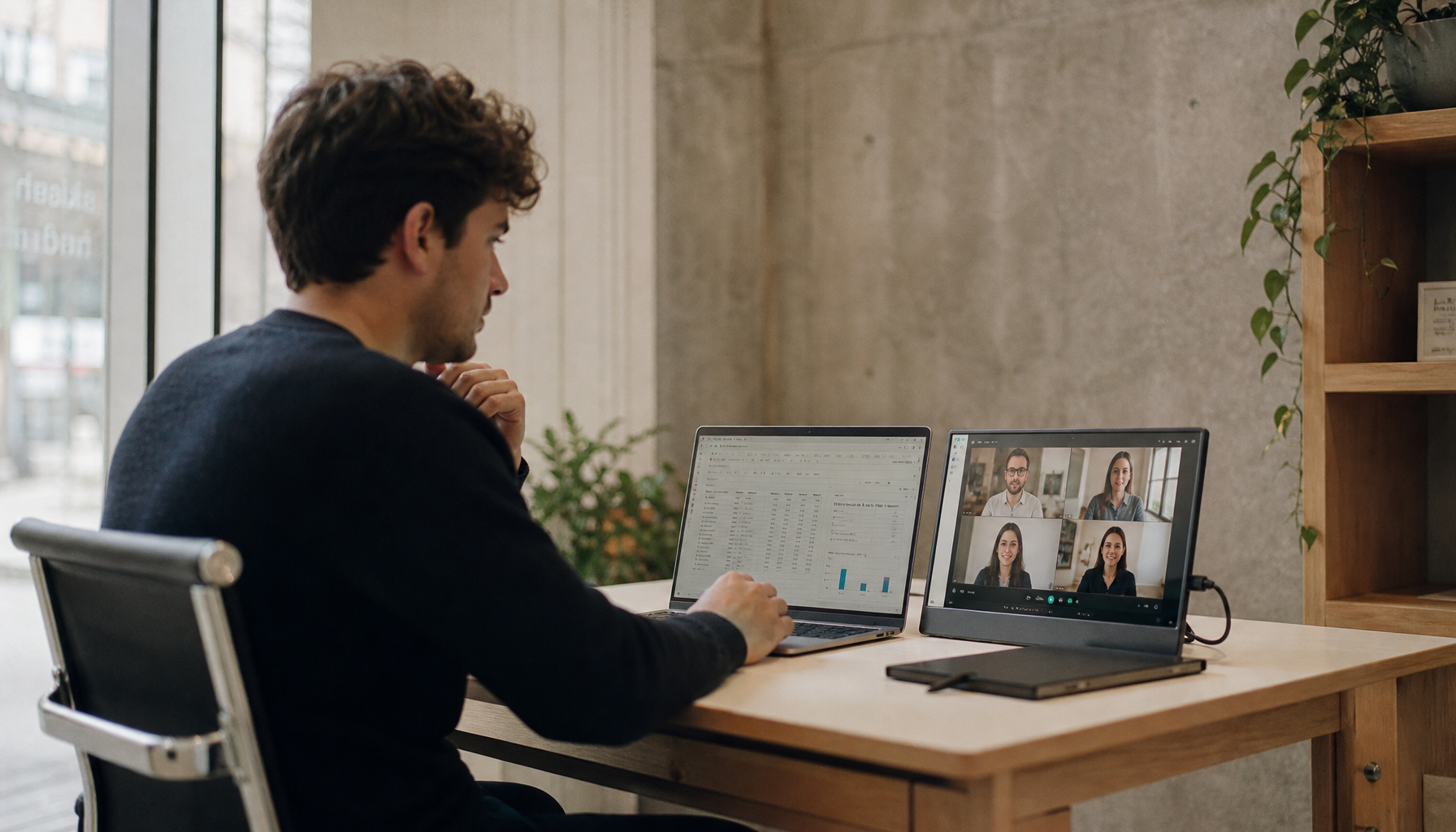
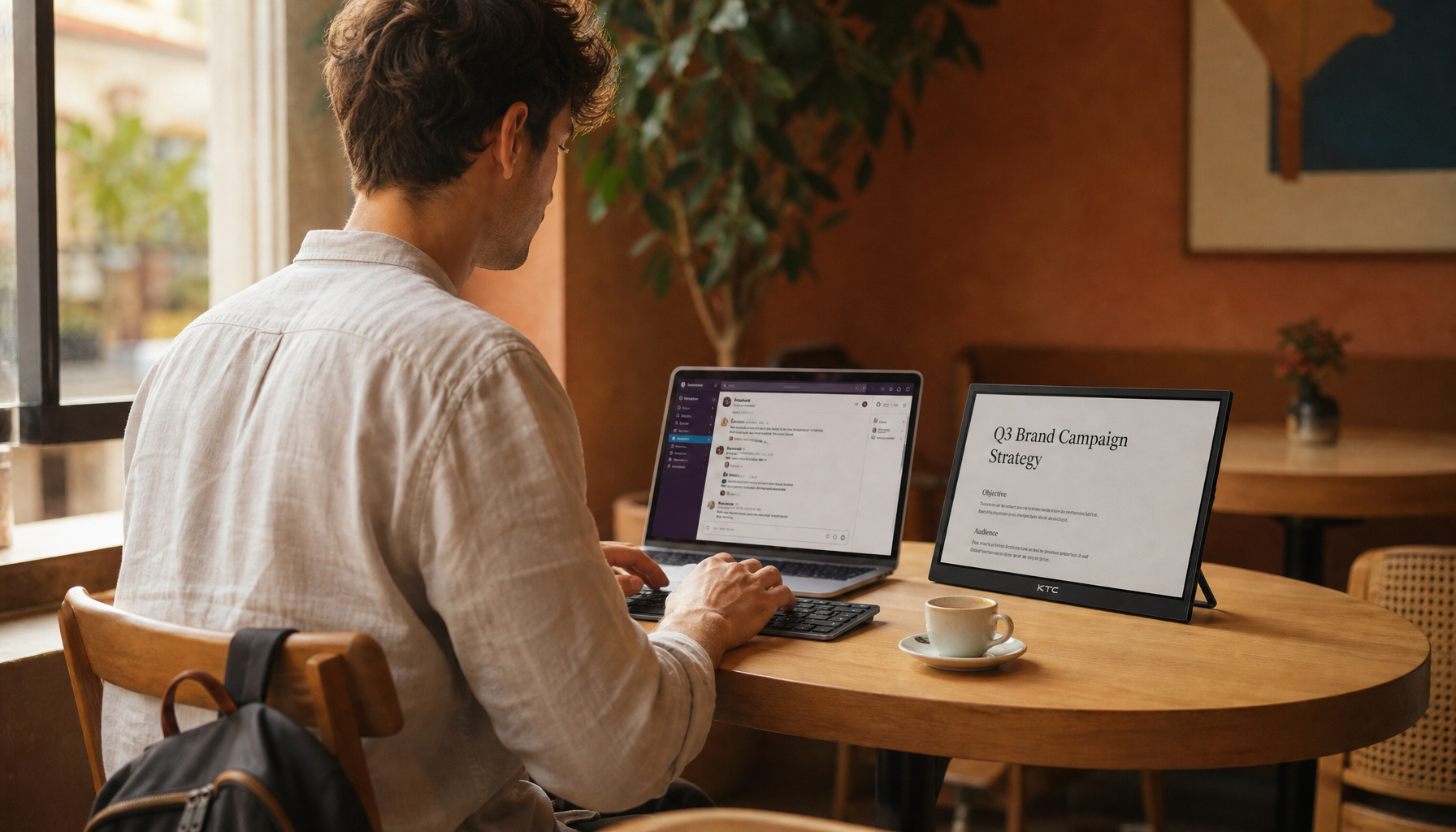
Setting the right monitor viewing angle, height, and distance helps reduce eye strain and neck fatigue during long sessions at the desk. The goal is to align the screen with the natural resting position of your eyes and spine so you can maintain good posture without constant adjustments.

The Science of Sight: Why Monitor Ergonomics Matters
Many people place their monitor wherever it fits on the desk and then wonder why their neck feels stiff or their eyes tire quickly. The eyes naturally rest in a slightly downward gaze, roughly 10 to 20 degrees below the horizontal line of sight. When the screen sits too high or too low, the neck compensates by tilting the head, which can lead to muscle tension over time. A well-aligned setup supports both focused work and extended gaming without forcing unnatural postures.
The Height Rule: Aligning the Top of Your Screen with Eye Level
Position the top edge of the screen at or slightly below eye level. This guideline comes from established workplace standards that aim to keep the head in a neutral position. A quick way to check is the finger test: sit comfortably, close your eyes, then open them and point one finger straight ahead. The top of the monitor should meet that line or sit just beneath it. If the screen is fixed too low, users often hunch forward; if it is too high, they tilt the head back. Both habits increase strain during long sessions.

The Arm’s Length Rule: Finding the Optimal Viewing Distance
Keep the monitor roughly an arm’s length away, which usually falls between 20 and 40 inches from the eyes. This range helps maintain clear focus without forcing the eyes to work harder. For a common 27-inch monitor, many users find 20 to 30 inches comfortable because it balances text size with a natural field of view.
This chart shows practical starting ranges for comfortable monitor setups. For a 27-inch display, the safest reading is that typical viewing distance sits around 20-30 inches, with a modest upward tilt often landing near the 10-20 degree range. Use the ranges as a fit check, not as exact rules.
Monitor Size, Viewing Distance, and Tilt: Safe Starting Ranges
Use the chart as a starting point for comfortable desk setups; the ranges are broad guidance, not exact fit rules.
View chart data
| Category | Recommended distance range | Suggested tilt range |
|---|---|---|
| 24 in | 30.0 | 10.0 |
| 27 in | 25.0 | 12.0 |
| 32 in | 22.0 | 12.0 |
| 34 in | 20.0 | 15.0 |
Resolution also plays a role. Higher-resolution panels let users sit slightly closer without noticing individual pixels, while lower-resolution screens may require a bit more distance to keep text sharp.
The Tilt-Back: Reducing Glare and Neck Tension
A modest backward tilt of 10 to 20 degrees often works well. This angle helps align the center of the screen perpendicular to your line of sight and reduces reflections from overhead lights. Too little tilt can create glare; too much can make the bottom of the screen harder to read. Adjust the tilt while seated in your normal posture and test it with the room lights on.
The Posture Pivot: Balancing Competitive Gaming and Immersive Play
Competitive players sometimes lean closer during intense moments, while story-driven or simulation gamers prefer a more relaxed distance. The same monitor can support both styles if you keep the base distance around 24 to 30 inches and use tilt to fine-tune. Curved panels with larger radii can help maintain consistent focus across the screen when you shift position slightly. The key is to return to the neutral setup once the session ends rather than staying in a leaned-forward posture for hours.
Troubleshooting Your Setup: Glare, Shallow Desks, and Special Lenses
Shallow desks make it hard to reach the recommended distance. In these cases, a stable riser or monitor arm can help, or you can increase the backward tilt to reduce the “looming” sensation. Users who wear bifocals or progressive lenses usually benefit from lowering the monitor an extra inch or two so they do not have to tilt their head back to see through the lower part of the lenses. Place the screen perpendicular to windows and away from bright lamps to cut glare, which often triggers squinting and secondary neck tension.
Building Your Ergonomic Foundation with the Right Display
Monitors with height, swivel, and pivot adjustments make it easier to hit the correct viewing angle without extra accessories. Models that include a full ergonomic stand let you fine-tune height and angle quickly, while VESA-compatible designs allow a monitor arm for even more flexibility on tight desks. When choosing a display, check whether the stand supports the adjustments you need most often rather than relying on temporary fixes.
Office Monitor collection offers several options with practical stands. For users who want height, swivel, and pivot in one package, the KTC 27" 2K 300Hz Vertical Gaming Monitor provides full movement without additional hardware. Similar adjustment ranges appear on the KTC 27" 4K 160Hz Gaming Monitor. A basic Gaming Monitor collection also includes tilt-only models that can work with a separate arm if your desk depth is limited.
Frequently Asked Questions
How Do I Know If My Monitor Height Is Correct?
Sit in your usual chair and close your eyes. Open them and look straight ahead. The top edge of the screen should meet or sit just below that line. If you have to look up or down more than a few degrees, adjust the height or add a stable riser.
What Distance Works Best for a 27-Inch Monitor?
Most users find 20 to 30 inches comfortable for a 27-inch panel. Start at arm’s length and move the monitor slightly closer or farther while reading text. Stop when the text is sharp and your neck feels relaxed.
Should I Tilt the Monitor Even If There Is No Glare?
A modest 10- to 20-degree backward tilt often improves comfort even without glare because it matches the eyes’ natural downward resting position. Test small changes and keep the angle that feels easiest to read for long periods.
What If I Wear Bifocals or Progressive Lenses?
Lower the monitor an additional 1 to 2 inches so you can view the center of the screen through the appropriate part of the lens without tilting your head back. This small change often reduces neck tension for multi-focal lens users.
Can a Monitor Arm Replace a Poor Stand?
Yes. A VESA-compatible arm gives you more range than many fixed stands and works well on shallow desks. Make sure the arm is rated for your monitor’s weight and that the desk edge can support the mount.