Creators who stream gameplay on Twitch or produce videos for YouTube face a constant juggling act: keeping high-frame-rate gameplay smooth while monitoring chat, switching scenes in OBS, and referencing editing timelines or scripts. A single screen forces constant alt-tabbing that breaks flow and risks missed alerts. A well-planned dual-monitor layout removes that friction without forcing expensive hardware upgrades.
The Creator's Dual Monitor Dilemma: Gameplay vs. Management
A single monitor cannot display live gameplay, OBS controls, live chat, and reference materials at the same time. Dual-monitor setups solve this by separating high-intensity gaming from management tasks. The challenge is choosing an arrangement that preserves low latency on the main display while keeping secondary information within easy view.
Side-by-Side: The Classic Layout for High-End Video Editing
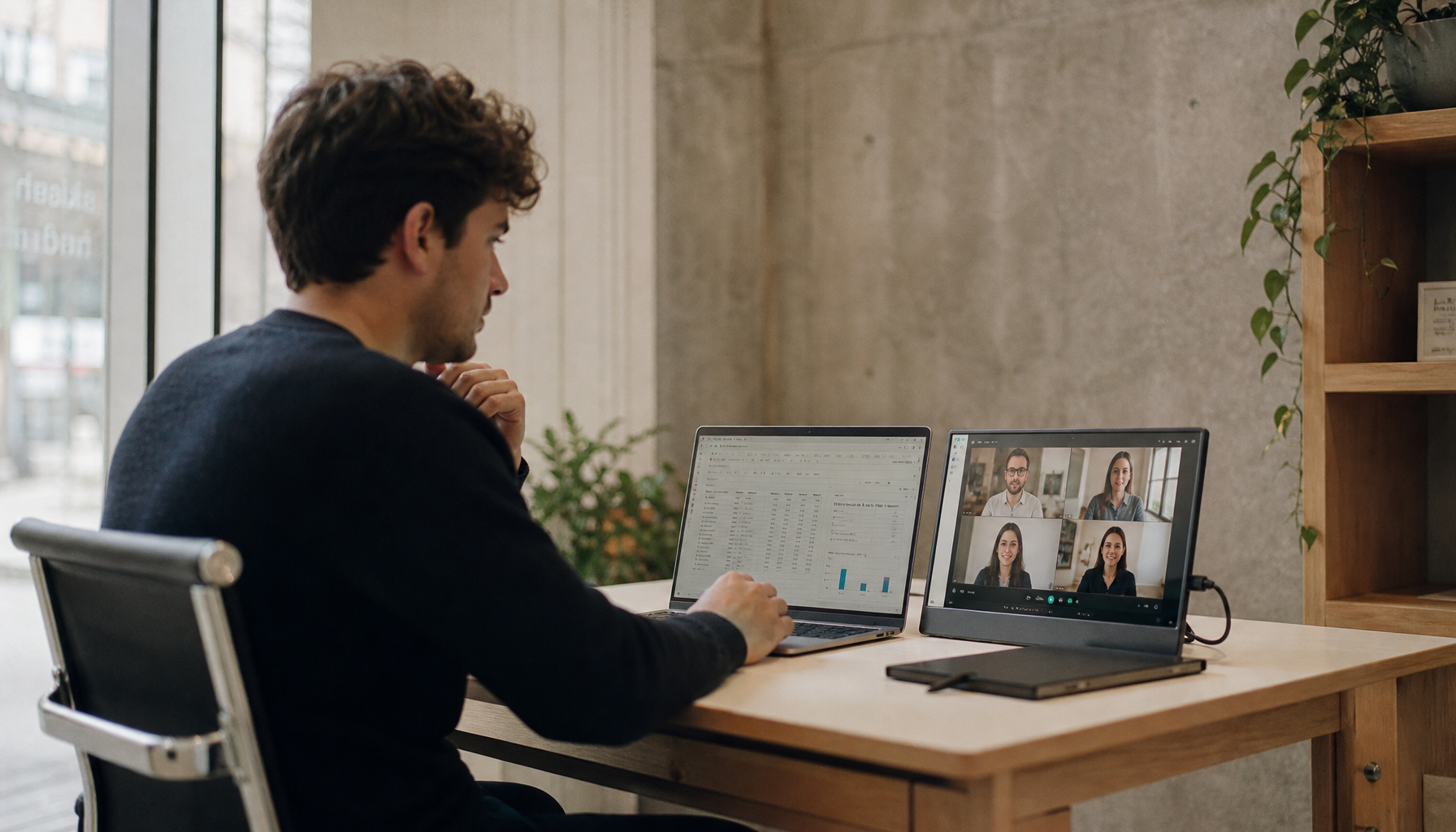
Side-by-side placement works best when the bulk of your time is spent in Premiere Pro or DaVinci Resolve timelines. Center the primary gaming display and angle the secondary monitor slightly inward to reduce neck rotation. An ultrawide such as the 49-inch super ultrawide can replace two separate panels for a seamless timeline workspace while still supporting a stacked secondary if needed.
Stacked Setup: The Pro Streamer's Space-Saving Choice
Stacking monitors vertically frees horizontal desk space and keeps chat or OBS docks closer to your natural line of sight. Position the main gaming panel at eye level and tilt the upper screen downward 15 to 20 degrees. This arrangement reduces the "focus gap" between gameplay and alerts, making it popular among full-time streamers who need fast reaction to donations or moderation requests.
Vertical-Secondary: Optimizing for Twitch Chat and Discord
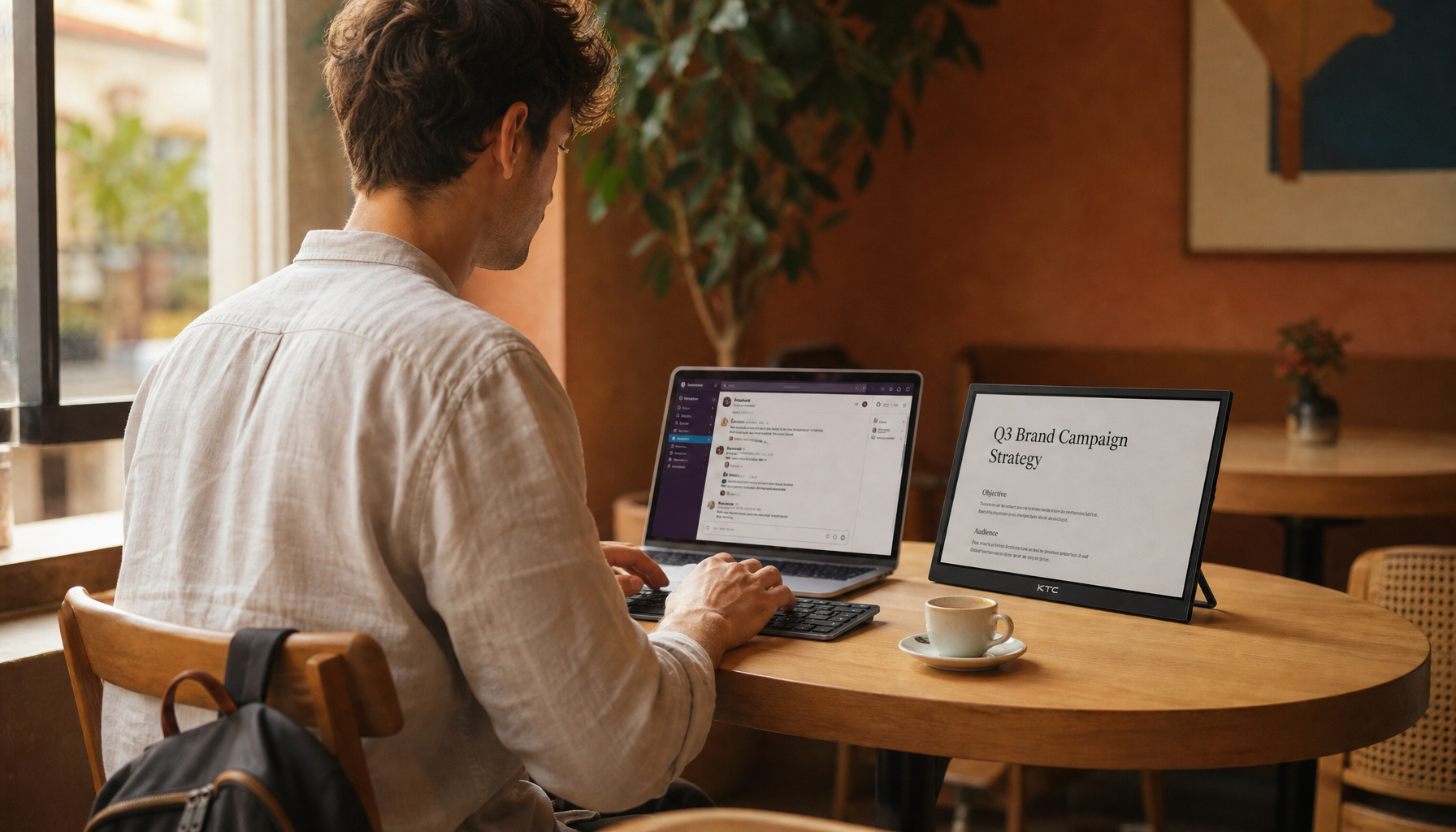
Rotating a secondary display into portrait mode is the standard choice for live chat management. A taller view shows far more message history without scrolling, and Discord or script windows remain visible in peripheral vision. Panels with full pivot support, such as the KTC 25-inch 300 Hz vertical monitor, maintain smooth scrolling even at high refresh rates.
Matching Different Resolutions and Refresh Rates without Stutter
Mixing a 360 Hz or 144 Hz primary with a 60 Hz secondary often triggers Windows 11 frame-pacing issues. The stutter-fix hierarchy below shows the order of troubleshooting steps that preserve variable refresh rate while eliminating most pacing conflicts.
2026 Stutter-Fix Hierarchy for Mixed-Refresh Dual-Monitor Setups
Priority order of fixes that resolve pacing conflicts while keeping G-Sync or FreeSync active.
Show fix steps
| Layer | Action | Impact on Stutter |
|---|---|---|
| Layer 1 | Disable Multi-Plane Overlay via registry | High |
| Layer 2 | Run OBS Studio as Administrator | High |
| Layer 3 | Lock secondary to 60 Hz or 120 Hz | Medium-High |
| Layer 4 | Disable hardware acceleration in Chrome/Discord | Medium |
Windows 11 already provides independent DPI scaling and refresh-rate controls per monitor, so the remaining friction is usually GPU scheduling rather than resolution mismatch.
Optimizing OBS Studio: Docks, Alerts, and Scene Control
OBS Studio lets you detach Chat, Audio Mixer, and Scene Transitions into floating docks that can be moved to the secondary monitor. Running OBS as administrator tells Windows to prioritize the encoder over background rendering on the second display. Place the Audio Mixer at the bottom of a stacked layout or along the side of a vertical panel so it stays reachable during live shows.
Ergonomic Placement and Reducing Creator Fatigue
According to official ergonomic standards, the primary monitor should sit directly in front of you at eye level, with any secondary screen angled to minimize repetitive neck rotation. High-quality dual-monitor arms clear desk space for cameras and stream decks while allowing quick height and tilt adjustments. Stacked layouts need more vertical clearance but far less horizontal width than side-by-side arrangements.
Choosing Your Secondary Display: KTC Recommendations by Use Case
For chat-heavy streams, the KTC 25-inch 300 Hz vertical monitor offers smooth portrait scrolling and full pivot support. Video editors who need maximum horizontal workspace often pair a 49-inch super ultrawide as the primary with a smaller secondary above it. Creators who want high-brightness HDR for both gaming and color-critical work frequently choose the KTC 27-inch 4K Mini-LED as the main display.
Final Verdict: Which Topology Fits Your Creator Workflow?
Choose stacked if your desk is narrow and you need fast vertical access to alerts. Choose vertical-secondary when chat interaction and community management are the top priority. Choose side-by-side or an ultrawide primary when most of your time is spent editing timelines or managing assets. Test each layout with your actual software stack before committing to new arms or monitors.
Frequently Asked Questions
Can I Use a 4K Primary and 1080p Secondary Without Stutter?
Yes. Windows 11 handles independent scaling and refresh rates per monitor. Most remaining stutter comes from Multi-Plane Overlay conflicts rather than the resolution difference itself.
Should I Disable G-Sync When Using Mixed Refresh Rates?
No. Keep variable refresh rate enabled on the primary gaming display. Focus on MPO registry edits and running OBS as administrator instead.
How Much Desk Depth Do I Need for a Stacked Setup?
Plan for at least 24 inches of depth to allow the upper monitor to tilt downward without crowding your keyboard or peripherals.
Is a Monitor Arm Required for Vertical-Secondary Layouts?
A quality arm makes height and pivot adjustments easier, but many KTC panels include stands with built-in pivot and height controls that work for most users.
Does Hardware-Accelerated GPU Scheduling Cause Issues?
HAGS can help with DLSS 3 titles, but disabling hardware acceleration inside Discord and Chrome often removes the remaining pacing fights with a 60 Hz secondary monitor.
What Is the Best Secondary Size for Chat?
A 24- to 25-inch panel in portrait mode strikes the best balance between readable chat history and minimal desk footprint for most streamers.