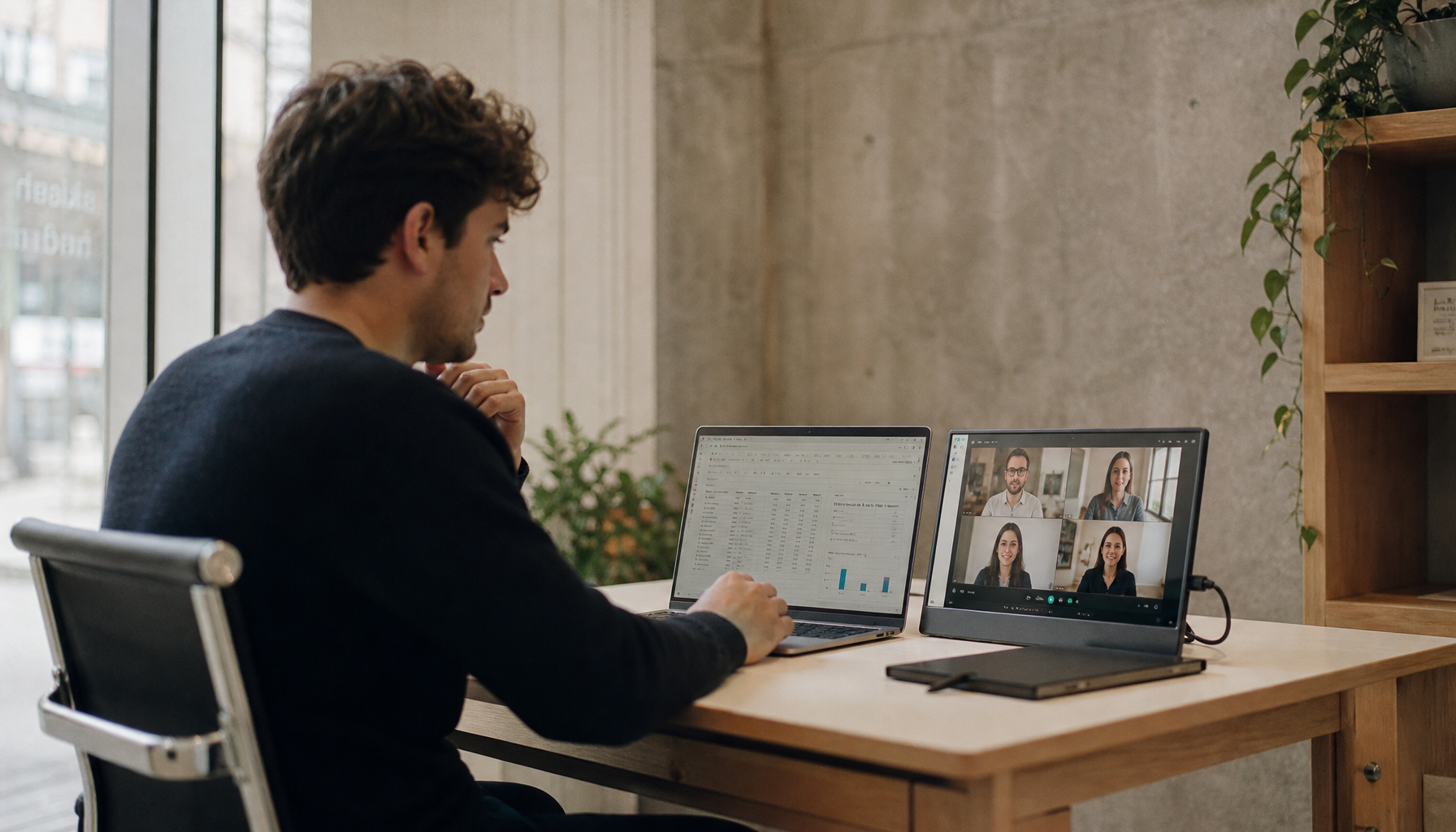
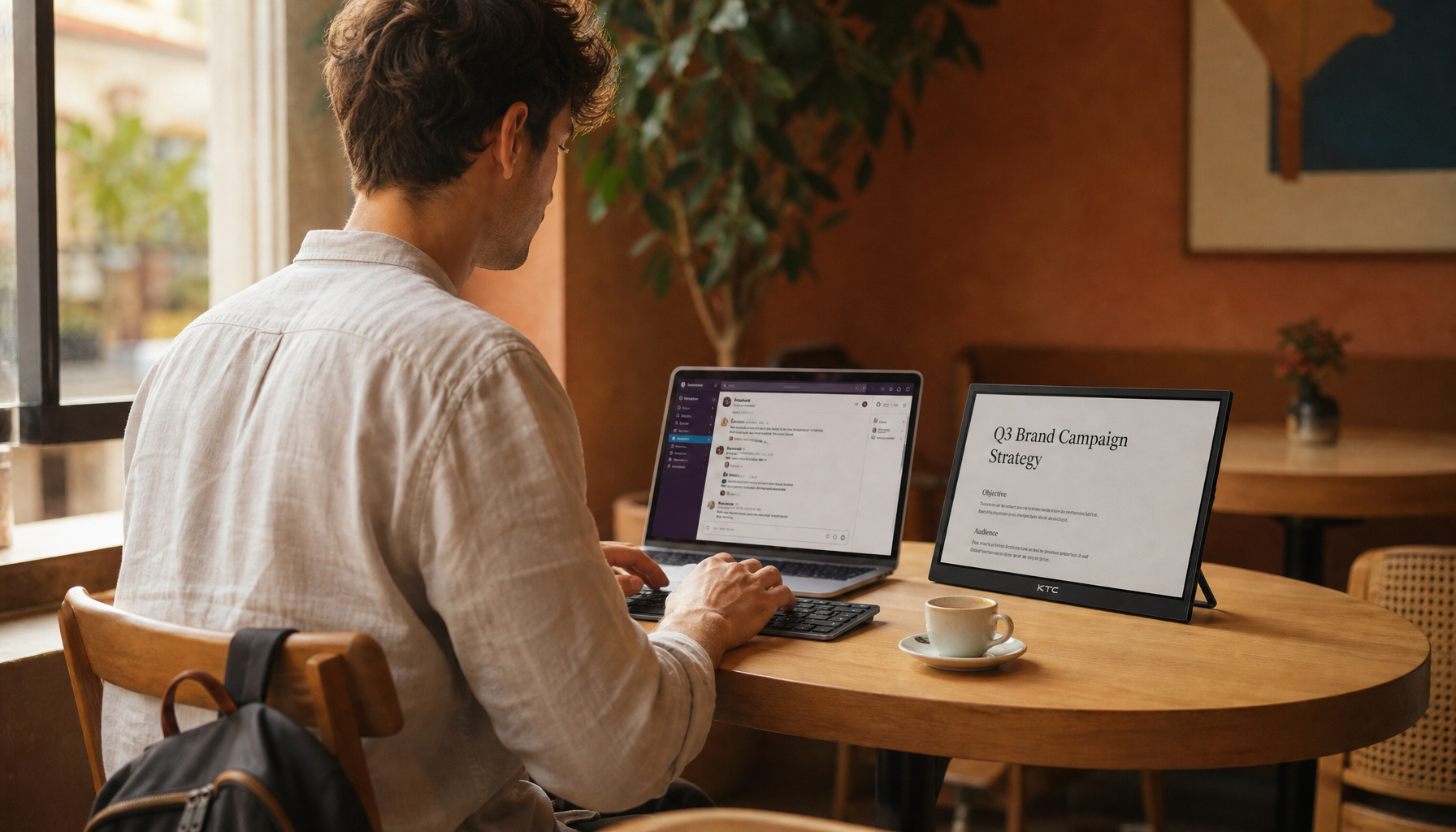
A 1440p 180Hz external monitor gives most modern gaming laptops the sharpest, smoothest desktop-class experience without pushing mobile GPUs into unrealistic territory. This resolution and refresh rate pair balances pixel density with the frame rates typical 2026 laptop hardware can actually deliver, especially when you route the signal directly to the dedicated GPU.

Why 1440p 180Hz is the 2026 Sweet Spot for Gaming Laptops
The jump from a typical 1080p laptop panel to 1440p adds roughly 77 percent more pixels, producing noticeably sharper text, cleaner UI elements, and more detailed game worlds. At the same time, 180Hz offers enough motion clarity for competitive play while leaving headroom for AAA titles that rely on DLSS or frame generation. Connecting an external display also lets you bypass the integrated graphics path in many laptops, which can unlock a modest performance increase when the port is wired to the dedicated GPU.
Matching Your Laptop GPU to a 1440p 180Hz Display
Not every mobile GPU benefits equally from this monitor spec. Mid-range chips such as the RTX 4070 and RTX 5070 mobile sit in the practical sweet spot, where esports titles can comfortably reach or exceed 180 fps and most AAA games land in the 90-120 fps range with upscaling. Lower-tier GPUs like the RTX 4060 mobile usually need frame generation even to approach consistent 1440p gameplay, so 180Hz headroom mainly helps in lighter titles.
1440p 180Hz Laptop GPU Fit by Game Type
Use 180Hz as a meaningful target only when the game can stay near the monitor ceiling in typical play. Esports titles can often benefit at lower tiers; AAA titles usually need upscaling or frame generation before 180Hz becomes practical.
View chart data
| Scenario | RTX 4060 Mobile | RTX 4070 Mobile | RTX 5070 Mobile | RTX 5080 Mobile |
|---|---|---|---|---|
| Esports | 2.0 | 3.0 | 3.0 | 3.0 |
| AAA native | 0.0 | 1.0 | 1.0 | 2.0 |
| AAA with DLSS | 0.0 | 1.0 | 2.0 | 3.0 |
| AAA with Frame Gen | 0.0 | 0.0 | 2.0 | 3.0 |
Higher-refresh options above 240Hz rarely add value on laptop hardware unless you play only esports at the lowest settings. Choosing a monitor that matches your GPU's realistic output prevents wasted budget on unused refresh headroom.
The Bandwidth Blueprint: Connecting for 180Hz Performance
To reach the full 180Hz, the signal must travel over a connection with enough bandwidth. DisplayPort 1.4 handles 1440p at up to 240Hz, while HDMI 2.0 is often limited to 144Hz at the same resolution when color depth or HDR is enabled. Check your laptop's NVIDIA Control Panel or AMD software to confirm which ports connect directly to the dedicated GPU rather than the integrated graphics.
USB-C hubs that share lanes between video and data frequently cap the refresh rate at 60Hz or 120Hz. A dedicated USB-C to DisplayPort 1.4 cable or a simple docking station with a single video output avoids this bottleneck. Once the cable is connected, set the monitor to 180Hz in Windows display settings and enable any adaptive-sync feature your laptop and monitor both support.
Optimizing Your Desk: Lid Open vs. Clamshell Mode
Closing the laptop lid for a cleaner desk can raise internal temperatures and trigger thermal throttling on many models, because intake or exhaust paths often route through the keyboard area. Keeping the lid open preserves airflow and maintains higher sustained performance. If desk space is tight, a monitor arm that positions the external display above the laptop lets you keep the lid cracked without losing screen real estate.
A 27-inch external panel also improves ergonomics over a typical 15- or 17-inch laptop screen. Raising the monitor to eye level reduces neck strain during long sessions, and the larger surface makes multitasking or strategy games easier to follow. Resources on high-refresh-rate behavior explain how to pair VRR settings with these setups so frame-rate fluctuations remain invisible.
Choosing the Right 1440p 180Hz Monitor for Your Setup
Panel type and stand features matter once the connection and GPU fit are confirmed. Curved HVA panels such as the H27S17 deliver strong contrast at a lower price and suit single-player or immersive games. Flat Fast IPS options like the H24T7 prioritize color accuracy and viewing angles for competitive play or mixed work. Mini-LED models such as the M27T6 add local dimming and higher peak brightness for HDR content without OLED burn-in concerns.
Match the stand to your desk habits. Height-adjustable, swivel, and pivot options reduce eye and neck fatigue during long sessions, while simpler tilt-only stands work when the monitor stays in one fixed position. Collections focused on 1440p gaming and 160-185Hz models group compatible options by size and curvature so you can compare ergonomics and ports in one place.
Frequently Asked Questions
Is 1440p 180Hz Worth It for a Gaming Laptop?
It depends on your GPU and game library. Mid-range mobile chips gain the most visible improvement in both sharpness and motion clarity, while entry-level GPUs may need upscaling features to reach the monitor's potential in demanding titles.
What Cable Do I Need for 180Hz Output?
A VESA-certified USB-C to DisplayPort 1.4 cable or a direct DisplayPort cable provides the safest path to 180Hz. HDMI 2.0 cables often cap at 144Hz once HDR or 10-bit color is enabled.
Can I Use a USB-C Hub for a High-Refresh Setup?
Most multi-port hubs split bandwidth between video and data, which drops the refresh rate. A dedicated video cable or a dock with a single video output preserves the full signal.
When Does 1440p Become Too Demanding for a Laptop GPU?
Entry-level chips such as the RTX 4060 mobile typically need DLSS or frame generation to maintain playable frame rates at 1440p in newer AAA games. Esports titles remain comfortable without those tools.
Is 180Hz Meaningful Outside Esports?
The extra smoothness helps in any fast-paced game, but the benefit is most noticeable when the GPU can sustain frame rates near the refresh ceiling. In slower single-player titles, the jump from 144Hz to 180Hz is smaller than the jump from 60Hz to 144Hz.
Should I Close the Laptop Lid When Gaming on an External Monitor?
Leaving the lid open usually improves thermals and sustained performance on laptops that rely on keyboard-area airflow. If you prefer a closed-lid look, monitor temperatures and consider a stand that allows some ventilation underneath.