

The safest code-conscious method is to keep monitor power out of the wall cavity and route only the correct low-voltage display cable in a listed pathway or with an in-wall-rated jacket. If you want hidden power for a wall-mounted monitor, use a proper receptacle or a listed power-relocation solution instead of burying a loose cord.
If one visible cable is ruining an otherwise clean gaming or work setup, it is easy to think a small hole in the wall will solve everything. The problem is that a setup that looks tidy for a day can still be the wrong choice for a high-refresh gaming monitor, a wall-mounted ultrawide, or any factory power cord hidden behind drywall. You will get a practical framework here for what can go in the wall, what should stay out, and which routing method makes the most sense for modern monitor setups.
Start With the Rule That Matters Most
A power cord inside the wall is the line most installers and code-minded homeowners avoid crossing. In the discussion, posters repeatedly distinguish flexible cords and extension cords from permanent building wiring, and that distinction is the right starting point for monitor installs too. If your monitor plugs into a standard outlet with a factory cord, that cord is generally not the thing you want concealed inside a finished wall.
Low-voltage display cabling is a different category, but it still needs care. The long-running CL2-or-higher question around a display cable standard shows the real issue: the cable might pass video just fine, yet still be the wrong jacket or construction for concealed space. For a code-conscious US setup, treat in-wall digital display cabling or similar signal cabling as something that should be selected for concealed use, not as a random desk cable you happen to have on hand.


The practical rule of thumb is simple: low-voltage monitor signal cables may be routed through a wall when the cable and pathway are appropriate, but monitor power should be handled as building wiring, not as a loose cord hidden behind drywall. If you need the screen powered on the wall, the cleaner answer is usually a recessed outlet, an inlet-and-outlet relocation kit, or a licensed electrician.
Choose the Routing Method Before You Buy the Cable
A surface-mount raceway is often the safest answer when you want a cleaner monitor wall without opening drywall at all. Raceways are enclosed pathways that sit on the wall surface, and they are practical for desk setups with one gaming monitor, dual displays, a docking station, or a portable monitor that gets moved regularly. They also protect display, data, audio, and network runs from abrasion while keeping the install reversible.
A low-voltage wall plate can look more built-in, but it demands better planning than many buyers expect. In the display cable wall plate discussion, one of the biggest complaints was not picture quality but stiffness: two 5 ft, 24 AWG display cables plus slack and wall-plate tails became difficult to push back into the cavity. That is a useful warning for monitor owners, because high-bandwidth cables for 4K or high refresh can be thicker and less flexible than ordinary patch leads.
If you are thinking about conduit, do not assume it automatically makes every cable choice code-safe. That same forum thread shows conflicting opinions on whether conduit changes the in-wall rating requirement, which is exactly why conduit should be treated as a routing aid, not a loophole. If you want the wall closed up and never worry about it again, confirm the plan with a qualified electrician or local inspector before you fish the cable.
Option |
Best for |
Code risk |
Performance notes |
When to choose |
Surface raceway on the wall |
Renters, desk setups, portable monitor stations, fast upgrades |
Low, because cables stay accessible and out of the wall cavity |
Easy to swap cables later |
Choose this when you want the safest clean-up with minimal wall work |
In-wall low-voltage pass-through with rated cable |
Clean wall-mounted gaming monitor or ultrawide setup |
Moderate if you use the wrong cable jacket or overcrowd the cavity |
Good if the cable spec matches your monitor |
Choose this when you want the cleanest look and can plan the run correctly |
Conduit with rated cable |
Future-proof installs where you may replace the cable later |
Moderate, because code details still matter |
Helpful for upgrades, but bend space still matters |
Choose this for remodels or when cable replacement matters |
New receptacle or listed power-relocation kit for monitor power |
Wall-mounted monitors that need hidden power |
Lowest code risk when installed correctly |
No signal benefit, but solves the power problem correctly |
Choose this instead of burying a monitor power cord |
Match the Cable to Your Monitor’s Actual Bandwidth
The digital display cable bandwidth tiers matter more once the cable is going through a wall, because replacing the wrong cable later is a hassle. An entry-tier certified display cable is the current baseline at 10.2 Gbps, a mid-tier certified cable goes to 18 Gbps for 4K at 60 fps with HDR, and a top-tier certified cable reaches 48 Gbps for 4K at 120 Hz and 8K at 60 Hz. For gaming monitors and high-refresh displays, that means the safest install is not just “a display cable,” but the specific class your panel actually needs.
Adapter choice matters too. A dual-mode video output source can sometimes use a passive adapter between two display standards, but a single-mode video output source needs an active adapter or converter, with the source example putting that cost at about $40. That is especially relevant if a laptop or small-form-factor PC is feeding a monitor with only a single branded digital input through a hidden run, because the adapter decision can break the setup even when the cable routing itself is clean.
Cable length becomes less forgiving as the monitor gets more demanding. In one digital display cable wall-run discussion, the target distance was about 20 to 23 ft, and the user was already worried that signal reliability on that display standard could fall off beyond roughly 16 ft. That is a good real-world reminder to test the exact cable path at full resolution, full refresh rate, and the monitor’s real color settings before closing the wall or snapping raceway covers shut.
Plan for Ultrawides, Wall Arms, and Cable Stress
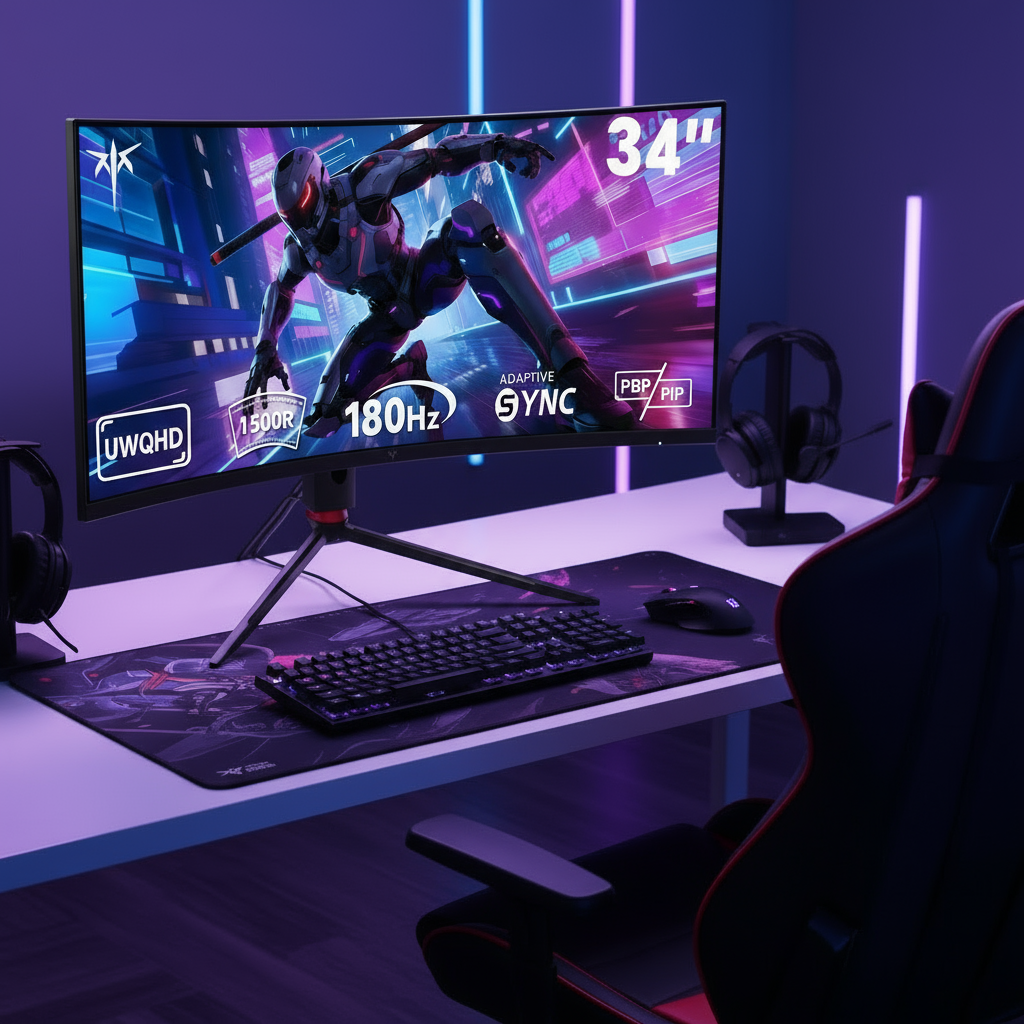
A 34-inch curved ultrawide mounting scenario shows that cable routing is only half the job. The other half is protecting the panel while you attach the mount, especially when the screen is curved, the rear buttons sit low on the chassis, or the stand removal process leaves the display awkward to handle. Using the original packing foam or another clean, stable support surface is often safer than improvising on a hard desk where the monitor frame or controls can take the load.
For larger monitors, cable slack needs to move with the arm, not fight it. A wall mount with cable management is useful not because it hides everything by itself, but because it reduces strain where the display cable exits the monitor. That matters on 34-inch to 38-inch displays, where a full-motion arm can pull harder on connectors than a fixed stand ever would.

Bend radius is the other detail that gets ignored until signal issues or cosmetic damage show up. A raceway-vs-cable-tray comparison makes the point clearly: enclosed pathways offer more protection and better bend control, while open trays do not really solve delicate signal-routing problems in a room. For monitor installs, that translates into a simple habit: use gentle turns, avoid crushing the cable behind the wall plate, and leave a small service loop behind the monitor so the connector is not carrying all the tension.
FAQ
Q: Can I run a monitor power cord or surge protector through the wall?
A: For a code-conscious setup, that is the wrong approach. Factory monitor cords, power strips, and extension cords are generally treated as flexible cords, not permanent in-wall wiring, so hidden power should come from a proper receptacle or a listed relocation method instead.
Q: Is a digital display cable safe to hide inside a wall?
A: It can be, but the signal cable should be chosen for concealed use and matched to the monitor’s bandwidth needs. A spare desk cable that works on the floor is not automatically the right cable to bury behind drywall.
Q: Should I use one branded digital connection or another for a wall-routed gaming monitor?
A: Use the connection your monitor actually needs for its resolution and refresh rate. If you are pushing 4K at 120 Hz or a high-refresh ultrawide mode, choose the cable standard first, then choose the in-wall routing method around it.
Practical Next Steps
The safest monitor install is usually the one that separates jobs cleanly: low-voltage signal handling for video, proper building wiring for power, and enough mechanical slack for the monitor arm or wall bracket to move without stressing the connector.
- Check whether the visible problem is signal cable clutter, power cable clutter, or both.
- If only the signal cable is the problem, decide between a surface raceway and an in-wall low-voltage route.
- Match the cable to the monitor first: 4K at 60 Hz, 4K at 120 Hz, ultrawide high refresh, or adapter-based laptop output.
- Bench-test the exact cable, adapter, and refresh-rate combination before any final install.
- Keep bends gentle and leave a small service loop behind the monitor or wall arm.
- If hidden power is required, add a proper outlet or a listed relocation solution instead of putting the monitor cord in the wall.
- If local code details are unclear, verify the plan with a licensed electrician before cutting drywall.
References
- Surface-mount raceway product overview
- Display cable bandwidth tiers and capabilities
- Adapter behavior between two display standards
- Ultrawide wall-mount handling example
- Display cable wall-run distance discussion
- In-wall display cable rating discussion
- Monitor power cord in-wall discussion
- Wall-mount arm with cable management example
- Raceway vs cable tray protection and bend-radius guidance