A vertical monitor does not automatically cause more discomfort, but it does shift the load from side-to-side movement toward up-and-down eye travel and, if the screen is too tall or too high, more neck extension.
If your neck feels tight after reading long documents on a portrait display, or your eyes feel tired even though the screen looks sharp, the problem is usually the setup rather than the rotation itself. In real workstation guidance, a few inches of height, a slightly better tilt, and the right monitor size can change whether a vertical panel feels efficient or exhausting. Here is how portrait orientation changes strain patterns and how to choose a monitor setup that works better for productivity, gaming, and mixed-use desks.
Vertical Orientation Changes Where the Strain Goes
A proper monitor position reduces awkward posture, eye strain, fatigue, and neck or back pain, but portrait mode changes the shape of the viewing task. A landscape screen spreads content wider, so you tend to make more left-right eye and head movements. A portrait screen stacks more content vertically, so the work shifts toward larger up-down eye travel and a greater risk that the top or bottom of the screen falls outside your comfortable viewing zone.

That matters because eyes naturally rest slightly downward, not straight up. A workplace-safety source notes that a monitor center around 15 degrees below horizontal is a reasonable target, and it specifically warns that tall or portrait monitors should not have their top edge higher than the user’s eyes. On a vertical display, the extra height can be helpful for code, articles, and long spreadsheets, but only if the panel is sized and placed so you are not repeatedly lifting your chin to reach the top.
Why portrait can feel better for text-heavy work
A vertical monitor is often more efficient for coding, reading documents, web pages, and timelines because it shows more content top-to-bottom and reduces scrolling. In practice, that can mean fewer interruptions when reviewing a long article, comparing product specs, or working through a long block of code on a buying-guide site or display database.
First-hand user reports point the same way. One portrait setup discussion describes vertical screens as a better fit for webpages, email, and code because those formats are naturally tall. That does not prove portrait is universally better, but it matches a common desk reality: when the content is vertical, the monitor often feels more natural too.
Neck and Shoulder Load Depends More on Height Than on Rotation
A screen that is too high or too low changes posture in predictable ways. Too low encourages a head-down, rounded-shoulder posture. Too high encourages repeated neck extension. Portrait orientation raises the stakes because the display is taller, so small placement errors create larger posture errors across the full screen.
A workplace-safety source gives practical targets that translate well to portrait displays: keep the monitor about 20 to 40 inches away, directly in front of you, with the top line at or slightly below eye level and the screen center roughly 15 to 20 degrees below horizontal eye level. It also says the screen should not sit more than 35 degrees left or right of center, because off-center placement increases uneven neck-muscle loading over time.
What this looks like on a real desk
In dual-monitor discussions, users who reduced pain often made the same fixes: they moved the display farther back, centered the main screen, and adjusted height with arms or stands rather than simply rotating the panel. One neck-strain thread describes relief after moving monitors back to about 3 ft and raising them to a more comfortable eye level. That kind of example matters because portrait discomfort is often blamed on orientation when the real cause is bad geometry.

For most people, the safest portrait setup is not “make it tall and place it anywhere.” It is “keep the top edge no higher than eye level, keep the screen about an arm’s length away, and make sure your main reading area sits in the upper-middle portion of the screen rather than at the extreme top.”
Eye Strain Changes With Distance, Tilt, and Clarity
A viewing distance of 20 to 40 inches is a common ergonomic range because distance affects both focus effort and posture. Too close increases focusing demand. Too far encourages forward leaning. With portrait monitors, this balance is especially important because the screen is taller; if you sit too close to a 27-inch or larger portrait panel, the corners and ends of the display can fall outside a comfortable visual zone.
Tilt matters too. A slight backward tilt of about 10 to 20 degrees usually matches the eyes’ natural downward gaze better and can reduce glare. An ergonomics company also recommends managing reflections by placing the screen at a right angle to windows and checking glare on a darkened display. On bright desks, that often matters more than panel orientation.
Why a sharper panel can still feel tiring
Users often assume eye strain comes from portrait mode itself, but clarity and scaling are usually part of the story. A tall monitor invites smaller text because more lines fit on screen. That helps productivity only if the text remains easy to read without squinting. For monitor shopping, that means portrait use works best when the panel has clean text rendering, wide viewing angles, and enough pixel density that you do not compensate by leaning forward.
Break timing still matters even with a good screen. The ergonomics company recommends the 20-20-20 rule, while a medical center shares a 30/30 micro-break rule: every 30 minutes, take 30 seconds to breathe, stand, stretch, or relax your hands. For long display-comparison sessions, those short resets are often more realistic than waiting until discomfort is obvious.
The Best Vertical Setup Depends on the Job
A portrait monitor setup is usually strongest for programming, document writing, web browsing, and spreadsheet work that runs long vertically. It is usually weaker for gaming, movies, and video editing, where the content is designed around a landscape frame. That is why a mixed setup often works better than forcing one orientation to handle everything.
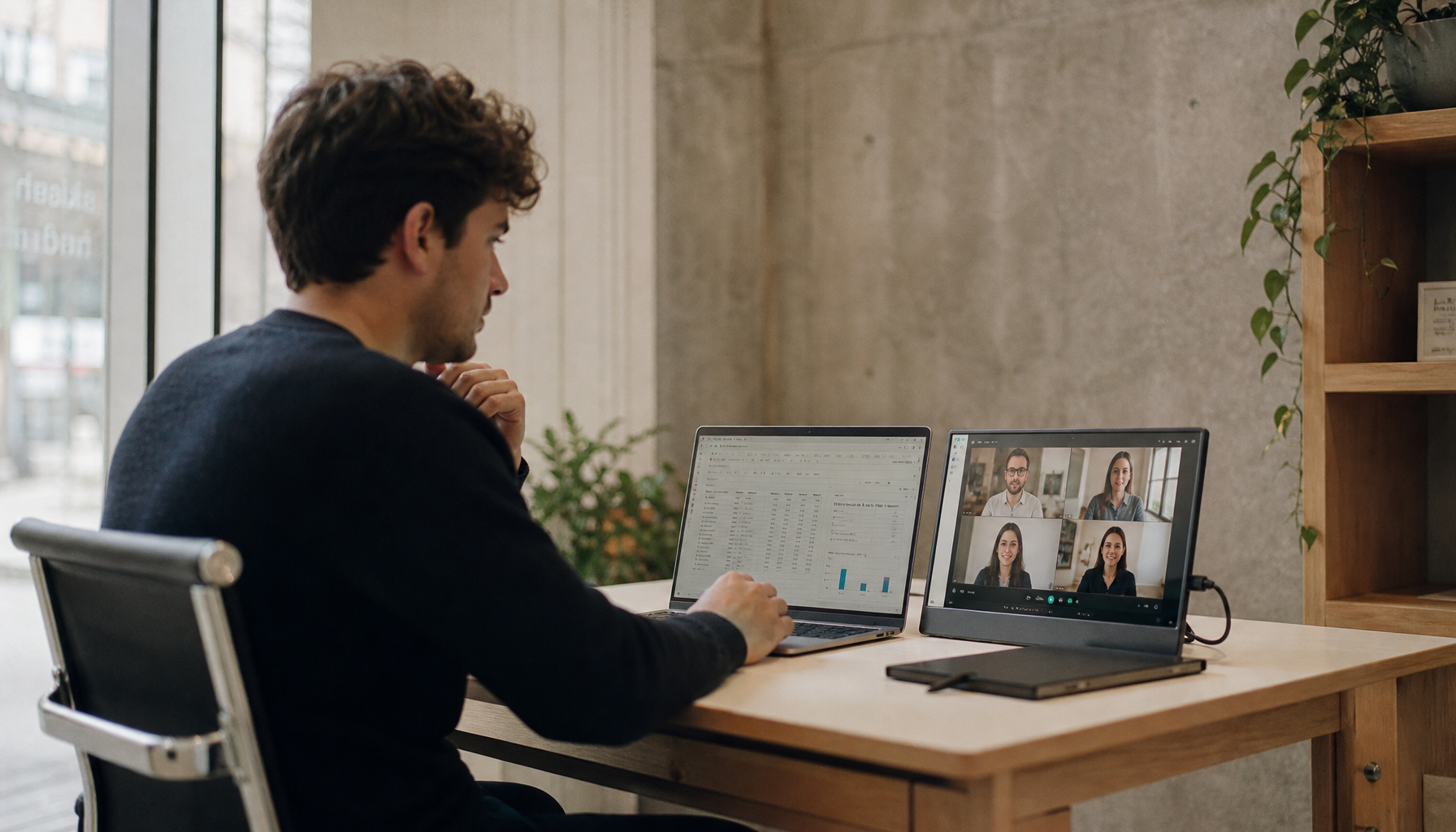
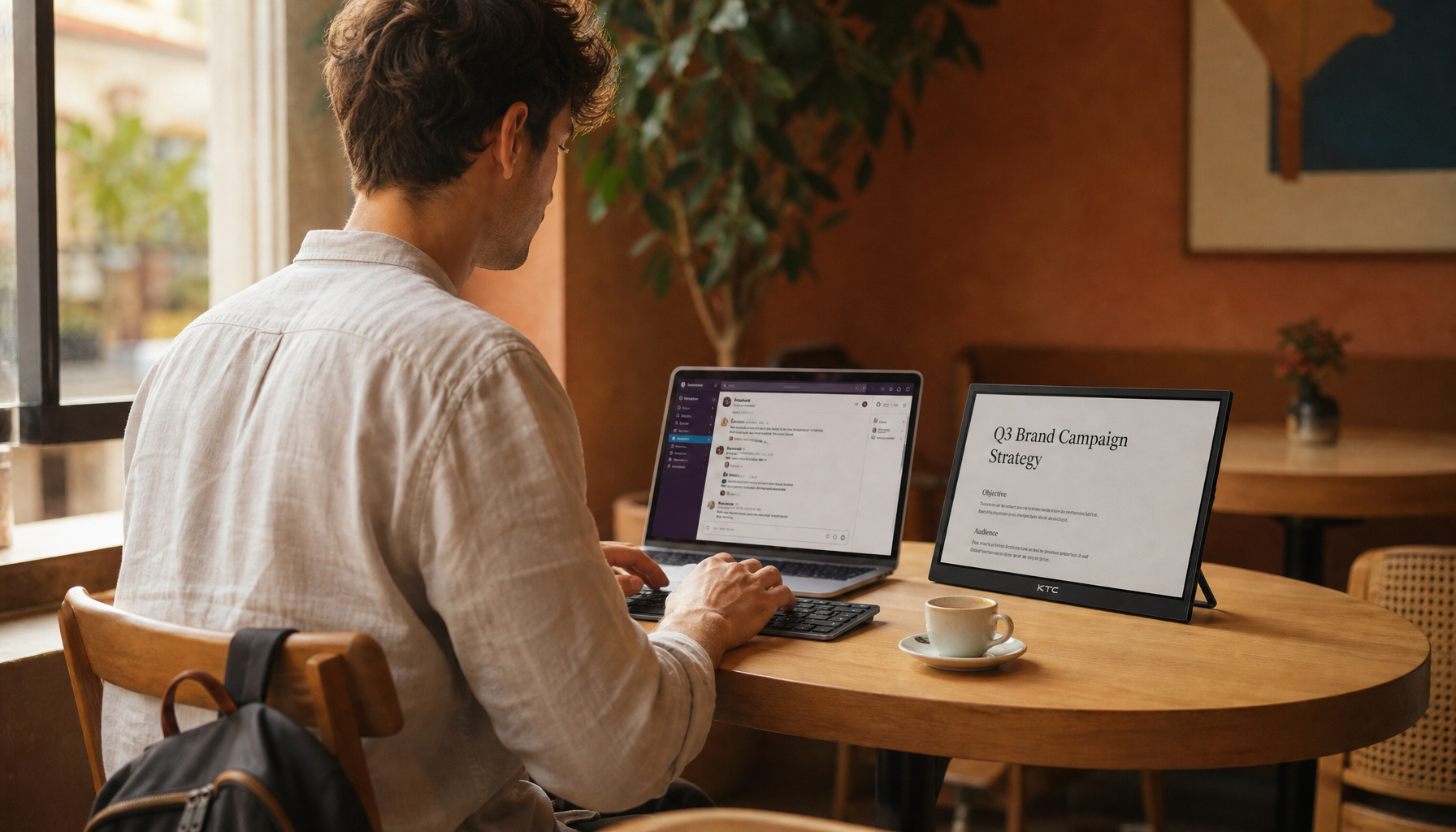
For a buying-guidance workflow, for example, a horizontal primary monitor can hold comparison charts, side-by-side product pages, or gaming footage, while a vertical secondary monitor can hold long spec sheets, reviews, notes, or chat. That split reduces window switching without forcing your main display to serve tasks it is not shaped for.
Portrait as primary vs portrait as secondary
A dual-monitor arrangement works best when the main screen is centered and the second screen is angled inward. If portrait is your primary screen, it should sit directly in front of the keyboard. If portrait is secondary, keep the landscape screen centered and move the portrait panel close enough that you can glance at it without sustained neck rotation.

For gaming-monitor buyers, this is usually the practical answer: use the high-refresh-rate landscape display as the primary panel, and let the portrait screen handle platform chat, walkthroughs, stream controls, product research, or documentation. That keeps the fast panel aligned with the activity that needs width and motion performance, while the vertical display handles tall content more efficiently.
What to Look for When Buying a Monitor for Portrait Use
A vertical monitor is not just a landscape monitor turned sideways in theory; in practice, a few hardware choices strongly affect comfort. The most important are size, stand adjustability, viewing angles, and whether the panel can rotate cleanly on its stock stand or on a monitor arm.
Smaller sizes are often easier to manage in portrait mode. A company notes that monitors around 24 inches or less are a common choice for coding or reading because they add vertical space without demanding as much head movement. That does not make 27-inch portrait monitors wrong, but it does mean they are less forgiving if your desk is shallow or your stand has poor height adjustment.
Comparison table: how common setups shift strain
Setup |
Best use |
Typical strain pattern |
Main risk |
Better buying/setup choice |
Single landscape monitor |
Gaming, video, wide spreadsheets |
More left-right eye travel |
Head turning on very wide screens |
Keep top at or below eye level; choose a stand with height and tilt |
Single portrait monitor |
Coding, reading, long documents |
More up-down eye travel |
Top of screen too high |
Favor 24-inch class or deep desk space; use an adjustable arm |
Landscape primary + portrait secondary |
Mixed productivity and gaming |
Balanced, if primary is centered |
Repeated neck rotation toward secondary screen |
Keep the main screen centered and angle the portrait display inward |
Dual landscape monitors |
Multitasking, editing, comparisons |
Wide horizontal scanning |
Neck fatigue across long sessions |
Match height and distance; keep edges close and screens angled inward |
Stacked monitors |
Space-limited desks |
More up-down head movement |
Looking too far up or down |
Reserve the upper screen for occasional use only |
For shoppers, the short list is simple: make sure the stand supports pivot, height, and tilt; confirm the panel has stable viewing angles; and be realistic about desk depth. A portable monitor can work in portrait mode for travel, but it often needs a solid stand because the default folio angle is rarely ideal for long sessions.
Practical Next Steps
If portrait orientation feels worse than landscape, do not start by blaming the format. Start by checking height, distance, tilt, and whether the monitor is simply too large for vertical use on your desk. Most strain complaints come from a workable idea paired with a poor physical setup.
Action checklist
- Set the top edge of the portrait monitor at or slightly below eye level.
- Keep the screen about 20 to 40 inches away, and avoid leaning forward to read small text.
- Tilt the display back about 10 to 20 degrees if glare or neck angle feels off.
- Use portrait for tall content such as specs, code, documents, chat, and long web pages.
- Keep gaming and video on a centered landscape primary display when possible.
- Take a 20-20-20 eye break or a 30-second break every 30 minutes.
- If discomfort continues, downsize the portrait screen or move it to a secondary role.
FAQ
Q: Does a vertical monitor cause more neck strain than a horizontal monitor?
A: Not by default. It changes the strain pattern. Landscape setups usually create more side-to-side scanning, while portrait setups create more vertical eye travel and a higher risk of looking up if the screen is placed too high. Height and distance matter more than rotation alone.
Q: Is portrait mode a good idea for gaming monitors?
A: Usually as a secondary display, yes. For most games, a landscape primary monitor remains the better fit because games are designed for width and motion across a horizontal frame. A portrait side monitor is more useful for chat, guides, system monitoring, or stream tools.
Q: What is the safest monitor size for portrait orientation?
A: Many users find 24-inch class monitors easier to place comfortably in portrait mode because the screen is tall without becoming visually overwhelming. Larger portrait panels can work, but they need more desk depth and better height control to avoid neck extension.
References
- A workplace-safety source: Computer Workstations - Monitors
- A medical center ergonomics guide
- A platform discussion on vertical monitors and productivity
- A platform discussion on monitor setups and neck problems
- An ergonomics company on monitor positioning
- A brand on monitor viewing angle and posture
- A workplace-safety source on monitor positioning
- A company glossary entry on vertical monitors
- A company on vertical monitor benefits and setup