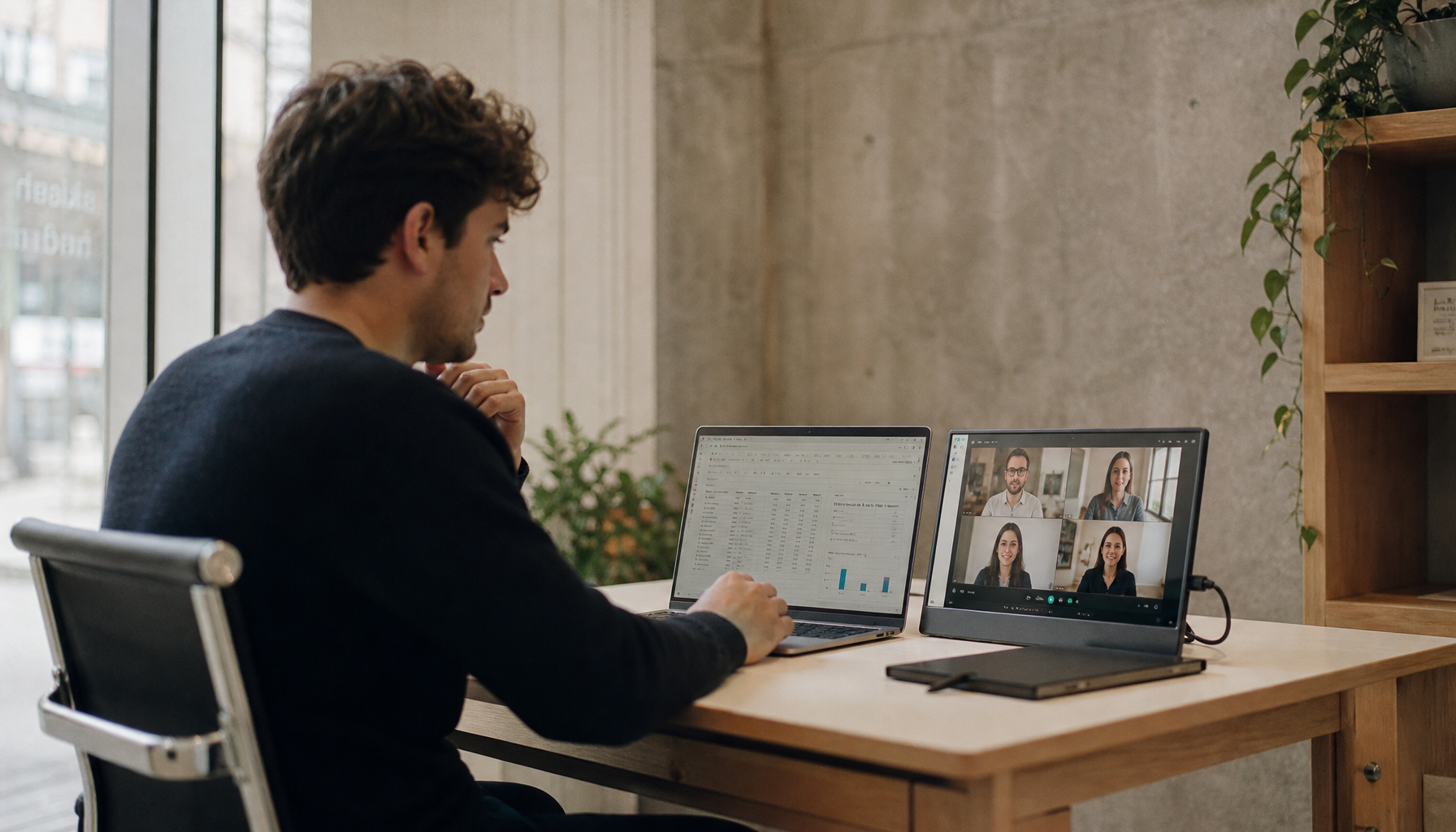
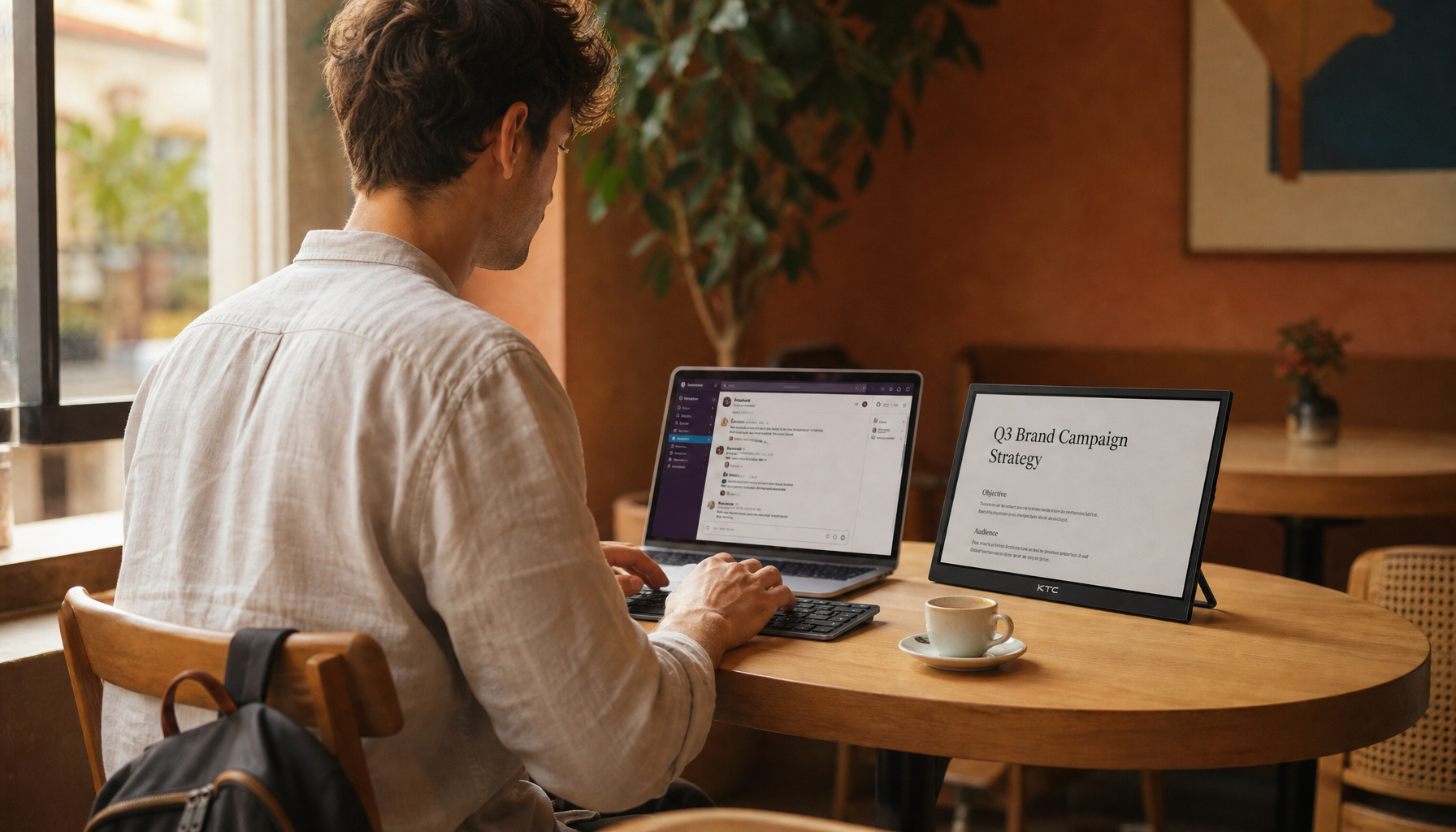
The best monitor position is usually perpendicular to the window, with the screen centered in front of you, about 20 to 30 inches from your eyes, and the top of the panel at or slightly below eye level.
If your monitor looks washed out in the afternoon or turns into a mirror when the sun shifts, the layout is usually the first thing to fix. Small changes like rotating the desk, moving the screen a few inches, and trimming monitor tilt to about 10 to 20 degrees can make text, fast motion, and dark scenes easier to see. You’ll leave with a practical setup plan for standard monitors, ultrawides, and high-refresh-rate gaming displays.
Start With Window Direction, Not Monitor Settings
The best default layout
A perpendicular monitor position is the safest default when a desk sits near a window, because it reduces direct glare and reflections better than facing the glass or putting the window directly behind you. A workplace safety agency also recommends keeping the monitor directly in front of you, no more than 35 degrees left or right of center, which matters even more with wider gaming monitors that tempt people to sit slightly off-axis.

The same layout also helps your eyes adapt to room brightness more easily. Digital eye strain gets worse when glare, poor viewing angle, and awkward posture stack together, and that is exactly what happens when sunlight hits a glossy or semi-gloss display at the wrong angle.
The core measurements that matter
For most desks, a 20 to 40 inch viewing distance works well, with the top of the screen at or slightly below eye level and the screen center roughly 15 to 20 degrees below your horizontal line of sight. If you use a 27-inch 1440p gaming monitor, that usually means the panel sits about an arm’s length away; if you use a 34- to 35-inch ultrawide, you may need a deeper desk or monitor arm to keep the full screen comfortable.
A well-matched screen and room brightness also matters. A very bright screen in a dark room or a dim screen in strong daylight both increase visual fatigue, so placement and brightness should be adjusted together rather than treated as separate problems.
What to Do When the Window Is Behind the Monitor, Behind You, or Beside You
Window behind the monitor
When the window is behind the screen, the monitor often looks dim compared with the bright background. Facing a bright window makes contrast feel weaker, which is especially noticeable on IPS office monitors and entry-level gaming panels during web browsing, strategy games, or dark UI work.
In that layout, rotate the desk first if possible. If the desk cannot move, raise monitor brightness to match the room better, use blinds or drapes to cut peak sunlight, and increase text size or zoom to about 125% to 150% if you are leaning forward to read smaller text on a high-resolution panel.
Window behind you
A window behind the user usually creates the most obvious reflections because the glass is mirrored directly on the display surface. This is where glossy and lightly coated panels struggle most, and it is easy to confirm with a simple test: turn the monitor off and check whether the window shape is clearly visible on the black screen.

This layout is especially rough on high-refresh-rate displays because motion clarity does not help if you cannot see shadow detail or UI contrast. A small desk rotation of even 15 to 20 degrees, combined with blinds, often improves visibility enough that you do not need to replace the monitor.
Window beside the desk
A side window setup is usually the easiest to manage, as long as the monitor remains roughly perpendicular to the glass. Side lighting keeps the room bright without putting the strongest light source directly in front of the screen.
That said, side sunlight can still hit curved ultrawides or tall dual-monitor stacks unevenly. If one half of the panel is brighter than the other, shift the monitor a few inches, reduce tilt, and move shiny desk accessories or lamps that may be bouncing light back onto the screen.
How Screen Size and Monitor Type Change the Setup
Standard 24- to 27-inch monitors
A standard 24- to 27-inch display is the easiest shape to place well because the screen width stays manageable at normal desk depth. With a 27-inch 1440p monitor, the usual ergonomic advice of about 20 to 30 inches of distance aligns well with what most people find comfortable for work and gaming.
This size also makes it easier to keep the full panel inside the recommended downward viewing zone. If you sit too close, you may start raising your chin or scanning the corners more than you should, which can turn a glare problem into a posture problem.
Ultrawide and curved monitors
A 35-inch ultrawide filter listing is a useful reminder that wide displays should be measured by actual width and height, not diagonal size alone. On a 34- to 35-inch ultrawide, the screen can be more than 32 inches wide, so a shallow desk leaves little room to maintain proper distance and angle.
Ultrawides also catch more side light simply because there is more surface area exposed to the room. If your desk sits beside a window, a monitor arm is often more valuable than extra peak brightness because it lets you center the panel, pull it slightly forward, and fine-tune the angle without twisting your neck.
High-refresh-rate gaming monitors
A bright room can make gaming monitors hard to use even when the panel is otherwise fast and sharp. Players often notice it first in SDR desktop use, web pages, and dark game scenes, where reflections flatten blacks and make enemies or HUD elements harder to track.
For most buyers, higher refresh rate does not solve daylight problems by itself. Good placement, decent brightness, and a screen finish that fits the room matter more than jumping from 144 Hz to something higher if glare is still the real bottleneck.
Adjust Settings and Room Lighting Before You Buy Another Monitor
Brightness, contrast, and text size
Brightness should match room light rather than stay locked to one preset all day. In a sunny room, raising brightness can help preserve visibility; in the evening, lowering it reduces fatigue. A moderate contrast range around 60% to 70% is a practical starting point, then tune by eye until white backgrounds stop feeling harsh.
If glare forces you to squint, make text physically easier to read before blaming the panel. Larger fonts, 125% to 150% scaling, and clean contrast often improve real usability more than pushing saturation or sharpness.
Control room light, not just panel light
Glare comes from direct sunlight, overhead lighting, and reflective surfaces, so the fix usually involves the room as much as the monitor. Blinds, drapes, softer task lights, and indirect ambient lighting are all more effective than maxing out brightness and hoping for the best.
A dark room is not automatically better. Visual ergonomics guidance notes that large brightness differences between the screen and the surrounding room can also cause strain, so a balanced setup with controlled daylight is usually better than working in a cave.
Break habits that compound the problem
Computer vision syndrome symptoms include headaches, blurred vision, dry eyes, and neck or shoulder pain, and glare makes all of them more likely during long sessions. The 20-20-20 rule and frequent blinking are simple, testable habits that help when you spend hours on spreadsheets, shooters, or editing timelines.
For longer workdays, the 30/30 micro-break idea is useful too: every 30 minutes, take 30 seconds to stand, stretch, and reset your posture. That will not remove reflections, but it does stop bad positioning from becoming your default.

When Repositioning Is Not Enough
Signs you may need a different monitor
If the room layout cannot change and the window remains a constant light source, your next purchase should prioritize brightness, a practical anti-glare finish, and a stand with real height, swivel, and tilt adjustment. This matters more than cosmetic extras when the monitor will live in daylight every day.
A matte or stronger anti-glare surface usually makes more sense in bright rooms, while glossy finishes tend to look better in controlled lighting. The tradeoff is simple: matte surfaces reduce mirror-like reflections, while glossier finishes often preserve a sharper, punchier look when the room is dark enough to support them.
Accessories that can help
If the panel itself is fine, blinds and a monitor arm are usually the first upgrades worth paying for. After that, an anti-glare or privacy filter can help in fixed layouts, especially on ultrawides, but fit matters: wide displays should be matched by exact viewable width and height, not just the advertised diagonal.
A filter is also a compromise, not magic. It can cut reflections and side visibility, but it may slightly change image clarity or perceived contrast, which matters if you use the same monitor for color-sensitive work and fast gaming.
Quick Comparison Table
Desk and window layout |
Main problem |
Best first fix |
Monitor traits that help most |
Who this fits best |
Window directly behind monitor |
Screen looks dim against bright background |
Rotate desk so screen is perpendicular to the window |
Higher brightness, height-adjustable stand |
Work desks in bright daytime rooms |
Window directly behind you |
Reflections on the panel |
Turn desk 15 to 20 degrees and use blinds |
Matte or stronger anti-glare coating |
Glossy-screen users, video calls, mixed work/gaming |
Window beside desk |
Side glare and uneven brightness |
Keep monitor perpendicular to the window |
Good swivel, monitor arm, moderate brightness headroom |
Most home office and gaming setups |
Large ultrawide near side window |
Wider panel catches more reflected light |
Increase distance and fine-tune angle with an arm |
Wide stand adjustment range, anti-glare accessory option |
34- to 35-inch ultrawide users |
High-refresh gaming monitor in bright room |
Motion stays clear but dark detail washes out |
Fix room light before upgrading refresh rate |
Solid SDR brightness, usable coating, ergonomic stand |
Competitive and daily-use gamers |
Practical Next Steps
Action checklist
- Put the monitor directly in front of you and turn it so the screen is perpendicular to the window.
- Set viewing distance to about 20 to 30 inches for most desks, or farther for large ultrawides.
- Lower or raise the panel so the top edge sits at or slightly below eye level.
- Reduce tilt to roughly 10 to 20 degrees and check for reflections with the screen off.
- Use blinds, curtains, or softer side lighting before relying on max brightness.
- Increase text scaling or zoom if glare makes you lean forward.
- Add a monitor arm or anti-glare filter only after the desk position is as good as it can get.
The practical rule is simple: fix geometry first, then brightness, then accessories. If your monitor is still hard to use after that, the best upgrade is usually a brighter panel with a more suitable screen finish and better stand adjustment, not just a faster refresh rate.
FAQ
Q: Is it better to place a monitor directly in front of a window or perpendicular to it?
A: Perpendicular is usually better because it reduces both background brightness problems and direct reflections. Facing the window often makes the screen feel dim, while putting the window behind you tends to create mirror-like glare.
Q: Do ultrawide monitors handle side windows better than standard monitors?
A: Not automatically. Ultrawides often need more careful angle and distance tuning because the wider panel catches more side light, so they benefit more from deep desks and monitor arms.
Q: Should I buy a matte gaming monitor for a bright room?
A: If your room has strong daylight that you cannot control, a matte or stronger anti-glare finish is usually the safer choice. It will not replace good placement, but it is often more practical than a glossier screen near a window.
References
- a workplace safety agency’s monitor ergonomics
- a university’s digital eye strain tips
- an optometric association on computer vision syndrome
- a medical center’s ergonomics guidance
- a company’s monitor positioning checklist
- an organization’s visual ergonomics
- a company’s monitor settings for your eyes
- a brand’s glare overview
- Ultrawide monitor filter sizing example
- Bright-room gaming monitor discussion