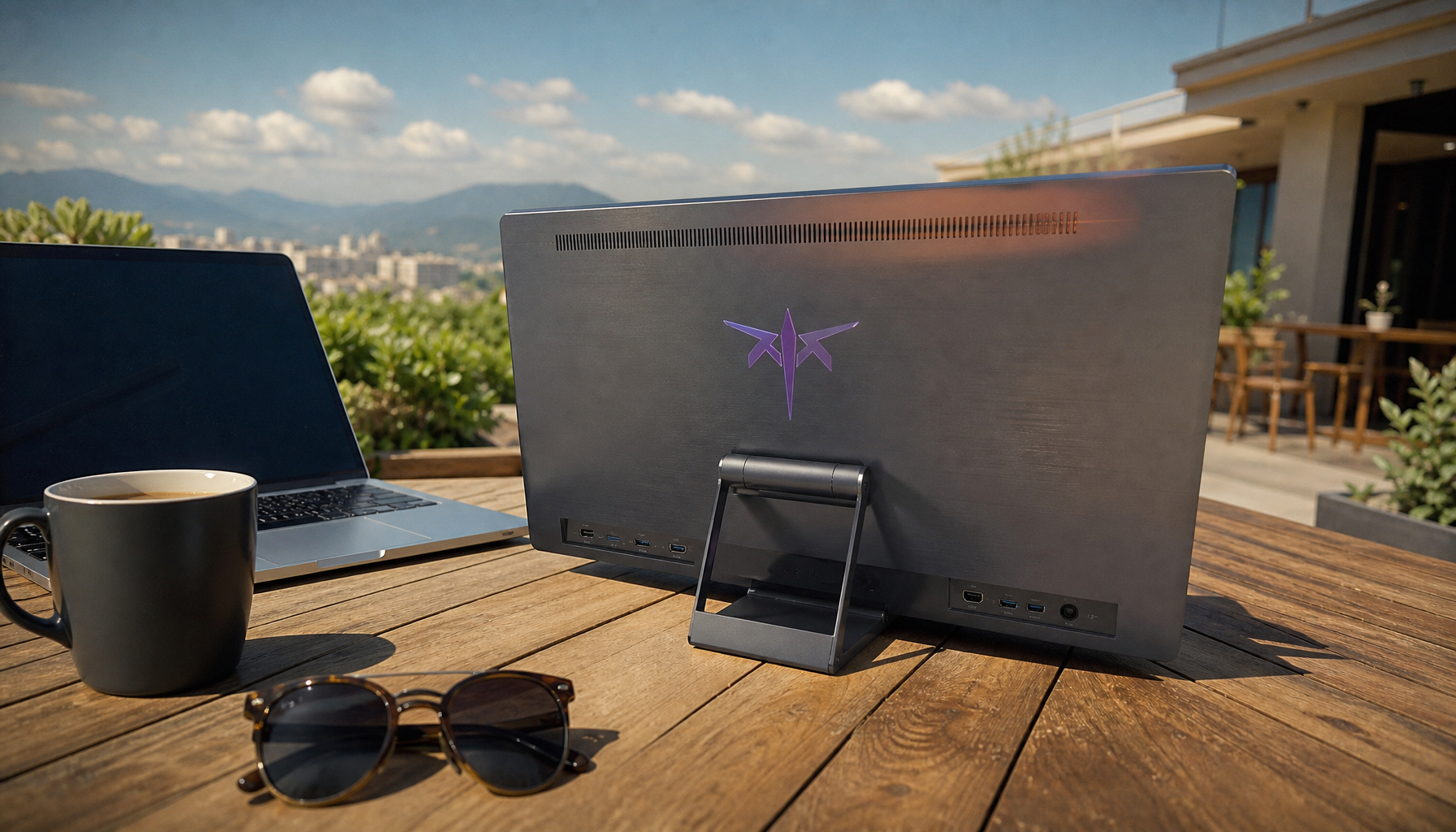
Wireless keyboards and mice act up with KVM switches because many KVMs expect simple wired USB HID signals, while wireless receivers, combo dongles, gaming features, and hotkey emulation add extra translation layers.
The Core Issue: KVM Emulation vs. Wireless Receivers
Many KVM switches keep keyboard and mouse control “alive” by using emulated USB, which buffers input so hotkeys and switching remain responsive. That works well with basic wired devices, but wireless receivers can use transfer behavior the KVM does not fully understand, making wireless keyboard and mouse setups more fragile.
This is why a display setup can look perfect while the mouse stutters or the keyboard misses keystrokes. Video and USB input are separate reliability problems; a clean 4K signal does not prove the USB path is healthy.
Combo receivers add another complication. One tiny dongle may carry both keyboard and mouse traffic, but the KVM may treat its keyboard port and mouse port as separate, specialized channels.
Symptoms You’ll Notice First
The most common failure is inconsistency, not total failure. A receiver may work after a delay, stop after switching PCs, or behave differently depending on whether it is plugged into the keyboard port, mouse port, or USB hub port.
Common signs include mouse lag, DPI drops during fast movement, missed keystrokes during shortcuts, broken Scroll Lock or hotkey switching, a receiver that works on one computer but not another, or devices that recover only after the dongle is unplugged and reconnected.
For gaming monitors and high-refresh productivity displays, mouse instability feels especially obvious. At 144 Hz or higher, even a brief input pause stands out because the screen is updating faster than the control path can keep up.

Port Choice Matters More Than It Looks
Dedicated keyboard and mouse ports are not always generic USB ports. Some are optimized for hotkeys and emulation, while USB hub ports behave more like direct passthrough.
Some manufacturers note that if wireless, gaming, or combo devices fail in dedicated ports, trying the KVM’s USB hub ports can help, though hotkey switching may stop working when the keyboard is moved away from the dedicated keyboard port.
That tradeoff is important. If your priority is stable control, use hub-style passthrough. If your priority is keyboard hotkeys, the dedicated keyboard port may be required.
A practical setup is to place the wireless receiver in a USB 2.0 or USB 3.0 hub port and use the KVM’s front button, remote, or on-screen switching instead of keyboard hotkeys.

Interference, Polling, and Driver Overhead
Wireless input is also exposed to radio noise. USB 3.0 devices, display docks, metal monitor stands, and crowded desk layouts can weaken 2.4 GHz receiver performance, especially when the dongle sits behind a display or near high-speed cables.

Real-world reports show mouse sensitivity drops and missed inputs disappearing when the receiver is connected directly to the PC instead of through the KVM path, pointing to mouse lag from switching hardware, docks, cabling, software, or interference.
Gaming mice can make this worse. A 1,000 Hz polling rate sends far more frequent updates than a basic office mouse, so a marginal KVM path has less room for error. Dropping to 500 Hz can sometimes stabilize control with little visible downside for office work.
Bluetooth-only devices are different from USB-receiver devices because they usually pair directly with the computer, not the KVM.
Quick Fixes Before Replacing the KVM
Start with the simplest path: plug the receiver directly into each computer to confirm the keyboard and mouse are healthy. Then test the KVM one change at a time.

Try these steps:
- Move the receiver from dedicated ports to a USB hub port
- Keep the receiver away from USB 3.0 drives and display cables
- Use shorter, better USB cables between the PC and KVM
- Disable KVM keyboard and mouse emulation if available
- Test a wired keyboard for switching hotkeys
For computers that rely heavily on Bluetooth input, avoid Bluetooth-only keyboards and mice when the goal is KVM switching. A USB receiver peripheral is usually more dependable because it can stay attached to the switch.
The most reliable buying rule is simple: choose a KVM that explicitly supports wireless or combo receivers, offers USB passthrough ports, and gives you a non-hotkey switching option. That protects both the workstation rhythm and the screen experience.