Your display looks dim because the room is competing with the screen. Bright ambient light, reflections, and your eyes’ response to glare can overpower even a monitor set to 100% brightness.
Does your monitor look crisp at night but washed out by 10:00 AM under office lights or beside a window? In real workspace setups, moving the screen, reducing reflections, or choosing a higher-brightness display can make text and dashboards easier to read without forcing you to work in a dark room. Here’s how to diagnose the problem and fix it with practical display and lighting choices.

The Core Issue Is Not Always Your Monitor
A bright office changes how your screen is perceived. The pixels are still emitting light, but overhead fixtures, daylight from windows, glossy desk surfaces, and pale walls all add competing light into your field of view. When that surrounding light is strong enough, the display loses perceived contrast, so black text looks gray, colors flatten, and white backgrounds stop feeling clean.
This is why a 250-nit or 350-nit office monitor can feel fine in a controlled room but underpowered in a sunlit workspace. Brightness is measured in nits, and the right level depends on ambient lighting rather than how impressive a screen looks in a showroom. A standard indoor office may be comfortable around 350 to 500 nits, while bright indoor spaces near windows may need 700 to 1,000 nits for reliable visibility.
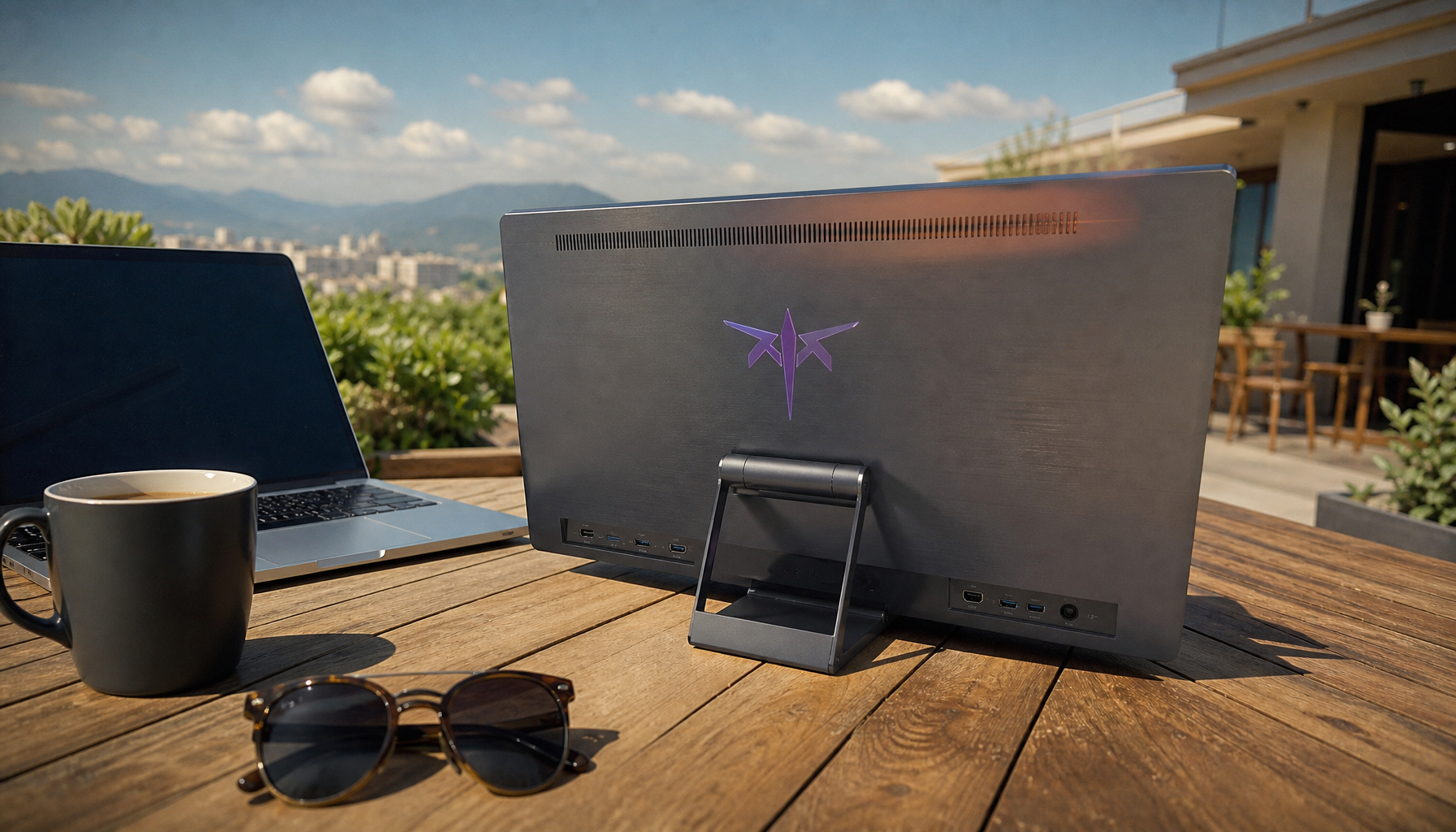
The effect is more obvious on portable smart screens and slim office displays because many are built for mobility, power efficiency, and thinness rather than strong luminance. A portable panel that looks excellent in a hotel room may struggle in a glass-walled conference area.
Brightness, Contrast, and Reflections Work Together
Maximum brightness solves only one part of the visibility problem. A screen can be technically bright but still hard to read if reflections sit on top of the image. That is why a glossy display near a window may look worse than a slightly less bright matte display facing the right direction.
Outdoor and high-ambient-light display design makes this clear. Sunlight reflection can overpower the light emitted by the screen, making content appear dim, blurred, or washed out. The same principle applies indoors at a lower intensity: direct window glare, ceiling light reflections, and shiny monitor coatings reduce effective contrast.
Contrast is the difference between bright and dark parts of the image. If the room adds reflected light to dark areas, black becomes gray. Once that happens, increasing brightness may make white areas brighter, but it does not fully restore image depth. That is why spreadsheet gridlines, code editors, dark dashboards, and video calls can all look flat even at full brightness.
Your Eyes Are Also Adapting to the Room
There is a physiological layer to this problem. In bright environments, your pupils constrict to manage incoming light. That helps protect your vision, but it can also make a screen look less luminous compared with the surrounding office. Users discussing bright-sun screen visibility describe the same everyday limitation: very bright sunlight can make a functioning display appear dim simply because the surrounding illumination is too intense.
In an office, the effect is less extreme than direct sun, but it still matters. If your monitor sits below a bright window or directly under a high-output ceiling fixture, your eyes adapt to the larger bright field around the display. The monitor then has to fight both the lighting and your visual system’s adjustment to that lighting.
A practical test is simple: shade the monitor with your hand or temporarily turn off the nearest overhead light. If text contrast improves immediately, your screen is not necessarily failing. The environment is lowering perceived brightness.

How Office Lighting Makes a Display Look Worse
Office lighting is usually designed for people, paper, meetings, and safety, not always for screen contrast. A well-lit office often targets enough light for task visibility, but that does not mean every desk position is monitor-friendly. General office areas commonly need 30 to 50 lumens per square foot, while detailed work may need more. That level can be productive for reading documents, yet harsh if the light source reflects straight into your display.
Color temperature also affects comfort and perceived clarity. Warmer 3,000K lighting feels softer and more relaxed, while 4,000K and 5,000K lighting appears more neutral or daylight-like. 4,000K lighting is often used for productivity-focused work areas because it supports a sharper, more alert visual environment. But if the fixtures are poorly placed, even good office lighting can create glare.
The goal is not to make the room dark. A dark room with a bright monitor can cause fatigue too. The better target is balanced lighting: enough ambient light for comfort, controlled angles to reduce reflections, and a monitor bright enough for the room.
What Monitor Brightness Specs Really Mean
A nit is a measure of screen luminance. For everyday office monitors, 250 nits is common in budget displays, 300 to 400 nits is typical for stronger productivity monitors, and higher-brightness commercial displays may go far beyond that.
Workspace condition |
Typical display need |
What to expect |
Controlled office away from windows |
250 to 350 nits |
Comfortable for documents, email, and basic productivity |
Bright open office |
350 to 500 nits |
Better readability under overhead lighting |
Desk near large windows |
700 to 1,000 nits |
Stronger defense against daylight and reflections |
Direct sun or window-facing signage |
1,000 nits and above |
Requires high-brightness hardware and reflection control |
Digital signage standards are useful here because they are direct about ambient light. Bright indoor spaces may call for 700 to 1,000 nits, while window-facing displays may need even more. Your office monitor does not need to become a storefront screen, but the comparison explains why a normal 250-nit panel can feel weak beside a wall of glass.
Matte, Anti-Glare, and Anti-Reflective Coatings Matter
Brightness is not the only buying criterion. Anti-glare coatings diffuse incoming light so reflections are less mirror-like. Anti-reflective coatings reduce the amount of reflected light. In bright spaces, a display with stronger reflection handling can outperform a brighter display with a glossy surface.
Sunlight-readable monitors are designed around high brightness, anti-glare or anti-reflective coatings, and strong contrast. That trio is important for office users too, especially gamers, traders, creators, and multitaskers who need stable visibility across long sessions.
There is a trade-off. Heavy matte coatings can slightly soften perceived sharpness or add a grainy look on white backgrounds. Glossy screens can look punchier in controlled lighting but become frustrating near windows. For most productivity desks in bright rooms, a quality matte or low-reflection coating is the more reliable choice.
Panel Type Can Change the Experience
IPS panels are common in productivity monitors because they offer wide viewing angles, stable color, and sharp text. OLED panels deliver excellent contrast and motion clarity, which is outstanding for immersive gaming and media, but many OLED monitors are less ideal for bright office productivity because glossy surfaces, automatic brightness behavior, text rendering differences, and static-interface concerns can matter during long workdays.
For a performance-driven desk, the right answer depends on use. If you spend most of the day in spreadsheets, browser tabs, design tools, and video calls under bright lighting, a bright IPS or IPS Black monitor with strong reflection handling is usually the safer workhorse. If your space is light-controlled and your priority is cinematic gaming, deep blacks, and fast pixel response, OLED becomes more compelling.
Resolution also plays a role, but it will not fix dimness. A 4K panel gives sharper text than 1440p at the same size, yet a low-brightness 4K monitor can still look washed out in a bright room. Treat resolution as clarity, brightness as visibility, and coating as reflection control.
Fix the Room Before Replacing the Monitor
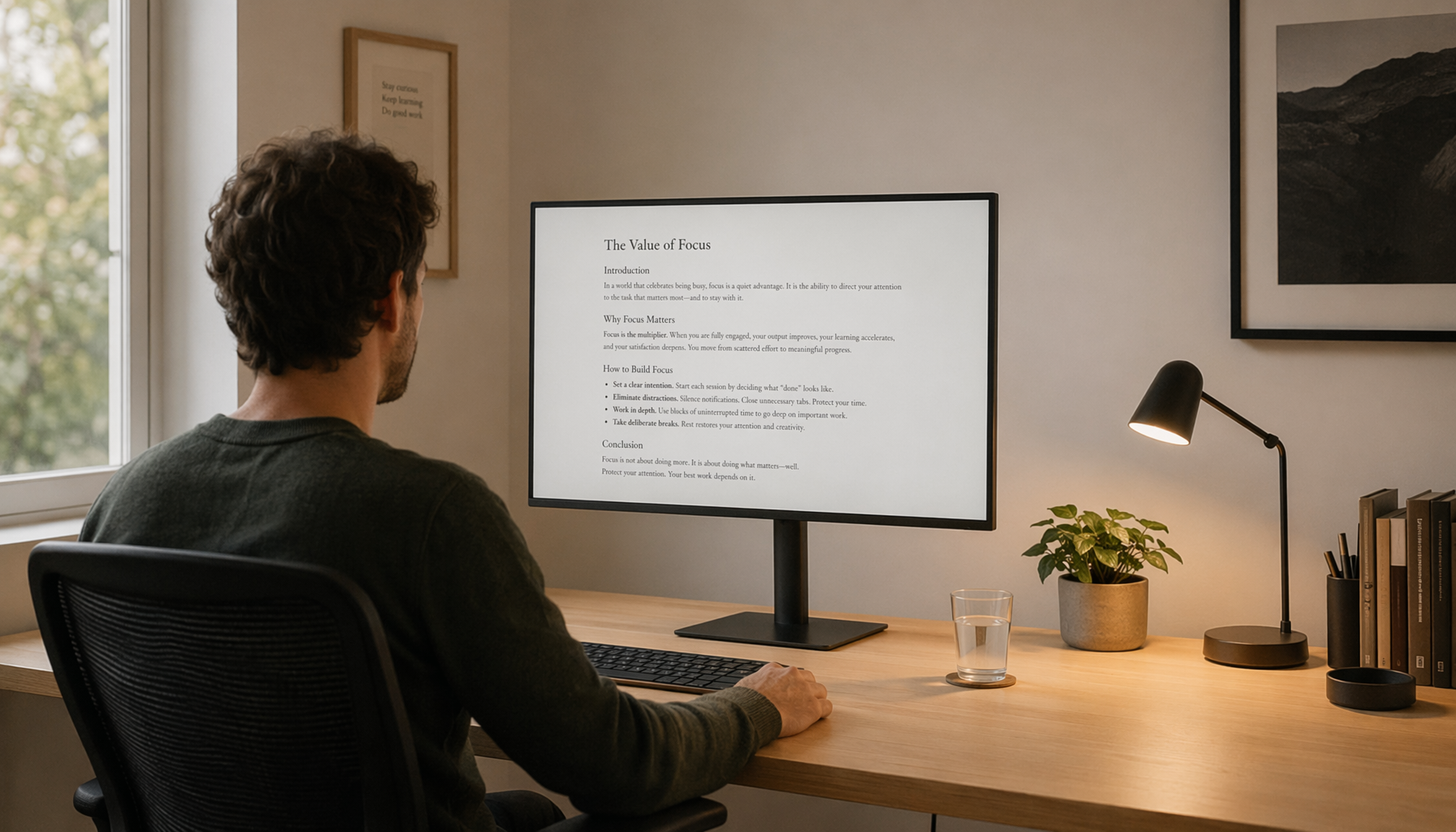
Start with the desk layout. Position the monitor perpendicular to windows when possible, not directly facing or backing onto them. Desks and monitors should avoid direct window reflections so natural light supports the workspace without landing on the screen.

Next, adjust overhead lighting. If your fixture sits directly above or slightly behind you, it may reflect off the panel into your eyes. Moving the monitor a few inches, tilting it slightly downward, or shifting your chair can remove a reflection that brightness controls cannot solve. Light-colored walls and ceilings help distribute light more evenly, but very bright surfaces behind the monitor can still reduce perceived contrast.
Task lighting should support your desk, not attack your screen. A desk lamp aimed at paper or the keyboard is useful; a lamp aimed toward the monitor is not. If you use video calls often, a soft light behind or near the monitor can improve face illumination while keeping the screen readable.

When It Is Time to Upgrade the Display
Upgrade when environmental fixes do not restore comfort. If your monitor is rated around 250 nits and your desk sits in a bright open office or near tall windows, you are asking the display to perform outside its best range. A 350-nit panel may be enough for normal office lighting, but a window-heavy workspace benefits from 400 nits or more, and extreme cases may justify commercial-grade brightness.
For productivity, prioritize brightness, reflection handling, ergonomics, USB-C convenience, and text clarity. A 27-inch 1440p monitor can be a strong value for general work, while 4K becomes worthwhile when you want sharper text, more detailed images, or better creative review space. Modern office features such as USB-C power delivery, hubs, webcams, Ethernet, and daisy-chaining can also improve the whole desk, not just the panel.
Portable smart screens need extra scrutiny. Look beyond size and resolution. Check brightness, coating, stand angle flexibility, USB-C power requirements, and whether the screen can hold usable brightness on battery power. A portable display that dims aggressively to save power may disappoint in a bright office even if its spec sheet looks good.
Pros and Cons of Turning Brightness to Maximum
Running maximum brightness can be the right short-term move. It improves visibility, helps fight mild glare, and can make white documents and dashboards easier to read in bright surroundings. For a competitive gaming monitor or trading display, higher luminance can also help you react faster to subtle visual changes.
The downside is that maximum brightness can increase eye fatigue in darker moments, raise power use, generate more heat, and shorten battery life on portable screens. On some displays, sustained high brightness may also trigger thermal or automatic brightness limits. That is why the best setup is not simply “100% forever.” It is a balanced configuration where the room, coating, and monitor brightness work together.
Quick Diagnostic: Is It the Screen or the Space?
If the image improves when you close blinds, shade the panel, or turn off one overhead fixture, the main problem is ambient light or reflection. If the image stays dim in a darker room, the monitor may have a low brightness ceiling, power-saving mode, incorrect display setting, aging backlight, or laptop setting limiting output.
Also check software controls. Operating system display settings, monitor menus, eco modes, HDR toggles, adaptive brightness, and color profiles can all change perceived luminance. A monitor set to Eco, Reading, or Low Blue Light mode may cap brightness or warm the image enough to feel dull during daytime work.
FAQ
Why does my monitor look bright at home but dim in the office?
The office likely has stronger ambient light, more overhead reflections, or nearby windows. Your monitor may be emitting the same brightness, but the surrounding light reduces perceived contrast.
Is 350 nits enough for office work?
It is usually enough for a typical office away from direct window glare. In a bright open office or beside large windows, 350 nits can feel marginal, especially on glossy screens.
Should I buy a brighter monitor or an anti-glare monitor?
For most office users, get both if possible. A brighter panel helps, but anti-glare or anti-reflective treatment often makes the bigger day-to-day difference when reflections are the real problem.
Can HDR fix a dim-looking office monitor?
Not reliably. Basic HDR support does not guarantee strong brightness or contrast in normal desktop use. For office visibility, high SDR brightness and reflection handling matter more than HDR marketing.
Final Word
A dim-looking display at maximum brightness is usually a workspace visibility problem, not a failure of effort or eyesight. Control reflections first, balance the lighting, then choose a monitor with enough nits, strong coating, and the right panel behavior for your desk. A screen should help you manage the workspace, not make you negotiate with the room all day.