A 4K USB-C monitor usually drops to 30Hz because the connection lacks enough usable video bandwidth. The cause is often the cable, port, dock, or a monitor setting that prioritizes USB data over display performance.
Does your mouse feel heavy, do windows drag like they are stuck in molasses, and does your crisp 4K display suddenly behave like an old TV? A quick isolation pass can usually show whether the bottleneck is the cable, laptop port, dock, or monitor menu setting before you buy anything. Here is how to get back to 4K at 60Hz with the least wasted time and money.
The Short Version: USB-C Is a Shape, Not a Guarantee

The most common trap is assuming every USB-C connection carries the same signal. It does not. USB-C is the connector, while the actual capability depends on standards such as DisplayPort Alt Mode, Thunderbolt, USB4, USB data speed, and USB Power Delivery. A laptop can charge over USB-C and still fail to provide native video output, because DisplayPort Alt Mode must be supported by the source device for direct USB-C video.
At 4K, 60Hz needs far more display bandwidth than 30Hz. When the system cannot reserve enough lanes for video, it negotiates down to a lower refresh rate, lower resolution, reduced color settings, or an unstable signal. In real desk setups, that bandwidth can be consumed by USB hub traffic, Ethernet, card readers, webcams, power negotiation, docks, and the wrong cable.
Why 4K at 30Hz Happens Over USB-C
A 30Hz cap is usually not a “bad monitor” diagnosis. It is a negotiation result. The computer, cable, dock, and monitor decide what mode they can all support, and the weakest link wins.
The cable is the first suspect because many USB-C cables are built for charging, not display. In one laptop community example, a user tried a single-cable USB-C monitor setup with the cable bundled with a laptop power adapter, and the likely issue was that the cable was charging-focused rather than video-capable. After switching to a proper USB-C 4 Gen 2 4K cable, the monitor worked and power delivery came through the same connection. That matches the broader buying reality that identical-looking USB-C cables can differ in data speed, video support, shielding, wattage, and internal wiring.

The port is the second suspect. A USB-C port marked only for charging or basic data may not output video at all, while a DisplayPort Alt Mode, Thunderbolt 3/4, or USB4 port is much more likely to handle a 4K display properly. Practical USB-C video guidance recommends checking the laptop manual and support page for terms like Thunderbolt, DisplayPort Alt Mode, or video output, because USB-C ports vary widely even on premium machines.
The monitor itself can also be the bottleneck, especially if it has a built-in USB hub, Ethernet port, KVM switch, or docking features. Some monitors let you choose whether the USB-C link prioritizes fast USB data or display bandwidth. In one reported 5120x1440 case, the monitor was limited to 30Hz until the user changed the monitor’s on-screen setting from “High Data Speed” to “High Resolution,” after which the display reached 70Hz, with Ethernet speed reduced to roughly 200–300 Mbps. Similar monitor support guidance recommends setting USB-C Prioritization to High Resolution, with the tradeoff that the monitor’s USB hub functionality may be disabled.
The Bandwidth Tradeoff Inside Many USB-C Monitors

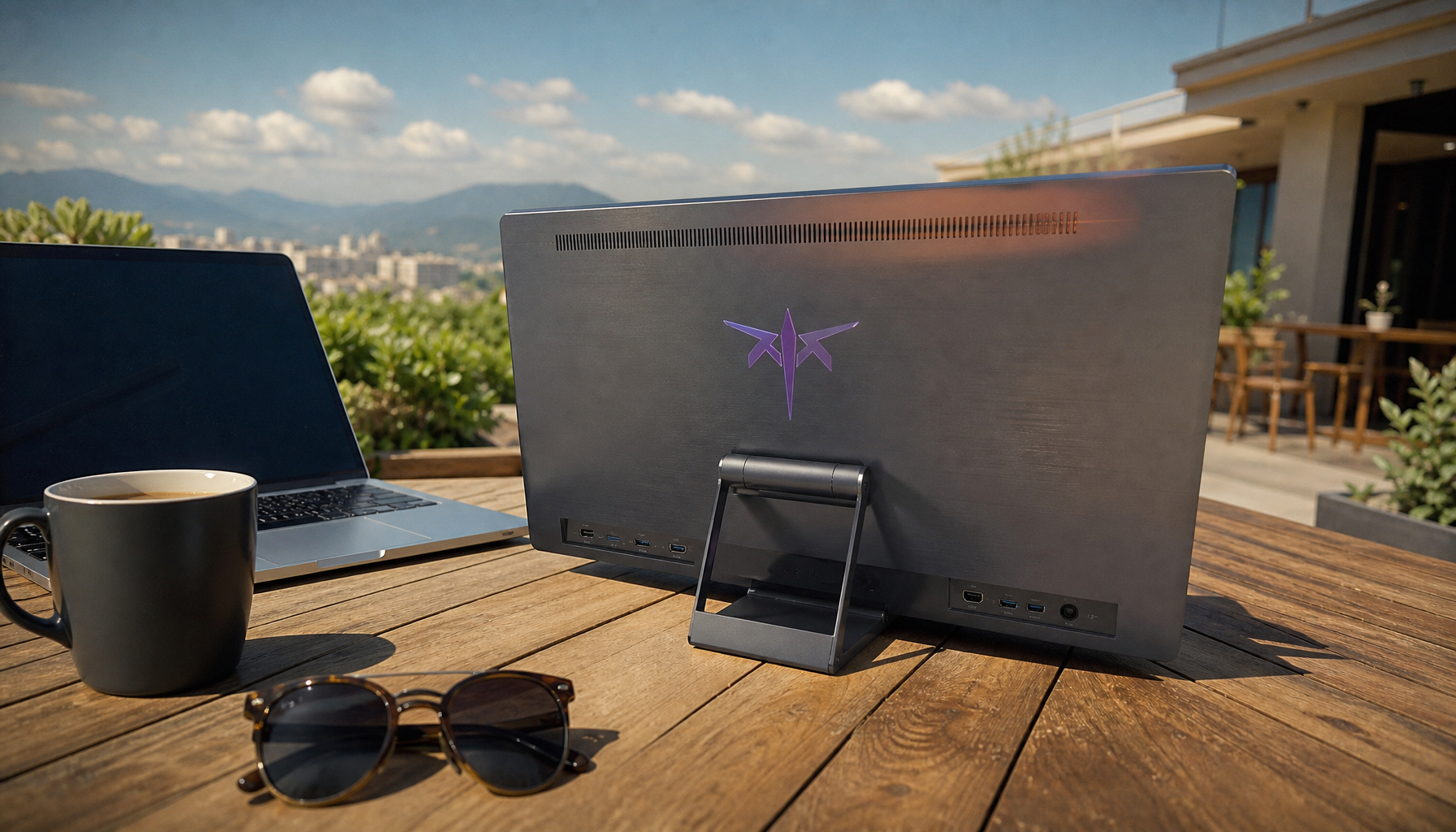
USB-C monitor marketing often promises one-cable simplicity: video, laptop charging, USB devices, Ethernet, and maybe a KVM switch through one port. That is powerful, but it is not magic. The cable has a finite number of lanes, and some modes split them between display and USB data.
For office productivity, that tradeoff may be acceptable. If you mostly run spreadsheets, email, and browser tabs, stable 4K at 60Hz with slower USB accessories is usually better than 4K at 30Hz with a faster built-in hub. For gaming or motion-heavy work, 30Hz is a hard downgrade because cursor movement, camera pans, scrolling, and aiming feel delayed. A pro gaming display should be fed by the highest-bandwidth path you can provide, often USB-C to DisplayPort or Thunderbolt/USB4 rather than a low-cost hub.
Setting or Path |
What It Prioritizes |
Practical Result |
High Resolution USB-C mode |
Display bandwidth |
Better chance of 4K at 60Hz, but slower or disabled USB hub features |
High Data Speed USB-C mode |
USB hub, Ethernet, peripherals |
Better accessory speed, but possible 4K 30Hz cap |
Direct USB-C to monitor |
Fewer failure points |
Best first test for cable and port capability |
USB-C hub or dock |
Convenience and expansion |
Can reduce bandwidth or power stability if underspecified |
USB-C to DisplayPort 1.4 |
Display performance |
Often best for high refresh, but may give up one-cable charging or monitor hub use |
How to Diagnose the Exact Cause
Start with the monitor’s on-screen menu. Look for USB-C Priority, USB-C Mode, USB Hub Speed, High Resolution, High Data Speed, DisplayPort version, MST, or KVM settings. If your goal is 4K at 60Hz, choose the mode that favors resolution or display bandwidth. This is the fastest fix when the monitor is acting like a dock.

Then remove the dock, hub, adapter, and extension cable. Connect the laptop directly to the monitor with one short, known-good USB-C cable that explicitly supports video, DisplayPort Alt Mode, USB4, or Thunderbolt. KTC’s troubleshooting approach is right for performance setups: test one variable at a time, then add the dock and peripherals back only after the direct connection works.
Next, verify the laptop port. Do not rely on connector shape. Check the manufacturer’s specs for DisplayPort over USB-C, DP Alt Mode, Thunderbolt 3, Thunderbolt 4, USB4, or explicit video output language. If the laptop has multiple USB-C ports, test each one. On some systems, one port may route through integrated graphics while another dock or side port may route differently, which can affect available modes.
If the direct cable works at 4K 60Hz but the dock does not, the dock is likely the limiter. Many hubs advertise “4K” but only at 30Hz. A hub that supports 4K at 30Hz is not defective when it refuses 4K at 60Hz; it is doing what it was built to do. Hub troubleshooting guidance notes that 4K at 60Hz needs more bandwidth than 4K at 30Hz, and forcing unsupported modes can cause flicker, black screens, or signal drops.
Cable Buying: What to Look For

For a 4K 60Hz USB-C monitor, buy by capability, not appearance. Look for explicit support for USB-C video, DisplayPort Alt Mode, USB4, Thunderbolt 3/4, or at least a reputable 10 Gbps USB-C 3.1/3.2 Gen 2 rating when the monitor maker recommends it. For higher-refresh gaming displays, a short certified USB-C to DisplayPort cable with DisplayPort 1.4 support is often the cleaner performance choice.
Cable length matters. A longer cable can be convenient on a standing desk, but signal integrity gets harder as distance increases. A short cable, around 3 ft when practical, is usually the most reliable starting point for 4K testing. If your monitor works with the included short cable but fails with a longer cable, the cable is not just an accessory; it is the bottleneck.
When Drivers and Firmware Matter
Hardware negotiation causes many 30Hz cases, but software can still matter. If the correct cable, direct connection, and monitor priority mode still do not expose 60Hz, update the laptop’s graphics driver, chipset driver, USB-C or Thunderbolt driver, BIOS/UEFI firmware, and monitor firmware where available. Support discussions commonly point users toward manufacturer drivers first, then rollback or clean reinstall paths when a display mode disappears after an update.
Do not start with exotic driver surgery when a charging-only cable is still in the chain. For a value-oriented workflow, prove the physical path first. Once the direct hardware path is known good, driver updates become a focused fix rather than a guessing game.
Pros and Cons of One-Cable USB-C
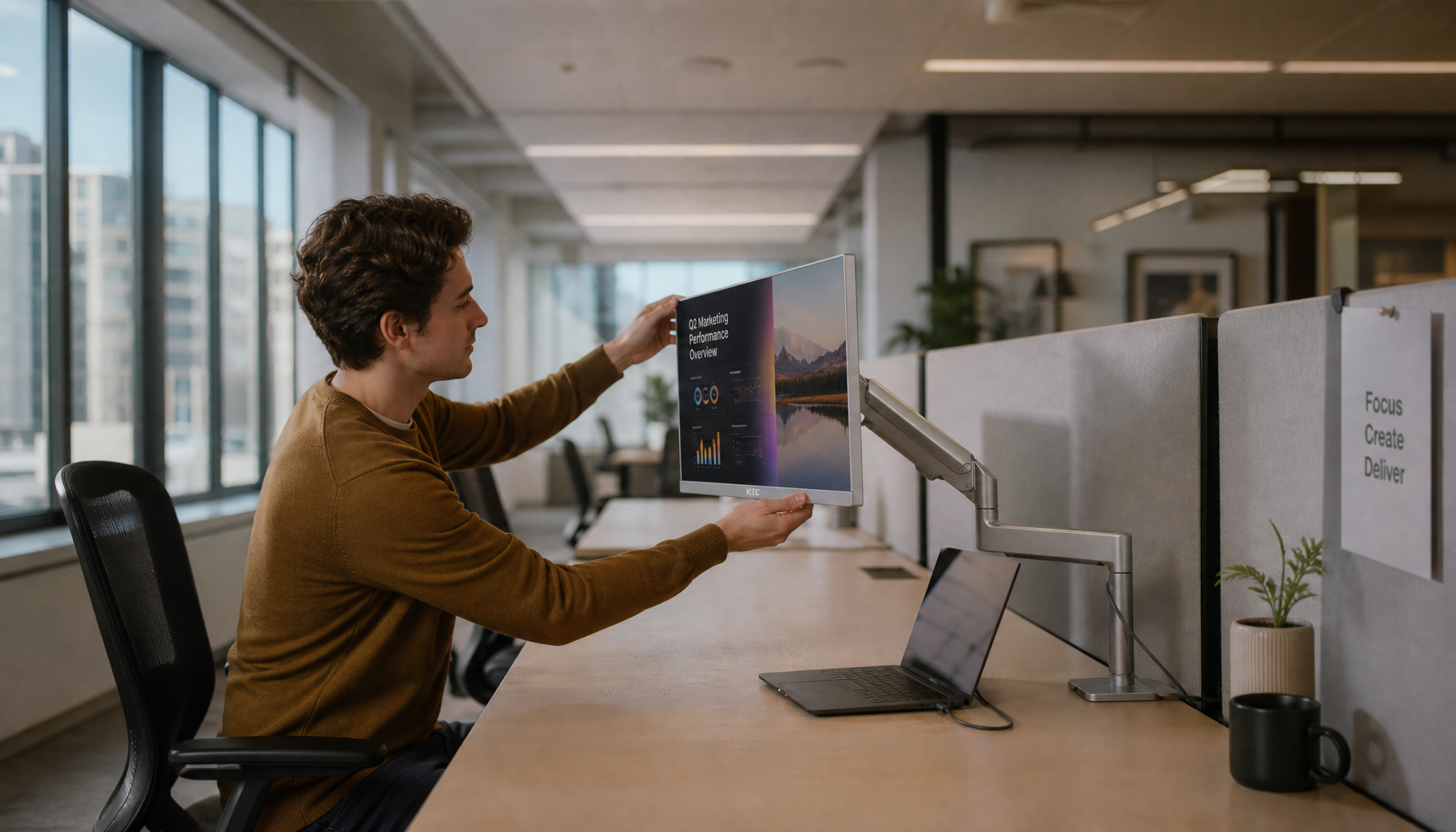
One-cable USB-C is excellent for clean desks, hot-desking, and portable smart screen setups. It can carry video, charge a laptop, connect a keyboard and mouse, and reduce clutter. Monitor buying guidance highlights that modern USB-C monitors can act as a display, USB hub, laptop charger, and sometimes a network dock, but DisplayPort Alternate Mode and Power Delivery are not guaranteed just because the port is USB-C.
The downside is shared bandwidth and compatibility ambiguity. A full desktop chain with 4K video, Ethernet, webcam, SSD, keyboard, mouse, and charging asks a lot from one connector. For competitive gaming, color-critical creative work, or high-refresh productivity, separating video from accessories may be more reliable: use DisplayPort or Thunderbolt for the display path, then use a hub for lower-priority peripherals.
Quick FAQ
Why does 30Hz feel so bad if the resolution is still 4K?
Resolution controls sharpness, while refresh rate controls how often the image updates. At 30Hz, motion updates half as often as 60Hz, so pointer movement, scrolling, window dragging, and game motion feel less responsive even though text still looks sharp.
Can HDMI fix it?
Sometimes. If your USB-C path is bandwidth-limited, direct HDMI or DisplayPort may expose 4K 60Hz. The tradeoff is that you may lose USB-C monitor features like charging, KVM switching, Ethernet, or daisy chaining.
Is Thunderbolt automatically better?
Thunderbolt is usually better for demanding monitor setups because it offers higher bandwidth and stronger docking support. Thunderbolt 3 commonly supports up to two 4K displays at 60Hz, while Thunderbolt 4 also targets strong multi-display capability; the exact result still depends on the laptop, dock, cable, and monitor.
Final Word
Treat 4K 30Hz as a signal-path problem, not a mystery. Set the monitor to High Resolution mode, use a short video-rated USB-C or Thunderbolt cable, verify that the laptop port supports DisplayPort Alt Mode, and bypass the dock until the direct connection proves 4K at 60Hz. A clean 60Hz desktop is not a luxury; it is the baseline for a display that feels as sharp as it looks.