A rolling smart display for fitness is most useful when your workout space changes from session to session. In a small home gym or a multi-use room, the goal is not just a big screen. It is a screen you can see clearly, move easily, and park without turning the room into a cable problem.

Why Placement Matters in a Home Gym
A rolling smart display helps most when the room has more than one job. A spare bedroom, living room corner, or cleared hallway may need to switch from yoga mat to cardio to storage within the same day. In that kind of space, fixed placement can become the part that gets in the way.
The real trade-off is simple: the screen should support the workout flow, not force the room to rearrange around it. If the display blocks a walking path, sits too close to the mat, or makes you hunt for a plug every time, the setup will feel annoying fast. The portable touch displays collection is the cleanest place to browse the category if you want to compare mobile options first.
For most people, the best setup is the one that stays easy to move and easy to read. If you only work out in one permanent spot, a fixed display can still make sense. If your room changes often, mobility usually matters more than a permanent mount.
Best Placement Options for Workout Rooms
For a rolling smart display for fitness, the best spot is usually the one that matches the workout pattern, not the nearest outlet. A corner or side-wall position often works well in a shared room because it keeps the center floor open for movement. That matters when the same room also holds furniture, storage bins, or walking space.
Living Room Workout Corner
A living room corner works best when the room has to reset after each session. The display can face the main exercise area, then roll back out of the way when you finish. This is especially helpful for evening floor workouts, when you do not want a screen or stand sitting in the middle of the room afterward.
Spare Bedroom Gym Setup
A spare bedroom is often a better fit when the display can live near the workout zone but still move around easily. The key question is whether the room has enough open space to roll the screen without bumping into dumbbells, a bench, or a storage shelf. If the room feels tight when you walk past it, it will feel tighter during a workout.
Wall, Floor, and Walkway Clearance
Do not place the display where the cable path becomes part of the workout path. Leave enough room for a mat, a step-back zone, and a clean lane for rolling the display aside afterward. In practical terms, if the screen makes you twist around it or step over cords, the layout needs to change.
This is also where the Rolling Smart Display for Home Office and Kitchen guide is useful as a room-sharing reference, because the same placement logic applies when one screen has to move between activities.

Rolling Versus Fixed Setup
A rolling setup is best when the room changes often. A fixed setup is better when the screen never moves and the viewing angle stays predictable. That is the main decision, and everything else comes after it.
| Setup Type | Mobility | Setup Effort | Cable Dependence | Screen Size Feel | Best Fit |
|---|---|---|---|---|---|
| Rolling display | High | Lower after the first setup | Moderate, because you still need slack | Feels large and easy to follow | Shared rooms, small gyms, frequent repositioning |
| Fixed monitor | Low | Lower day to day if the room never changes | Usually lower once installed | Often more stable visually | Dedicated room, permanent desk or wall spot |
| Tablet + stand | Very high | Very low | Low | Can feel small from across the room | Tight spaces, short sessions, quick setup |
A tablet stand is compact, but it can feel undersized when the viewer is a few steps away or lying on the floor. A fixed monitor can also be the cleaner choice if the room never changes and you do not want to think about wheels, parking, or cable slack. The rolling option wins when convenience is tied to flexibility rather than permanence.
In other words, if you are rebuilding the room before every workout, the rolling setup is usually the better fit. If you never move the screen, a simpler fixed display may be easier to live with.
What Features Matter Most
The most important features for sweaty, move-anywhere workouts are mobility, power flexibility, and readability. A fancy spec sheet is less useful than a setup that stays stable, survives repeated repositioning, and remains easy to see from standing or floor-based exercises.
Mobility and Base Stability
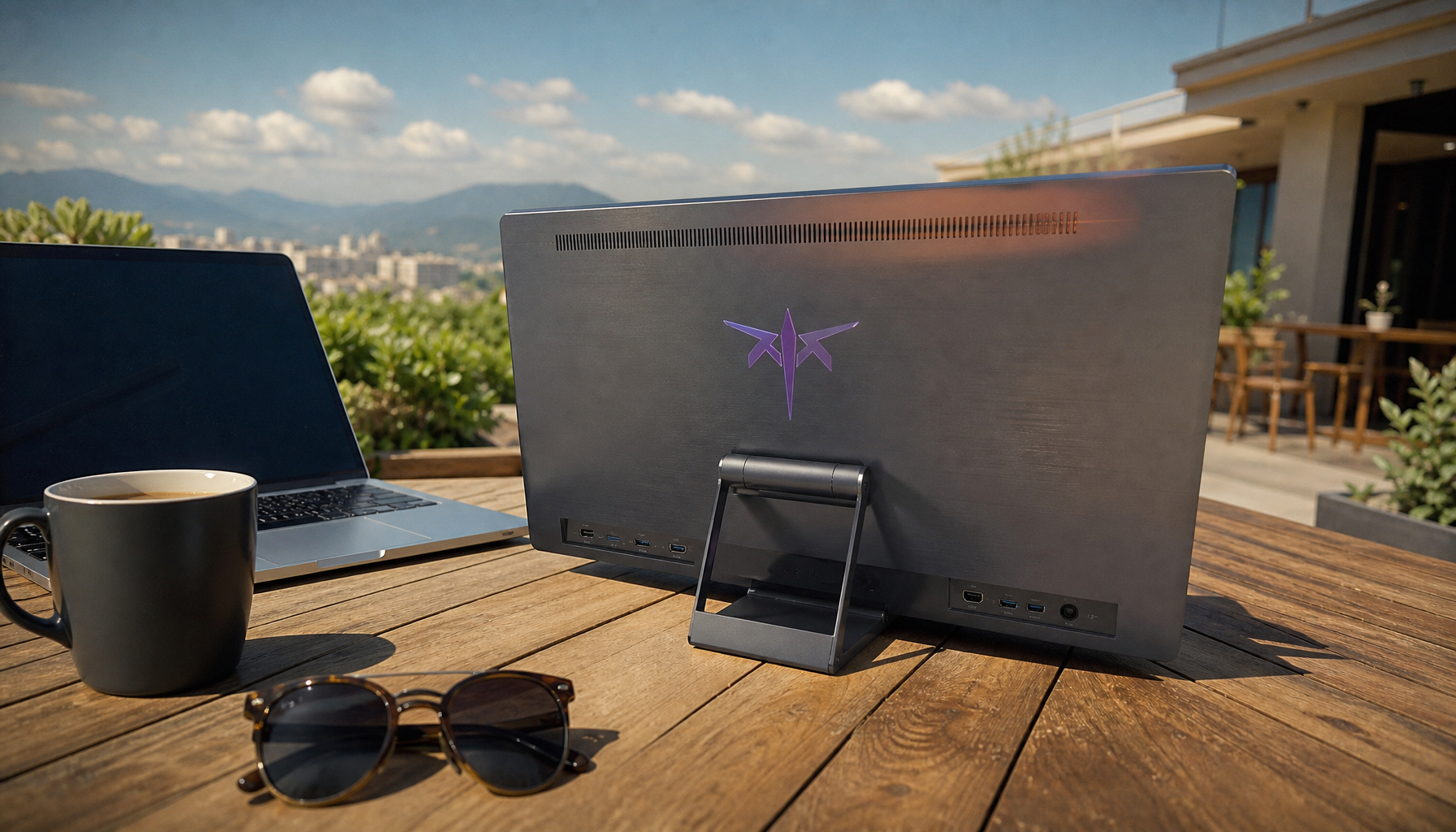
A wheeled or movable base matters when the display needs to shift between cardio, mat work, and storage. The KTC MEGAPAD 32" 4K Android 13 Google EDLA Smart Touch Monitor with 9500mAh Battery includes a wheeled base and adjustable height, which makes it a natural reference point for this kind of room-shared setup. That does not make it the only option, but it does show what a mobility-first design looks like.
The practical check is simple: if the screen wobbles when you tap it or adjust it, it is not settled enough for a workout corner. Mobility only helps when the base still feels planted during use.
Battery, Power, and Cable Dependence
Battery-backed use can reduce outlet hunting in apartment layouts and odd corners. The same 32-inch MEGAPAD model lists a 9,500 mAh battery and up to 11 hours of runtime claimed, while the collection page also shows other battery-equipped MegPad options for mobile use. That said, runtime in real use can vary with brightness, casting, and volume, so the safer buying question is whether battery support reduces cable friction in your room.
The portable touch displays collection is helpful here because it groups the battery-backed models in one place. If your outlet is already close and the screen will never move, battery capacity matters less.
Screen Size, Glare, and Touch Use
A larger screen is easier to follow from a few feet away, especially for workout videos, timers, and quick form checks. The 32-inch MEGAPAD uses an anti-glare 4K touch screen, which is useful in rooms with mixed lighting or daylight. The product page also lists dual 6W speakers, which can help if you prefer not to rely on a separate speaker during workouts or classes.
The key is not that bigger is always better. The key is that a larger panel becomes more helpful as viewing distance increases. If you usually work out close to the screen, a smaller model may be easier to place.
For shoppers comparing categories, the Smart Monitor collection is the better browse path if you want a fixed-style display instead of a rolling touch display.
Workout App Setup and Content Flow
The easiest workout session is the one that starts before you start moving. Open the app, streaming source, or casting path first, then place the screen where it stays visible from both standing and floor positions. That keeps the workout from turning into a setup break.
- Choose the workout source you already use most often.
- Place the screen where you can see it from standing and mat positions.
- Test the audio and touch response before the session starts.
- Save shortcuts or recent apps so the next session begins faster.
- Recheck cable slack and wheel position before moving the display again.
The MEGAPAD manuals support this kind of low-friction workflow by emphasizing Wi-Fi setup, HDMI input, wireless casting, and keeping cables loose after height or angle changes. They also stress that the unit should stay upright during movement and that the screen should be kept dry. That makes the session flow easier when you treat the display like a room fixture that still needs some care.
If you want a simple browse starting point for the product class behind that workflow, the KTC MEGAPAD 32" 4K Android 14 Google EDLA Smart Touch Monitor with 8550mAh Battery is the model most closely aligned with a workout-room mobility setup.
Final Setup Checks Before You Roll Out
Before you roll the display into workout position, check the stability, cable slack, path clearance, and viewing angle. If any of those feel awkward in the dry run, they will feel worse once you start moving.
- The display should stay stable when you tap the screen or adjust the angle.
- Cables should have enough slack to move safely without pulling the source device.
- The path between rooms should stay clear for rolling, turning, and parking.
- The screen should be easy to read from standing and floor-based positions.
- If the route feels tight, change the room layout before you use the screen.
This is the point where the setup either feels convenient or starts creating small daily annoyances. A rolling smart display for fitness works best when it moves smoothly, parks cleanly, and does not make you think about it between sessions.
How Much Space Does a Rolling Smart Display Need for Home Workouts?
There is no single room-size rule that fits every home gym. What matters more is whether you have enough clearance for the workout itself, the display base, and the path you use to roll it aside. A small room can still work if the floor plan stays open where you actually move. Check the base footprint against your mat area first, then test a full rolling path with the screen at full height.
Can I Use a Rolling Smart Display in a Humid Workout Room?
You can use one in an exercise room if you keep the screen dry and follow the care guidance. The safer rule is to avoid direct moisture on the panel and not treat it like a splash-resistant device unless the product explicitly says so. Sweat nearby is one thing, but wet hands and damp screens are the bigger issue. Wipe the panel after sessions in humid spaces.
What Screen Size Works Best for Workout Videos?
Larger screens are easier to follow from across the room, while smaller screens can work better in tight spaces. If you are standing several feet away or following floor work, a larger display usually feels easier to read. If the room is compact, a smaller screen can be the better compromise. Test both distances before buying.
How Do I Keep Cables From Getting in the Way During Exercise?
Give the cables enough slack to follow the screen as it moves, and route them away from walking paths. It also helps to test the rolling path before the workout starts. If a cord crosses the route you use to step, stretch, or park the display, the cable run needs to be changed. Use Velcro ties or a short extension to keep slack tidy.
Can I Use One Display for Workouts, Streaming, and Video Calls?
Yes, if the apps, inputs, and network setup support those uses. A rolling smart display is often most practical when it does more than one job, but that only works if switching between workout videos, entertainment, and calls stays simple. A multi-use screen is valuable when it reduces setup, not when it adds it.
A Clean Fit for Small Workout Spaces
A rolling smart display for fitness makes the most sense when the room has to do more than one job. If you need mobility, cleaner cable handling, and a screen that can move after the session, a rolling setup is usually the smarter choice. If your screen never moves, a fixed monitor is simpler. The best fit is the one that makes the room easier to use tomorrow, not just today.
FAQs
How Much Space Does a Rolling Smart Display Need for Home Workouts?
There is no single room-size rule that fits every home gym. What matters more is whether you have enough clearance for the workout itself, the display base, and the path you use to roll it aside. A small room can still work if the floor plan stays open where you actually move.
Can I Use a Rolling Smart Display in a Humid Workout Room?
You can use one in an exercise room if you keep the screen dry and follow the care guidance. The safer rule is to avoid direct moisture on the panel and not treat it like a splash-resistant device unless the product explicitly says so.
What Screen Size Works Best for Workout Videos?
Larger screens are easier to follow from across the room, while smaller screens can work better in tight spaces. If you are standing several feet away or following floor work, a larger display usually feels easier to read.
How Do I Keep Cables From Getting in the Way During Exercise?
Give the cables enough slack to follow the screen as it moves, and route them away from walking paths. It also helps to test the rolling path before the workout starts.
Can I Use One Display for Workouts, Streaming, and Video Calls?
Yes, if the apps, inputs, and network setup support those uses. A rolling smart display is often most practical when it does more than one job.