Keep one layer in charge of color: use the monitor preset for physical behavior, the operating system ICC profile for translation, and the GPU driver for signal format, refresh rate, scaling, and game-specific overrides.
Does your monitor look perfect in its sRGB preset, then suddenly too warm, washed out, crushed, or oversaturated after a driver update or reboot? A disciplined setup gives you a testable benefit: the same image, document, and game menu should look consistent after sleep, restart, app launch, and profile switching. Here is how to separate display presets from GPU color controls so they stop fighting each other.
Why Presets and GPU Color Settings Collide
A display preset is the monitor’s internal recipe. It may change brightness, contrast, white point, gamma, color gamut, HDR behavior, overdrive, and sometimes whether manual controls are locked. On a gaming monitor, FPS, Racing, Cinema, sRGB, DCI-P3, and User modes are not cosmetic labels; they can remap the panel’s output before the computer ever sees the result.
GPU driver color management sits upstream. Driver control panels can alter output color depth, dynamic range, gamma, brightness, contrast, saturation, hue, sharpening, HDR state, and scaling. When both the monitor and GPU driver try to improve the picture, the result is often double correction. A wide-gamut monitor in a vivid preset plus a GPU saturation boost can make web photos look radioactive. A monitor locked to sRGB plus a custom ICC profile built for wide gamut can make creative work look flat or inconsistent.
The core principle comes from color management itself: color management exists because different devices need a shared, device-independent way to describe and translate color. The ICC approach is not magic; it only works when each device is in a known state. Change the monitor preset after profiling, and the profile may no longer describe the display you are actually using.
Define the Control Stack Before You Touch Sliders
The Monitor Should Control Physical Output
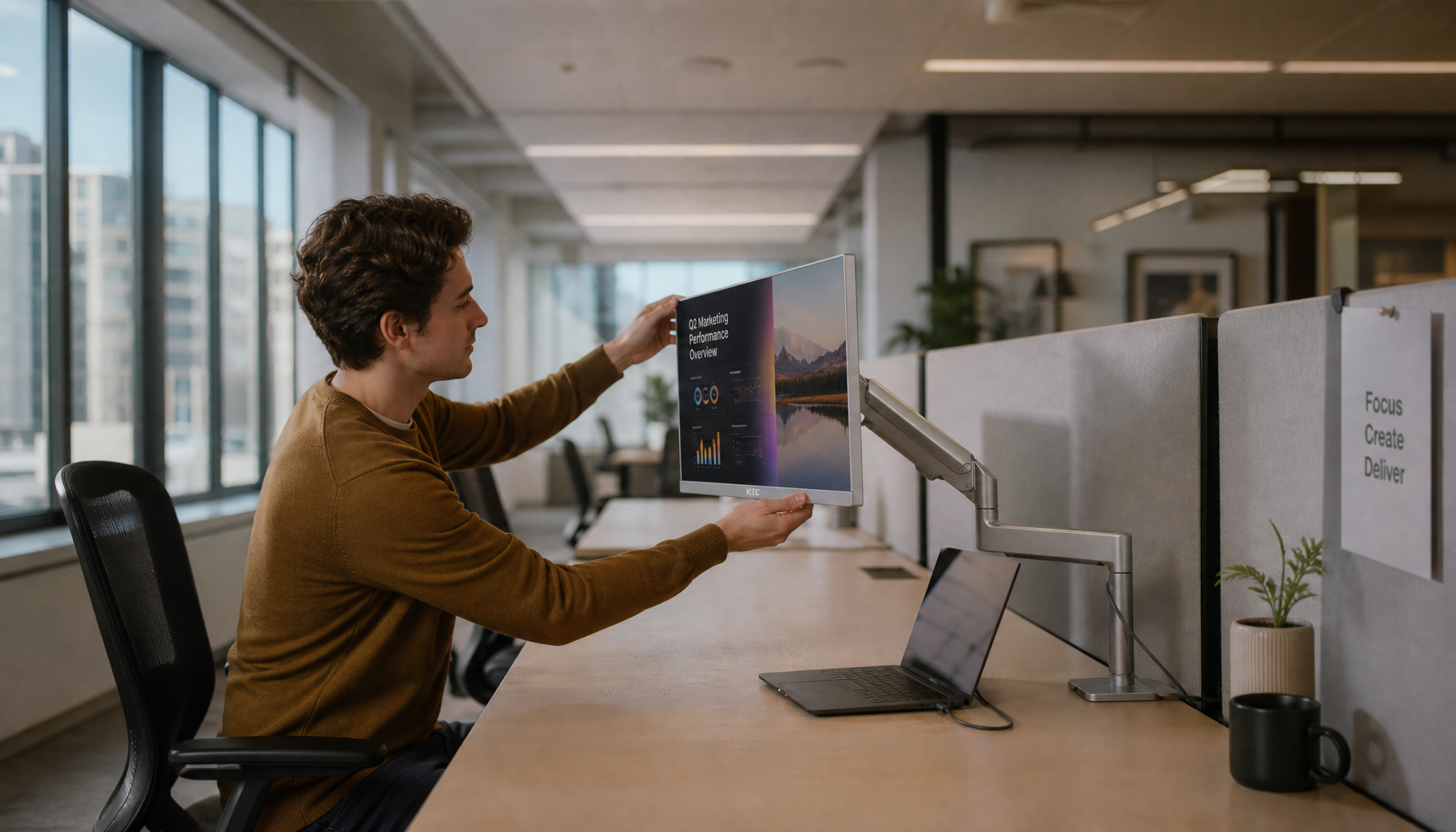
Use the monitor’s on-screen display for hardware-level behavior: brightness, contrast, local dimming, black equalizer, response time, overdrive, adaptive sync, and a stable base preset. For office productivity, that usually means a Custom or User mode with comfortable brightness and a neutral white point. For competitive play, it may mean a low-latency gaming preset, but avoid color boosts unless visibility matters more than color accuracy.

For creative work, the best baseline is usually sRGB for web output, Adobe RGB or DCI-P3 only when the job demands it, and a calibrated custom mode when your display supports reliable profiling. The practical reason is that each device has its own color space, so you should not edit photos in a random vivid preset and expect prints, phones, and browsers to agree.
A real-world example: if your portable OLED screen is in P3 mode while the operating system and browser assume sRGB, standard web colors can look oversaturated. Switching the monitor to sRGB for browser and office work often produces a calmer, more reliable image than trying to compensate with GPU saturation controls.
The Operating System Should Own ICC Profiles
The ICC profile tells color-managed applications how your display behaves. Calibration sets the display into a known state; profiling describes that state so software can translate color correctly. This distinction matters because calibration and profiling are two tasks people often merge into one vague calibration step.

In practice, create or assign one ICC profile per stable monitor preset. If you calibrate your display in Custom mode at a comfortable luminance, do not later switch to FPS mode and expect that same profile to remain valid. If you need separate workflows, name them clearly: “27-inch sRGB Office,” “27-inch P3 Video,” or “Print Display Adobe RGB.” The name should tell you which monitor preset was active when the profile was made.
A profile appearing in the system profile utility does not guarantee the visible output is changing if another preset, system mode, or display pipeline is overriding it. If calibrated D65 and D50 profiles remain visible but the display appearance does not change, test after restart and check whether a system preset is taking priority.
The GPU Driver Should Stay Neutral for Color
Treat the GPU driver as a transport and performance layer unless you have a specific reason to use it for correction. Set output color format, bit depth, refresh rate, variable refresh, and scaling there. Leave brightness, contrast, gamma, hue, and digital vibrance at defaults for color-sensitive work.

For gaming, GPU color tweaks can be useful, but they should be profile-specific rather than global. A small vibrance increase for a competitive shooter may help visibility, but leaving that same boost active while editing product photos or building presentation slides is a classic conflict. The performance-driven compromise is simple: keep global driver color neutral, then use per-game settings where the driver supports them.
Layer |
Best Used For |
Avoid Using It For |
Monitor preset |
Brightness, gamut mode, HDR behavior, response tuning |
Frequent color shifts after profiling |
Operating system ICC profile |
Color translation for apps and workflows |
Fixing a badly chosen monitor preset |
GPU driver |
Refresh rate, bit depth, range, scaling, adaptive sync |
Global gamma, saturation, and contrast tweaks |
Application settings |
Soft proofing, document color spaces, export intent |
Overriding a broken display pipeline |
Build Conflict-Proof Presets
Start With One Known-Good Baseline
Choose the monitor preset first, then leave it alone long enough to test it. For most office and web use, sRGB or Custom mode is the safest baseline. For HDR gaming, use HDR mode only when HDR is actually enabled and supported by the game or video. For photo and video work, match the preset to the delivery target: sRGB for web, P3 for modern video review, and Adobe RGB only when the full workflow supports it.
Color errors can enter at capture, editing, and delivery, not just at the monitor. A file prepared for the wrong destination can shift badly even if the screen looks beautiful, which is why the delivery color space matters as much as the display mode.
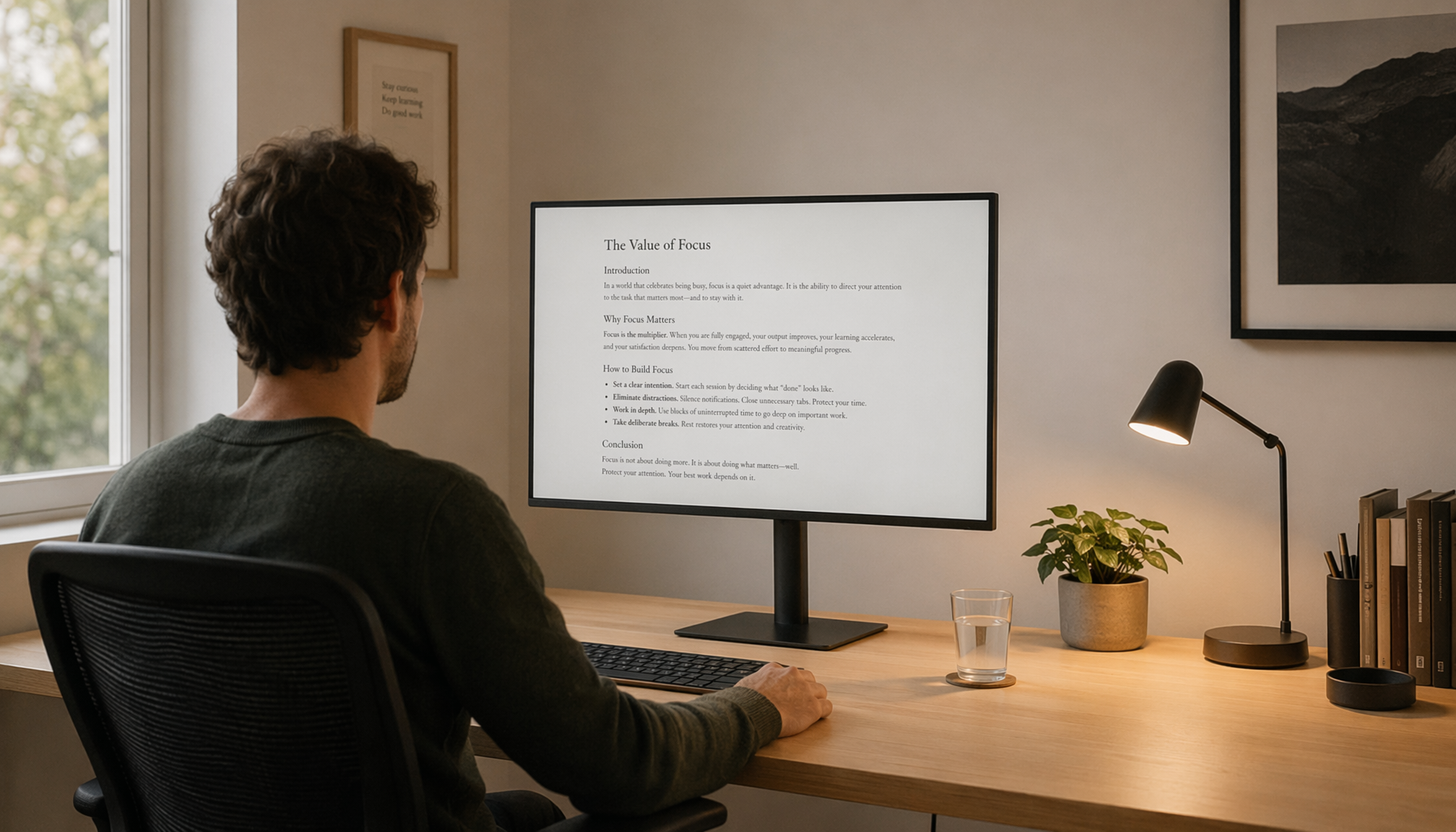
After selecting the preset, reset GPU color controls to default. Then set the operating system to the recommended native resolution and correct scaling. A non-native resolution can soften text and make interface judgment harder, while scaling changes interface size without changing the panel’s actual pixel grid. For productivity displays, that distinction matters: crisp text reduces fatigue more reliably than lowering resolution to make things bigger.
Calibrate After the Preset, Not Before
Calibration should happen after the monitor is in the preset you actually plan to use. Let the panel warm up first, especially for color-critical work. Display behavior changes over time through use, so both calibration and profiling are needed.
A practical setup might look like this: set your 27-inch office monitor to Custom, choose a comfortable brightness for your room, set color temperature near D65 if available, reset GPU color controls, then create or assign the ICC profile. For a laptop plus portable screen, repeat the process per display instead of copying one profile across both panels. Two screens may share resolution or model family, but their white point and gamut behavior can still differ.
The advantage is repeatability. The downside is discipline. If you switch presets often, color accuracy will be less stable unless your monitor supports hardware calibration slots or you maintain matching ICC profiles for each preset.
Stop Common Override Loops
Disable Global Enhancers That Rewrite Color
Blue-light filters, HDR auto switching, gaming overlays, eye-comfort modes, and vendor enhancement engines can all change color temperature or gamma. They are not bad features, but they are not neutral. Accessibility guidance describes comfort features as tools that shift color or apply overlays, which means they should be scheduled and understood rather than left as mystery variables.
For office work at night, a warmer tone can be the right choice. For editing product images, proofing a deck, grading video, or choosing brand colors, it should be off. The user-empowering approach is not to ban comfort modes; it is to create a Color Critical mode where they are disabled and a Long Session mode where comfort wins.
Watch HDR and Wide-Gamut Modes
HDR adds another possible conflict because it changes the tone-mapping path. A monitor can be in an HDR preset while the operating system, GPU driver, and app each make different assumptions about SDR and HDR content. If SDR content looks gray or too bright after launching a game, check whether HDR stayed enabled globally.
Wide-gamut displays create a similar trap. A P3 or Adobe RGB preset can be excellent in the right workflow, but unmanaged apps may send ordinary sRGB values without proper conversion. The result is oversaturation, not better color. For mixed office, browser, and gaming use, sRGB remains the most predictable everyday preset. For creative review, switch intentionally and verify that the app is color managed.
Keep Driver Updates From Resetting Your Work
GPU driver updates can reset color range, bit depth, scaling mode, and sometimes custom color settings. After any major driver update, check output dynamic range first. On many desktop setups, limited RGB can make blacks look washed out, while the wrong range into a TV-like display can crush shadow detail. Then confirm refresh rate, resolution, HDR state, and ICC assignment.
If settings repeatedly reset, treat it like a system conflict instead of endlessly moving sliders. Display behavior often depends on the exact GPU, monitor, dock, and driver stack. The reliable workflow is to update from the computer or GPU maker, remove stale monitor entries when needed, and test with one monitor connected before rebuilding a complex desk setup.
A Practical Validation Routine
Use one familiar test image, one gray ramp, one text-heavy document, and one game or video scene you know well. First, restart the computer and confirm the monitor is still in the intended preset. Then open the operating system color settings and verify that the correct ICC profile is assigned to the correct display. Next, open the GPU driver panel and confirm global color controls are neutral. Finally, check the same content in a color-managed app and a normal browser.
The simple calculation is time versus stability. Spending 20 minutes building a clean baseline can prevent weeks of second-guessing every image, spreadsheet, and game scene. For a dual-monitor desk used eight hours a day, that is a high-value adjustment: less eye fatigue, fewer bad color decisions, and fewer “why did this change again?” interruptions.

Pros and Cons of Separating the Layers
Approach |
Pros |
Cons |
Monitor preset as the main control |
Stable physical baseline, works before OS loads, easy to switch |
Preset changes can invalidate profiles |
OS ICC profile as the color authority |
Best for color-managed apps and creative work |
Unmanaged apps may not fully honor it |
GPU driver color tweaks |
Fast, useful for games and visibility |
Easy to apply globally by accident |
App-level color management |
Precise for editing, proofing, export |
Requires correct document and display profiles |
The best setup is not the most complicated one. It is the one you can reproduce after a reboot, after a driver update, and after moving from work to play.
FAQ
Should I use the monitor’s sRGB preset or a custom calibrated preset?
Use sRGB when you want predictable web, office, and general app behavior. Use a custom calibrated preset when you need tighter control and have a calibration device. If the custom preset is just a renamed vivid mode with random tweaks, sRGB will usually be more reliable.
Should I adjust color in GPU driver software?
For color-critical work, keep GPU color controls neutral. Use the GPU panel for refresh rate, output range, bit depth, scaling, and adaptive sync. Save color boosts for specific games or non-critical viewing profiles.
Why does my calibrated profile stop working after switching monitor modes?
The profile describes the display state that existed during calibration. If you switch from Custom to FPS, HDR, P3, or Eye Care mode, the monitor’s behavior changes and the old profile may no longer match. Create separate profiles for stable presets or avoid switching modes during color-critical work.
A high-performance display should feel powerful, not unpredictable. Put the monitor, operating system, GPU driver, and apps into clear roles, then test after restart. Once the layers stop competing, your screen becomes what it should be: a reliable window into work, play, and creation.