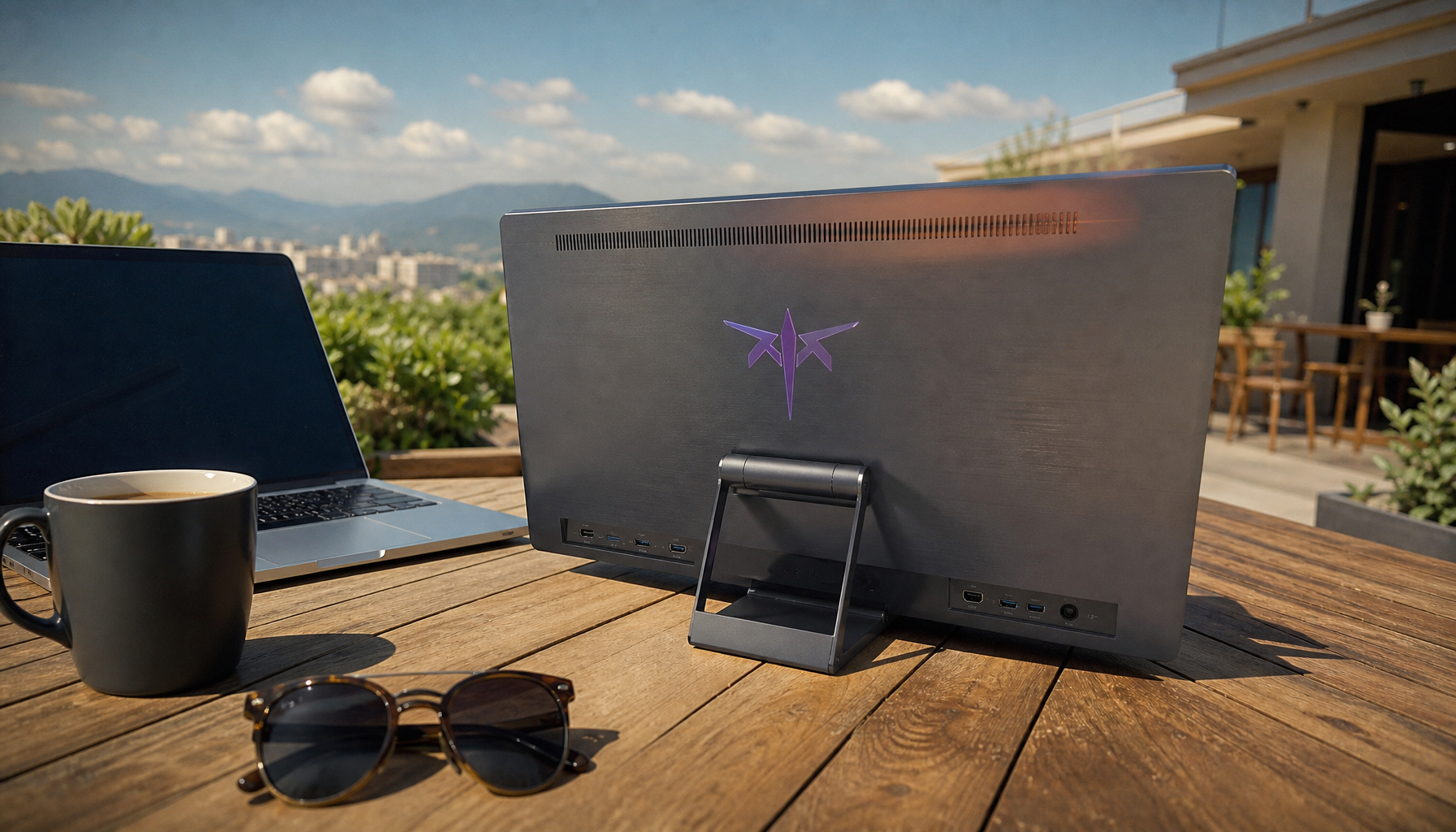
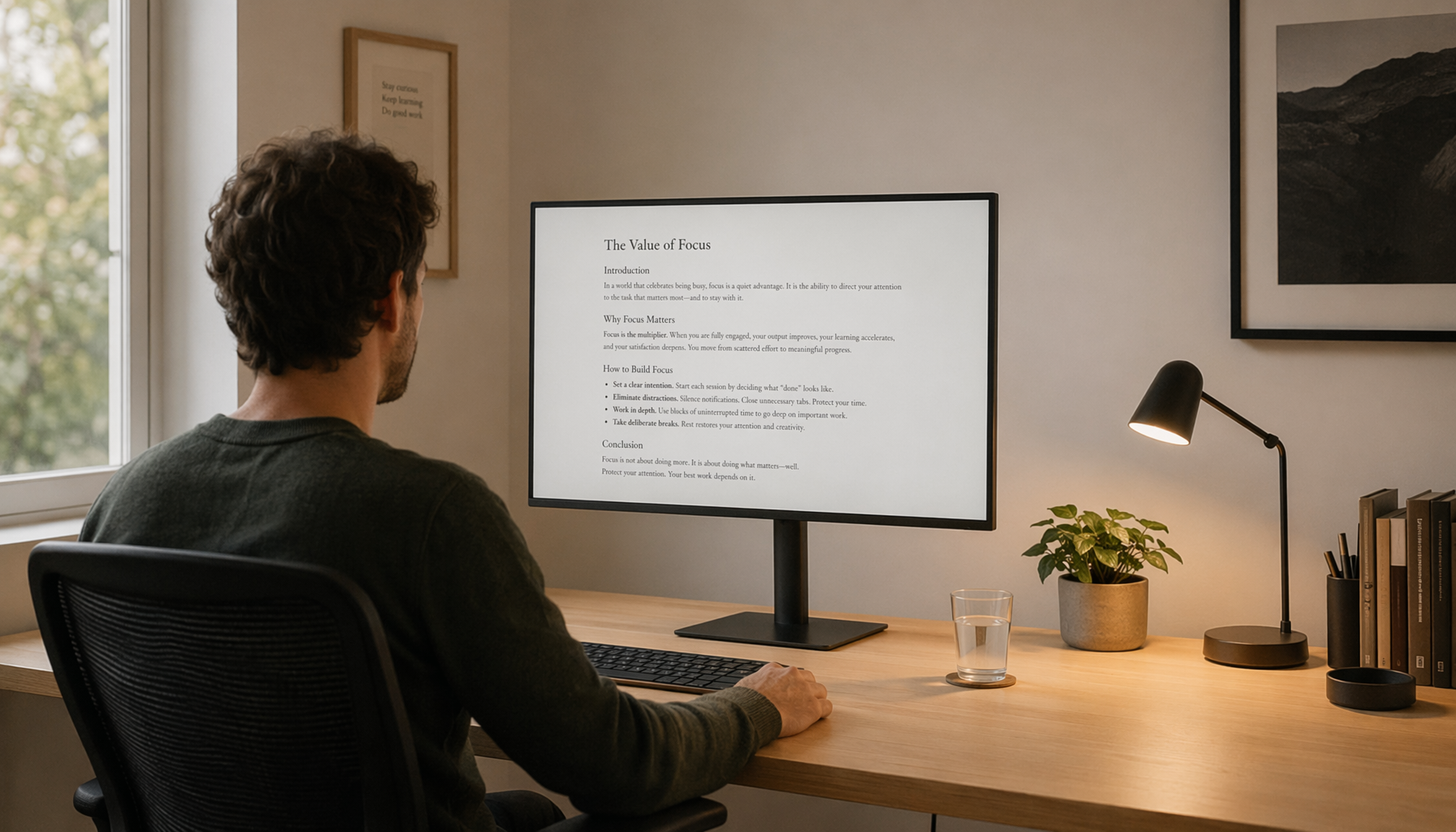
A portable monitor usually cuts laptop runtime by about 20% to 50%, mainly because the laptop may power the screen backlight while also driving extra pixels. The impact is manageable if you choose an efficient 1080p panel, lower brightness, and use USB-C Power Delivery passthrough when available.
Watching your laptop drop from 70% to low-battery warnings halfway through an airport work session is the classic portable-monitor tradeoff. A typical travel display draws about 5W to 15W, enough to turn a long laptop session into a 3- to 5-hour setup depending on battery size and workload. Here is how to predict the hit, reduce it, and decide when the extra screen is worth the power cost.
The Simple Battery Math

A laptop battery is commonly measured in watt-hours, or Wh, which tells you roughly how much energy it can store. A portable monitor adds a steady electrical load, so the real-world question is not whether it drains the battery, but how many extra watts the laptop must supply.
Many portable monitors draw 5W to 15W, while traditional desktop LCD monitors can use far more. That makes portable displays efficient compared with desk monitors, but still meaningful when the energy comes from a laptop battery instead of a wall outlet.
Example setup |
Monitor draw |
Laptop battery |
Monitor-only battery cost |
14-inch or 15.6-inch 1080p display at moderate brightness |
8W |
60Wh |
About 13% per hour |
Brighter 15.6-inch 1080p display |
10W |
50Wh |
About 20% per hour |
4K, bright, touch, or high-refresh model |
15W |
50Wh |
About 30% per hour |
Dual portable displays at high brightness |
30W |
60Wh |
About 50% per hour |
That table isolates the monitor load only. Your laptop is still powering the CPU, GPU, keyboard backlight, Wi-Fi, apps, charging losses, and its own screen. If your laptop normally uses 12W during office work, adding a 10W portable monitor can nearly double the active power draw. That is why a laptop that lasts eight hours alone may feel closer to four or five hours once the second screen is attached.
Why a Portable Monitor Drains More Than the Screen Rating Suggests
The monitor’s backlight is the obvious drain, but it is not the whole story. Driving an external display also makes the graphics system work harder, and that extra GPU activity can raise power consumption even when the monitor itself is efficient.
A connected external display can create extra GPU work because the laptop must render and transmit another desktop surface. This matters most with 4K panels, HDR modes, high refresh rates, video playback, gaming, design software, and multi-window browser sessions. A 1080p spreadsheet screen is a light load; a 4K 165Hz gaming display has a very different battery profile.
Brightness is usually the fastest lever. In hands-on setup work, reducing the portable monitor from showroom bright to a readable travel setting often makes the difference between a usable mobile workstation and a battery countdown. For shaded coffee shops, hotel rooms, airplanes, and train seats, 30% to 50% brightness is often enough unless the panel is unusually dim.
Connection Type Matters

USB-C is the cleanest portable-monitor connection because one cable can carry display signal and power, but it also creates the easiest path for battery drain. If the monitor has no separate power input or passthrough charging, the laptop becomes the power source.
Modern portable monitors commonly rely on USB-C connectivity, and USB-C DisplayPort Alt Mode can carry video and often power when the laptop supports it. The practical buyer’s translation is simple: verify that your laptop’s USB-C port supports video output, then check whether the monitor has a second USB-C port for Power Delivery input.
Power Delivery passthrough changes the battery story. With passthrough, a wall charger or PD power bank feeds the monitor, and the monitor forwards charging power to the laptop. Without passthrough, a one-cable setup is elegant but battery-hungry. With passthrough, it becomes a cleaner desk or travel rig that can maintain charge during longer sessions.
Resolution, Refresh Rate, and Panel Choices
For most productivity users, 1080p remains the sweet spot on a 14-inch to 15.6-inch portable monitor. Text is clear enough, scaling is simple, and power demand stays reasonable. Higher resolution can look sharper, but it increases panel demand and graphics workload.
Gaming-focused portable displays show the performance ceiling. Some models offer 1440p resolution and refresh rates up to 165Hz, which can be excellent for hotel-room gaming or console sessions but less ideal for maximum laptop battery life. If you are writing, coding, trading, planning content, or managing dashboards, a 60Hz 1080p IPS panel is usually the value-oriented choice.
OLED and high-brightness panels can be fantastic for contrast and immersion, but they are not automatic battery savers. Touchscreens, speakers, wireless casting, and built-in batteries also change the equation. A built-in battery can protect the laptop from monitor drain for a while, but it adds weight, cost, and another device to charge.
Real-World Use Cases

For office productivity, the portable monitor usually earns its power budget. A second screen lets you keep source material, chat, spreadsheets, calendars, dashboards, or design references visible without constant window switching. A multiple-monitor workflow has been associated with a 42% increase in productivity, and while every workflow will vary, the direction is familiar to anyone who has worked from one cramped laptop screen.
For gaming, expect the biggest hit. A portable gaming monitor can improve immersion, especially with a handheld, console, or compact gaming laptop, but high refresh, high brightness, and GPU load will shorten unplugged time quickly. If frame rate matters more than runtime, use wall power or a large PD power bank.
For travel work, the best setup is a moderate-brightness 1080p monitor, a full-feature USB-C cable, and a charger strong enough for both devices. The category now ranges lightweight second screens to high-refresh gaming models and larger business displays. That range is useful, but it also means battery impact depends heavily on the exact model, not just the words “portable monitor.”
Pros and Cons for Laptop Battery Life
The main advantage is efficiency per square inch of productivity. A portable monitor uses far less energy than a full desktop monitor, takes little bag space, and can turn a laptop into a serious dual-screen workstation anywhere you can sit for 30 minutes.
The downside is predictable: if the laptop powers the monitor directly, your battery becomes the shared fuel tank. The drain gets worse with high brightness, 4K resolution, high refresh rates, touch input, weak cables, GPU-heavy apps, and leaving the display connected during sleep. General battery guidance reinforces that screen brightness is a major drain on portable devices, which lines up with what you see immediately on a dual-screen laptop setup.
Long-term battery health deserves attention too. More drain means more charging cycles, and heat can make battery aging worse. Battery-care guidance emphasizes that heat is harmful and recommends managing brightness, background activity, and charging habits, principles that translate well to laptop-plus-monitor travel setups.
How to Reduce the Battery Hit
Start by choosing the right class of display. A 13-inch to 15.6-inch 1080p IPS monitor at 60Hz is the dependable default for work. Choose 4K, OLED, touch, or high refresh only when the task pays back the extra power draw.
Then tune the setup. Set both screens to comfortable rather than maximum brightness, use battery saver when away from power, close unused apps and browser tabs, and avoid running high-load video, sync, and conferencing tools unless needed. Disconnect the monitor at the end of the session, especially before sleep or shutdown, because some systems can continue reacting to connected peripherals.
Finally, treat the cable as part of the power system. A low-grade charge-only USB-C cable can cause flicker, failed passthrough, unstable display detection, or charging that never quite catches up. For a performance-driven setup, use a short, full-feature USB-C cable rated for video and sufficient Power Delivery wattage.
FAQ
Does a portable monitor damage a laptop battery?
Not directly. The monitor does not damage the battery by being connected, but it can make the laptop discharge faster, run warmer, and use charge cycles more quickly. Over months or years, heavy drain plus heat is the pattern to avoid.
Is HDMI better than USB-C for battery life?
HDMI may reduce the chance that the laptop is powering the monitor, but most HDMI portable-monitor setups still need separate USB power. USB-C is cleaner and more flexible, especially with Power Delivery passthrough, but it can drain the laptop quickly if the monitor pulls power directly from the laptop.
Should I buy a portable monitor with its own battery?
A built-in battery helps when you need true untethered use, but it adds weight and another charging routine. For most work travel, USB-C PD passthrough with a good charger or power bank is the more reliable long-session solution.
Final Verdict
A portable monitor is one of the highest-impact upgrades for mobile productivity, but it is not electrically free. Plan for a 20% to 50% runtime reduction when the laptop powers the display directly, then control the variables that matter: 1080p over 4K, moderate brightness, 60Hz for work, solid USB-C cabling, and PD passthrough whenever the session needs to last.