Yes, a portable monitor can work well at a kitchen counter or high table if the screen is stable, bright enough, and raised close to eye level. Treat the counter like a temporary standing desk, not just a place to drop a second screen.
Why It Works for Counter-Height Productivity
A portable monitor is built for flexible work away from a fixed desk, and many current models are designed as lightweight second screens for laptops, travel, and hybrid setups. Reviewers consistently describe portable monitors as practical tools for extending workspace without committing to a permanent monitor arm or full desktop station.
At a kitchen island, that flexibility matters. You can keep a spreadsheet, calendar, chat window, recipe, call notes, or reference document on the portable display while your laptop handles the main task.

For most office work, a 14- to 16-inch screen is the sweet spot. It is large enough for readable text but still light enough to move when the counter needs to become a real kitchen again.
The Ergonomic Catch: Height and Angle
The biggest issue is not whether the monitor works. It is whether your neck pays for it.
A counter is usually better than a dining table for standing, but a portable monitor sitting flat on its cover stand may still be too low. Ergonomic advice generally points toward placing the screen top around eye level, and a monitor setup should reduce downward neck bend during longer sessions.
Use a compact riser, sturdy cookbook stand, laptop stand, or adjustable tablet stand. The goal is simple: eyes forward, shoulders relaxed, wrists neutral.

Quick setup checklist:
- Raise the display until the top edge sits near eye level.
- Keep it about an arm’s length away.
- Angle it slightly upward if the counter is high.
- Use an external keyboard and mouse for sessions over 30 minutes.
- Stand on an anti-fatigue mat if you work there often.
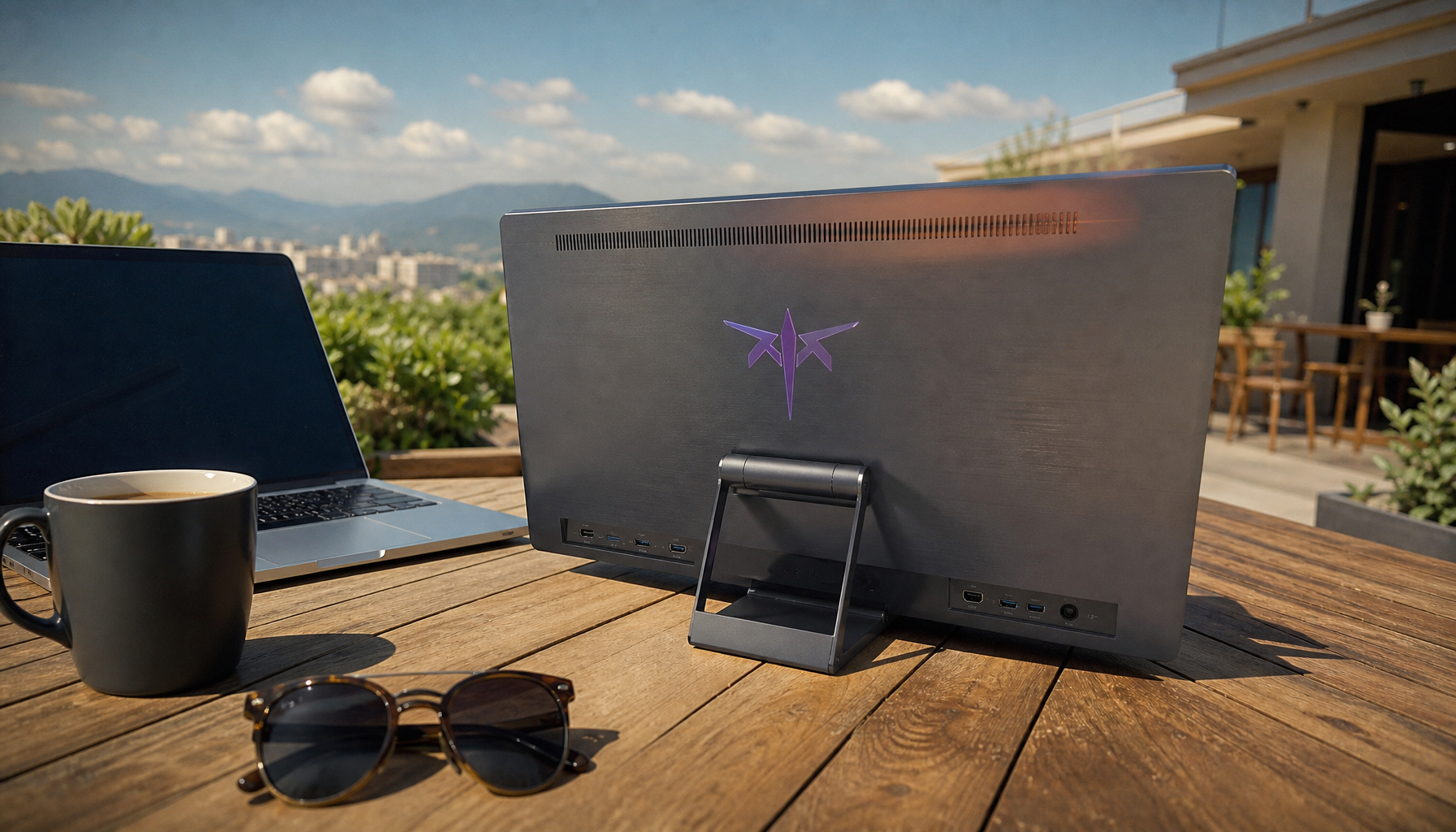
Many portable monitor covers double as stands, but they are often the weakest part of the setup on slick stone or glossy counters.
Power, Cables, and Bright Kitchens
Kitchen counters create two real-world problems: glare and cable clutter.
Brightness matters because overhead lights, windows, and reflective countertops can wash out dim panels. Consumer testing notes that higher brightness is useful in bright environments, so aim for stronger brightness if your counter faces a window.

Power is the other piece. Many portable monitors rely on USB-C for video and power, but not every laptop USB-C port supports display output. Before buying, confirm whether your device supports DisplayPort Alt Mode.
Expect extra battery drain if you power the monitor from a laptop. A typical 1080p portable display may draw enough power to noticeably shorten unplugged work time, so a wall charger or USB-C power bank is smarter for long standing sessions.
Best Use Cases at High Tables
This setup shines for lightweight, focused work. It is less ideal for eight-hour production days unless you invest in better support gear.

Good fits:
- Email, documents, dashboards, and research.
- Video calls with notes on the second screen.
- Code review or light spreadsheet work.
- Gaming or streaming while traveling.
- Kitchen-friendly tasks like recipes plus video.
For gaming, prioritize refresh rate and stand stability. For creative work, prioritize color accuracy and brightness. For office productivity, a reliable 1080p or 16:10 display usually delivers better value than chasing 4K on a small screen.
Buying Priorities for Standing Setups
For kitchen counters and high tables, rank the stand almost as highly as the panel. A budget screen with a poor folding cover can feel worse than a modest screen with a secure kickstand.
Hands-on testing often treats stand quality as one of the most important factors for a portable monitor, especially when using portrait mode or changing locations; that matches the reality of portable work on counters.
Look for a monitor with USB-C, mini HDMI as a backup, at least 300 nits of brightness, a matte finish, and a kickstand with real angle control. If you plan to move between rooms, keep weight near 2 lb or less.
Bottom line: yes, you can use a portable monitor while standing at kitchen counters or high tables. Pair it with a stable stand, clean cable path, and enough brightness, and it becomes a useful micro workstation instead of an awkward temporary screen.