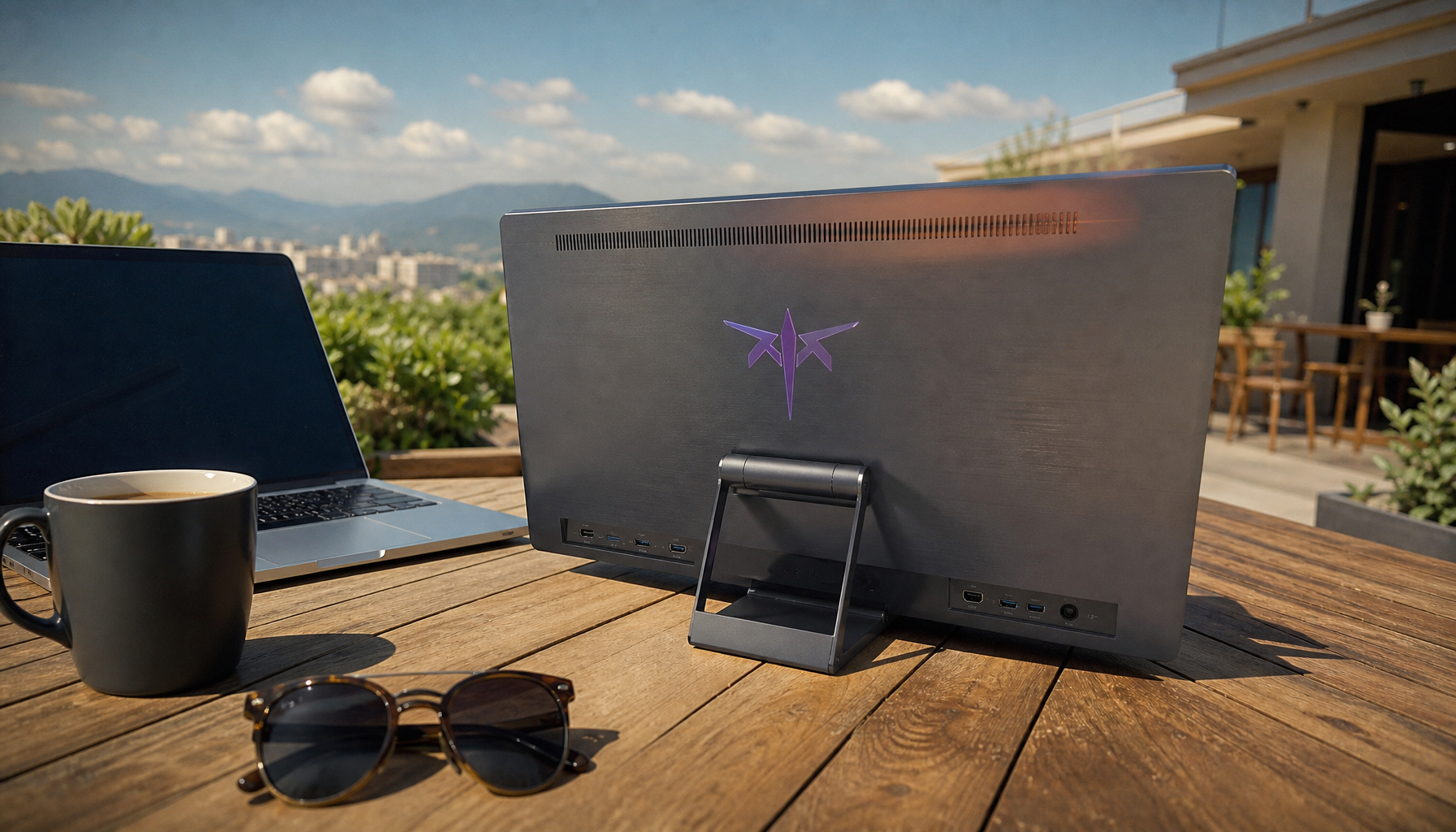
A firm cable only proves the plug is seated; it does not prove the monitor is receiving a usable video signal. “No Signal” usually points to the wrong input, a failed handshake, an unsupported display mode, a weak cable or port, or a PC that is powered on but not outputting video.
Start With the Signal Path, Not the Screen
Think of the display chain as four checkpoints: source device, output port, cable, and monitor input. If any one of them fails, your monitor can stay black while everything looks physically connected.
First, confirm that the monitor is set to the exact input you are using: HDMI 1, HDMI 2, DisplayPort, USB-C, or mini-HDMI. Auto-detect is convenient, but it can miss a sleeping PC, a dock, or a DisplayPort handshake after standby.
 Then power-cycle the chain in order. Turn off the monitor and PC, unplug the monitor for 30 seconds, reconnect the cable, power on the monitor, then boot the PC. Classroom AV teams often troubleshoot by working backward from the display to the source because each device in the chain can silently block output, especially around switches, adapters, and input selection in a display setup.
Why a “Good” Cable Can Still Fail
A cable can feel locked in and still be the problem. Bent pins, worn shielding, a strained connector, or insufficient bandwidth can all cause signal loss, flicker, or black-screen behavior.
This matters more with high-performance monitors. A 4K 144 Hz, ultrawide, or HDR display pushes more data than a basic office screen. A marginal HDMI or DisplayPort cable may work at 1080p 60 Hz but fail when the GPU tries to drive a higher refresh rate.
Quick checks:
- Try another certified HDMI or DisplayPort cable.
- Use a different port on the GPU and monitor.
- Remove adapters, hubs, or docks temporarily.
- Lower the refresh rate to 60 Hz if the screen appears briefly.
- Avoid sharp bends or pressure on connectors.
 Cable care is not cosmetic. Public equipment guidance warns users not to pinch or stress connected cords because physical handling can damage wiring and connected hardware over time in connected cords.
Check the PC: Power On Is Not the Same as Video Out
Fans, lighting, and a power LED do not guarantee that the computer has completed booting or initialized the GPU. A desktop can look alive while the graphics card, RAM, motherboard, or power supply is preventing video output.
If you use a gaming PC, check whether the monitor cable is plugged into the graphics card, not the motherboard port. Motherboard video may be disabled if your CPU lacks integrated graphics, while GPU ports may stay inactive if the card is not fully seated or powered.

For laptops and office setups, wake behavior is a common trigger. Close and reopen the lid, disconnect the dock, reconnect power, and try the built-in display first. On Windows, press Windows + P and select Duplicate or Extend if the system is sending output to the wrong display mode.
If the monitor works with another device, the “No Signal” message is evidence against the monitor, but it does not prove the cable is perfect.
Display Settings, Drivers, and Handshake Issues
Modern monitors depend on negotiation. HDMI, DisplayPort, USB-C Alt Mode, GPU drivers, firmware, and refresh-rate settings all need to agree before the image appears.
If the screen goes black after a driver update, game launch, sleep, or resolution change, boot into Safe Mode or connect a simpler display and reset the output to a conservative setting. Start with 1920 × 1080 at 60 Hz, then step back up to your preferred resolution and refresh rate.
For office productivity displays and portable smart screens, USB-C adds one more requirement: the port must support video output, not just charging and data. Some laptops have multiple USB-C ports where only one supports DisplayPort Alt Mode. Portable monitors may also need separate USB-C power if the laptop cannot supply enough wattage.
Electrical behavior can be subtle. MIT researchers describe how abnormal power signatures can reveal failures before total breakdown in monitored systems, and the same principle applies here: unstable power, bad ports, and failing adapters may work intermittently before they fail completely in a monitoring system.
When to Escalate Beyond Cable Checks
Escalate when the monitor shows no BIOS logo, no manufacturer splash screen, and no signal across multiple known-good cables and displays. At that point, the likely fault moves deeper into the GPU, RAM, motherboard, power supply, firmware, or the monitor’s input board.
Before buying a replacement, isolate the fault:
- Test the monitor with a console or another laptop.
- Test the PC with another monitor or TV.
- Reseat the desktop GPU and RAM with power unplugged.
- Try integrated graphics if supported.
- Check the warranty before opening the monitor.

For a performance display, the smartest fix is diagnostic, not guess-based. Prove where the signal stops, then replace only the weak link.