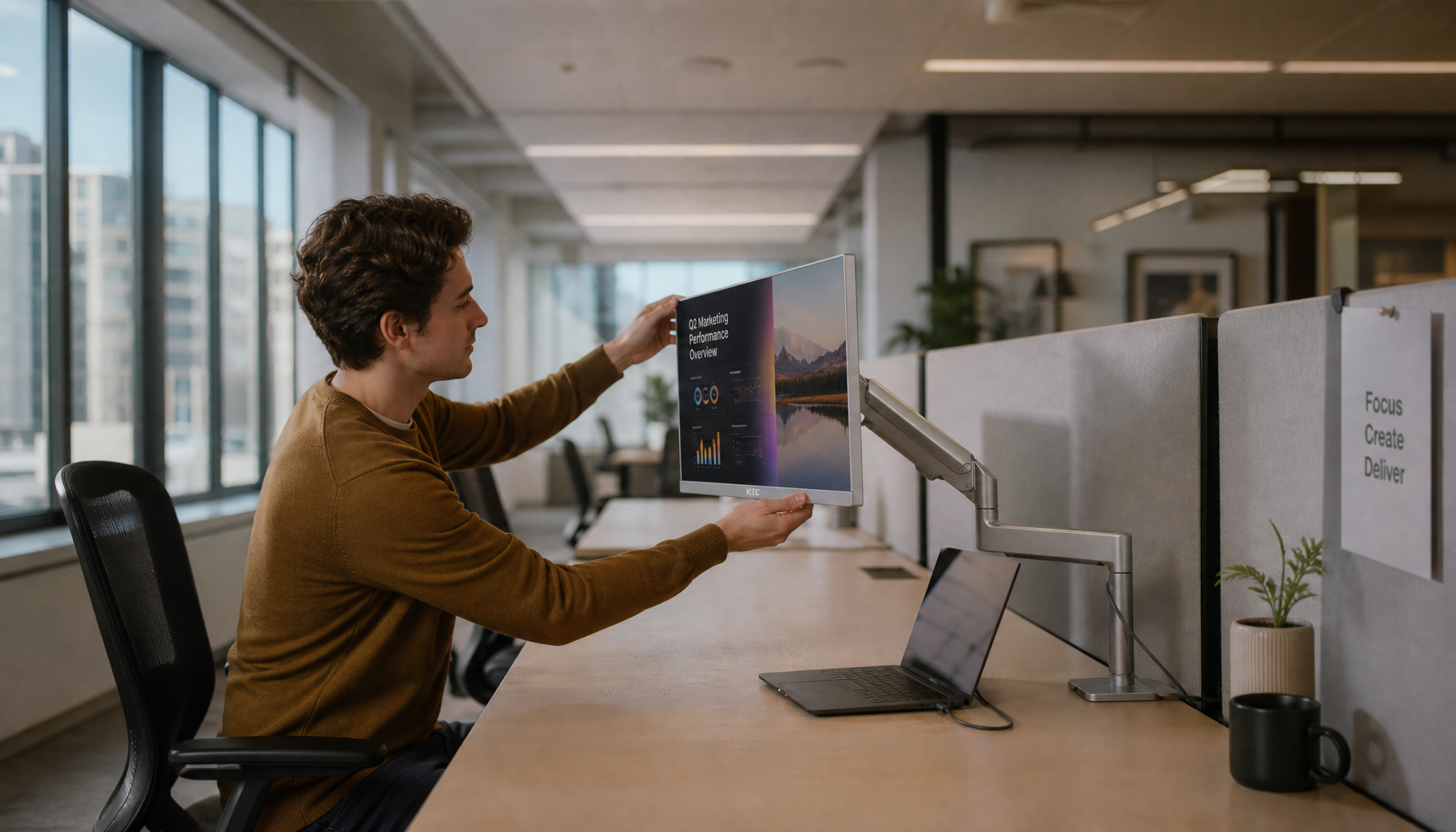
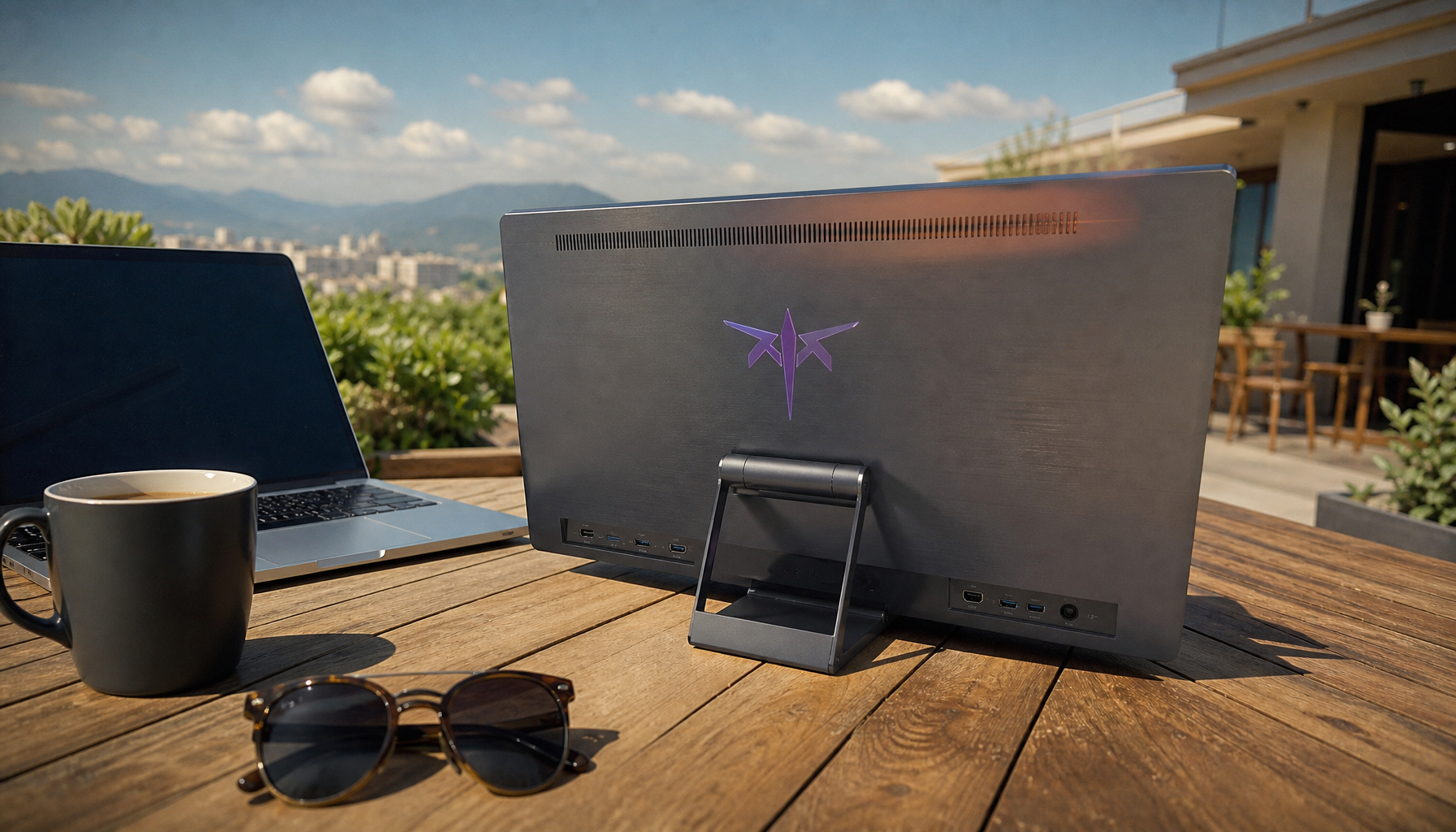
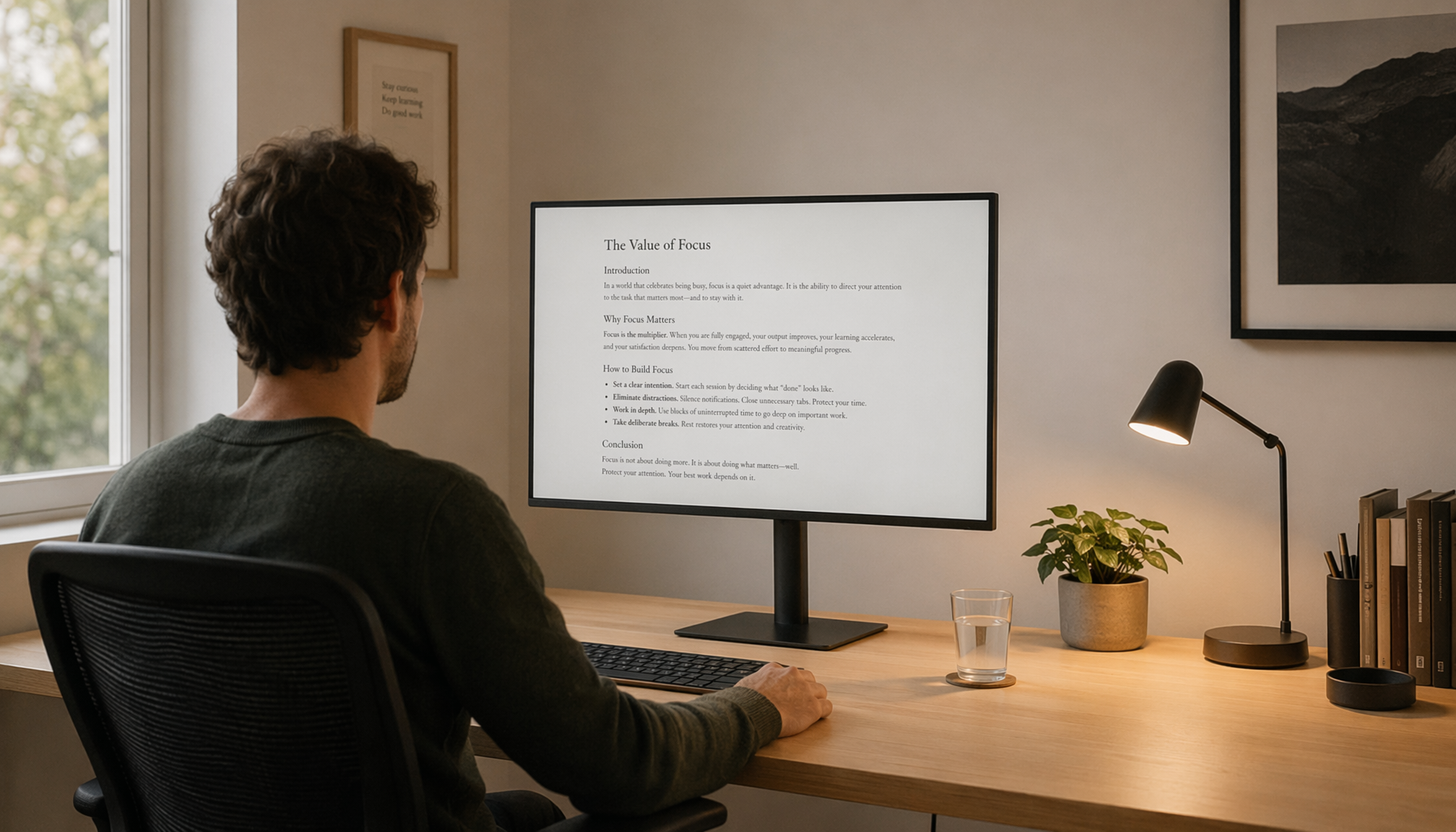
Higher brightness speeds up burn-in risk because it drives the same pixels harder, especially on OLED screens showing static taskbars, HUDs, logos, or dashboards. The practical safe zone is moderate daily brightness, active panel protection, short sleep timers, and room-light control before pushing the display harder.
Is your OLED gaming monitor stunning at night but starting to make you nervous after eight-hour workdays with the same taskbar and browser tabs parked in place? Long-term OLED testing and panel-care recommendations point to the same pattern: varied content is usually low-risk, while bright static content repeated for thousands of hours is the real accelerator. This article gives you a brightness strategy for gaming, office work, and extended desktop use without turning a premium screen into a dim compromise.
Why Brightness Changes Burn-in Speed
Burn-in is uneven wear. On OLED, each pixel emits its own light, so a white spreadsheet cell, bright taskbar icon, game HUD, or streaming logo can age those pixels faster than surrounding areas when it stays in the same position for long sessions. A practical OLED mitigation resource describes the core risk as long-running static images at high brightness, which matches what technicians see in real desktop setups: the problem is rarely one intense gaming night, but repeated exposure patterns.

Brightness matters because higher luminance means higher drive stress. OLED lifespan notes connect panel aging to static images, high brightness, and heat, and recommend daily brightness around 50% to 70% for routine use. That percentage is not universal because monitor brightness scales differ by model, but the direction is reliable: lowering routine desktop brightness reduces stress while preserving the option to use peak brightness for HDR, games, and short media sessions.
This is also why “just buy the brightest monitor” is not a complete strategy. Gaming displays are often marketed by nits, and higher nit counts can improve visibility and impact, especially in dense FPS or racing scenes. For all-day productivity, however, peak brightness should be treated like performance headroom, not the default cruising speed.
The Safe Zone Is a Use Pattern, Not One Magic Number
The safest brightness level depends on the panel type, room lighting, and how static your content is. For an OLED used as a main PC monitor, the practical safe zone is usually moderate SDR brightness, dark mode, hidden static UI elements, and automatic sleep after a few idle minutes. For an LCD or LED-backlit monitor, permanent burn-in is less common, but image retention can still happen in demanding signage, surveillance, or control-room environments.
Use case |
Practical brightness behavior |
Burn-in risk level |
Mixed gaming and video |
Moderate desktop brightness, higher HDR only during active content |
Low to moderate |
Office work on OLED |
50% to 70% as a starting range, lower in dim rooms |
Moderate if taskbar and white windows stay fixed |
Static dashboard or signage |
Lowest usable brightness, pixel movement, commercial anti-retention features |
High |
LCD office monitor |
Match brightness to room comfort and readability |
Low, but image sticking can occur |
Bright-room gaming |
Control glare first, then raise brightness only as needed |
Moderate on OLED if static HUDs persist |
In practical display tuning, brightness works best as a workload control. If someone runs a 32-inch OLED for spreadsheets, chat, browser tabs, and a fixed taskbar all day, SDR brightness should be lower than the gaming preset, panel-care options should stay enabled, and display sleep should be short. If the same screen is used for varied single-player games and movies, brighter picture modes are more reasonable because the wear pattern is more evenly distributed.
OLED, LCD, and “LED” Do Not Age the Same Way
A lot of burn-in confusion starts with the word LED. Most so-called LED monitors are LCD monitors with LED backlights, while OLED is a different display technology. A monitor discussion makes the useful distinction that LED refers to a monitor backlight type, not the same kind of self-emissive pixel structure used by OLED.
On OLED, high brightness increases the load on individual pixels. On LCD, the backlight supplies light and the liquid crystal layer modulates it, so the failure mode is different. LCD burn-in or image sticking can occur when prolonged static imagery affects the liquid crystal material, though temporary retention is different from more permanent burn-in. For 24/7 security and monitoring screens, anti-retention systems use movement modes to vary pixel activity without interrupting the feed.
That difference matters for buying decisions. A competitive OLED monitor can be excellent for immersive gaming, HDR scenes, and contrast-rich creative work. A static operations dashboard, public menu board, or trading terminal may be better served by a commercial LCD, Mini-LED, or anti-retention display because the same interface may sit unchanged for many hours.
Brightness Versus Contrast: Do Not Fix One by Breaking the Other
Brightness and contrast are often adjusted together, but they solve different problems. Brightness controls overall screen luminance and black-level visibility, while contrast controls how bright whites separate from dark tones. If you lower brightness too far, shadow detail can disappear; if you push contrast too hard, bright detail can clip.
A useful target is not “dark at all costs,” but clean visibility with preserved detail. Screen contrast ratio describes the range between darkest black and brightest white, and depth and readability generally improve as contrast rises. For a gaming monitor, that means you should still see enemies in dark corridors without turning every black into gray. For office work, it means text remains crisp without blasting a white document window at maximum output all day.
A simple test is to open a dark gray test pattern or a familiar dark game scene, then reduce brightness until dark details are barely still visible. After that, check a bright white page or test pattern and lower contrast if fine highlight detail disappears. This approach is more reliable than copying someone else’s settings because monitor scales are arbitrary, and even two units of the same model can behave differently.
How Room Lighting Pushes You Into Risk
Bright rooms do not directly cause OLED burn-in, but they often make users raise brightness. That indirect effect is important. If sunlight hits the panel or a desk lamp reflects across the screen, you may push the monitor into a hotter, brighter operating range just to make ordinary content readable.

The better first move is environmental control. Adjust blinds, move the display away from direct reflections, use a bias light behind the monitor, or switch to a matte productivity display if your workspace is consistently bright. Your operating system may also offer practical controls for brightness and color, and supported displays can use auto color management to keep colors more consistent across apps.
For a real-world example, a 300-nit office monitor in a controlled room can feel clearer and more comfortable than a 600-nit OLED fighting a window reflection. The OLED may win in contrast and HDR impact, but the safer extended-use setup is the one that does not force high brightness for basic readability.
Panel Protection Features Are Part of the Brightness Plan
Modern OLED displays are not defenseless. Pixel shifting, logo dimming, taskbar detection, automatic dimming, and compensation cycles all reduce uneven wear. Pixel shifting makes small firmware-level image movements, while screen shift and logo dimming help reduce repeated stress on the same pixel areas.
The key is to let these systems run. Some OLED TVs commonly run short automatic compensation cycles after several cumulative hours when turned off normally, so cutting power at a strip can interfere with maintenance. Manual pixel cleaning should not be treated like a nightly ritual; the better habit is to reserve it for visible image retention, troubleshooting, or manufacturer-recommended heavy-use maintenance.
For PC use, the most valuable changes are boring but powerful. Auto-hide the taskbar, use dark mode, remove desktop icons, choose a dark or rotating wallpaper, set the display to sleep quickly, and avoid leaving paused games or static dashboards on screen. The burn-in speed drops when the same bright shapes stop occupying the same pixels every day.

Finding Your Brightness Setting for Gaming and Work
Start with separate profiles. Use a restrained SDR desktop profile for work and a brighter gaming or HDR profile for active play. If your monitor supports uniform brightness, logo dimming, static-area dimming, or OLED care modes, leave them enabled for the desktop profile even if you prefer a more dynamic image in games.

For office productivity, begin around the middle of the monitor’s brightness range and adjust to the room. If white pages feel like a lamp, lower brightness. If dark gray UI elements merge into black, raise it slightly or adjust gamma and black level instead of jumping straight to maximum brightness. For OLED, the 50% to 70% daily brightness recommendation is a reasonable starting band, with lower settings preferred for long static workloads.
For gaming, brightness should serve visibility and immersion. Gaming brightness references often place lower-end gaming monitors around 250 to 300 nits, mid-range displays around 400 to 500 nits, and premium HDR models at 1,000 nits or more. Use that peak capability for active, varied HDR scenes, not for a static desktop with a browser, taskbar, and chat window frozen in the same positions.
Pros and Cons of Lower Brightness
Lower brightness reduces OLED pixel stress, lowers heat, improves comfort in dim rooms, and can make extended work sessions feel less fatiguing. It also cuts power use and helps dark mode deliver its full benefit on OLED, where black pixels can turn off.
The tradeoff is visibility. Too little brightness can hide shadow detail in games, make text feel dull in bright offices, and reduce the punch of HDR content. The right answer is not the lowest possible setting; it is the lowest comfortable setting that preserves detail for the task.
Higher brightness gives stronger visual impact, better daylight readability, and more dramatic HDR highlights. The cost is more power, more heat, more eye discomfort in dark rooms, and faster uneven wear when static content is involved. On OLED, that last point should guide long-session behavior.
FAQ
Does 100% Brightness Instantly Cause Burn-in?
No. Burn-in is cumulative uneven wear, not an instant failure. The risk rises when maximum brightness is paired with repeated static elements over long periods, such as a taskbar, fixed HUD, channel logo, or dashboard.
Is OLED Safe for Office Work?
Yes, if the setup is managed. Use moderate SDR brightness, dark mode, hidden taskbars, fast sleep timers, and panel-care features. If your work is mostly static dashboards for 10 or more hours a day, a quality LCD or Mini-LED monitor may be the more reliable value choice.
Should I Run Pixel Cleaning Every Night?
Usually no. OLED maintenance recommendations generally treat manual pixel cleaning as a tool for visible retention or periodic maintenance, not a nightly habit. Let automatic compensation cycles run by turning the display off normally.
The Practical Safe Zone
Run your display bright when the content earns it, then bring it back to a moderate profile for long desktop sessions. The most reliable burn-in strategy is not fear-based dimming; it is controlled brightness, varied content, enabled protection features, and a workspace that does not force the panel to fight glare all day.