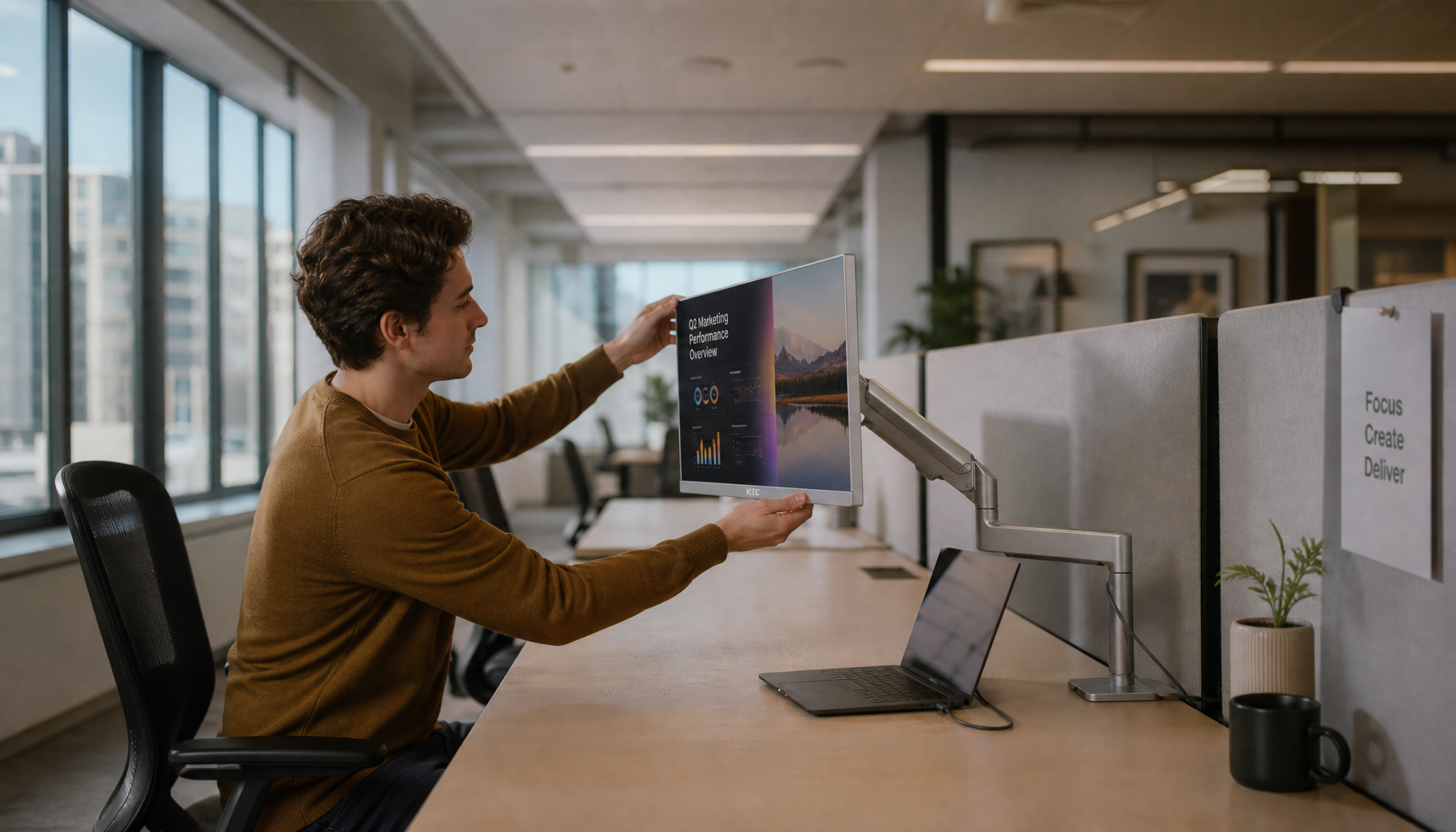
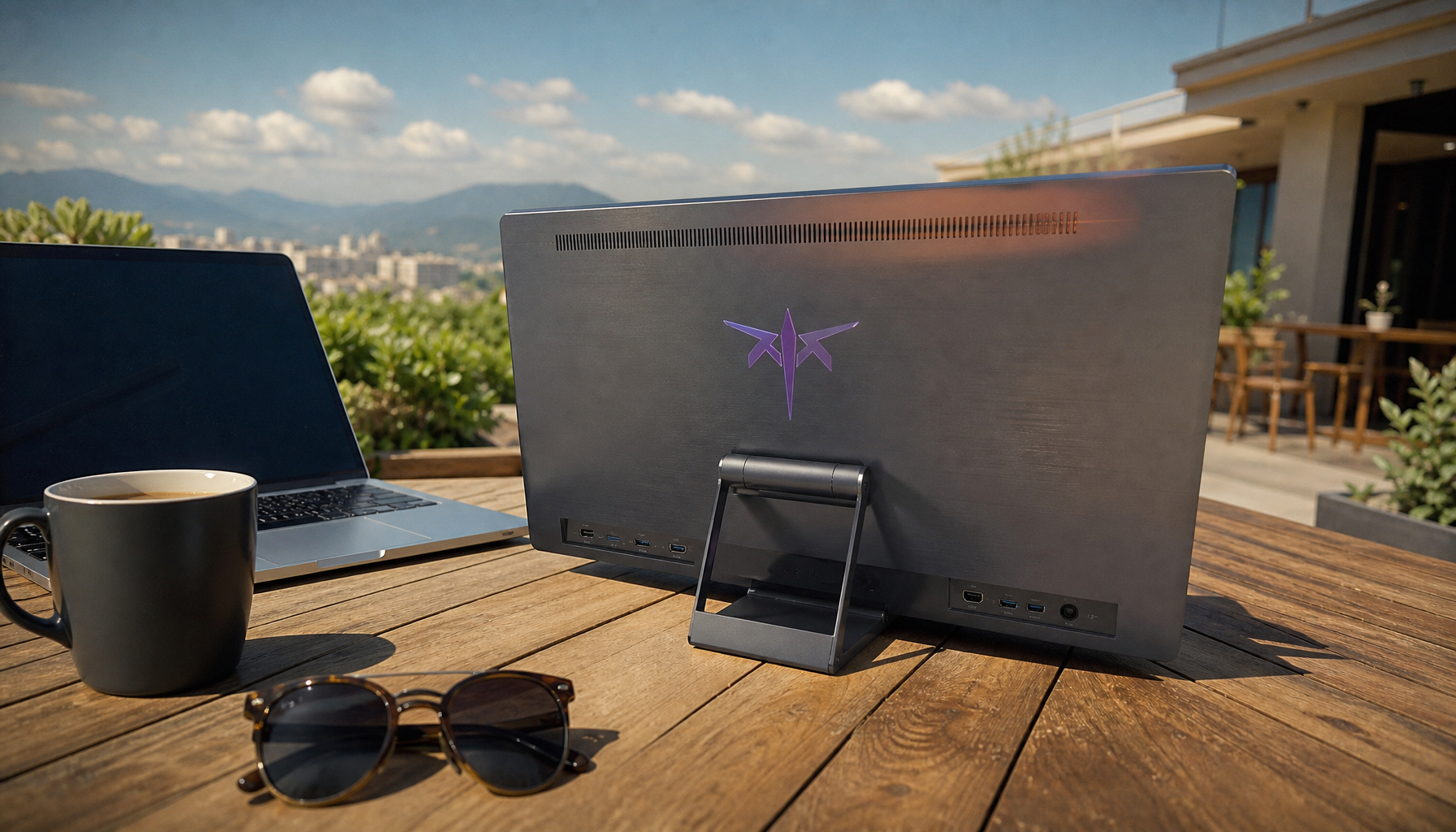
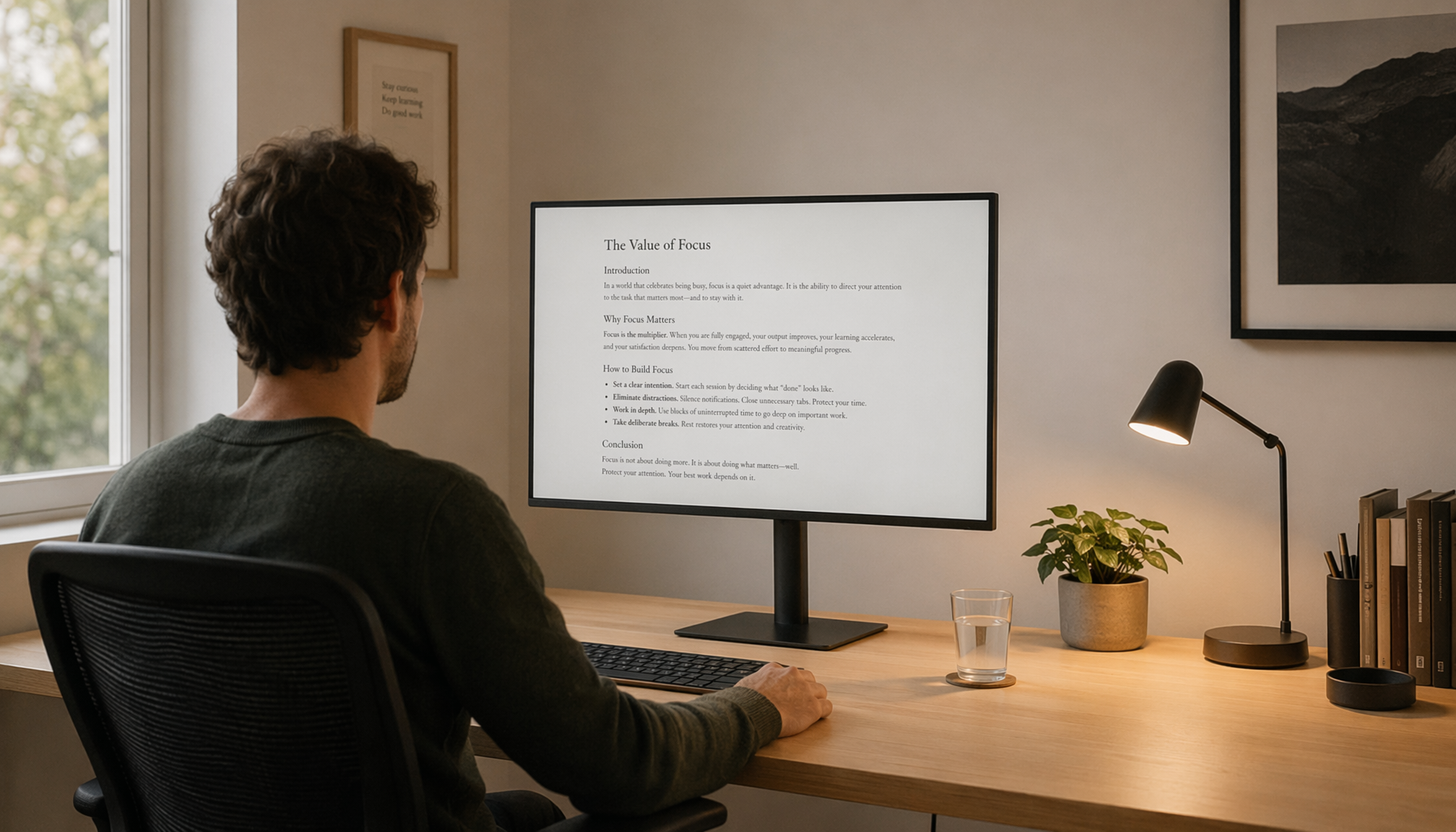
Your laptop usually forgets external monitor arrangements because the operating system is redetecting the display path, dock, cable, or port as a different connection. The fix is to stabilize the hardware chain, confirm Extend mode, then save a clean display layout in system settings.
Does your desk go from command center to chaos every time you reconnect your laptop, with your main display swapped, windows stranded, or the cursor hitting an invisible wall? A stable setup can save real work time by keeping research, dashboards, chat, and creative tools exactly where your hands expect them. Here is how to make your laptop remember your monitor layout more reliably and how to know when the issue is hardware, the operating system, or the dock.
Why Laptop Monitor Arrangements Get Forgotten
External monitor arrangements are stored as a relationship between the laptop, graphics adapter, display output, monitor identity, resolution, scaling, refresh rate, and connection path. When any part of that chain changes, your operating system may treat the monitor as new hardware instead of the same display returning to the same desk position.
That is why the problem often appears after switching from HDMI to USB-C, reconnecting through a different dock port, using a new adapter, updating a graphics driver, or closing the laptop lid before the external display fully wakes. External display troubleshooting guidance notes that support for multiple monitors depends on the graphics adapter and connection method, and a splitter cannot create independent extended desktops because it duplicates one signal rather than creating separate outputs.
In practical terms, a laptop that remembers “27-inch monitor on the right through USB-C dock port A” may not recognize “same 27-inch monitor on the right through HDMI adapter port B” as the same arrangement. For a gaming-and-productivity desk, that distinction matters: your 27-inch 1440p main screen might suddenly become secondary while the laptop panel takes over as primary.
First, Lock Down the Physical Connection
Before changing settings, make the connection repeatable. Use the same cable, same laptop port, same dock port, and same monitor input every time. Reseat each cable firmly, then power-cycle the monitor and dock if you use one. University IT guidance treats firmly reseated cables, dock resets, and monitor power checks as first-line steps because unstable physical links can prevent displays from appearing correctly at all.

This is not busywork. A loose USB-C cable can still charge a laptop while failing to maintain a stable video handshake. A monitor left on “Auto” input may wake on HDMI one day and DisplayPort the next. A compact travel adapter may work at 1080p but become unreliable at higher refresh rates or with two displays attached.
For a reliable desk setup, pick the strongest available connection. DisplayPort and USB-C with DisplayPort Alt Mode are usually better choices for high-refresh productivity and gaming monitors than old HDMI adapters, while direct HDMI can still be perfectly fine for a single office display. Dual-monitor setup guidance notes that HDMI, DisplayPort, and USB-C with DisplayPort Alt Mode are common modern interfaces, and digital connections are preferred for clarity and reliability.
Confirm Extend Mode, Primary Display, and Physical Arrangement
Once the hardware path is stable, open Display settings and confirm that the laptop is using Extend mode, not Duplicate or “show only” on one display. Extend mode creates one large desktop across screens, while Duplicate mirrors the same image. For productivity, Extend is almost always the right mode because each monitor can hold different content.
Use the display projection shortcut and choose Extend, then open Settings, System, Display. Use Identify so the number shown on each screen matches the physical monitor in front of you. Drag the display rectangles until they match the desk layout, with the main screen centered and the secondary screen on the correct side. If the tops of the rectangles are misaligned, your cursor may jump up or down when crossing between screens.

Set the main display intentionally. This determines where the Start menu, many app launches, and full-screen games often appear. If your external monitor is your performance display, make it primary while docked. For a 27-inch 1440p monitor, that gives you sharper workspace density than a typical laptop panel and better room for side-by-side windows.
Setting |
Best choice for most users |
Why it matters |
Display mode |
Extend |
Keeps separate apps visible on separate screens |
Main display |
Your central external monitor |
Puts core work, taskbar behavior, and games where expected |
Arrangement |
Match physical desk layout |
Prevents cursor jumps and wrong-side window movement |
Scaling |
Set per monitor |
Keeps text readable across mixed screen sizes |
Refresh rate |
Stable native setting |
Reduces flicker, black screens, and renegotiation issues |
Match Resolution, Scaling, and Refresh Rate Before Blaming the Operating System
A laptop may “forget” a layout because one display reconnects at a different resolution, scale, or refresh rate. That can make the operating system rearrange the desktop to fit the new geometry. For example, a 27-inch monitor that reconnects at 1080p instead of 1440p has a smaller virtual workspace, so windows may be moved or resized.
Use each monitor’s native resolution when possible. Then set scaling so text is comfortable without forcing one screen to behave like another. Mixed scaling is workable, but extreme differences between a laptop panel and a large external monitor can make cursor movement and window placement feel inconsistent.
Refresh rate also matters. If a gaming monitor is set to 180Hz through one connection but falls back to 60Hz through another adapter, the system may renegotiate the display profile. KTC’s monitor sizing guidance highlights that a 27-inch 1440p screen offers about 109 PPI, while 27-inch 1080p drops to about 81 PPI, so using the wrong resolution on a larger monitor can look visibly softer and may disrupt a clean desk layout.
Check the Dock, Adapter, and Graphics Limits
If your arrangement breaks mostly after docking, treat the dock as part of the display system, not just a cable hub. Some docks support two independent external displays. Others can mirror, reduce refresh rate, or fail when both monitors request too much bandwidth. USB-C ports are especially confusing because the connector shape alone does not guarantee video output.
Support guidance is clear that a device with one video output generally supports one external monitor by default, while docking stations or USB display adapters may add more outputs depending on compatibility. That means a laptop, dock, and monitor may all be functional while the combination still lacks enough bandwidth for your preferred layout.
A simple test is to connect one monitor directly to the laptop, save the arrangement, disconnect, and reconnect. If it remembers correctly, add the dock. If the layout fails only through the dock, update the dock firmware if available, try a different dock cable, reduce refresh rate temporarily, or move one display to a direct laptop port. For a high-performance desk, stability beats theoretical port count.
Build a Repeatable Reconnect Routine
For users who move between a work bag, meeting room, and home desk, sequence matters. Wake the monitor first, connect the dock or display cable second, then open the laptop or wake the system. Give the operating system a few seconds to identify displays before launching full-screen apps or restoring a heavy window set.
If you use a laptop screen plus two external monitors, make the physical layout consistent. Place the most important external display directly in front, then use the laptop panel as a side display for chat, music, or system monitoring. Dual-monitor optimization guidance recommends monitor alignment at the top edge and a comfortable viewing distance to reduce neck strain and awkward cursor travel.

This is where performance and ergonomics meet. A remembered layout is not just convenience; it protects focus. Productivity guidance frames multiple displays as a way to reduce switching between windows and applications, with cited research claims ranging from strong task-specific gains to broader productivity improvements. Even if your own gain is modest, fewer layout resets means fewer interruptions before deep work, ranked play, or creative editing.
When the Monitor Is Detected but Windows Open in the Wrong Place
Sometimes the monitor arrangement is correct, but apps still reopen on the wrong display. That is usually an application behavior issue, not a monitor detection failure. Many apps remember their last window coordinates. If the app was closed while the external monitor was disconnected, it may reopen on the laptop screen next time.
The fix is to reconnect all displays, move each core app to its preferred monitor, resize it normally instead of maximizing immediately, close the app, then reopen it while the full display setup is still active. Do this for your browser, editor, chat app, spreadsheet, streaming software, or game launcher. Snap layouts and taskbar settings can also reduce window hunting by keeping applications visually tied to the monitor where they are used.

A practical office layout might put the document or spreadsheet on the main monitor, reference material on the right, and communication on the laptop panel. A creator layout might place the timeline or canvas on the best-calibrated display and tool palettes on the second. A gaming layout might reserve the fastest monitor as primary and keep chat, stream controls, or hardware telemetry on the side display.
When to Update Drivers, Firmware, or BIOS
If the issue started after an update, driver rollback may be worth considering. If the issue has always existed, updates are more likely to help. Start with graphics drivers, then chipset or dock drivers, then monitor drivers if the manufacturer provides them. Avoid BIOS or UEFI updates as a casual first step because firmware updates carry more risk than ordinary driver installs.
The strong signal for a driver or firmware problem is repeatable failure after the same event. If the arrangement breaks only after sleep, only when the dock is attached, or only when the monitor wakes from deep sleep, check power management settings and dock firmware. If the monitor vanishes completely, use Display settings to Detect it and confirm the monitor input source before reinstalling software.
Pros and Cons of Common Fixes
Fix |
Pros |
Cons |
Most reliable and free |
Less flexible for travel |
|
Replace a weak adapter |
Often solves flicker and redetection |
Costs more for quality USB-C or DisplayPort gear |
Lower refresh rate |
Improves stability on limited bandwidth |
Reduces gaming smoothness |
Use a dock |
Cleaner one-cable desk setup |
Dock compatibility can be the failure point |
Match monitor size and resolution |
Smoother cursor movement and scaling |
May require buying similar displays |
FAQ
Why does my laptop swap monitor positions after reconnecting?
It usually means the monitor is being detected through a different hardware path or with different display parameters. Keep the same cable, port, dock, input source, resolution, scaling, and refresh rate, then save the layout again in Display settings.
Why does my second monitor mirror instead of extend?
The system may be set to Duplicate mode. Use the display projection shortcut and choose Extend. Extended desktop mode lets each display show different content, which is the mode most productivity and gaming desk setups need.
Can an HDMI splitter fix this?
No, not for an independent multi-monitor desktop. A splitter duplicates one signal, so both monitors show the same output rather than becoming separate workspaces. Use separate video outputs, a compatible dock, or a proper USB display adapter instead.
Should I buy matching monitors?
Matching monitors are not required, but they make arrangements easier to remember and use. Similar size, resolution, refresh rate, and height reduce cursor jumps, scaling surprises, and visual inconsistency. For a balanced desk, two 24- to 27-inch displays are usually more practical than mixing a tiny portable panel with a large high-refresh main display.
Bottom Line
A laptop that remembers your monitor arrangement is usually the result of a stable signal path and disciplined display settings. Standardize the cable route, use Extend mode, set the main display deliberately, and tune resolution, scaling, and refresh rate as one system. Once the layout stops shifting, the whole desk feels faster because your attention stays on the work, the match, or the creative timeline instead of the settings menu.