For most long monitor sessions, set your display near 6500K and keep room lighting in the 4000K-5000K range during the day, then shift warmer to 2700K-3500K at night. The goal is not identical color temperature everywhere; it is reducing harsh contrast between the screen, desk, and surrounding room.
Start With the Display, Then Tune the Room
A 6500K display white point is the practical baseline for general PC use, gaming, streaming, and office work because it keeps whites neutral instead of overly yellow or blue. For gaming, 6500K is also a strong default because it balances color accuracy, visibility, and comfort across genres, while cooler settings can trade accuracy for sharper perceived contrast in competitive play color temperature for gaming.
Think of your monitor as the reference surface. If your room is much warmer, whites on the screen may look icy blue. If the room is much cooler, the screen can feel dull or yellowed.

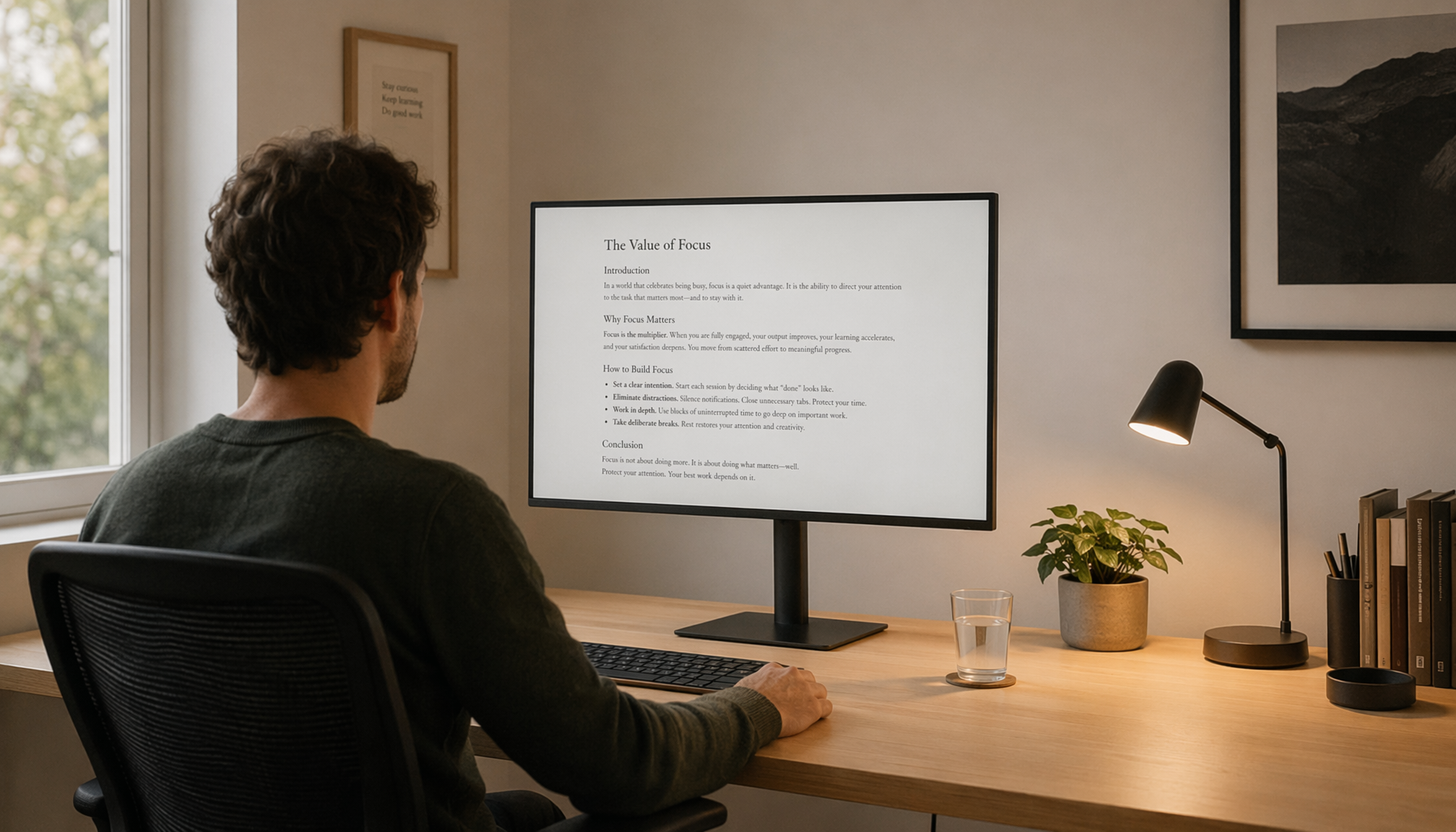
A reliable setup starts with the display at 6500K or in sRGB/Standard mode. During the day, keep room lighting around 4000K-5000K. In the evening, shift the room warmer to 2700K-3500K. If you use bias lighting behind the monitor, keep it in the 4000K-6500K range and dim it so it supports the screen without competing with it.
Match Brightness, Not Just Kelvin
Color temperature gets attention, but brightness mismatch causes the bigger comfort problem. OSHA notes that high contrast between the screen, work surface, and surrounding area can contribute to eye fatigue and headaches, while diffuse light helps reduce glare and visual hot spots surrounding area.
In practical terms, a bright display in a dark room is the enemy of extended viewing. Your eyes keep adapting between the screen and the room, which makes long sessions feel harder than they should.
Use the paper test: open a blank white document, hold a sheet of white paper beside the monitor, and adjust screen brightness until the screen is not dramatically brighter than the paper. Many home office setups land around 30%-50% monitor brightness, depending on ambient light.
Best Settings by Use Case
For office productivity, choose 4000K-5000K room lighting with a 6500K display. This keeps spreadsheets, documents, dashboards, and browser pages crisp without pushing the room into a sterile, blue-white feel.
For immersive gaming or movie sessions, keep the monitor at 6500K if you care about intended color. Add low-output bias lighting behind the display so dark scenes stay readable without flooding the room.
For late-night use, warm the room to 2700K-3500K and lower monitor brightness. If your monitor has a night mode, use it gently; pushing the screen too warm can distort color, UI contrast, and game visibility.
For color-sensitive work, avoid mixed bulbs. A warm lamp on one side and a daylight bulb on the other can make neutral grays look inconsistent across your desk.

Build a Comfortable Lighting Layout
Do not rely on one overhead fixture. A better display room uses layered light: soft ambient light, a controlled task lamp, and optional bias light behind the screen. Living spaces commonly feel more comfortable around 2700K-3000K, while task areas can use cooler light for clarity.

Place lamps to the side of the monitor, not behind it and not aimed at the panel. For video calls or streaming, a soft key light at roughly 45 degrees can brighten your face while keeping screen glare under control key light.

The best long-session setup is simple: neutral display, moderately cool daytime room light, warmer evening light, and no bright reflections on the screen. That combination preserves immersion, protects clarity, and makes your monitor feel like part of the room instead of a spotlight on your eyes.