Control glare by changing the angle, intensity, and reflection path of sunlight instead of blacking out the room. The best setup combines smart screen placement, diffused window light, calibrated brightness, and the right anti-glare surface.
Squinting at a washed-out monitor while your workspace is filled with daylight is a frustrating tradeoff: the room feels alive, but your screen becomes hard to use. In real setups, turning a monitor perpendicular to the window and softening direct sun with a shade or film can make text easier to read without making the office feel closed in. Here is how to keep the daylight, protect focus, and make your display perform like it belongs in the space.
Why Sunlight Glare Happens
Glare is not just “too much light.” It is excessive brightness or reflected light that competes with the content on your display, reducing contrast and forcing your eyes to work harder. In practice, your monitor may still be technically bright, but the reflection of a window, white wall, glossy desk, or overhead fixture can overpower dark text, game shadows, spreadsheet gridlines, or video-call controls.
The most common mistake is treating all daylight as the enemy. Direct sunlight on the screen is the real problem; controlled natural light in the room is usually a productivity asset. Office ergonomics guidance commonly points to windows, overhead lighting, and reflected work surfaces as key glare sources, while recommending monitor repositioning and lighting control as first-line fixes.
For a quick diagnostic, sit in your normal position and turn off the monitor for 10 seconds. If you see a bright window, lamp, or white tabletop reflected in the black screen, that surface is your glare path. Your job is to break that path, not necessarily block the window.

Start With Screen Placement Before Buying Anything
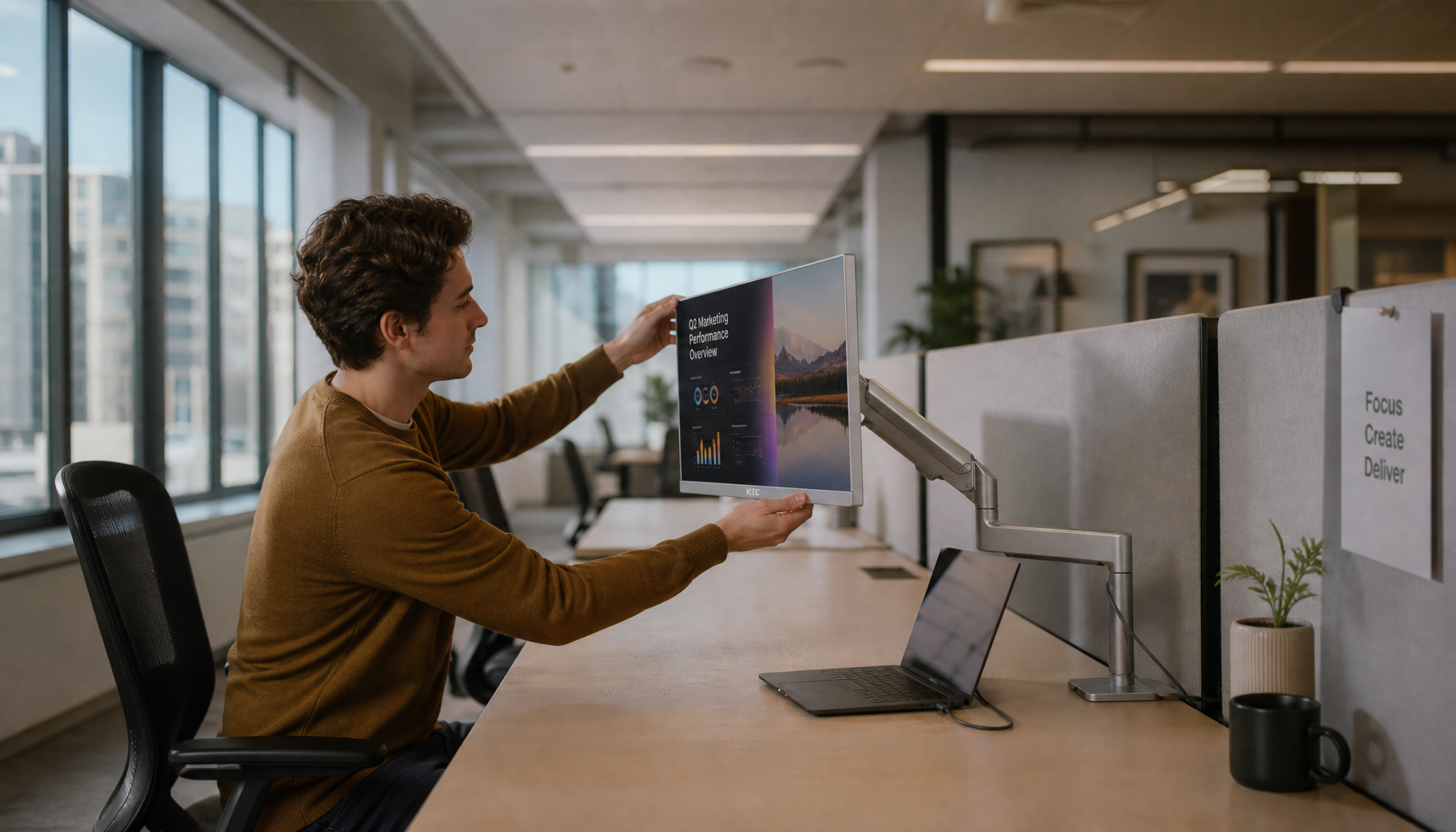
The fastest improvement usually comes from moving the monitor so it sits at a right angle to the window. That means the window is beside you, not directly behind the screen and not directly behind your head. A screen facing a window gets blasted by direct light; a screen with a window behind you becomes a mirror.
Digital signage placement follows the same logic at a larger scale: visibility improves when teams study how sunlight moves through the space and avoid putting screens in direct sun paths. For a home office or gaming setup, do a simple morning, noon, and late-afternoon check. If the sun only hits your display between 4:00 PM and 5:00 PM, a targeted shade is better than permanent blackout curtains.
Monitor height and tilt matter, too. A small tilt can redirect reflections away from your eyes, but over-tilting may create neck strain or distort viewing angles. For productivity displays, keep the top of the panel around eye level and make small angle changes until the window reflection disappears from your seated position. For gaming monitors, especially curved or ultrawide panels, test from your actual play posture because aggressive curvature can catch side-window reflections differently across the panel.
Diffuse the Window, Don’t Kill the Daylight
The goal is soft daylight, not darkness. Sheer roller shades, light-filtering curtains, frosted window film, solar film, and adjustable blinds reduce harsh direct rays while preserving ambient brightness. This keeps the room visually open and prevents the “cave office” effect that often leads people to crank monitor brightness too high.

For a south- or west-facing workspace, choose adjustable treatments rather than a fixed solution. A sheer shade may be enough in the morning, while angled blinds may be needed later when the sun drops low. If you work on color-sensitive content, avoid deeply tinted films that shift the room’s color temperature; for spreadsheets, coding, writing, and general office work, diffusion matters more than perfect color neutrality.
There is a practical performance reason to diffuse rather than block. Sunlight-readable display guidance emphasizes that outdoor and high-brightness environments are not solved by brightness alone; coatings, bonding, placement, and environmental controls all contribute to readability. Your office display benefits from the same layered thinking, just at a less extreme scale.
Tune Brightness and Contrast Like a Display System
Brightness can help, but it is not a cure-all. If the screen is too dim relative to the room, content looks washed out. If it is too bright, your eyes fatigue, especially when the sun fades and the monitor stays at daytime intensity.
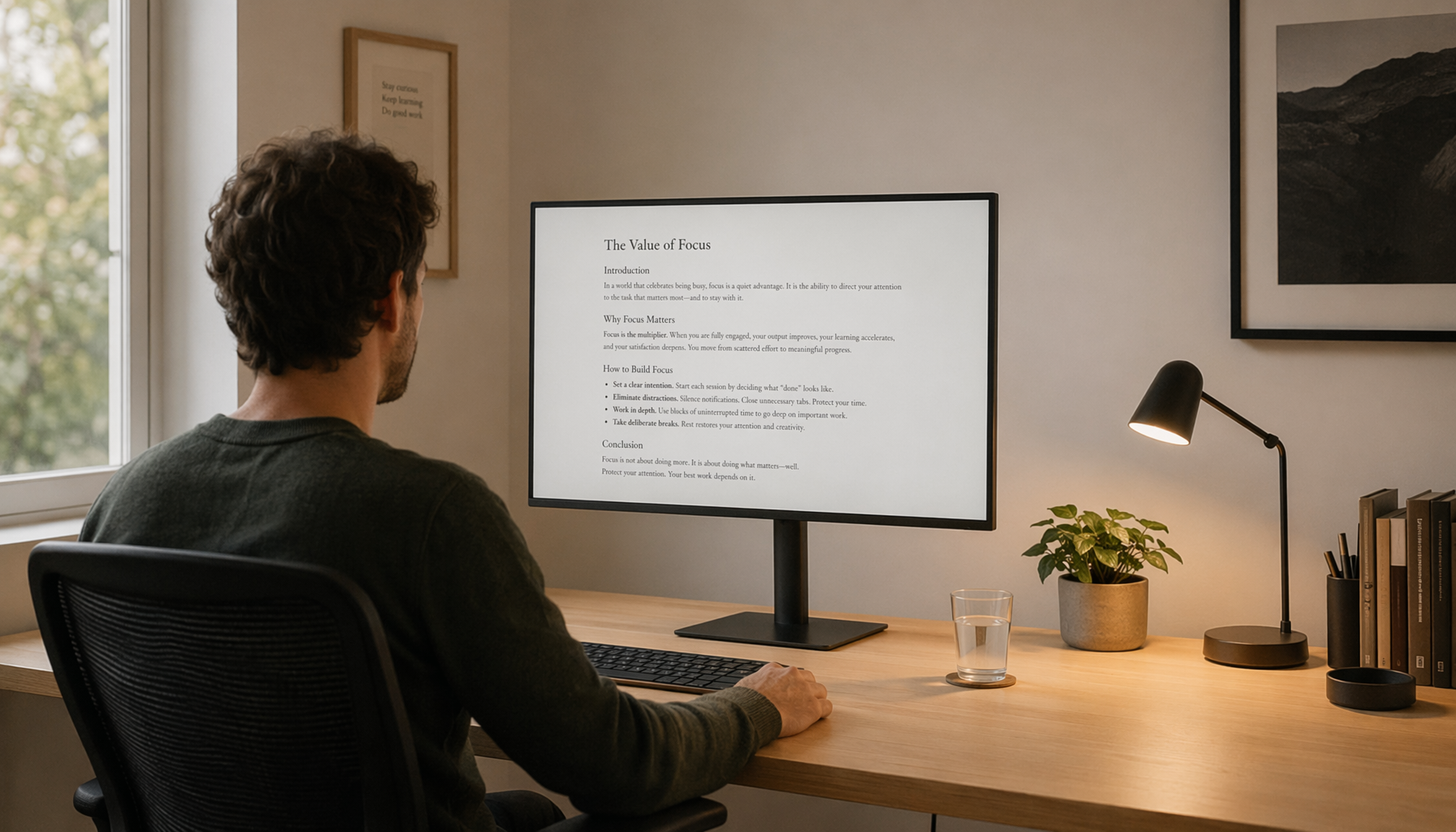
A good starting point is to raise brightness until white backgrounds look clean but not glowing. Then increase text contrast through your operating system, app theme, or monitor settings. For daytime spreadsheet work, a light theme with strong text contrast often beats dark mode because it reduces the visible contrast between the bright room and the document background. For gaming, use in-game gamma and black equalizer features carefully; boosting shadow detail can help in bright rooms, but too much adjustment makes the image flat and reduces immersion.
Automatic brightness can be useful on laptops and portable smart screens, but it is not always tuned for precision. If your display keeps dimming while you are working near a window, set a manual daytime profile and a lower evening profile. On a quality monitor, save these as presets so you are not rebuilding the setup every afternoon.
Choose the Right Anti-Glare Surface
Anti-glare treatments scatter incoming light so it does not bounce straight back into your eyes. Matte monitor coatings, external anti-glare films, and clip-on filters all work on that principle. For bright offices and portable screens, this is often the most value-oriented upgrade because it improves an existing display instead of replacing it.

There are tradeoffs. A stronger matte surface reduces mirror-like reflections, but it can soften text slightly or create a grainy sparkle effect on white backgrounds. Display testing specialists note that anti-glare microstructures can reduce reflections while also introducing visible sparkle if the surface texture interacts poorly with pixel geometry. That is why premium office monitors often use lighter haze coatings instead of extremely rough matte layers.
For office productivity, a moderate anti-glare finish is usually ideal. For competitive gaming, avoid cheap films that blur motion detail or add texture to bright skies and HUD elements. For portable smart screens used near windows, a removable magnetic anti-glare filter can be smart because you can use it in bright locations and remove it for media viewing in controlled lighting.
Option |
Best Use |
Pros |
Cons |
Matte monitor coating |
Daily office or mixed-light gaming |
Built in, clean, reliable |
Quality varies by panel |
External anti-glare film |
Existing glossy screen |
Affordable, targeted fix |
Can soften text if low quality |
Clip-on filter |
Shared or temporary setup |
Removable, easy to test |
May affect fit or touch use |
Window diffusion |
Whole workspace |
Keeps natural light |
Needs seasonal adjustment |
Severe side glare |
Very effective locally |
Bulky, less elegant |
When a Brighter Display Actually Makes Sense
If you have optimized placement and window diffusion but the display still washes out, the panel may simply lack enough luminance for the room. Standard indoor LCDs are often far below true sunlight-readable performance, while outdoor-focused displays use much brighter backlights and optical treatments to preserve contrast. Industrial sunlight-readable monitors commonly combine high brightness, coatings, and optical bonding rather than relying on one spec alone.
For a normal office, you do not need a rugged outdoor screen. But if your desk sits beside a large glass wall, a brighter productivity monitor with a good matte finish and strong contrast may be worth more than another lamp, shade, or filter. Look for a display that can sustain comfortable brightness, has a non-glossy surface, and offers usable presets. A very glossy, high-contrast monitor can look spectacular at night and frustrating at 2:00 PM.
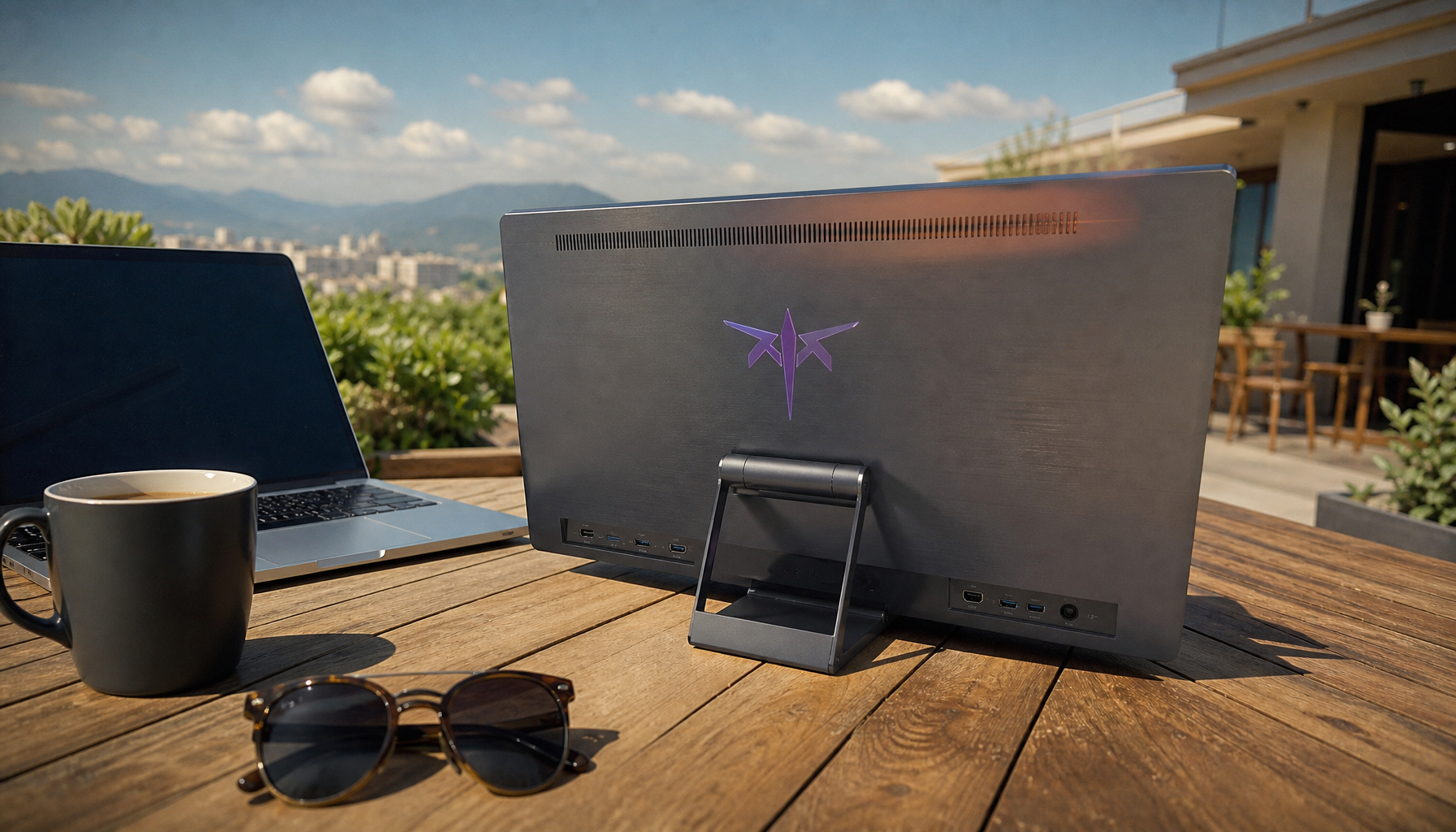
Portable smart screens deserve special attention because they are often used in cafes, coworking rooms, patios, and window seats. A compact display with limited brightness and a glossy cover can become unreadable fast. Pair it with a foldable shade, matte protector, and a darker desk mat to reduce reflected light from below.
Control Reflections Around the Desk
Your screen is only one reflective surface in the system. White desks, glass tabletops, framed wall art, glossy keyboards, and bright shirts can all bounce light back into the display. If you see a pale haze across the lower half of the screen, the cause may be the desk surface rather than the window.
A darker, low-sheen desk mat is one of the cheapest fixes. So is moving glossy objects out of the reflection zone. For video calls, this also helps your camera exposure because harsh backlight and screen reflections can make your face look dim or uneven.

Overhead light matters, too. If you have ceiling lights directly above or in front of the monitor, switch to indirect task lighting or move the lamp so it illuminates the desk without striking the screen. Ergonomic glare recommendations often include reducing overhead lighting intensity and using glare shields when light sources cannot be moved.
A Practical Setup Example
Imagine a 27-inch office monitor on a desk 6 ft from a west-facing window. The worst glare appears after 3:30 PM, when sun hits the screen and reflects off a white desktop. The fix is not blackout curtains. Rotate the desk so the window is to the side, add a light-filtering roller shade, tilt the monitor slightly downward, place a charcoal desk mat under the keyboard, and save a brighter afternoon display preset.
That combination keeps the room bright enough to feel natural while removing the direct reflection path. If the screen remains glossy, add a quality anti-glare filter. If the monitor is old and dim, put the filter money toward a brighter matte display instead.
FAQ
Are anti-glare filters worth it?
They are worth it when the display is glossy and you cannot fully control the light source. They are less compelling if your monitor already has a high-quality matte coating or if the real problem is direct sunlight hitting the screen from the wrong angle.
Should I use dark mode to reduce glare?
Dark mode can feel comfortable at night, but it may make reflections more visible in bright daylight because dark backgrounds act more like a mirror. In sunny rooms, a light theme with strong text contrast often reads better.
Is blocking the window better than increasing brightness?
Blocking direct sun is usually better than overpowering it with brightness. Use brightness to balance the display with the room, then use shades, angle changes, and anti-glare surfaces to reduce the reflection itself.
Natural light and high-performance screen visibility can coexist. Treat the workspace as a display environment: redirect the sun, diffuse the window, tune the panel, and upgrade the surface only when the basics are already right.