You don't need to spend $1,500 or more on a premium studio display to achieve professional color accuracy. By focusing on the core specs that matter—Delta E under 2, wide color gamut coverage, and hardware calibration support—freelance designers, photo editors, and video creators can assemble a complete, reliable creative suite for under $2,000 using high-value OEM panels.
The key is vertical integration arbitrage: choosing monitors built around the same advanced panels found in premium brands but without the markup. This approach leaves budget for a hardware colorimeter, ergonomic arm, bias lighting, and a Thunderbolt dock rather than allocating everything to the display itself. The main decision splits between 5K IPS panels for Mac-based photo and print work versus 4K Mini-LED for HDR video and motion design.

The 'Spec-Per-Dollar' Arbitrage: Why You Don't Need a $1,500 Display
Premium studio displays carry a significant brand premium for the same underlying panel technology, calibration readiness, and color performance that OEM options deliver at lower cost. This vertical integration approach gives creators the same Mini-LED backlighting or 5K resolution without paying the full markup, allowing the remaining budget to support a complete workflow instead of just the screen.
For color-critical work, the industry standard is a Delta E of 2.0 or lower, a difference that is barely perceptible to the human eye, according to this guide to Delta E color difference. Monitors that achieve factory Delta E < 2 with 98-99% DCI-P3 coverage meet the baseline for most graphic design, photo retouching, and video grading tasks.
The $2,000 suite target forces disciplined allocation: roughly $425–$530 for the monitor, $200–$300 for a hardware colorimeter, and the balance for ergonomics, lighting, and connectivity. This contrasts sharply with buying an Apple Studio Display at $1,599 and still needing to add a stand, calibration tool, and accessories that push well beyond budget.
Many creators overlook this when upgrading from general-purpose monitors. Checking your primary workflow first—print accuracy versus HDR grading—prevents buying a monitor strong in the wrong area. See our guide on What Delta E Values Actually Mean for Your Creative Work for deeper reading on tolerances across different creative tasks.
The Sharpness vs. Contrast Debate: 5K IPS vs. 4K Mini-LED
The core hardware choice comes down to your dominant workflow. Mac-based photo editors and graphic designers usually benefit most from 5K resolution on an IPS panel, while video editors and motion designers gain more from Mini-LED's HDR contrast.
A 27-inch 5K panel delivers 218 PPI, matching macOS Retina standards for perfect 2x integer scaling. This produces razor-sharp text, fine UI elements, and accurate detail for print work or UI/UX design without the sub-pixel blurring or minor GPU overhead that fractional scaling on 4K panels can introduce. As explained in Apple's scaling guidance, macOS is optimized around this pixel density.
In contrast, a 27-inch 4K Mini-LED monitor with VESA DisplayHDR 1400 certification offers sustained 900-nit brightness and significantly improved dynamic contrast, making it far better suited for HDR video grading and 3D rendering where deep blacks and bright specular highlights matter. The VESA DisplayHDR 1400 specification sets these performance floors specifically for professional content creation.
The trade-off is real. 5K IPS lacks the local-dimming contrast for true HDR, while 4K on macOS often requires non-integer scaling that some pixel-sensitive designers find slightly soft. For hybrid users, test both in your software before committing.

This comparison aligns with our deeper analysis in Mini-LED IPS vs. Standard IPS: Is the Advanced Backlight Worth the Upgrade?. Many creators regret choosing contrast over sharpness—or vice versa—when their workflow evolves. The decision framework is straightforward: prioritize 5K for typography and print-critical accuracy; choose Mini-LED when HDR deliverables dominate your deliverables.
Setting Up for Trust: Calibration and the 'Toggle Tax'
Factory calibration provides a good starting point, but panels drift over time due to component aging and environmental factors. Hardware calibration with a colorimeter remains necessary to maintain Delta E within professional tolerances long-term, as outlined in this explanation of color accuracy and Delta E.
Mini-LED displays introduce a practical friction known as the “Toggle Tax.” In SDR desktop work, especially dark mode, active local dimming often produces visible blooming or halos around bright UI elements like the cursor or windows. Most users turn local dimming off for productivity tasks, which reduces the panel to standard IPS contrast levels of roughly 1000:1. Turning it back on is required for accurate HDR review, creating repeated OSD navigation that feels clunky on monitors without dedicated software controls.
Mac users face an additional consideration with single-cable USB-C setups. While 90W power delivery and KVM functionality are convenient, occasional wake-from-sleep inconsistencies have been reported with certain Apple Silicon configurations. Keeping a spare HDMI or DisplayPort cable handy avoids frustration during tight deadlines. Our guide on How to Verify Your Display Calibration Is Actually Working offers practical tests using neutral gray ramps and shadow detail to confirm ongoing accuracy.
Allocating Your $2,000 Budget: The Complete Suite Breakdown
A monitor priced between $425 and $530 leaves approximately $1,470–$1,575 for the rest of a capable creative suite. This allocation prevents the common mistake of spending nearly the entire budget on the display alone.
$2,000 Creative Suite Budget Allocation
Approximate budget split for a complete creative suite, using safe ranges rather than exact prices. The monitor takes only about a quarter to a third of the total budget, leaving room for calibration, ergonomics, lighting, and accessories.
View chart data
| Category | Low estimate | High estimate |
|---|---|---|
| Monitor | 425.0 | 530.0 |
| Calibration tool | 200.0 | 300.0 |
| Monitor arm | 100.0 | 150.0 |
| Bias lighting and peripherals | 150.0 | 200.0 |
| Dock / other accessories | 720.0 | 1125.0 |
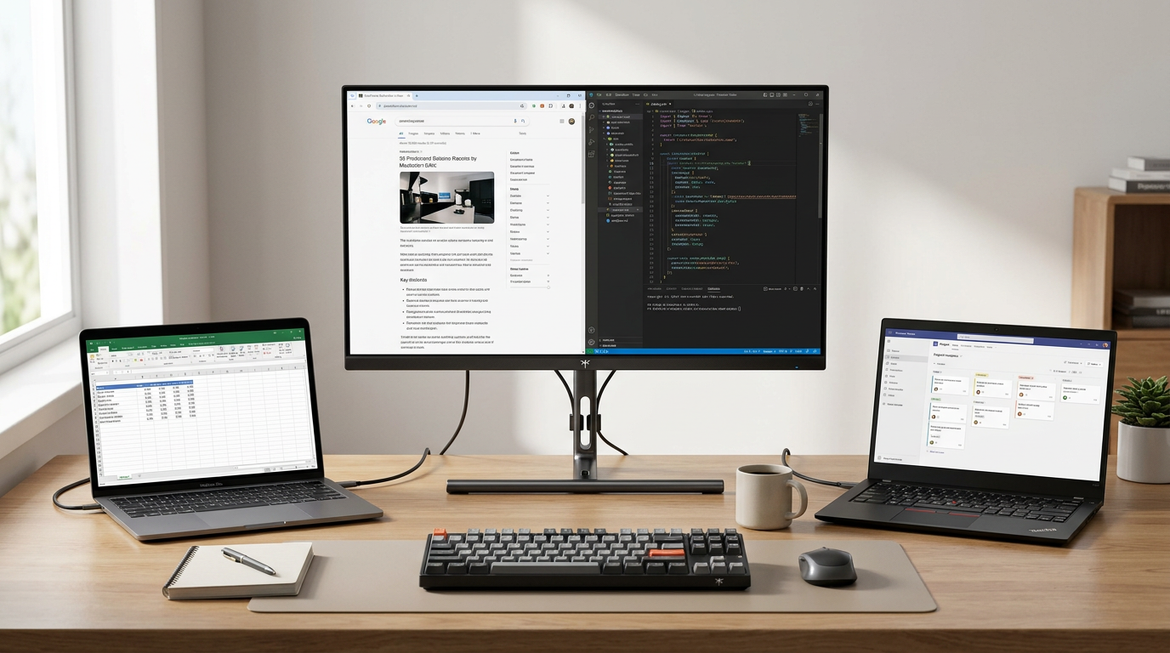
Prioritize a hardware colorimeter in the $200–$300 range. For the H27P3, which ships with a tilt-only stand, invest in a quality monitor arm with full height, swivel, and pivot adjustment—essential for long editing sessions. Add bias lighting behind the monitor to reduce eye strain and improve perceived contrast accuracy. A Thunderbolt dock or high-quality USB-C hub completes the one-cable experience while providing reliable connectivity.
Compare this to purchasing a premium display without these supporting tools. The full suite approach delivers better real-world accuracy and comfort. Our Home Office Setup Guide: How to Choose the Right Ergonomic Monitor details arm selection criteria that prevent neck strain during extended creative work.
Choosing Your Configuration: Which Monitor Anchors Your Studio?
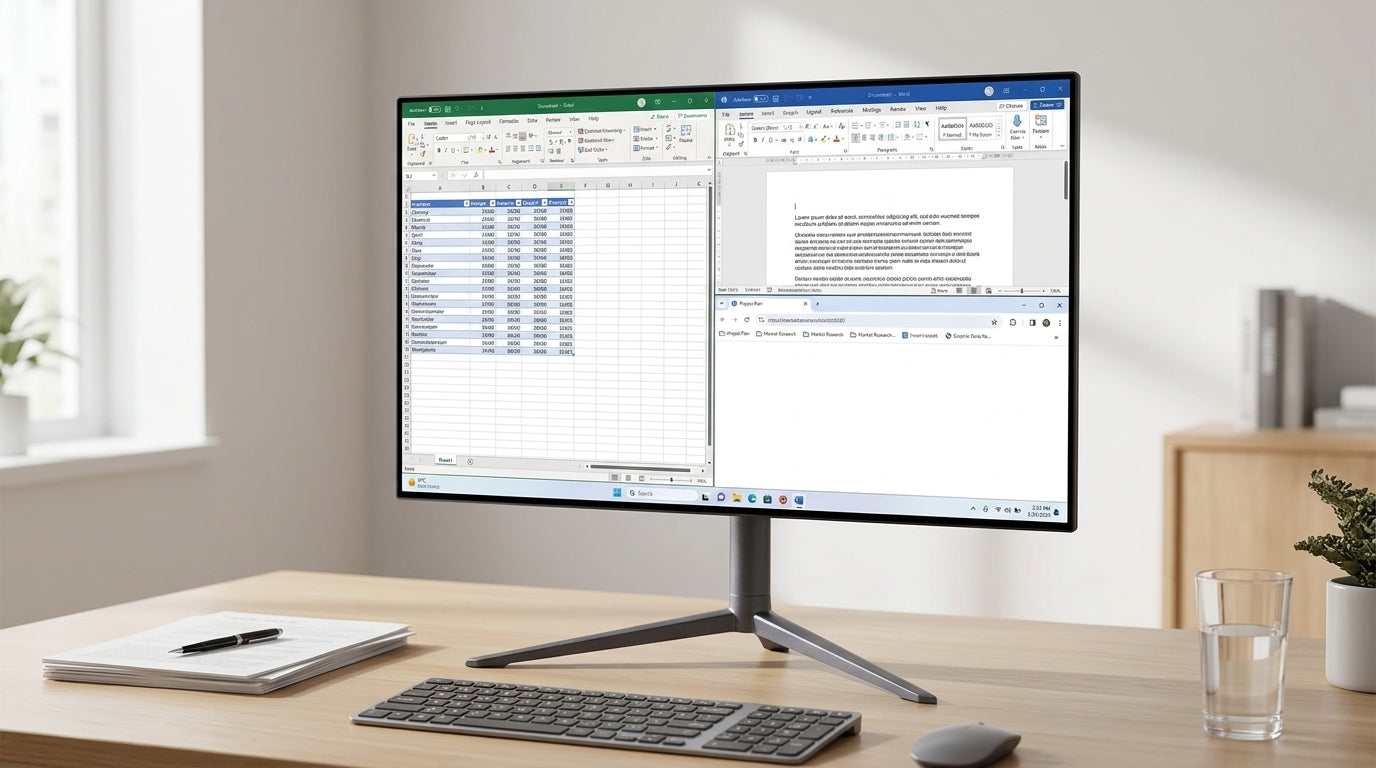
Match the monitor to your primary output. For macOS photo editing, UI/UX design, and print-critical work that demands flawless text and pixel-level precision, the KTC 27" 5K@60Hz 2K@120Hz Home&Office Monitor | H27P3 is the strongest fit. Its 5120x2880 resolution, 99% DCI-P3 coverage, and Delta E < 2 performance align directly with Retina workflows.
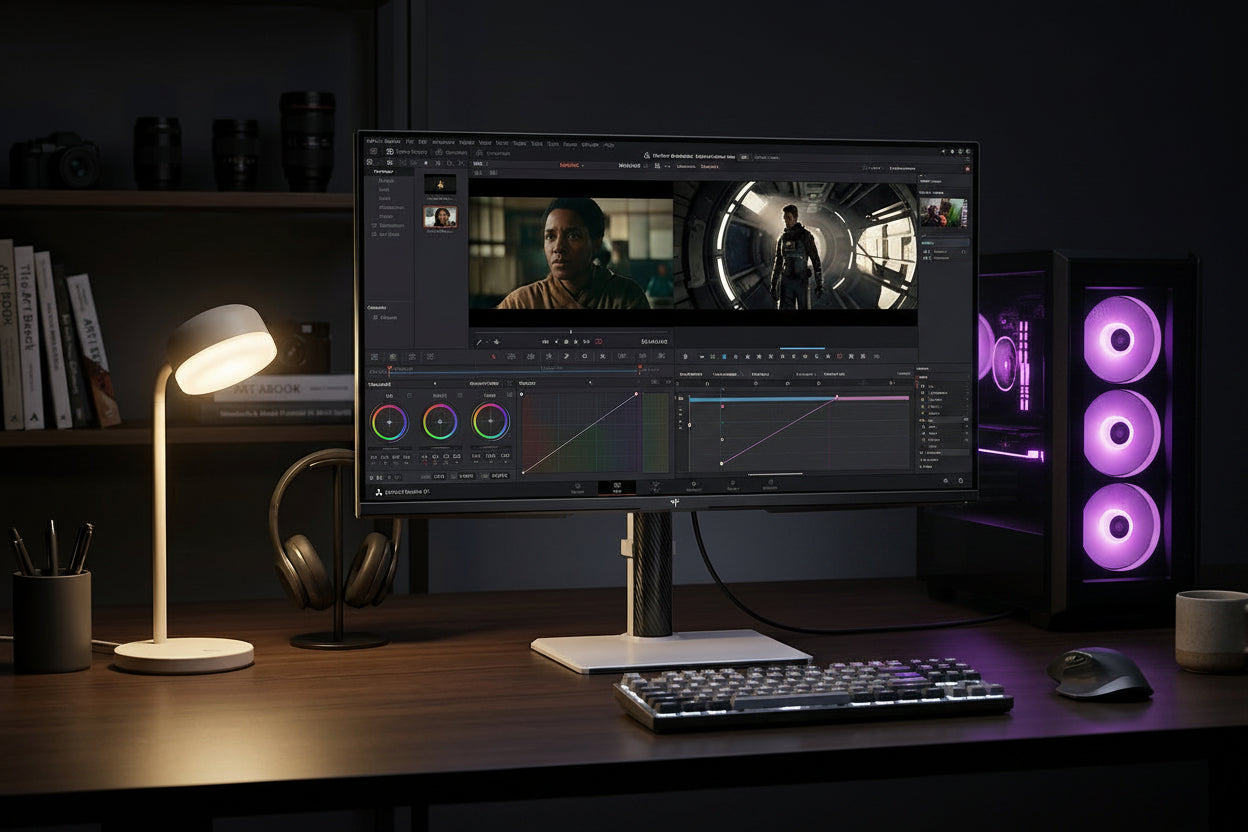
Video editors, motion designers, and hybrid creators who grade HDR content benefit more from the KTC Mini LED 27" 4K 160Hz HDR1400 Gaming Monitor | M27P6. The 1152-zone Mini-LED backlight, HDR1400 certification, and high peak brightness handle modern delivery standards that standard IPS panels cannot match.
Budget-conscious creators whose needs are primarily sRGB web work or lighter 4K canvas duties can start with the KTC 27" 4K 160Hz/320Hz 90W Gaming Monitor | H27P27 at roughly $180. It provides solid factory accuracy but lacks the resolution or HDR performance of the higher-tier options.
Before purchasing, verify your software’s color management settings and test the monitor’s USB-C behavior with your specific Mac model. The configuration that feels limiting after six months of daily use is usually the one that mismatched the dominant workflow from the start.
How Does 5K Resolution Compare to Mini-LED HDR for Creative Professionals?
5K resolution excels in sharpness and scaling on macOS, making it preferable for typography, detailed retouching, and print workflows. Mini-LED HDR1400 delivers superior contrast and brightness for video grading and motion work. Most hybrid creators eventually own both or choose based on 70% of their billable hours.
Is Hardware Calibration Really Necessary for Budget Monitors?
Yes, for any monitor expected to hold professional tolerances beyond the first year. Panel drift occurs regardless of price tier. A $250 colorimeter pays for itself by preventing reprints or client revisions caused by gradual color shift.
What Is the Real Impact of the Mini-LED Toggle Tax?
In dark-mode SDR work, local dimming often creates distracting halos around UI elements. Disabling it for productivity restores clean text but drops contrast to standard IPS levels. Users who switch between modes multiple times per day report this as the most noticeable daily friction.
Can I Rely Solely on USB-C for a Mac-Based Creative Setup?
It works reliably for many, but occasional wake-from-sleep or port negotiation issues have been reported with Apple Silicon Macs. Keeping a standard HDMI cable as backup removes a common point of deadline stress.
How Should I Prioritize the Remaining Budget After Buying the Monitor?
Allocate first to a hardware colorimeter, then to a full-motion monitor arm if your chosen model has limited stand adjustment. Bias lighting and a quality dock follow. This order ensures measurement accuracy and physical comfort before adding conveniences.
Which Setup Works Best for a Freelance Designer Working on Both Print and Web?
The 5K IPS option (H27P3) typically provides the best balance. Its native resolution advantage for typography and detail outweighs HDR benefits when final deliverables are rarely HDR video. Add the calibration tool and arm within the $2,000 envelope for a future-proof desk.