Wireless display can move pixels fast enough for casual viewing, but HDR depends on metadata, tone mapping, color volume, brightness targets, and device handshakes that can break at every hop.
HDR Metadata Is a Chain, Not a Label
HDR works because the source, operating system, graphics hardware, transport layer, receiver, and display agree on how brightness and color should be interpreted. When that agreement holds, specular highlights, shadow detail, and wide color stay intentional instead of washed out or crushed.
On a desktop PC, HDR output depends on display recognition, graphics behavior, and content metadata. Industry HDR setup checks recommend confirming HDR per display when multiple monitors are connected. That matters because a wireless receiver often sits between the PC and monitor, acting like a new “display” with its own capabilities.

For a performance display buyer, this is the core issue: the monitor may be HDR-ready, but the wireless adapter may not pass the full HDR capability map cleanly.
Wireless Protocols Prioritize Compatibility First
Most wireless display systems were built around convenient screen sharing, not reference-grade HDR transport. Peer-to-peer wireless display standards are commonly positioned as wired-video-like links over local wireless networking, but their baseline appeal comes from broad device support, not guaranteed HDR fidelity across every implementation.
That broad approach is useful in classrooms, meeting rooms, and travel setups. But HDR needs tighter control than a slide deck or browser tab. Wireless mirroring protocols must negotiate discovery, compression, transmission, decoding, and display behavior, and those extra steps create more places for metadata to be dropped, ignored, or replaced with a generic SDR-like path.

A wired video connection is simpler: the source reads the display’s capabilities, sends video, and maintains a more direct signal path. Wireless display links add transmitter and receiver units, radio behavior, processing delay, and sometimes format conversion.
Bandwidth Pressure Forces Tradeoffs
HDR at high refresh rates is data-hungry. Add 4K resolution, 10-bit color, wide color gamut, and 120 Hz gaming, and the wireless link has to make hard choices.
Many wireless display systems are selected for clean installation, but a wired connection is still recommended when users need maximum quality, such as uncompressed 4K, 8K, HDR, and immersive audio support. The reason is practical: wireless links face interference, range limits, latency, and dropouts that direct cabling avoids.
Common compromises include reducing resolution from 4K to 1080p, compressing the video stream more aggressively, lowering refresh rate or color depth, outputting HDR content through an SDR container, or tone mapping early before the display sees the original HDR intent.
For gaming monitors, that can turn a premium HDR panel into a bright SDR display with extra steps.
Tone Mapping Can Happen in the Wrong Place
HDR needs tone mapping when the content’s brightness range does not match the display’s real output. That is normal. The problem is location.
Desktop operating systems can perform tone mapping before composing the final image, using monitor color information and content metadata to make that decision. If a wireless receiver reports incomplete capabilities, the source may tone-map for the adapter instead of the actual display.
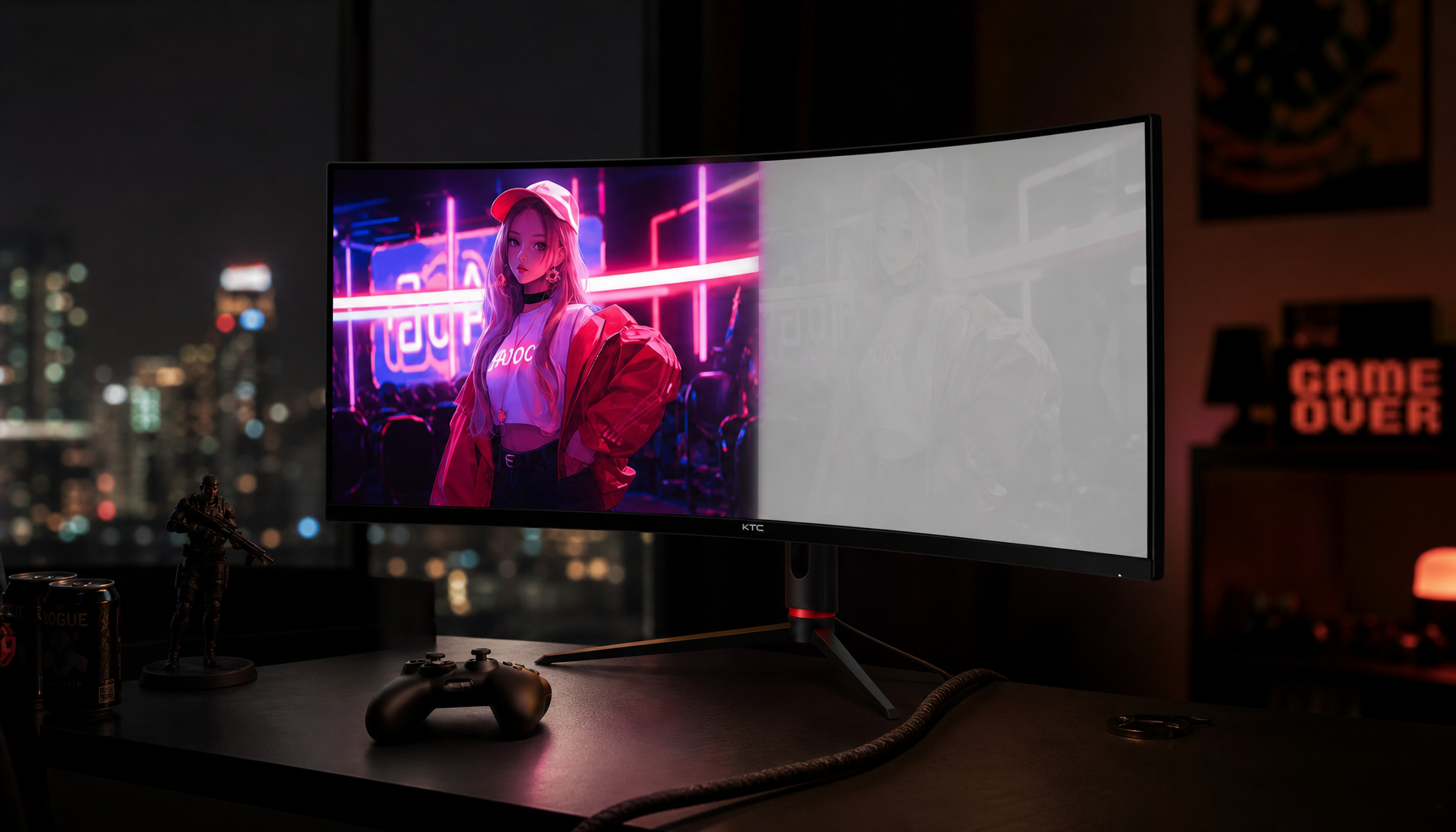
That can produce familiar symptoms: dim HDR, gray blacks, clipped highlights, muted colors, or HDR mode triggering on the monitor while the image still looks flat. The screen says “HDR,” but the creative brightness instructions may already have been compressed upstream.
Some premium wireless systems handle parts of this better, but protocol support, receiver firmware, and display capability reporting still decide the result.
Best Practice for Display Buyers
Use wireless display when convenience is the priority: presentations, casual streaming, portable screens, or clean room layouts. For HDR gaming, color-critical work, and premium monitor performance, use a certified wired connection whenever possible.

A practical buying rule is simple: if you paid for high refresh, 10-bit color, local dimming, or serious peak brightness, do not assume wireless will preserve it. Check that the source, adapter, protocol, and monitor explicitly support the same HDR format, resolution, refresh rate, and color depth.
Wireless display is improving, but HDR is still a precision signal. For immersive, reliable performance, the shortest and most transparent chain usually wins.