









Black levels can look different because static images expose a monitor’s baseline contrast, while moving video adds compression, frame transitions, overdrive, HDR tone mapping, local dimming, and your eyes’ motion sensitivity.
Ever pause a dark game scene or movie and notice the shadows suddenly look cleaner, grayer, or deeper than they did while the action was moving? A few targeted settings checks can reveal whether the difference comes from the panel, the video signal, or motion processing. Here’s how to read what your screen is doing and tune it for sharper dark-scene performance.
The Core Difference: Still Frames Are Easier for a Monitor to Show
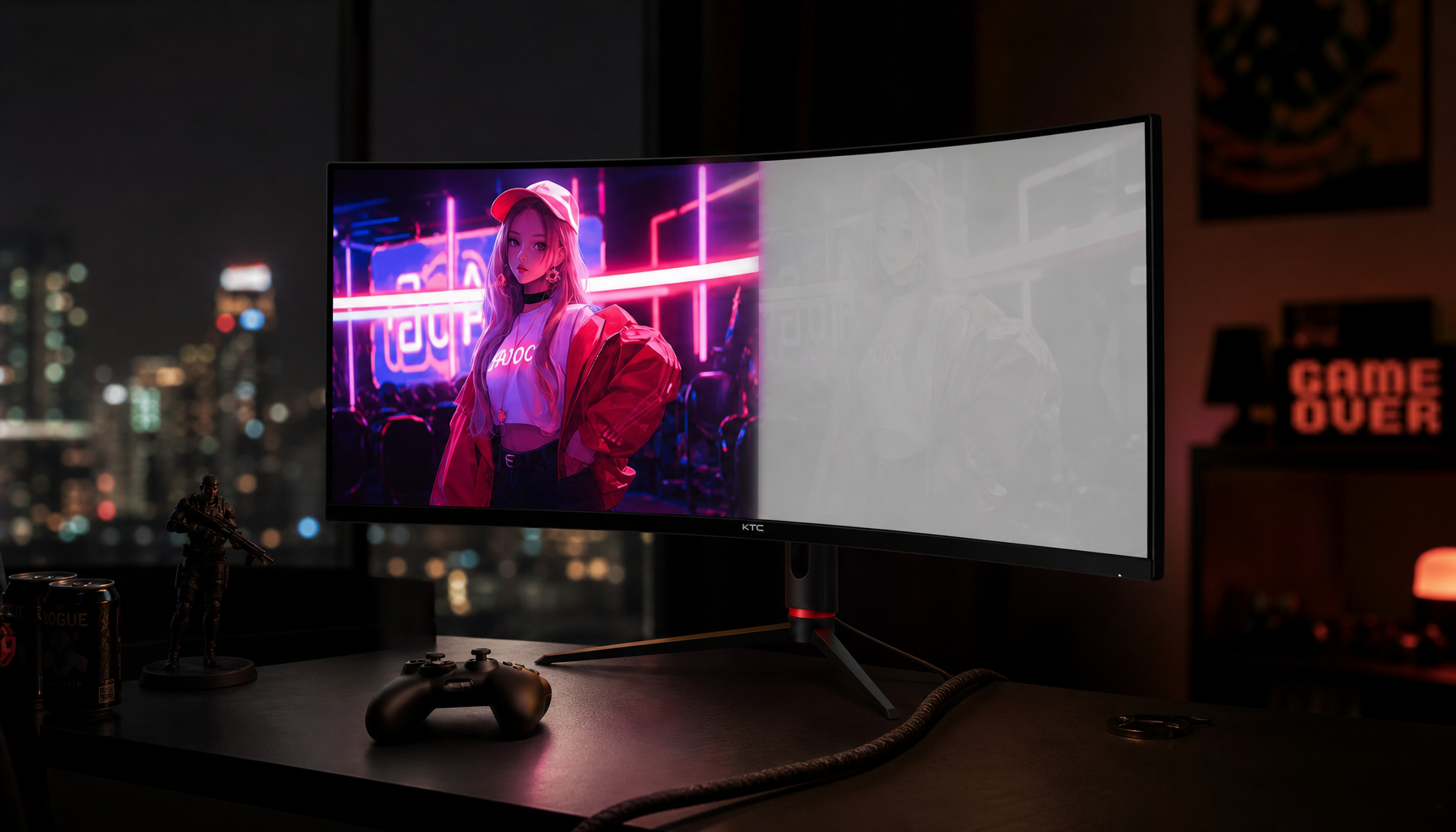
A static image gives your display a stable target. Each pixel or backlight zone can settle into one brightness value, so you can judge black level, shadow detail, and contrast without motion blur or frame-to-frame changes interfering. That is why a dark wallpaper, a paused movie frame, or a calibration pattern often looks more controlled than the same scene in motion.

Moving video is harder. The display must update many brightness values per second, while the source may be compressed, tone-mapped, scaled, sharpened, or processed by the monitor. On LCD monitors, pixel transitions can lag behind the intended frame. On OLED monitors, pixels respond extremely fast, but HDR brightness management, compression artifacts, and near-black handling can still change the impression of black depth.
This is also why two monitors with similar advertised specs can behave differently during a dark cinematic pan. Static contrast tells you one thing; motion clarity, response tuning, dimming behavior, and signal handling tell you the rest.
What “Black Level” Actually Means
Black level is the darkest luminance a display can produce while still showing meaningful image detail. A lower black level usually creates stronger perceived contrast, but only if the display does not crush shadow detail. If a monitor makes every dark gray step look pure black, it may look punchy at first, but you lose information in dark clothing, night skies, cave walls, and competitive game corners.
LCD-based monitors use a backlight shining through liquid crystals, so their blacks depend on how well the panel blocks that light. LCD technology is mature and affordable, but contrast varies widely by panel quality. OLED works differently because each pixel produces its own light and can turn off individually, which is why OLED can deliver true blacks and extremely high perceived contrast.
Mini-LED sits between those worlds. It is still LCD-based, but it uses many small backlight zones to dim dark parts of the image more precisely. That improves black levels dramatically versus basic edge-lit LCD, though bright objects on dark backgrounds can still produce blooming.

Why Static Images Can Look Deeper Than Moving Video
A still image removes motion from the equation. If your monitor has decent native contrast, a dark static image can look rich because the pixels have time to reach their target state and the backlight system is not chasing rapidly changing content.
In moving video, LCD response time becomes a major factor. Response time controls how quickly pixels transition between shades, and aggressive overdrive can reduce blur while introducing overshoot or inverse ghosting. In dark scenes, that can make blacks appear smeared, lifted, or oddly outlined during camera movement.
A practical example is a 144Hz gaming monitor playing a 24 fps movie. The monitor refreshes quickly, but the source only changes 24 times per second. If motion interpolation is off, pans may judder. If overdrive is too strong, dark edges can shimmer or leave inverse trails. If black frame insertion is enabled poorly, the image may look darker but less stable. The paused frame looks right because none of that motion behavior is active.
Why Moving Video Can Sometimes Look Deeper Than Static Images
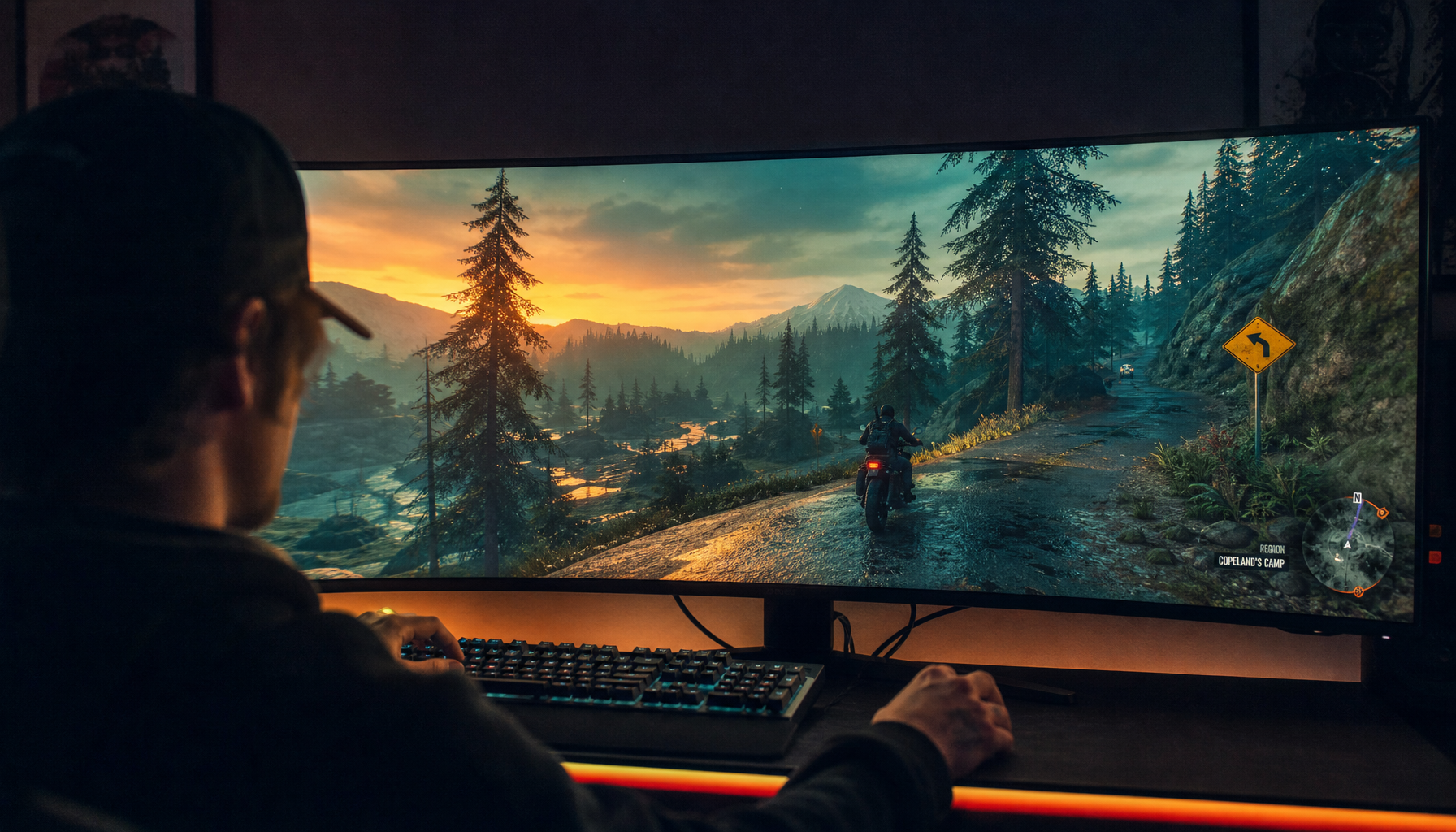
The opposite can happen too. Some videos look blacker in motion than when paused because your eyes are less sensitive to fine near-black detail during movement. Compression noise, banding, and raised blacks may be less obvious while the scene is moving.
Local dimming can also change the result. A static desktop image with a bright taskbar, subtitle, or cursor may force a dimming zone to stay brighter, lifting nearby blacks. During a full-screen video scene, the dimming algorithm may have more predictable content to work with and make the image look deeper. On Mini-LED monitors, this is especially visible in star fields, loading screens, and movie credits.
OLED behaves differently. Because OLED pixels can shut off individually, OLED and Mini-LED often diverge most in dark motion: OLED usually wins black depth and pixel response, while Mini-LED can win sustained brightness and long-term durability. For cinematic games, OLED’s instant pixel response can make black transitions look cleaner. For mixed office and gaming use, Mini-LED avoids burn-in concerns from static UI and can stay brighter in large HDR scenes.
Panel Type Changes the Way Blacks Behave
Panel type |
Black-level behavior |
Motion behavior |
Best fit |
IPS |
Consistent color and wide viewing angles, but weaker contrast and possible glow |
Modern IPS can be fast, though dark transitions vary by model |
Office, creation, general gaming |
VA |
Stronger native contrast and deeper blacks than IPS |
Can show darker smearing in motion on some models |
Movies, cinematic games, mixed media |
OLED |
Pixel-level blacks and extremely high contrast |
Excellent response, very clean motion |
Premium gaming, HDR media, visual immersion |
Mini-LED LCD |
Strong blacks with local dimming, but possible blooming |
Depends on LCD panel response and dimming speed |
Bright rooms, HDR, productivity plus gaming |
IPS is often the productivity favorite because colors and viewing angles stay stable, which matters on large desks and dual-screen setups. IPS monitors are also valued by designers for color consistency, but they typically cannot match VA or OLED for dark-room contrast.
VA panels usually produce darker blacks than IPS, making them attractive for movies and atmospheric games. The tradeoff is that some VA panels have slower dark-pixel transitions, so a night scene can look rich when paused but smeary during fast motion. OLED is the cleanest answer for black depth and motion clarity, but static toolbars, HUDs, and productivity layouts make burn-in prevention worth considering.
HDR, SDR, and Range Mismatches Can Lift or Crush Blacks
Sometimes the monitor is not the problem. The signal chain is. HDR mode, graphics output range, video player settings, cable bandwidth, and monitor picture mode can all change black levels.
HDR is not simply a brighter switch. HDR on a monitor depends on the operating system, graphics hardware, cable, app, firmware, and content all mapping brightness correctly. If one part mishandles the signal, desktop blacks can look gray, shadows can lose detail, or SDR video can appear washed out in an HDR desktop.
For most office work, SDR is the more predictable default. Switch HDR on when the content is actually HDR, such as HDR games, mastered video, or visual review work where highlights and shadow detail matter. A weak entry-level HDR monitor may accept an HDR signal without delivering meaningful HDR contrast, so an HDR badge alone should not drive a buying decision.
Calibration: The Fastest Way to Separate Monitor Limits from Setup Problems
The most useful black-level test is a near-black gradient. If the darkest few steps are invisible, black level is set too low and you are crushing shadow detail. If every dark step is obvious and the whole image looks smoky, black level is too high.
A test pattern is useful because black-level controls affect shadow detail directly. Brightness usually controls the backlight, not image accuracy, so lowering brightness may improve comfort in a dark room without fixing a black-level mismatch. Contrast affects whites and highlight clipping, while gamma changes the midtone curve that determines how heavy or open shadows feel.
A simple real-world check is to open a dark movie scene with a black jacket, pause it, and adjust black level until fabric folds remain barely visible without turning the whole scene gray. Then play the same scene. If the paused frame looks good but motion looks smeared, check overdrive. If bright subtitles create halos, check local dimming. If the whole desktop looks washed out after enabling HDR, return to SDR for daily work and reserve HDR for real HDR content.

Practical Settings for Better Blacks in Video and Games
Start with the monitor’s most neutral picture mode, often called Custom, User, Standard, or Game depending on the brand. Avoid Vivid-style presets for judging black levels because they often exaggerate contrast and saturation.
Set brightness for your room. In a dim room, a lower backlight reduces eye fatigue and can make blacks feel deeper. In a bright office, higher brightness improves visibility, but it can also make IPS glow and gray blacks more obvious. For a 27-inch productivity monitor on a desk, room lighting matters as much as the spec sheet.
Tune overdrive with motion content, not a still image. If dark edges trail behind moving objects, try a stronger setting. If you see bright or colored halos behind moving shapes, reduce overdrive. Competitive players may accept a little artifacting for speed, while video editors, office users, and cinematic gamers should prioritize clean transitions.
Use local dimming selectively. For HDR movies and games, good local dimming can add depth. For desktop work, it can cause brightness shifts around windows, cursors, and subtitles. OLED users should keep pixel-shift, logo dimming, and pixel refresh features enabled where available, especially if the screen also handles office apps and static dashboards.
Buying Advice: Match the Display to the Black-Level Problem You Actually Have
If your main issue is dark-room movie depth, prioritize OLED, VA, or a strong Mini-LED monitor over a basic IPS panel. If your issue is dark-scene motion in games, response behavior matters as much as contrast. Panel choice affects color, black levels, viewing angles, and speed, so do not buy on refresh rate alone.
For office productivity with occasional media, a 27-inch 1440p or 4K IPS monitor remains a reliable value choice, especially if you care about text clarity, viewing angles, and ergonomic stands. For immersive gaming and streaming, OLED gives the most convincing blacks and motion clarity. For one screen that handles spreadsheets by day and HDR games by night, Mini-LED can be the more durable all-purpose compromise.
Also check ports and bandwidth. A high-refresh or high-resolution display may need the right video input standard to run at its advertised mode. If your cable forces a lower refresh rate, reduced color detail, or limited dynamic range, black levels and motion can both suffer.
FAQ
Why do blacks look gray when I play video full screen?
The most common causes are a raised black-level setting, HDR being enabled for SDR content, a limited-versus-full RGB range mismatch, weak native contrast, or a bright room washing out the screen. Start by testing SDR mode, a neutral picture preset, and a near-black gradient.
Why does my monitor look great when paused but blurry in dark motion?
That usually points to pixel response, overdrive tuning, or video compression. VA panels can look especially deep when still but may smear darker transitions on some models. Try changing the response-time setting one step at a time while watching the same dark moving scene.
Is OLED always best for black levels?
For pure black depth and motion clarity, yes. OLED is the premium benchmark because pixels can turn off individually. For long office sessions with static UI, Mini-LED or IPS may be more practical because they avoid OLED burn-in concerns and often handle bright full-screen work better.
Deep blacks are not one spec; they are the result of panel type, signal handling, motion behavior, room lighting, and settings discipline. Calibrate with a still pattern, verify with moving video, and choose the display technology that matches how you actually use the screen.


,%20compression,%20motion%20processing,%20and%20HDR%20tone%20mapping.%20This%20guide%20explains%20why.
)