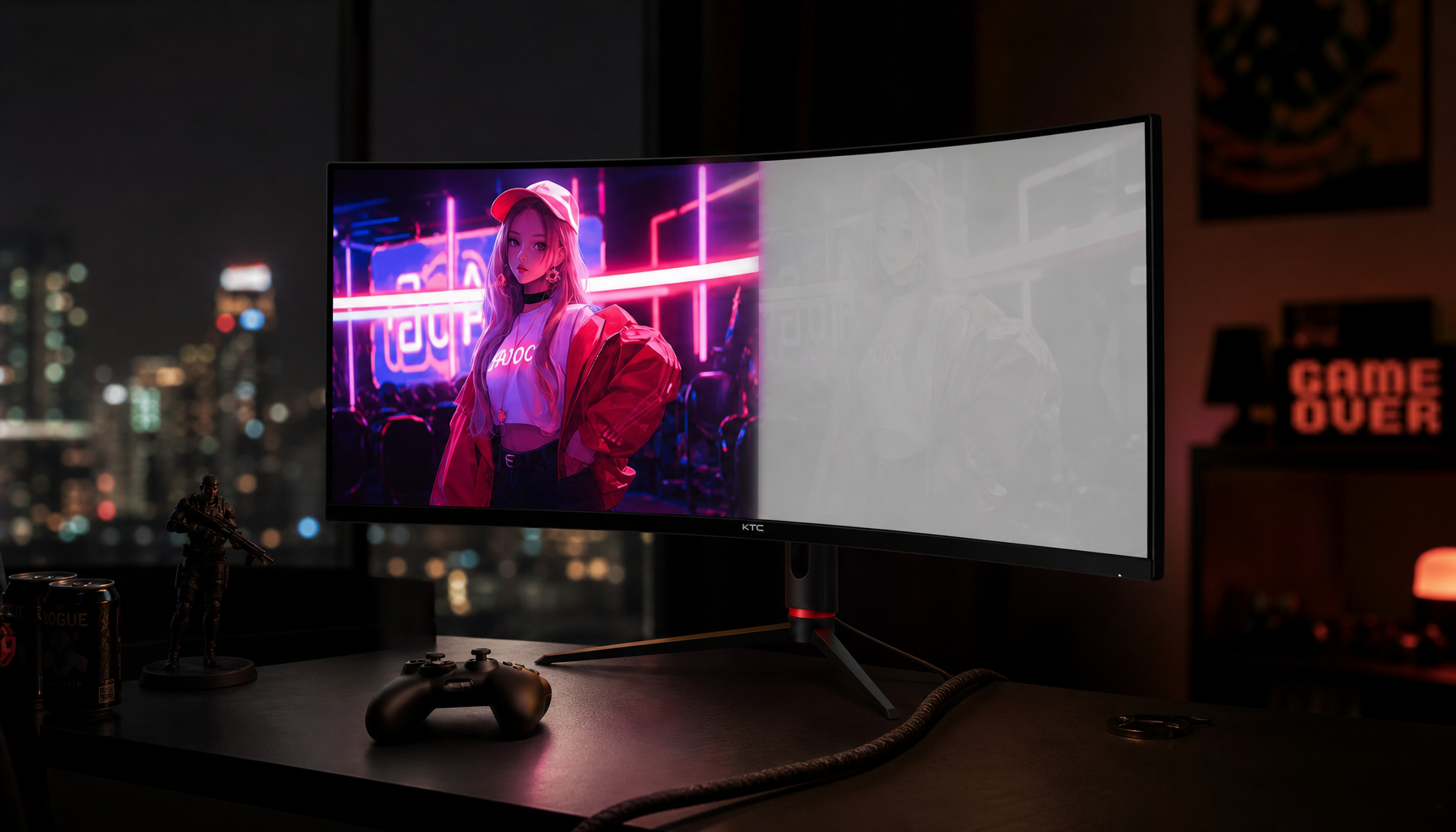
Power-saving modes can reduce brightness, power draw, heat, and eye strain, but they can also shift white point, contrast, gamma, saturation, and brightness stability. For color-critical work, use them outside review, editing, grading, or multi-monitor matching sessions.
Does your carefully edited image look neutral at noon, then too warm, flat, or slightly green by evening after Eco Mode kicks in? A portable monitor can drop from about 22W at full brightness to 14W at 50% and 10W at 30%, so the power benefit is real. The goal is to know when those savings are worth it, when they damage trust, and how to set up a display that stays predictable.
The Short Version: Power Saving Changes More Than Brightness
A power-saving mode is usually not a single switch. A display mode can adjust brightness, contrast, color temperature, sharpness, scaling, refresh behavior, and blue-light output at the same time. That is useful for battery life and comfort, but it is exactly why color accuracy can move.
Color accuracy means the screen reproduces a color close to the intended standard, such as sRGB for web work or P3 for some digital creative workflows. Color consistency means the same file looks stable over time, across brightness levels, and across multiple screens. A monitor can be pleasant and efficient while still being unreliable for color judgment.
In hands-on display setup work, the biggest color mistakes rarely come from one obviously bad setting. They come from quiet automation: auto brightness dimming one screen, Night mode warming another, Eco mode lowering contrast, and a laptop panel using a different profile than the external monitor. The result is a workspace that feels efficient but makes design, photo, product, and brand-color decisions less repeatable.
Why Eco, Reading, Night, and Auto Modes Affect Color
Power-saving modes usually save energy by reducing backlight output on LCD panels, limiting peak brightness, changing refresh rate, or altering the image processing pipeline. On OLED screens, savings can also depend on the actual image content because darker pixels draw less power. The MobiSys 2021 OLED study found dark mode saved only about 3% to 9% at common indoor auto-brightness levels, but about 39% to 47% at full brightness in tested phone scenarios, making brightness the deciding variable for real energy savings.
On LCD office and gaming monitors, the backlight remains the major load, so lowering brightness is usually the cleanest way to reduce power without heavily distorting color. The risk rises when the monitor also changes color temperature, saturation, contrast, gamma, or local enhancement features. A Reading or Eye Care mode may reduce blue light by 30% to 50%, while Vivid mode may boost saturation by 20% to 30%, which helps media pop but can make neutral color work misleading.
Mode |
Typical Benefit |
Color Risk |
Best Use |
Eco or Power Saving |
Lower power draw and heat |
Dimmer luminance, possible contrast compression |
Writing, email, dashboards |
Reading or Eye Care |
Less harsh viewing during long sessions |
Warmer white point and reduced blue output |
Documents, evening office work |
Night Mode |
Comfort in dark rooms |
Strong warm cast, poor color judgment |
Late browsing, not editing |
Vivid |
More visual punch |
Oversaturation and less accurate color |
Casual media, presentations |
Game Mode |
Lower input lag and smoother motion |
Often less accurate color processing |
Competitive play |
Standard or sRGB |
More predictable baseline |
Less dramatic image |
Office, web, color checks |
Brightness Is the Biggest Power Lever, but It Changes Perception
For SDR work, brighter is not automatically more accurate. A portable monitor power example shows a display dropping from about 22W at 100% brightness to 14W at 50% and 10W at 30%, which is a strong reason to avoid running maximum brightness all day. The catch is that lowering brightness too far changes how you judge shadow detail, contrast, and saturation.
A simple example: if you edit a product photo at 30% brightness in a bright room, you may push exposure and saturation too high because the screen looks dull. Later, on a normally lit display, the same image can look overcooked. If you review a spreadsheet or code at 30%, that compromise is fine. If you approve a brand color, it is not.
A basic monitor calibration workflow starts with room lighting, then adjusts brightness, contrast, gamma, and color balance. Calibration is not only for photographers; even basic brightness and contrast tuning can improve readability, shadow detail, and washed-out color.
Color Temperature Shifts Are the Silent Accuracy Killer

Power-saving and comfort modes often make the display warmer by reducing blue light. That can be excellent for evening writing, but it moves the white point away from the neutral target most SDR workflows expect. KTC’s calibration guidance identifies D65, often labeled 6500K, and gamma 2.2 as practical defaults for office, gaming, web, and SDR use, while warning that features like Eco mode, Eye Saver, auto brightness, and HDR modes should be disabled before calibration.
The reason is simple: an ICC profile only describes the display state that existed when it was made. If you calibrate in Standard mode at 120 nits, then switch to Eye Care mode at night, that profile no longer describes the current screen behavior. The profile may still be loaded in the operating system, but the monitor has changed underneath it.
For a real-world workflow, keep two mental lanes. Use comfort modes for reading, writing, meetings, and admin work. Switch back to your calibrated Standard, Custom, or sRGB mode before editing images, checking UI colors, matching a second screen, or approving anything that will ship.
Multi-Monitor Setups Make the Problem More Visible
Dual and triple displays are powerful because they reduce window switching and keep work visible. Research on multiple-monitor setups highlights their value for developers, finance teams, engineers, healthcare review, and creative workflows, but design and media work still need calibrated or closely matched displays for consistent color.
This is where power saving gets exposed fast. Imagine a designer using a 27-inch IPS monitor as the primary canvas and a portable USB-C screen for references. If the portable screen enters Eco mode and drops brightness while the main monitor stays stable, the reference image may look darker and warmer. The designer might adjust the working file to compensate for a problem that exists only on the secondary display.

The same applies to office productivity. A finance dashboard, slide deck, or product catalog may not need reference-grade accuracy, but it still benefits from consistency. When one display uses Night mode and the other uses Standard, charts, status colors, and product images can look unnecessarily different, which slows visual judgment.
Gaming Monitors, High Refresh, and Power-Saving Tradeoffs
Gaming displays are built for speed, smoothness, and immersion. A practical monitor buying guide recommends treating marketing labels cautiously and evaluating measurable specs like refresh rate, response time, adaptive sync, connectivity, and ergonomics. For color consistency, apply the same skepticism to power-saving presets.
A 144Hz or 240Hz mode can draw more power than 60Hz, especially on portable displays where high refresh rates may add a few watts. Dropping to 60Hz for spreadsheets, coding, or writing is a smart efficiency move and usually has less color impact than switching into a heavy Eco or Eye Care preset. For gaming, use Game mode when latency matters, but do not judge photo edits, thumbnails, product colors, or stream overlays in that mode unless it has been calibrated and verified.
OLED adds another wrinkle. Dark interfaces can save meaningful energy at high brightness, but the OLED study suggests indoor savings may be modest at moderate brightness. For a desktop OLED monitor, dark mode can still reduce panel stress and improve perceived contrast, yet it should not replace proper calibration or a stable review mode.
How to Use Power Saving Without Losing Color Trust
Start by separating “work comfort” from “color decision” modes. Your everyday mode can be efficient, lower brightness, and easier on the eyes. Your review mode should be stable, neutral, and repeatable.
The most reliable baseline is a neutral preset such as Standard, Custom, User, sRGB, Warm, or 6500K, depending on what the monitor offers. KTC’s calibration without RGB controls guidance is practical here: reset the monitor, disable dynamic image features, use native resolution, choose the most neutral preset, set brightness before color, then save a clearly named profile.

For office displays, a target around 100 to 120 nits in dim room lighting is a reasonable calibration zone, while brighter rooms may require more luminance for visibility. The key is not chasing one universal number. The key is keeping the same brightness, preset, HDR state, and ambient lighting whenever you make color decisions.
For creative work, prioritize a monitor that is built for accuracy rather than forcing a gaming or budget office panel into a reference role. Display-selection guidance often emphasizes resolution, PPI, and color-focused specs; a 4K monitor can be a strong fit for many design, UI, branding, and digital illustration workflows, while 5K makes more sense for higher-detail creative work.
The Practical Setup I Recommend
Use Standard, Custom, or sRGB as your anchor mode. Calibrate or visually tune that mode under your normal working light, then leave it untouched. If your monitor has auto brightness, dynamic contrast, Eye Saver, Vivid, Super Resolution, or SDR-inappropriate HDR processing, keep those off for the anchor mode.
Use Eco mode when you are writing, researching, coding, managing email, or running dashboards. Use Reading or Night mode when comfort matters more than color truth. Use Game mode for competitive play. Before color-sensitive work, switch back to the anchor mode and give your eyes a minute to adapt, especially if you were using a warm night setting.
For multi-monitor desks, match brightness by eye only as a starting point, then use a colorimeter when color matters. Visual calibration improves usability but cannot verify accuracy. For product photography, print matching, brand design, video grading, medical imagery, or multi-monitor consistency, measurement is worth it.
Pros and Cons of Display Power-Saving Modes
Power-saving modes are valuable because they cut energy use, extend laptop battery life with portable screens, reduce heat, and improve comfort during long workdays. They also make more sense on USB-C portable monitors, where a 15W to 30W secondary screen can substantially increase the total draw of a laptop setup.
The downside is predictability. Eco, Night, Reading, Vivid, and Game modes can change the exact image characteristics you rely on for color judgment. The mode may be helpful, but it is not neutral. Treat it like a task-specific tool rather than the truth.
FAQ
Does dark mode improve color accuracy?
Dark mode can reduce power use on OLED screens, especially at high brightness, but it does not improve color accuracy by itself. It changes interface luminance and viewing comfort, not the monitor’s measured fidelity.
Should I turn off Eco mode before calibration?
Yes. Calibration should be done in the exact mode you plan to use for color-critical work. If Eco mode changes brightness, contrast, or color temperature afterward, the profile may no longer match the display.
Is lowering brightness bad for color work?
Not automatically. A controlled, moderate brightness can improve consistency and comfort. The problem is lowering brightness so far that you misjudge shadows, contrast, and saturation, especially in a bright room.
Are portable monitors worse for color consistency?
Not always, but they are more likely to be power-managed aggressively because they often run from a laptop or power bank. Lock the brightness and mode before using one as a reference or secondary creative display.
Final Word
Power-saving modes are excellent servants and poor judges. Use them to stretch battery life, reduce heat, and make long sessions easier, then switch to a stable calibrated mode when the color decision matters. A display that saves power and stays predictable is the real performance win.