Bit depth is the precision of color steps your monitor can show: 8-bit is enough for most SDR use, while 10-bit mainly improves smooth gradients and HDR scenes.
If you have ever seen a sky in a game look smooth on one monitor but striped on another, this is the setting behind that difference. The jump from 8-bit to 10-bit increases per-channel shade steps from 256 to 1,024, which is why subtle shadows and highlights can look cleaner. You will leave with a practical way to decide when 10-bit is worth prioritizing over higher refresh rate, panel speed, or budget.

Bit Depth in Plain English
Precision, not “more colorful”
In monitor specs, bit depth usually means bits per color channel (red, green, blue), which controls how finely each channel can step from dark to bright. More steps means smoother transitions between tones, especially in gradients.
A display’s color gamut is a different property from bit depth. Gamut is the range of colors a monitor can cover (like sRGB or DCI-P3), while bit depth is how smoothly the monitor can move between shades inside that range.
Mainstream screens standardized around 24-bit true color, where each RGB channel gets 8 bits. That is why “8-bit display” today usually means 8 bits per channel, not 8 bits total for the whole pixel.
8-bit vs 10-bit: What Changes on Screen?
The numbers and their visual impact
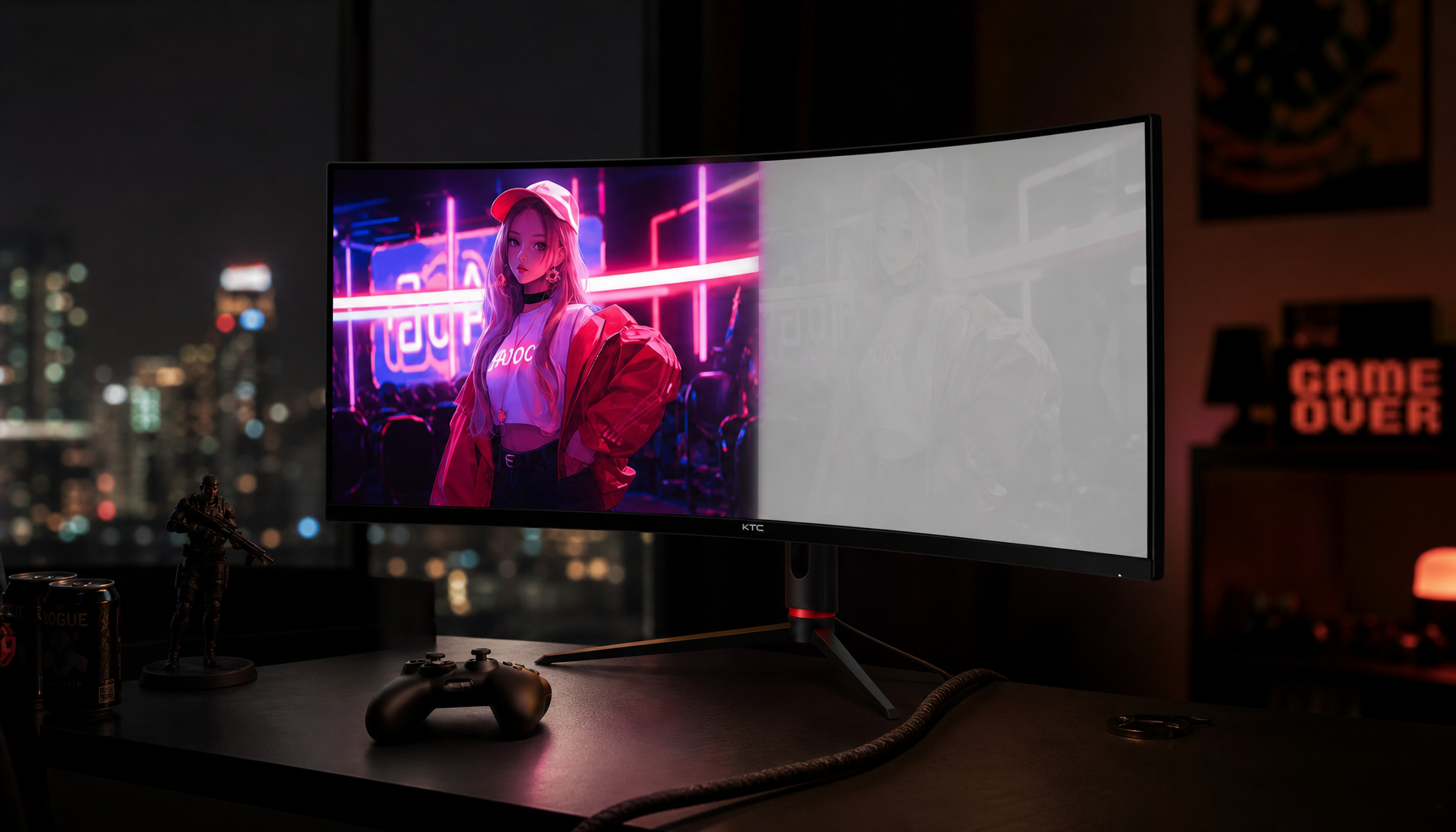
The core math is straightforward: 8-bit per channel uses 256 levels (0-255), while 10-bit uses 1,024 levels. That is why totals jump from about 16.7 million color combinations to about 1.07 billion.
Mode |
Levels per channel |
Total RGB combinations |
What you usually notice |
Best fit |
6-bit |
64 |
262,144 |
More obvious stepping in gradients |
Budget office/secondary screens |
8-bit |
256 |
16,777,216 |
Generally clean for SDR gaming and desktop work |
Most gaming monitors |
8-bit + FRC |
Simulated near 10-bit |
Marketed near 1.07B |
Smoother gradients than plain 8-bit |
Mid-range gaming and portable monitors |
True 10-bit |
1,024 |
1,073,741,824 |
Best gradient smoothness and tonal control |
HDR and color-critical workflows |
Visible banding in gradients is the main reason buyers care about 10-bit. In practice, skies, smoke, fog, skin tones, and dark shadow ramps are where the difference is easiest to spot on gaming and ultrawide monitors. |
||||
Most home desktop and web content is still 8-bit in SDR, while HDR formats target 10-bit or higher. So 10-bit helps most when your games, media, and monitor mode are all actually running an HDR-capable pipeline. |

True 10-bit vs 8-bit + FRC: Reading Specs Without Guessing
Marketing label vs panel behavior
Many monitor listings that say “10-bit” are actually 8-bit + FRC rather than native 10-bit panels. FRC (frame rate control) rapidly alternates nearby shades so your eye perceives an in-between tone.
In portable and mid-range displays, 8-bit + FRC can noticeably reduce banding at lower cost. The tradeoff is that strict grading workflows may still prefer native 10-bit because temporal dithering can introduce subtle artifacts in difficult gradients.
Spec-sheet clues like 16.7M vs 1.07B color listings help you classify a panel quickly. As a buying shortcut: 16.7M usually signals 8-bit, “1.07B” may be native 10-bit or 8-bit+FRC, and “16.2M/16M” often points to 6-bit class panels.
Gaming Monitor Decisions: Bit Depth vs Refresh Rate
The common 120 Hz vs 144 Hz tradeoff
A real-world monitor-buying case showed a 38-inch ultrawide running 10-bit at 120 Hz but dropping to 8-bit at 144 Hz. That exact tradeoff appears often in high-refresh models, especially at higher resolutions.
Display output modes are constrained by valid HDMI mode combinations and bandwidth limits. When a monitor OSD forces you to choose between higher Hz and higher bit depth, it is usually a link-budget limitation, not a “bad” panel.
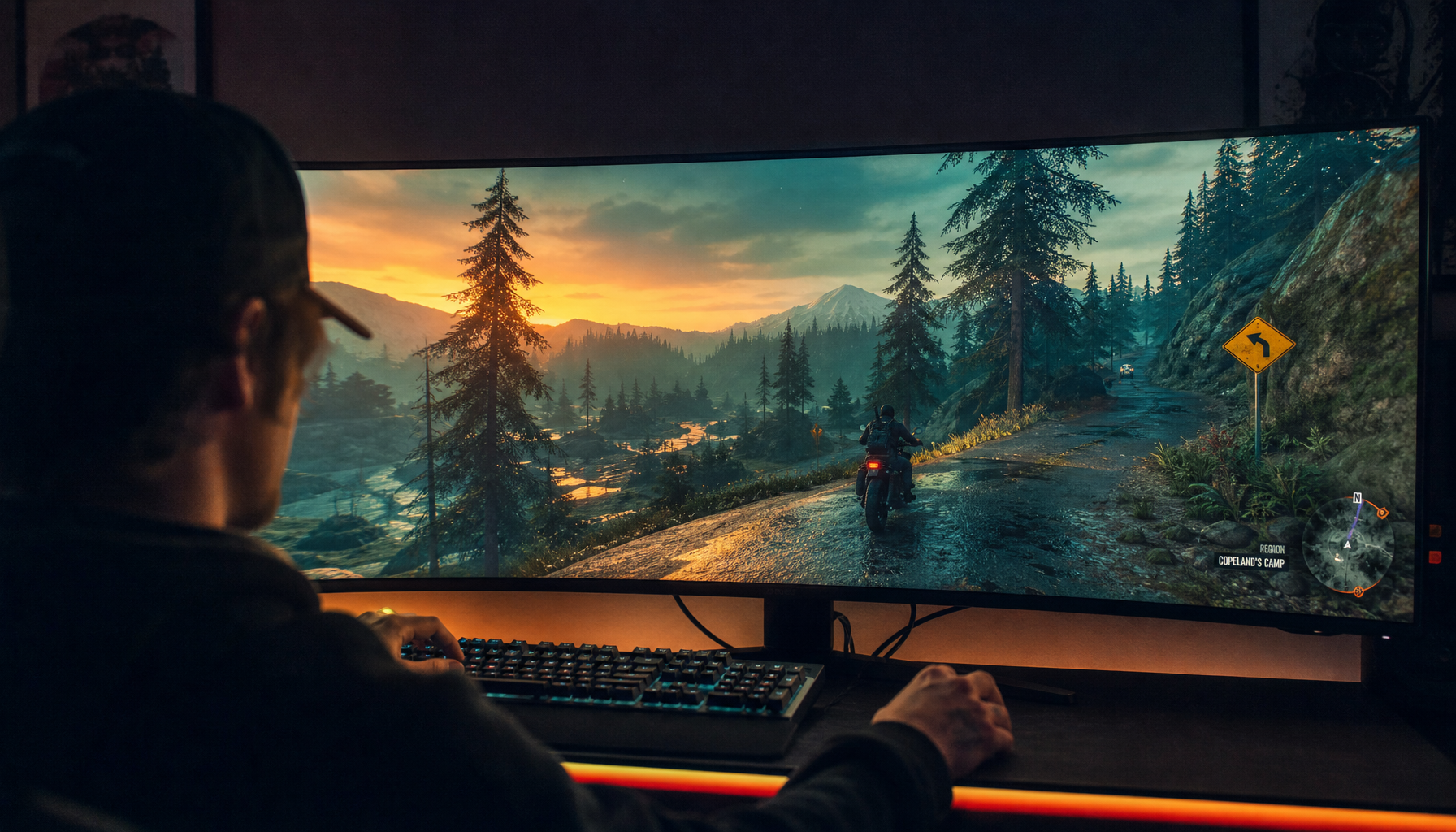
For many users, 8-bit or 8-bit+FRC remains the common creative and gaming setup. A practical rule: prioritize 144 Hz for competitive shooters and fast motion clarity, but prioritize 10-bit mode for HDR single-player titles, cinematic games, and mixed gaming-plus-editing workflows where gradient quality is visible.
How to Check and Configure Bit Depth on Windows
A 5-minute setup workflow
Windows shows your current mode in Advanced display settings. Path: Start > Settings > Display > Advanced display settings, then select the target monitor and confirm reported bit depth.
GPU control panels expose output depth settings, and 10 bpc can be set under NVIDIA or AMD display options. If 10-bit is unavailable, common blockers are cable/port limits, refresh-rate mode limits, or monitor-side OSD settings.
A dated workflow note from August 17, 2018 with a July 29, 2019 update is still useful for one key point: prefer DisplayPort when possible for stable high-color-depth configurations. In daily use, the full chain must align: source content, app, GPU driver, cable/port, monitor mode.

FAQ
Q: Does 10-bit always matter for gaming monitors?
A: HDR-heavy content benefits most from 10-bit precision, while fast SDR esports often gains more from higher refresh rate and response behavior.
Q: Is 8-bit + FRC good enough for a portable monitor or secondary gaming screen?
A: 8-bit + FRC is commonly used and often visually close to 10-bit for everyday work, casual gaming, and field setups.
Q: Why does banding still appear on a “10-bit” monitor?
A: The selected output mode and monitor capability must both be verified, and many pipelines still feed 8-bit SDR content that cannot magically gain missing gradient data.
Practical Next Steps
- Check your current bit depth in Windows and verify what your monitor is actually receiving.
- In your GPU control panel, test two profiles: max refresh + 8-bit and lower refresh + 10-bit.
- Run a gradient test image and one HDR game scene to see which profile looks better on your panel.
- For buying decisions, treat native 10-bit as a priority only if you regularly use HDR content or color-sensitive editing; otherwise, focus first on refresh rate, response time, and panel consistency.
References
- Wikipedia: Color depth
- HowStuffWorks: Monitor Color Depth
- LCD Module Pro: Color Depth in LCD Modules (8-bit vs 10-bit + FRC)
- RTINGS: Gradient Test & Banding Explanation
- RTINGS: HDR vs SDR
- Microsoft Learn: Display Color Depth Discussion
- Microsoft Learn: 10-bit Output Explanation
- NVIDIA Forum: Picture quality, colorimetry, frame rate
- Linus Tech Tips Forum: 10-bit vs 8-bit for gaming
- Engineering Stack Exchange: 16.7 million colors calculation