IPS glow is a normal side effect of IPS panel design that becomes more obvious in dark rooms, at high brightness, and when you sit close to larger screens. Screen size matters, but viewing distance, backlight quality, and panel variation often matter just as much.
Do dark game scenes look smoky in the corners even though the monitor seems sharp, fast, and colorful everywhere else? A few practical changes, such as lowering brightness, adding soft light behind the screen, and adjusting your seating position, can make the effect much less distracting in everyday use.
What IPS Glow Actually Is
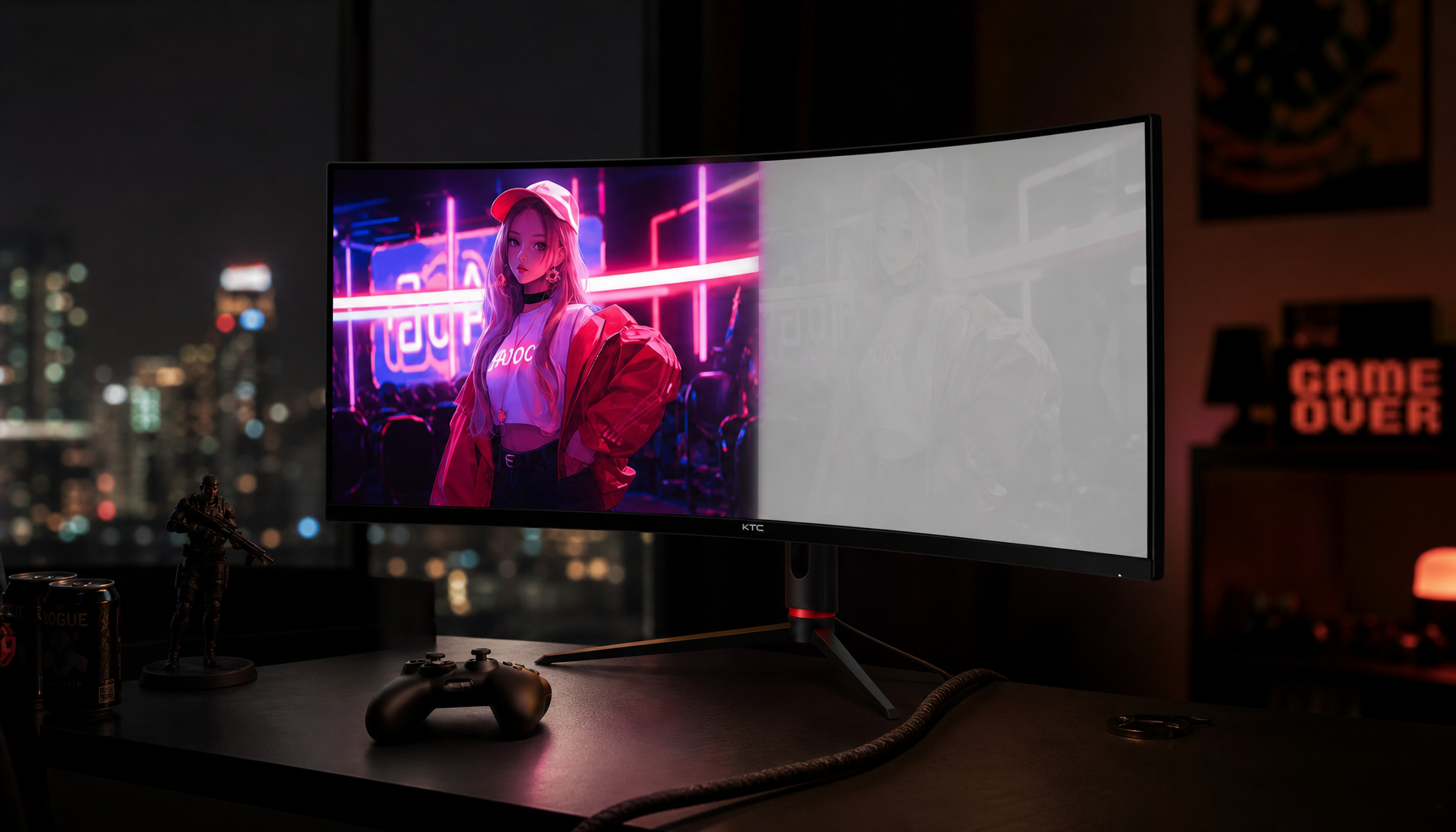
The grayish haze on dark scenes that appears near the corners or edges of an IPS monitor is usually called IPS glow. It is most visible when the room is dark, the image itself is dark, and your eyes are not perfectly centered on every part of the panel at once.

That tradeoff exists because color accuracy and wide viewing angles in IPS panels are major reasons they remain popular for office displays, creative work, and many gaming monitors. In bright rooms and mixed-use setups, that balance is often excellent. In a dim room with black-heavy content, the weakness becomes much easier to spot.
What Causes IPS Glow
The panel structure and backlight both contribute
A standard conventional LED backlight in an IPS monitor makes deep blacks harder to maintain than on VA or OLED. When you look at the center of the screen, the corners are already being viewed from a steeper angle, so dark content there can look lighter, milkier, or foggier even when the panel is working as designed.
In real use, the effect is easiest to spot on a black loading screen, a dark movie scene, or a horror game menu. If the center looks acceptable but the lower corners brighten as your eyes move outward, that is classic glow behavior rather than a color issue.

Brightness, room lighting, and distance amplify it
A forum discussion about why some monitors have IPS glow points to the same amplifiers over and over: higher brightness, darker rooms, and closer seating. None of those factors creates glow by itself, but all of them make the haze easier to notice. That is why a monitor can look fine in a store or daytime office and then suddenly look disappointing late at night.
Reports on fast IPS models with low or minimal glow add another variable: manufacturing variation matters. Two units of the same model can look slightly different, and fixed backlight bleed or clouding can make the overall picture seem worse than the panel type alone would suggest. That is why shopping by panel label alone rarely tells the whole story.
Is It Worse on Certain Screen Sizes?
The short answer is yes, but not for the simplistic reason many buyers assume. Guidance on larger displays and higher brightness suggests glow tends to become more noticeable as screen size increases, especially when you keep the same seating distance. The reason is straightforward: the bigger the screen, the farther the corners sit from your direct line of sight.
A desk example makes this easy to picture. If you sit about 2 ft from a 27-inch monitor and then replace it with a 32-inch model without moving back, the corners of the larger panel are viewed more off-axis. Even if both monitors use similar IPS technology, the 32-inch screen can look worse simply because more of it sits in your peripheral vision.

How IPS glow usually feels |
Why it changes |
|
24-inch monitor at a normal desk distance |
Mild to moderate |
Corners stay closer to your central viewing angle |
27-inch to 32-inch monitor at the same desk distance |
More noticeable |
Corners sit farther off-axis and fill more of your vision |
Large TV viewed from a couch |
Often less obvious |
Longer distance reduces the angle penalty |
Mini-LED IPS display |
Reduced, not gone |
Local dimming lowers dark-scene haze but may introduce blooming |
The distance issue matters so much that one forum discussion about black-uniformity review methods argues that checks done from around 4 ft away can understate what people actually see at a normal desk. That criticism matches many gaming and productivity setups, where users sit much closer than TV-style test distances.
When It Is Normal and When It Is a Problem
A useful real-world test is to open a dark scene, sit in your normal position, and then lean slightly left, right, up, or back. If the bright haze shifts with your head movement, you are likely seeing glow. If a bright patch stays pinned to one edge no matter where you move, you may also be dealing with bleed or poor uniformity on top of normal IPS behavior.

That is also why online photos are a weak judge. The same forum discussion notes that camera exposure, room lighting, and the screen used to view the photo can all exaggerate or hide the issue. The better test is simple: if dark games, movies, or editing work look distracting in your actual room after basic tuning, the monitor is not a good fit for your use, even if someone else says it is within spec.
Practical Ways to Reduce IPS Glow
The most effective low-cost fix is still the least glamorous one: lower brightness and sit a little farther back. That reduces the visible haze because the panel pushes less light through dark areas and your viewing angle to the corners becomes less severe. Staying centered and using a soft bias light behind the display can also make black levels feel more solid.

Picture settings can help, too. Advice on reducing IPS glow consistently favors dialing back brightness first, then refining contrast, gamma, and backlight-related settings so the image does not look harsh. Soft ambient light works better than a pitch-black room, and a lamp aimed away from the panel is usually better than overhead glare hitting the screen.
If you are shopping for an upgrade rather than tuning what you own, Mini-LED IPS models can reduce visible glow by improving local contrast, but they usually cost much more and can show blooming around bright objects. For truly black backgrounds, OLED still wins. For long office sessions, static UI, and value-focused reliability, IPS remains a strong option.
Should You Avoid IPS If Glow Bothers You?
Not automatically. The case for IPS in design, drawing, and general visual work is still strong because color consistency, text clarity, and broad usability matter every day, not only during dark scenes. A good IPS monitor in a balanced room is often the best all-around tool for office productivity, multitasking, and mixed gaming.
The nuance is that not every fast IPS panel behaves the same. Enthusiast discussions suggest some gaming-focused models feel worse than expected, while other units are quite manageable. The safest conclusion is not that one label guarantees bad glow, but that screen size, seating distance, backlight design, and panel variation determine whether the experience feels premium or frustrating.
A strong IPS display is still one of the smartest value buys for color, speed, and daily usability. If dark-room immersion is your top priority, move up to better backlight control or OLED. If balanced performance is the goal, tune the setup first before blaming the panel class.