Your GPU shows multiple DisplayPort link rates because DisplayPort negotiates connection speed between the graphics card, cable, adapter, dock, and monitor. The setting usually shows available or negotiated bandwidth modes, not multiple separate DisplayPort ports.
Does your 4K or high-refresh monitor look capable on paper, while your GPU settings show several DisplayPort rates and leave you wondering which one is correct? Choosing the right link rate can restore missing refresh-rate options, reduce flicker, and help a multi-monitor desk run with fewer black-screen surprises. Here is how to read those rates, what they mean in real setups, and when changing them actually helps.
What a DisplayPort Link Rate Means
DisplayPort is a digital display interface designed for computers, monitors, and similar devices. It sends video as packet-based data rather than as a simple fixed video signal like older display standards. That packet design is why DisplayPort can scale across different resolutions, refresh rates, color depths, audio, Multi-Stream Transport, and USB-C DisplayPort Alt Mode without changing the basic connector concept.
A link rate is the speed of each DisplayPort lane. Most full-bandwidth DisplayPort connections use four lanes, so total usable bandwidth depends on the per-lane rate, lane count, and encoding overhead. When your GPU control panel, monitor service menu, diagnostic app, or firmware utility shows several rates, it is exposing the possible speed modes that the source and display can try during link training.
In plain English, link training is the handshake. The GPU and monitor test the connection and settle on the fastest stable mode that the whole chain can handle. DisplayPort negotiation chooses the highest stable connection speed, which matches what display technicians see in the field: the monitor is rarely the only variable. A 6 ft bargain cable, a USB-C dock, a passive adapter, or a marginal connector can force a lower rate even when the GPU and panel both support more.

Why You See More Than One Rate
You see multiple DisplayPort link rates because the DisplayPort standard includes several generations and fallback modes. A GPU may support DisplayPort 1.4 or 2.1, but it still needs to work with older monitors, docks, and cables. That backward compatibility is useful, but it also means the settings menu may show lower modes beside higher modes.
For example, DisplayPort 1.2 supports high-bandwidth rate 2, often called HBR2, while DisplayPort 1.3 and 1.4 add HBR3. DisplayPort material notes that DisplayPort 1.4a supports up to 8.1 Gbps per lane and 32.4 Gbps across four lanes before usable-payload overhead. DisplayPort 2.x moves to UHBR modes and a more efficient coding method, giving up to 77.37 Gbps of usable payload in top configurations.
That does not mean every displayed rate is active at once. It means the GPU has several gears. If your monitor is a 1440p 165 Hz panel, it may not need the top gear available on a modern GPU. If your monitor is a 4K 240 Hz OLED or an 8K screen, the higher gear may be essential, often alongside Display Stream Compression.
Common DisplayPort Rate Names and What They Suggest
The names vary by GPU vendor and tool, but the usual pattern is consistent. Older DisplayPort modes have lower per-lane rates, while newer modes carry more data per lane. The table below keeps the practical view front and center.
Link Rate Family |
Typical Standard Context |
Practical Meaning |
RBR |
Early or low-demand DisplayPort |
Usually enough only for modest resolutions or fallback troubleshooting |
HBR |
DisplayPort 1.0/1.1 era |
Older monitor support and lower-bandwidth modes |
HBR2 |
DisplayPort 1.2 |
Common for 1080p high refresh, 1440p high refresh, and 4K 60 Hz setups |
HBR3 |
DisplayPort 1.3/1.4 |
Important for 4K high refresh, 5K, HDR, and DSC-based modes |
UHBR10, UHBR13.5, UHBR20 |
DisplayPort 2.x |
Built for premium high-refresh 4K, 8K, multi-display, and future-heavy bandwidth needs |
The key is not to chase the biggest number blindly. A stable HBR2 link that fully supports your monitor mode is better than an unstable HBR3 link that causes wake-from-sleep failures or random black screens. For performance displays, though, leaving bandwidth on the table can hide the exact refresh-rate option you bought the monitor for.
The Bandwidth Chain: GPU, Cable, Port, Adapter, Monitor
A DisplayPort setup is limited by the weakest part of the path. The maximum signal is limited by the lowest-bandwidth device in the chain, and that is exactly how DisplayPort behaves on real desks. If you connect a strong GPU to a high-end monitor through an older dock, the dock can become the ceiling.

Cable quality matters more as bandwidth rises. Cable guidance notes that DisplayPort is generally the stronger choice for high-performance monitor setups, but it also emphasizes cable type, version, length, build quality, GPU capability, and monitor capability. For high-bandwidth signals such as 4K at 144 Hz, a short, certified cable is a practical reliability upgrade, not an accessory upsell.
A simple example makes this clearer. A 4K monitor has about 8.29 million pixels. At 144 Hz, the display path must refresh that full frame 144 times per second before color depth, blanking, HDR, and compression are even considered. Move that same monitor to 60 Hz, and the bandwidth demand drops dramatically. That is why lowering refresh rate can make a flaky link stable immediately.
DisplayPort Version vs. Link Rate vs. Refresh Rate
DisplayPort version, link rate, and refresh rate are connected, but they are not the same thing. The version describes the feature generation. The link rate describes the negotiated transport speed. The refresh rate describes how many times per second the monitor updates the image.
A DisplayPort 1.4 GPU can connect at HBR2 if the monitor, cable, or settings do not support HBR3. A DisplayPort 2.1 GPU can still run an older DisplayPort 1.2 monitor at HBR2. A USB-C port can carry DisplayPort video only if it supports DisplayPort Alt Mode, and some docks split available lanes between display output and USB data.
This is why a laptop can feel inconsistent. One USB-C port may be wired for full DisplayPort Alt Mode, another may support video with fewer lanes, and a dock may support two office monitors at 60 Hz while failing to deliver dual high-refresh 4K. DisplayPort 2.x supports demanding multi-display configurations, but the hardware path still has to expose the required lanes and bandwidth.
Why Your Monitor May Fall Back to a Lower Link Rate
Fallback is usually a stability decision. During link training, the GPU tests signal quality. If the connection cannot hold the higher rate cleanly, it may drop to a lower mode. That can be caused by cable length, cable quality, a bent connector, a weak adapter, a dock with limited bandwidth, a monitor firmware bug, or a GPU driver issue.
Multi-monitor setups add another layer. A GPU driving two or three displays must maintain each active surface, and the load rises with resolution, refresh rate, and animated content. KTC’s multi-monitor guidance argues that multi-monitor setups increase GPU demand because every active display has its own resolution, refresh rate, and workload. Link rate is not GPU rendering power, but both influence whether the desk feels smooth.
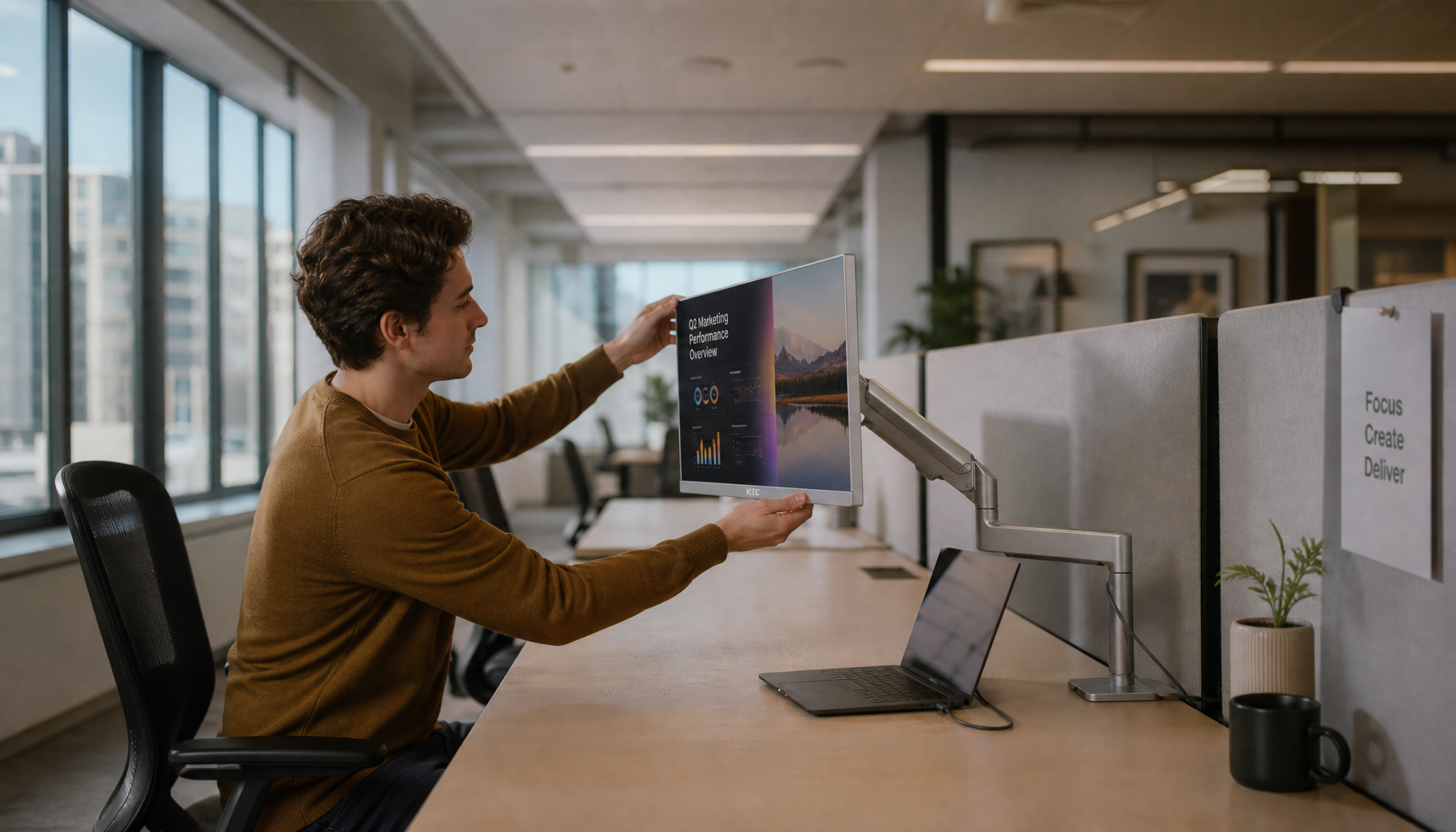
A practical office example is a 1440p 165 Hz main monitor beside a 4K 60 Hz secondary screen. The main display may need a higher DisplayPort mode for full refresh, while the secondary may be perfectly comfortable at 60 Hz. Setting both screens to maximum refresh can waste bandwidth and GPU resources if the second panel only shows chat, documents, or dashboards.
Should You Manually Change the Link Rate?
Most users should leave DisplayPort link rate on automatic unless there is a clear symptom. Auto negotiation exists because the GPU and display can usually choose the best stable mode faster than a user can guess it.
Manual adjustment becomes useful when the screen flickers, wakes to a black display, loses high-refresh options, drops HDR, fails with a dock, or behaves differently after a cable swap. In those cases, forcing a lower link rate can confirm whether the issue is signal stability. If HBR3 flickers but HBR2 is solid, the monitor is telling you the connection path is marginal at the higher speed.
The tradeoff is capability. Lowering the link rate may remove 4K 144 Hz, 10-bit color, HDR, or multi-monitor daisy-chain options. Raising it may expose the performance mode you want, but only if the cable and monitor can hold the signal reliably. For a competitive gaming display, the goal is the highest stable link that unlocks the monitor’s rated refresh rate. For an office productivity display, the goal is stable native resolution, clean text, and comfortable refresh, often 60 Hz to 75 Hz on secondary panels.
How to Troubleshoot Missing Refresh Rates or Flicker
Start with the actual target mode. If you bought a 4K 144 Hz monitor, confirm that your operating system or GPU control panel is set to the monitor’s native resolution and rated refresh rate. Then check whether HDR, 10-bit color, or chroma settings changed the bandwidth requirement. A display may run 4K 144 Hz in one color mode but not another without DSC.
Next, simplify the path. Connect the monitor directly to the GPU using a short, certified DisplayPort cable. Avoid docks, splitters, extension cables, and passive adapters during the test. DisplayPort capabilities depend on the DisplayPort version supported by the source, cable, and display, which is the cleanest mental model for troubleshooting.

Then test one change at a time. If the monitor is unstable at 165 Hz, try 144 Hz. If HDR causes dropouts, test SDR at the same refresh. If a USB-C dock is involved, test the same monitor directly from the computer. If a secondary screen is running at 144 Hz for static work, lower it to 60 Hz and see whether the main display becomes more reliable.
Driver and firmware updates are worth doing, especially for new GPUs, new OLED gaming monitors, or USB-C docks. However, do not use updates as a substitute for checking the cable. In hands-on display troubleshooting, a weak cable is one of the fastest fixes because high link rates leave less room for poor signal integrity.
DisplayPort vs. HDMI When Link Rates Get Confusing
DisplayPort is often the better PC-monitor choice for high refresh rates, adaptive sync, daisy-chaining, and workstation-style multi-display setups. HDMI is often the better living-room choice because TVs, consoles, receivers, and soundbars are built around it. That split is practical, not ideological.
The right port is the one that supports the best shared mode between your GPU and monitor. DisplayPort 1.4 may beat HDMI 2.0 for a gaming monitor, while HDMI 2.1 may outperform an older DisplayPort path in another setup. If both ports support the same resolution, refresh rate, color depth, and variable refresh behavior, image quality will not magically improve just because the cable shape changes.
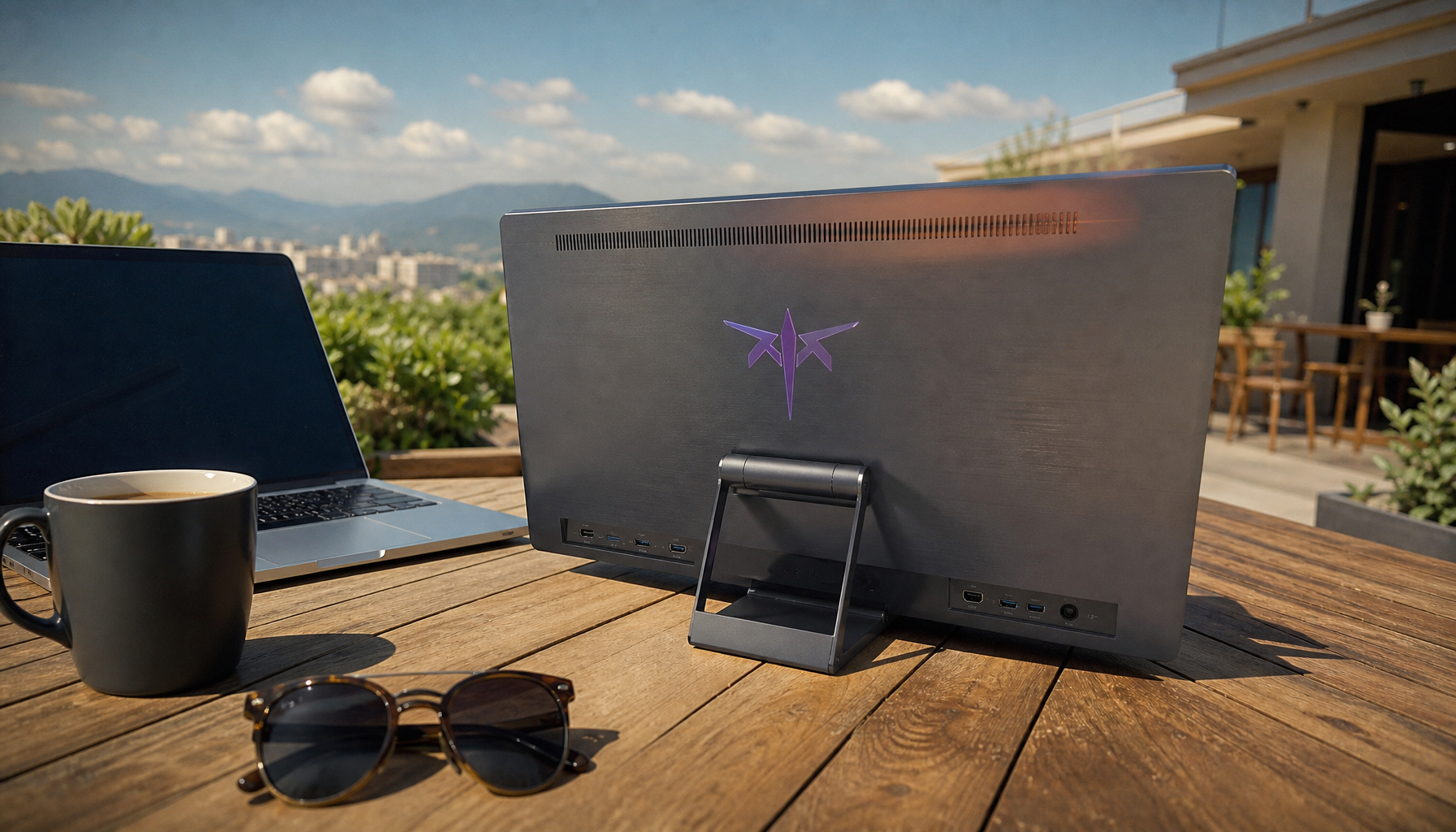
Adapters deserve suspicion in performance setups. Passive DisplayPort-to-HDMI adapters can cap refresh rate or resolution, while active adapters need their own rated bandwidth. For high-refresh PC monitors, a direct DisplayPort cable from GPU to monitor is usually the cleanest path.
Quick FAQ
Is a higher DisplayPort link rate always better?
Only if it is stable and needed for your display mode. A higher rate can unlock more resolution, refresh rate, color depth, or HDR headroom, but an unstable high-rate link can cause flicker, black screens, or wake problems.
Why does my 240 Hz monitor only show 144 Hz?
The most likely causes are insufficient link bandwidth, the wrong cable or port, a dock or adapter limit, disabled DSC, or a monitor input setting that is not using its highest DisplayPort mode. Test with a direct certified DisplayPort cable before changing more complex settings.
Can a cable change the link rate?
Yes. The GPU and monitor may fall back to a lower rate if the cable cannot reliably carry the higher signal. This is especially common with long, unbranded, damaged, or older cables used for 4K high-refresh displays.
Does DisplayPort link rate affect FPS?
It does not increase the GPU’s rendering power. It affects whether the finished frames can be transported to the monitor at the selected resolution, refresh rate, and color settings. Your game FPS still depends on the GPU, CPU, settings, and workload.
The Bottom Line
Multiple DisplayPort link rates are normal. Treat them as bandwidth gears, then match the gear to the display job: highest stable mode for a performance gaming monitor, clean and efficient settings for office screens, and direct certified cabling when the setup pushes 4K, HDR, high refresh, or multiple displays.