A DisplayPort Out jack is only one piece of the chain; your PC, GPU, monitor settings, cable quality, bandwidth budget, and operating system all have to support multi-stream output for the setup to work.
You plug the second screen into the first monitor’s DisplayPort Out, expect a clean extended desktop, and get a black panel, mirrored image, flicker, or a monitor that wakes only when it feels like it. The practical win is testable: after a 10-minute check of MST support, cable order, monitor menu settings, and bandwidth load, you can usually tell whether the chain is fixable or whether direct GPU connections are the smarter move. Here is how to diagnose the failure without buying random adapters or blaming the wrong display.
DisplayPort Out Does Not Automatically Mean Daisy-Chaining Works
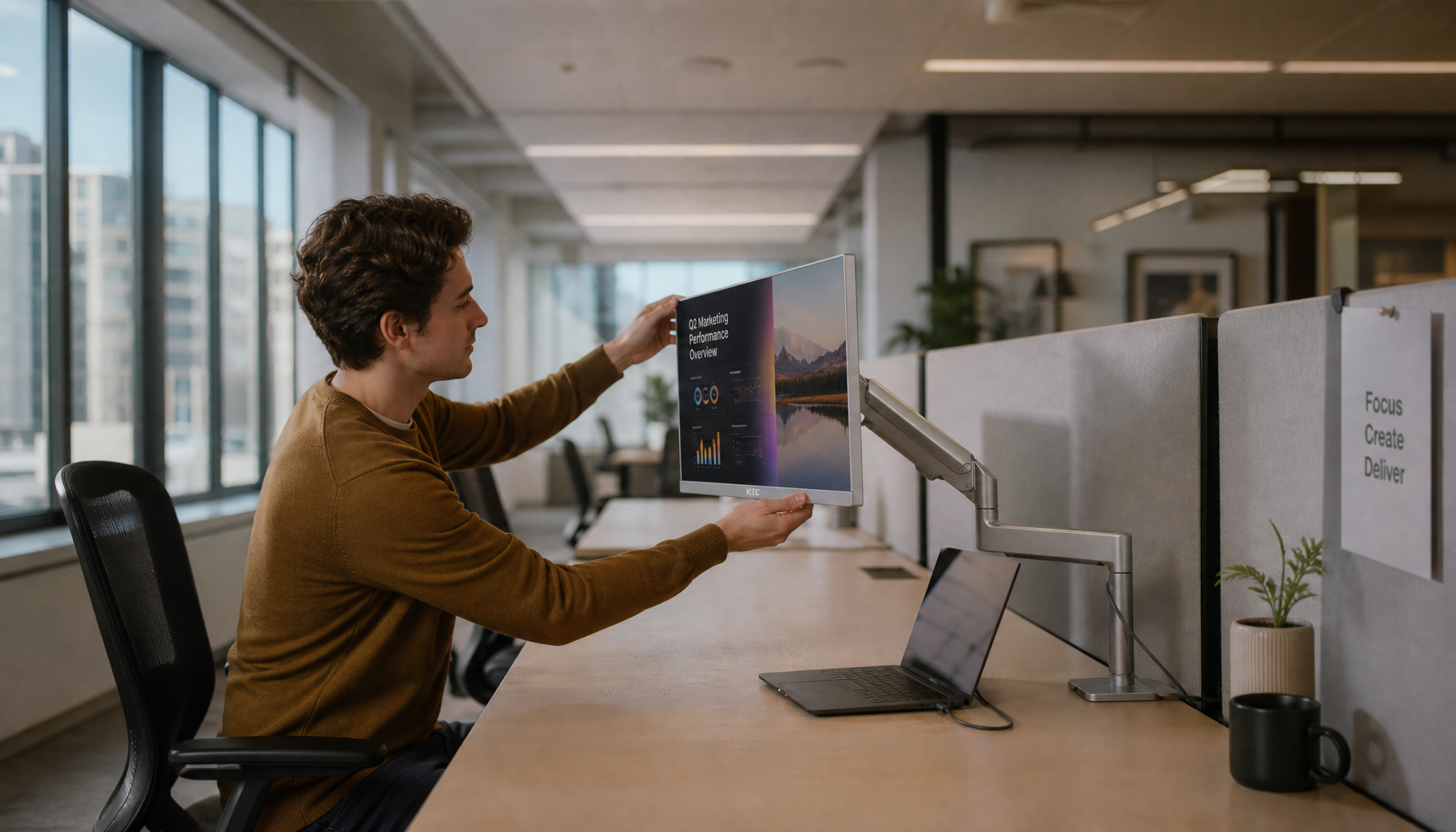
A monitor daisy chain is a linear display setup: your computer connects to Monitor 1, Monitor 1 passes the signal to Monitor 2, and so on. The appeal is obvious. You get less cable clutter, fewer ports occupied on the laptop or graphics card, and a cleaner desk for productivity, trading, coding, editing, or a compact gaming station. The general wiring idea is the same kind of sequential connection used in other systems, where devices pass signal or data along one streamlined path, but that structure also creates capacity and failure-point limits, as a daisy chain does in other technical environments.
The catch is that monitor daisy-chaining is not powered by the port shape alone. It usually depends on DisplayPort Multi-Stream Transport, or MST, which lets one DisplayPort link carry multiple independent display streams. A monitor may have DisplayPort Out for pass-through, docking, or model-family compatibility, but if the source device, first monitor, cable, or menu setting does not support MST correctly, the second display will not become an independent extended screen.

This is why a setup can look valid on the back panel and still fail in display settings. The physical connection says a path exists. MST support says there is enough intelligence and bandwidth to split that path into usable displays.
The Compatibility Chain Has More Links Than the Cable Chain
Your Source Port Must Support MST
The first failure point is the computer. A desktop GPU DisplayPort output, laptop USB-C port, high-bandwidth USB-C port, or dock must be able to send multiple display streams. DisplayPort is generally the better PC monitor standard for this job because DisplayPort supports Multi-Stream Transport, while HDMI is usually built around one display connection unless a hub, splitter, or dock is doing additional work.
USB-C adds another layer. A USB-C port can look modern and still lack DisplayPort Alt Mode or high-bandwidth video capability. If the port is only for charging and data, no cable will make it behave like a video output. If it does carry video but the laptop’s graphics system supports only one external display, the chain may stop after the first screen.
A common real-world example is a thin laptop connected to a USB-C monitor that has DisplayPort Out. The monitor powers the laptop and shows the first desktop perfectly, but the second screen stays dark. The likely issue is not the second monitor; it is that the laptop port, GPU, or USB-C mode is not providing enough display stream support for the full chain.
Every Upstream Monitor Must Forward the Signal
DisplayPort Out matters most on upstream monitors. Monitor 1 must have DisplayPort In and DisplayPort Out, and if you add a third screen, Monitor 2 also needs an output. The final monitor does not need to forward anything, so it only needs a compatible input.
You also have to connect the ports in the right direction: PC to DisplayPort In on the first monitor, then DisplayPort Out from that monitor to DisplayPort In on the next one. Plugging into the wrong DisplayPort jack is easy because the connectors look identical from behind a desk.
Many monitors also hide the required mode in the on-screen display menu. It may be called MST, Daisy Chain, DisplayPort 1.2, DP 1.2, or DP Out. If that setting is off, the first monitor may behave as a normal single display and never forward the independent stream. This is especially common after a factory reset, firmware update, office move, or monitor swap.
Bandwidth Is the Silent Deal-Breaker
The most performance-driven reason a daisy chain fails is simple: too many pixels are trying to travel through one upstream link. Daisy-chaining shares the bandwidth of the first cable from the PC to Monitor 1. Every additional screen consumes part of that same pipe.

That shared-bandwidth reality is why dual 1080p productivity screens are far easier than multiple high-refresh 4K gaming displays. KTC’s guidance is blunt in practical terms: shared upstream bandwidth becomes a bigger constraint as resolution, refresh rate, HDR, color depth, and monitor count rise.
Here is the user-facing version of the math. A 1920 x 1080 display at 60Hz is light work for many modern DisplayPort chains. A 2560 x 1440 display at 144Hz asks for far more. A 4K screen at 144Hz with HDR is in a different class again. If you try to run a 4K gaming monitor, a 1440p side monitor, and a third productivity panel through one output, the system may lower refresh rates, disable HDR, refuse the last screen, or flicker under load.
Setup Goal |
Daisy-Chain Outlook |
Better Choice |
Two 1080p office monitors at 60Hz |
Usually realistic with MST-compatible hardware |
Daisy-chain if cable management matters |
Two 1440p productivity monitors at 60Hz |
Often realistic on modern DisplayPort or high-bandwidth USB-C gear |
Daisy-chain after checking source specs |
One 4K main display plus one simple side screen |
Possible, but bandwidth-sensitive |
Test at 60Hz before assuming higher refresh |
High-refresh gaming plus extra displays |
Higher risk for smoothness and features |
Use separate GPU outputs |
Color-critical 4K or HDR workflow |
Risk of forced compromises |
Prefer direct connections |
For gaming, the stakes are higher because refresh rate and response behavior are part of the experience, not just spec-sheet decoration. Independent gaming monitor testing often emphasizes refresh rate, response time, brightness, color, and real-game performance, and those priorities can be undermined when a chain forces the main display down from 144Hz, 240Hz, or HDR mode. If your main display is built for competitive speed or cinematic HDR, treat daisy-chaining as a convenience feature for secondary screens, not the foundation of the whole rig.
Cable Quality Can Mimic a Monitor Failure
A bad or marginal DisplayPort cable can make a good chain look broken. Community troubleshooting notes repeatedly show symptoms such as intermittent black screens, displays randomly dropping, and chains recovering only after physically unplugging the connector. That behavior is frustrating because rebooting the PC or power-cycling the monitor may not clear the bad link state.
DisplayPort daisy-chain guidance often points to cable order, MST settings, unsupported ports, and cable quality as common causes of detection failures, and recommends certified DisplayPort cables when building a chain. If the chain flickers, blacks out, or produces visual noise, certified DisplayPort cables are not an upsell detail; they are part of the signal path.

The practical test is direct and cheap. Swap the cable between PC and Monitor 1 first, because that cable carries the full load for the entire chain. Then swap the cable between Monitor 1 and Monitor 2. If the issue moves, disappears, or changes from “no signal” to “unstable signal,” the display hardware was probably not the root cause.
Why HDMI, Adapters, and Portable Screens Complicate the Picture
HDMI is excellent for TVs, consoles, soundbars, and broad consumer compatibility, but it is not the standard path for true independent monitor daisy-chaining. Many HDMI splitters duplicate one image rather than create separate extended desktops. That is useful for signage or presentations, but not for a workstation where each screen needs its own space.
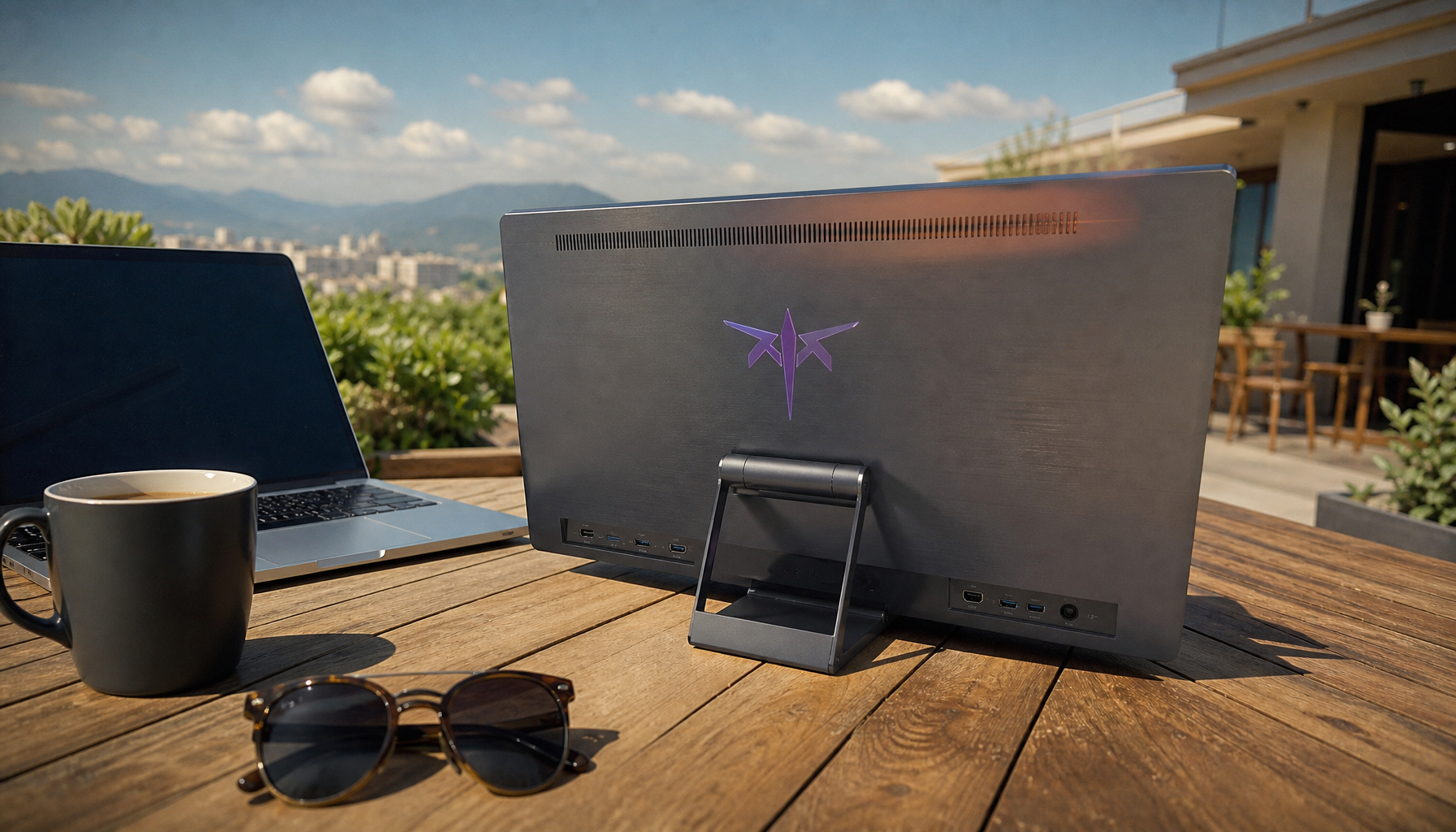
Adapters can help, but only when they solve the exact signal problem. A passive adapter cannot invent MST support. A DisplayPort-to-USB-C cable for a portable monitor may need active conversion electronics, and the portable screen may still require separate power. In desk-based temporary setups, that can be acceptable; for a travel kit, it may defeat the simplicity you wanted.
Portable smart screens are especially easy to misread because USB-C can mean power, data, video, or all three. If your portable display accepts USB-C video but your desktop GPU only offers DisplayPort, you may need an active DisplayPort-to-USB-C cable plus a USB power line. That is workable for a clean secondary screen, but it is not the same as a native monitor MST chain.
A Fast Diagnostic Path That Actually Separates Causes
Start with the source. Confirm the laptop, GPU, dock, or high-bandwidth USB-C port supports multiple external displays through DisplayPort MST, USB-C DisplayPort Alt Mode, or an equivalent multi-display video mode. If it is a base-level system with a one-external-display limit, the monitor’s DisplayPort Out cannot override that ceiling.
Next, check the monitor menus. Enable MST, Daisy Chain, or DisplayPort 1.2 or later on the upstream monitors. If the final monitor has a DP version setting, it may not need to forward MST. Then verify the input selection is actually DisplayPort, not HDMI or an Auto mode that keeps choosing the wrong source.
After that, reduce the bandwidth load. Set both displays to 60Hz, turn off HDR temporarily, and use native but not overclocked resolutions. If the chain starts working, the original setup was not impossible because of the port; it was too demanding for the shared link.
Finally, isolate the physical layer. Reseat each connector, unplug DisplayPort cables fully rather than only rebooting, power-cycle the dock if one is involved, and test with known-good DisplayPort cables. If separate direct GPU connections work flawlessly but the daisy chain fails only during wake-from-sleep or dock-undock routines, the chain may be technically compatible but operationally unreliable for daily use.
When Direct Connections Are the Smarter Upgrade
Daisy-chaining is excellent for clean office displays, shared desks, laptop docking stations, finance dashboards, coding layouts, and general productivity. It is less ideal when your main display is a high-refresh gaming monitor, when you mix very different resolutions and refresh rates, or when your work depends on stable color, HDR, and pixel-perfect behavior.
Monitor buying guidance shows how far display expectations now vary, from budget 22- or 23-inch office panels to 4K and professional displays costing much more, and that variety matters because resolution recommendations differ by size, purpose, and performance class. A chain that is fine for two 24-inch 1080p panels may be the wrong architecture for a 32-inch 4K creator display beside a fast esports monitor.
For a performance-first desk, connect the primary gaming or color-critical screen directly to the GPU. Put the secondary browser, chat, monitoring, or document display on the chain if your hardware supports it. That layout preserves the value of the premium panel while still reducing cable clutter where it costs less.

FAQ
Can I daisy-chain from any monitor with DisplayPort Out?
No. DisplayPort Out is necessary on upstream monitors, but it is not sufficient. The source device, monitor firmware, monitor settings, cables, and bandwidth budget must support MST or an equivalent USB-C chaining method.
Why does my second monitor mirror instead of extend?
The system may be in duplicate mode, the chain may not be using MST correctly, or the hardware may be acting like a splitter rather than sending independent streams. In your operating system’s display settings, choose Extend, but if the second display is not detected as a separate panel, return to MST and cable checks.
Why does the chain work at 60Hz but fail at 144Hz?
That points strongly to bandwidth pressure. Higher refresh rates consume more of the shared DisplayPort link, especially at 1440p, 4K, HDR, or higher color depth. Use a direct GPU connection for the high-refresh primary display when smooth motion is the priority.
A DisplayPort Out port is an invitation to build a cleaner desk, not a guarantee that every screen mode will pass through it. Treat the chain like a performance system: prove source support, enable MST, budget the pixels, and use solid cables. When the main display is where your speed, color, or immersion lives, give it a direct line and let daisy-chaining handle the screens that benefit most from simplicity.