Display-related eye strain becomes a chronic concern when symptoms keep returning, last beyond normal recovery, interfere with work or play, or come with noticeable vision changes, severe headaches, or persistent dryness.
Do your eyes still feel gritty after you shut down the monitor, or does a short ranked session leave you rubbing your temples before the next match loads? A practical screen setup can often reduce strain by improving distance, brightness, glare control, blinking, and break timing without sacrificing performance. Here is which warning signs matter, what to adjust first, and when it is time to book an eye exam.
Digital Eye Strain Is Usually Temporary, Until the Pattern Changes
Display-related eye strain is the everyday term for discomfort caused by sustained near focus, reduced blinking, glare, poor lighting, posture stress, or an outdated prescription. Eye-health guidance describes eye strain as a common comfort problem rather than a formal diagnosis, and screen-linked cases are often called digital eye strain or computer vision syndrome; the important point is that eye discomfort should improve when the visual load is reduced.
That distinction matters for gamers, analysts, designers, programmers, and hybrid office workers. A hard two-hour spreadsheet session or a late-night gaming sprint can leave the eyes dry, sore, or unfocused. If a walk, artificial tears, a better-lit room, or a night of sleep resets you, that is usually an acute strain pattern. If the same symptoms return every workday, shorten your usable screen time, or make you avoid normal tasks, the problem is no longer just a bad evening with a bright panel.
The American Academy of Ophthalmology states that long use of computers and digital devices can cause temporary discomfort, including blurred vision, dry or stinging eyes, aching, and tearing, while digital screen use does not permanently damage the eyes. That does not mean you should ignore recurring symptoms. Chronic strain can be a signal that your setup, habits, tear film, contact lenses, or prescription are no longer matching your daily screen load.
Warning Sign: Symptoms Last More Than a Few Days
The clearest warning sign is duration. If blurred vision, dryness, headaches, light sensitivity, or focusing trouble lasts more than a few days despite rest and basic adjustments, the issue deserves professional attention. Eye-care guidance recommends seeing an eye specialist when eye discomfort, headache, or vision changes do not improve with self-care.
For example, finishing an eight-hour office day with tired eyes on Monday, recovering overnight, and feeling normal Tuesday morning is different from waking up with blur on Thursday after three days of identical symptoms. Chronic strain often feels less like a single event and more like a shrinking performance window. You start the day fine, then the screen becomes uncomfortable earlier and earlier.
For a quick self-check, track when symptoms start and when they fully clear. If your eyes used to feel tired after six hours but now feel strained after 45 minutes, the trend matters more than any one bad day.
Warning Sign: Dryness, Burning, or Watering Keeps Coming Back
Dryness is one of the most common signs that screen strain is becoming a recurring problem. The American Academy of Ophthalmology explains that people normally blink about 15 times per minute, but screen use can reduce blinking to about 5 to 7 times per minute, making the eye surface more likely to dry out.

This matters because dry eyes can feel contradictory. Some people get burning and gritty irritation; others get watery eyes because the surface is irritated and the eyes overcompensate. In performance terms, both are bad: contrast feels harsher, text edges seem less stable, and fast motion becomes more fatiguing.
The fix is simple but effective. Put a blink cue beside the display, use preservative-free artificial tears if you need drops often, move fans or vents away from your face, and consider a humidifier in dry rooms. Eye-care guidance also cautions against redness-removing drops for dry-eye-related strain because they may worsen dryness over time, while artificial tears can help prevent or relieve dry eyes.
Warning Sign: Headaches, Neck Pain, and Focus Problems Arrive Together
Chronic screen strain rarely stays only in the eyes. Headaches behind the eyes, neck tension, shoulder pain, and trouble shifting focus from screen to distance often point to a workstation problem or a vision correction issue. The American Optometric Association describes gaming as visually demanding and recommends breaks, blinking reminders, hydration, and professional guidance when eye-related symptoms show up during long play sessions.
A common monitor pattern is simple: the screen is too high, too close, or too bright for the room. A 32-inch display pushed close to the keyboard can make your eyes scan aggressively and your neck tilt upward. A laptop sitting flat on a desk can force a forward head posture while also placing the screen too low. In both cases, the eyes and body are compensating for the setup.
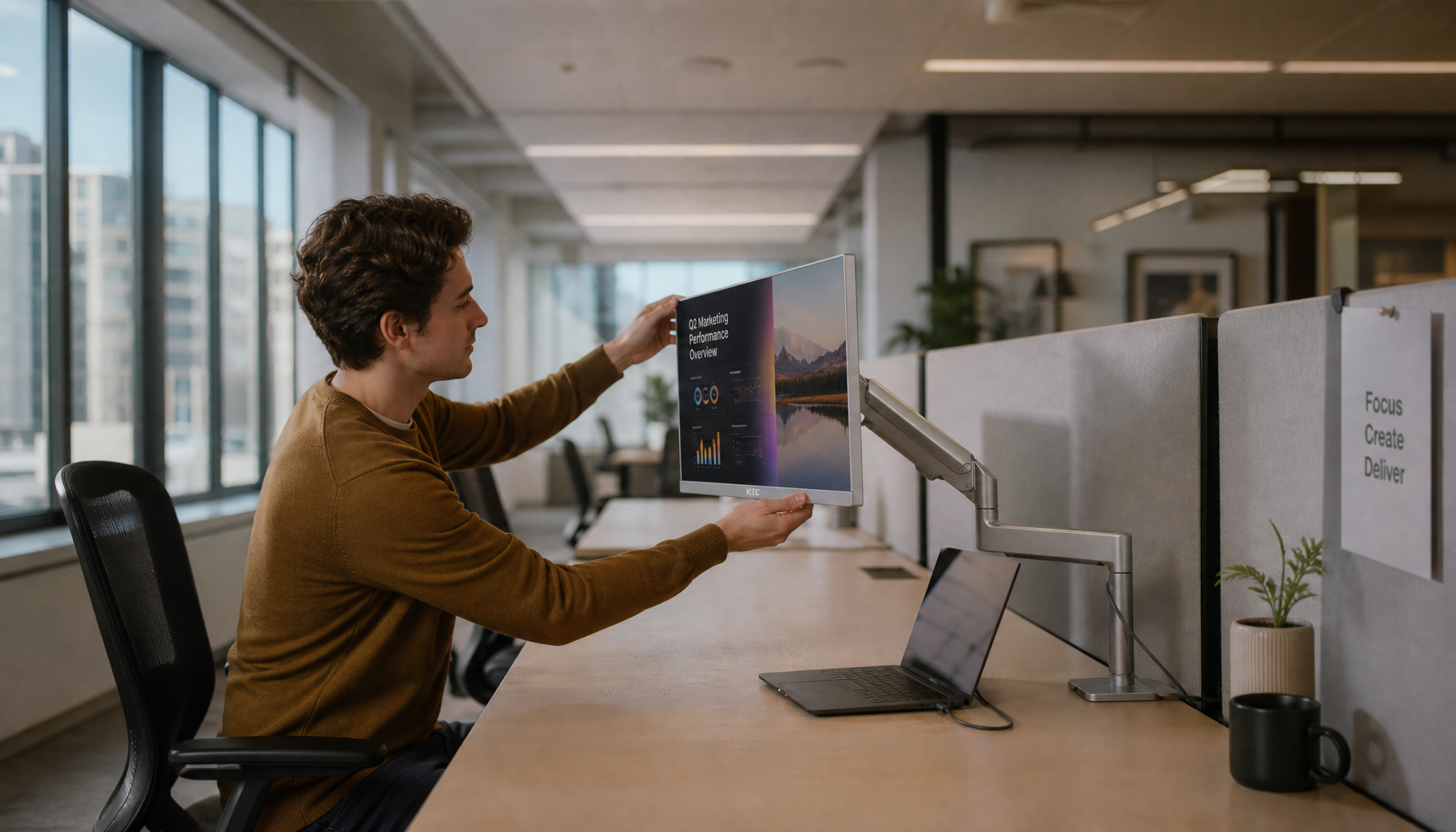
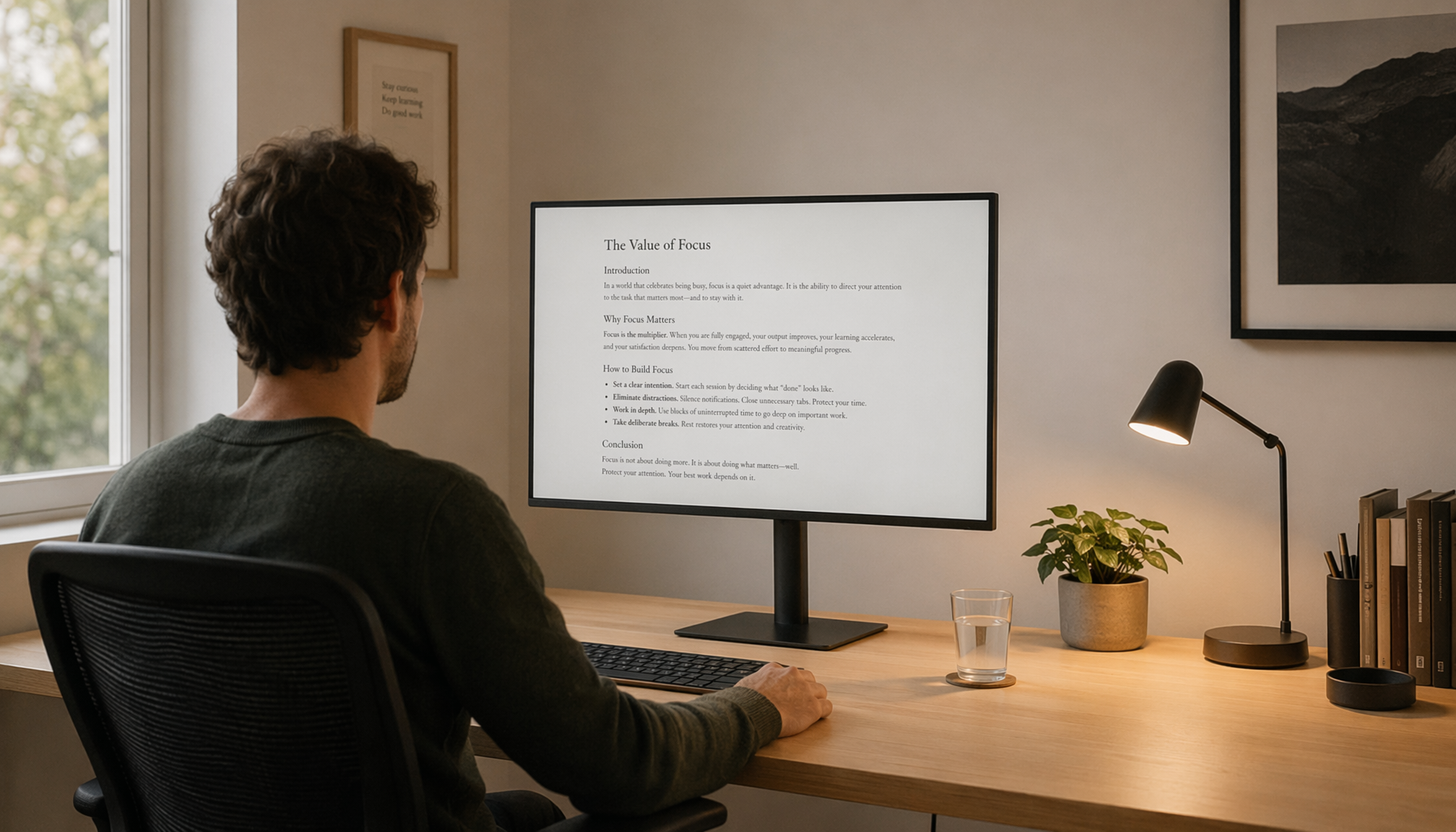
Aim for a display about an arm’s length away, with the top of the screen at or slightly below eye level and your gaze angled slightly downward. Eye-health guidance recommends screens roughly 20 to 26 inches from the face, with the center slightly below eye level, plus brightness matched to room lighting and glare reduced. For larger monitors, you may need a little more distance so your eyes are not constantly sweeping across the panel.

Warning Sign: You Squint, Lean In, or Keep Enlarging Text
Squinting is a performance warning light. It may mean the screen is too bright, text is too small, contrast is poor, glare is hitting the panel, or your prescription is outdated. If you keep leaning toward the screen or increasing zoom just to get through normal work, do not treat that as a personality quirk.
Workplace eye-health guidance recommends adjusting display settings, including text size and comfortable brightness, because computer eye strain can cause dryness, irritation, and discomfort during prolonged work. For office productivity displays, sharper resolution and readable scaling often matter more than chasing extreme refresh rates. For gaming, high refresh can improve motion comfort, but it will not solve glare, dry eyes, or small UI text.
The practical test is easy: open a document, spreadsheet, and game menu at your normal distance. If you cannot read comfortably without squinting, leaning, or tightening your forehead, fix the viewing conditions before blaming the monitor panel.
Warning Sign: Breaks No Longer Restore Comfort
The 20-20-20 rule is not a magic cure, but it is a useful baseline: every 20 minutes, look at something about 20 ft away for 20 seconds. Eye-care guidance includes this habit in computer-work recommendations, along with blinking often and adjusting brightness, contrast, and text size.

If breaks used to help and no longer do, look deeper. Your room may be too dim for a bright HDR monitor, your contact lenses may dry out after lunch, your dual-monitor angle may make your eyes and neck rotate all day, or you may need computer-specific glasses for intermediate distance rather than standard reading or distance lenses.
A useful reset is a full session audit. For one workday or gaming night, use intentional breaks, match brightness to the room, remove glare, raise text size, and sit at a consistent distance. If symptoms still return quickly, that is a stronger sign that an eye exam or dry-eye evaluation is needed.
Monitor Choices That Help, and What They Cannot Fix
Better display hardware can support eye comfort, but it is not a substitute for setup discipline. A matte screen, stable stand, good brightness range, clean text rendering, and smooth motion can reduce visual effort. A premium monitor used in a dark room at maximum brightness can still strain your eyes.

Choice |
Practical Upside |
Tradeoff |
Higher resolution |
Cleaner text edges for spreadsheets, code, and documents |
Requires proper scaling or text can become too small |
Higher refresh rate |
Smoother motion for gaming, scrolling, and cursor movement |
Does not fix dryness, glare, or poor distance |
Matte or anti-glare finish |
Reduces reflections from windows and overhead lights |
Some coatings slightly soften perceived sharpness |
Adjustable stand or monitor arm |
Helps set height, tilt, and viewing distance correctly |
Adds cost but often improves comfort more than specs alone |
Warmer color temperature at night |
Can feel less harsh in dim rooms |
Color-critical work may need calibrated settings |
The American Academy of Ophthalmology does not recommend blue-light glasses specifically for eye strain because strong evidence is lacking that blue light from digital devices causes it, while computer glasses designed for screen distance may help some heavy users. That nuance matters. Blue-light reduction can be useful for evening comfort or sleep routines, but glare control, blinking, distance, prescription accuracy, and room lighting usually carry more weight for daytime strain.
When to Schedule an Eye Exam
Book an eye exam if symptoms last more than a few days, worsen despite self-care, include significant vision changes, or come with severe headaches. Also schedule one if you notice frequent double vision, persistent light sensitivity, trouble shifting focus between near and far, or screen blur that improves only when you close one eye.
Eye-care guidance notes that diagnosis may include questions about symptom triggers and a vision test, and treatment often focuses on changing daily habits or environment, while underlying eye conditions may need direct care through an eye exam. For a better appointment, bring a clear symptom log: screen hours, monitor distance, display size, contact lens use, headache timing, lighting conditions, and what improves or worsens the discomfort.
For office professionals and gamers, this is not just about comfort. Poor visual ergonomics can drain focus, slow reading, increase mistakes, and make high-quality displays feel worse than they should. A well-matched prescription, better tear support, and a properly positioned monitor can restore both endurance and precision.
FAQ
Can display-related eye strain become permanent?
The discomfort can become recurring or persistent, but reputable eye-health sources generally describe screen-related eye strain as uncomfortable rather than permanently damaging. The important move is to treat persistent symptoms as a signal to adjust your setup and get checked, not as something to push through.
Is a gaming monitor worse for eye strain than an office monitor?
Not automatically. A gaming monitor can be more comfortable when motion is smooth, brightness is controlled, and the stand is adjustable. It can feel worse if it is too bright, too close, too large for the desk, or used in a dark room with glare and no breaks.
Should I use dark mode?
Dark mode can help in dim rooms, but it is not universally better. If text blooms, contrast feels harsh, or you squint more, use a light theme with comfortable brightness instead. Match the screen to the room rather than committing to one mode all day.
What is the fastest setup fix?
Start with distance, height, and brightness. Put the monitor about arm’s length away, set the top edge at or slightly below eye level, reduce glare, and match brightness to the room. Then add the 20-20-20 rule and deliberate blinking.
A display should expand your performance, not quietly tax it. If symptoms are lasting longer, arriving sooner, or changing how you work or play, treat that pattern as useful data: tune the setup, protect recovery, and get professional eyes on the problem when self-care stops working.