A wall-mounted monitor usually tilts forward because the mount, joints, wall attachment, or cable routing is slowly giving way under load. In most cases, the problem is fixable with better adjustment, better support, or a better-matched mount.
A wall-mounted monitor usually tilts forward because the mount is underrated for the screen, the tilt joint or spring tension was never fully dialed in, or the wall attachment and cable routing are adding slow mechanical pull. The good news is that this is usually a fixable hardware setup problem, not a failing display.
You level the screen, step back, and the setup looks clean, sharp, and locked in. Then a few weeks later the top edge is staring at your keyboard again. That is frustrating because a stable mount should not behave that way under normal daily use. Here are the exact causes, the right way to diagnose them, and the fixes that actually keep a gaming or productivity display where you put it.
The Short Answer: Something in the Holding System Is Losing the Fight
Because monitor arm adjustment hardware is supposed to be loosened only for repositioning and then retightened, a monitor that gradually points toward the desk is usually dealing with a slipping joint, low arm tension, or too much leverage for the mechanism. In both gaming setups and office workstations, this is the classic sign that the mount is technically installed but not truly matched to the load it is carrying.
When monitor weight and compatibility checks are skipped or treated too casually, slow forward sag becomes much more likely. A typical 27-inch monitor can weigh about 7 to 12 lb, and good mounting practice is to keep roughly 25% to 50% safety headroom above the monitor’s actual weight. In plain English, if your display weighs 10 lb, pairing it with a mount rated for exactly 10 lb pushes the joint to its limit every day.
If drywall alone is not sufficient for many wall-mounted arms, then a monitor that looked fine on day one can start drifting once the wall plate, fasteners, or arm joints settle under constant load. The same thing happens when cables are too short and pull against the screen every time you adjust it. That delayed failure pattern is an inference from how these systems are loaded over time, but it matches what mount guides warn about: marginal support often reveals itself after real use, not in the first five minutes.
What “Tilting Forward” Usually Means
The monitor angle changes, but the height stays the same
When tilt and swing adjustments are controlled by small hex bolts at the display head, the most common failure is simple tilt-joint sag. The arm itself may stay at the right height, yet the panel slowly noses down at the VESA plate. If that is your symptom, the fix is usually not a full remount. It is a careful retightening of the tilt hardware after you return the panel to the angle you actually want.

The whole arm creeps, sinks, or twists
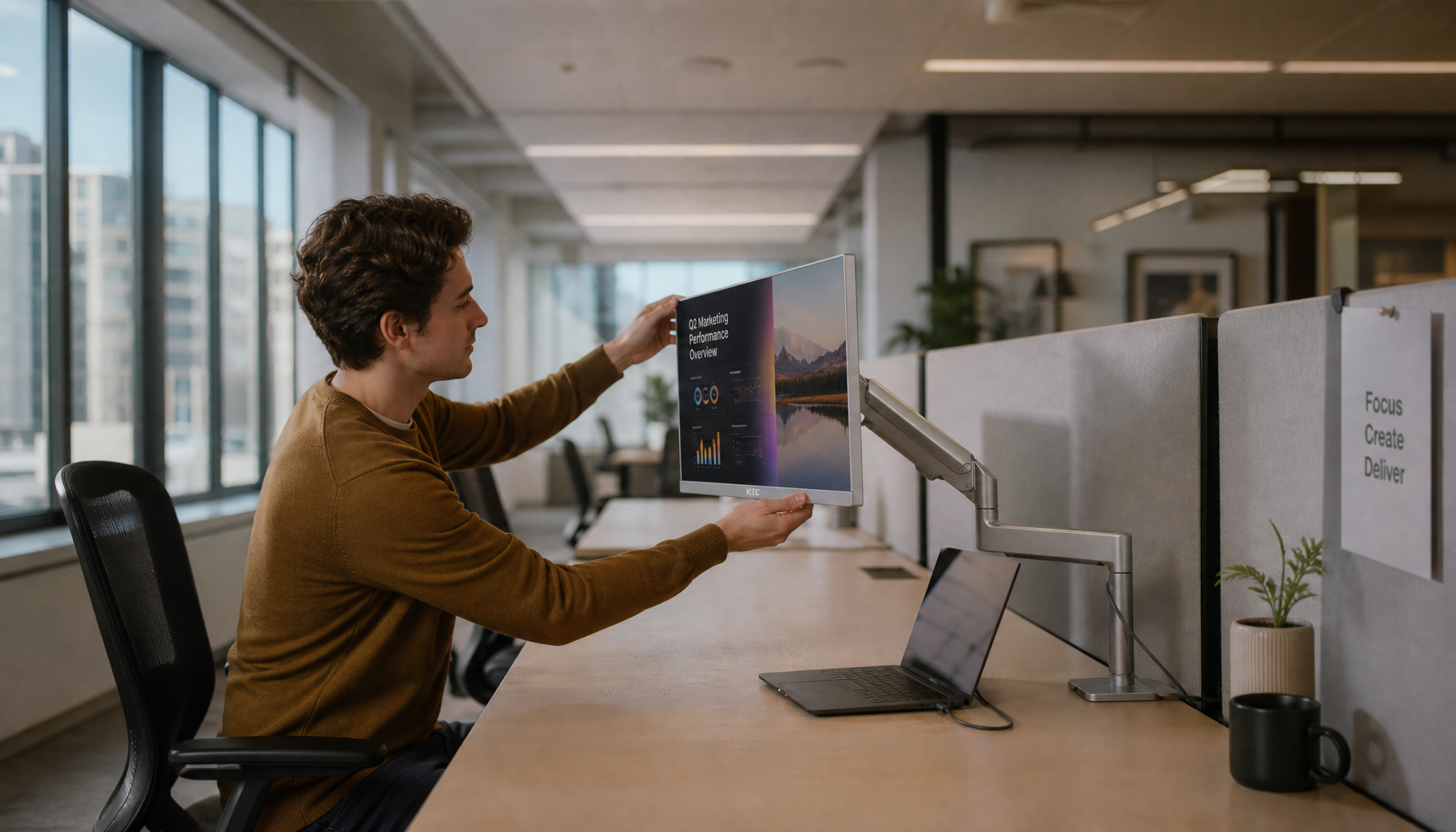
Because arm tension is the spring resistance that keeps a monitor at the desired height, a display that lowers or changes posture as the days pass may need tension adjustment rather than just more tilt torque. This is especially common with gas-spring or articulating wall arms. A 32-inch productivity display that is technically within spec can still feel unstable if the spring setting was never calibrated to that exact weight.
The wall plate is steady, but cables are quietly pulling the screen
When cable slack for a full range of motion is missing, HDMI, DisplayPort, or power cables can act like a small leash on the monitor. That pull is easy to ignore during setup, but after repeated adjustments it can bias the screen downward or sideways. If your monitor only drifts when the arm is extended farther from the wall, cable strain is a serious suspect.

The screen is stable, but the angle is still wrong for your body
If the top of the screen near eye level and your eyes naturally look slightly downward toward the center, the display is usually in the ergonomic zone. Many people correct a screen into a more upright or higher position than they actually need, then keep nudging it again later because the posture never feels relaxed. A wall mount can be mechanically secure and still feel wrong if the original angle was poorly chosen.
How to Fix It So It Stays Fixed
Start with the spec sheet, not the wrench
Because monitor weight and screen size should both be verified, the first job is to confirm that your mount is not overloaded or too close to its limit. Also confirm VESA compatibility, which simply means the hole pattern on the back of the monitor matches the mount plate, usually about 3 x 3 in. or 4 x 4 in. If you are using a larger curved or ultrawide display, this check matters even more because leverage rises fast as screens get wider and deeper.
Reset the arm to neutral, then tune tension and tilt in small steps
Since tension should be adjusted incrementally until the arm holds position on its own, do not crank every bolt at once and hope for the best. Bring the arm close to its normal working position, level the display, adjust spring tension if the arm rises or drops on its own, then fine-tune the tilt joint only enough to keep the screen planted. Some mounts also need the backing bolt held steady during tightening, which is why rushed one-tool adjustments often fail.
Recheck the actual viewing geometry
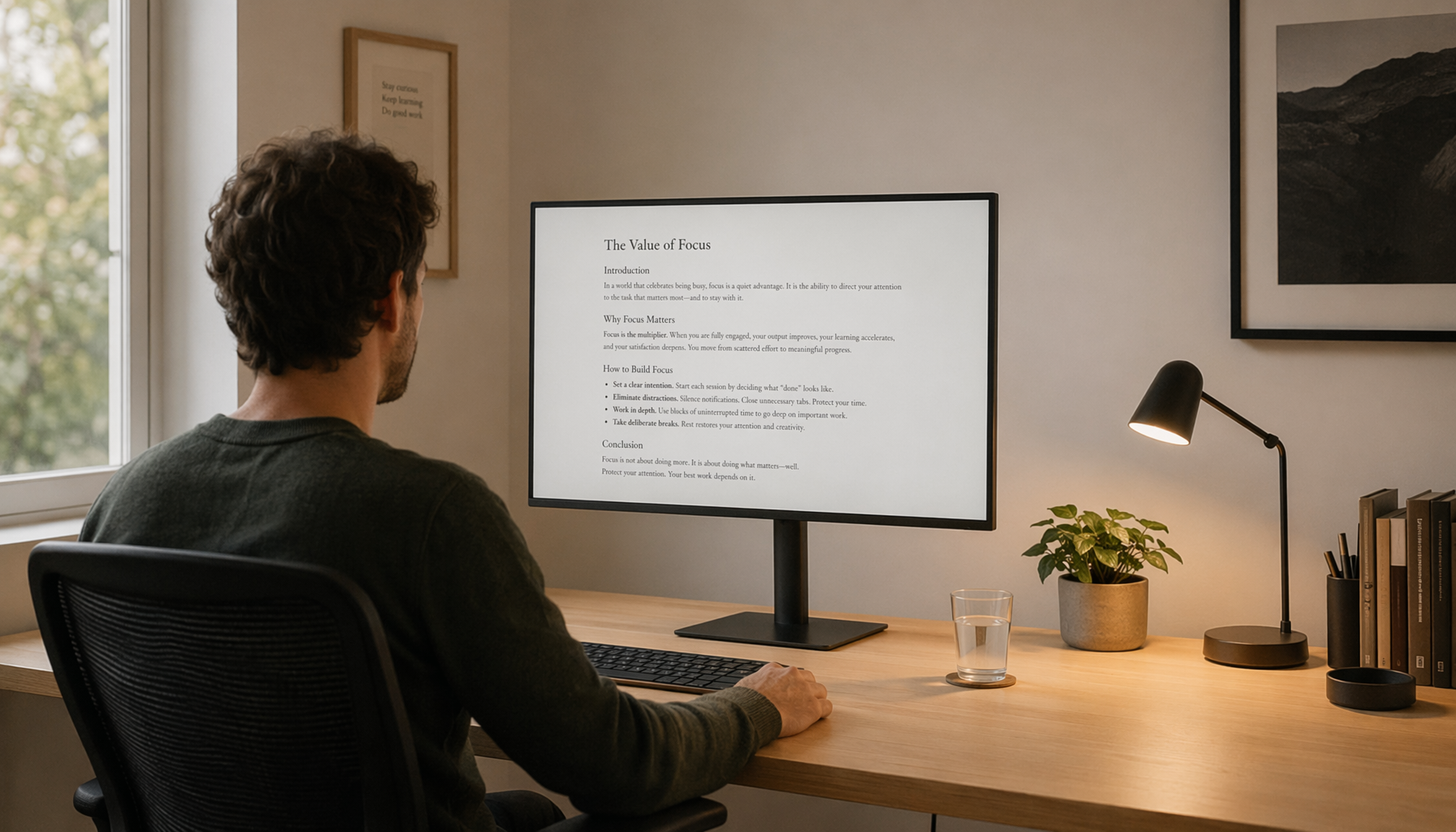
Because neutral posture, movement, and rest all matter for comfortable computing, the best final angle is the one that keeps your neck quiet, not the one that looks most dramatic on the wall. A solid target is the top of the screen at or slightly below eye level, the monitor at least 20 inches away, and a slight backward tilt rather than a flat, forward-facing wall pose. If you wear bifocals, the screen may need to sit lower and tilt back more aggressively than standard advice suggests.

Remove the slow sources of drift
When cable management and wall support are treated as long-term usability issues instead of cosmetic extras, monitors stay put far more reliably. Leave enough slack for full movement, keep the arm from living at maximum extension unless you truly need that reach, and recheck every fastener after a few days of normal use. That last step is practical rather than glamorous, but it is often the difference between a display that feels engineered and one that feels temporary.
Which Mount Types Sag Less?
The main mount types do not fail in the same way, and that matters if you are shopping for a replacement after a bad experience.

Stability profile |
Tradeoff |
|
Fixed wall mount |
Usually the most resistant to drift because it has the fewest moving joints |
Very limited post-install adjustment |
Tilt wall mount |
Good balance for simple office or gaming setups where glare control matters |
The tilt hinge becomes the main weak point if load headroom is too small |
Full-motion or articulating arm |
Best for deep desks, sit-stand use, shared viewing, and flexible positioning |
More joints mean more places for creep if tension and torque are not set correctly |
That is why full-motion arms are excellent for flexibility, but they demand better setup discipline than a basic fixed plate. If your workflow never changes and your desk depth is predictable, a simpler mount can be the more reliable choice. If you move between controller gaming, keyboard work, and standing sessions, the extra adjustability is worth it, but only when the arm has real weight headroom.
When to Remount, Replace, or Call for Help
If the wall type, anchor choice, or load safety is uncertain, stop treating the problem like a minor annoyance. A screen that repeatedly loosens after correct adjustments, a wall plate that no longer sits flush, or an arm that is already near its rated limit is no longer giving you a tuning problem. It is giving you a hardware mismatch or an installation risk.
A good wall-mounted monitor should feel planted, effortless, and easy on the neck. Once the load rating, wall support, cable slack, and viewing angle all line up, the screen stops drifting and starts behaving like a serious part of the setup instead of a compromise hanging on the wall.