Use your smartphone as a smart monitor remote by keeping both devices on the same Wi-Fi network, choosing casting or mirroring when supported, and using wired USB-C or HDMI when you need lower lag and higher reliability.
Tired of reaching behind the display, hunting for tiny buttons, or juggling a monitor remote while a streaming app, browser, or presentation is already on screen? A phone-based control setup gives you a testable win: faster app launching, easier media control, and fewer desk interruptions when the monitor supports the right wireless or wired path. Here is the practical setup, what each control method does, and how to avoid no-signal errors and lag.
What “Smartphone as Remote” Means on a Smart Monitor
A smart monitor is not just a panel for a laptop. It adds built-in apps, wireless display features, and device connectivity so the screen can run entertainment, work, or dashboard-style experiences without always depending on a PC. That makes the smartphone valuable in three roles: a remote control for apps already running on the monitor, a casting controller that tells the monitor what to stream, or a mirrored source where the phone’s whole screen appears on the display.
The difference matters. Casting sends supported app content to the monitor while the phone remains usable for other tasks. Mirroring duplicates the phone screen in real time, which is better for demos, photo previews, or quick app access, but it usually needs stronger Wi-Fi and reacts more noticeably to network congestion. Wired display output is the performance option: a video-capable USB-C or HDMI adapter path can reduce lag for gaming, presentations, and productivity.

Before You Start: Confirm the Control Path
The first checkpoint is compatibility. A smart monitor may support app control through its own ecosystem, wireless casting, screen mirroring, or only conventional inputs. For wired device connections, identify the correct input and select the connected source from the monitor’s home screen. For wireless sharing, the phone and display normally need to be on the same Wi-Fi network and use a supported feature such as built-in casting, screen sharing, or another mirroring tool.
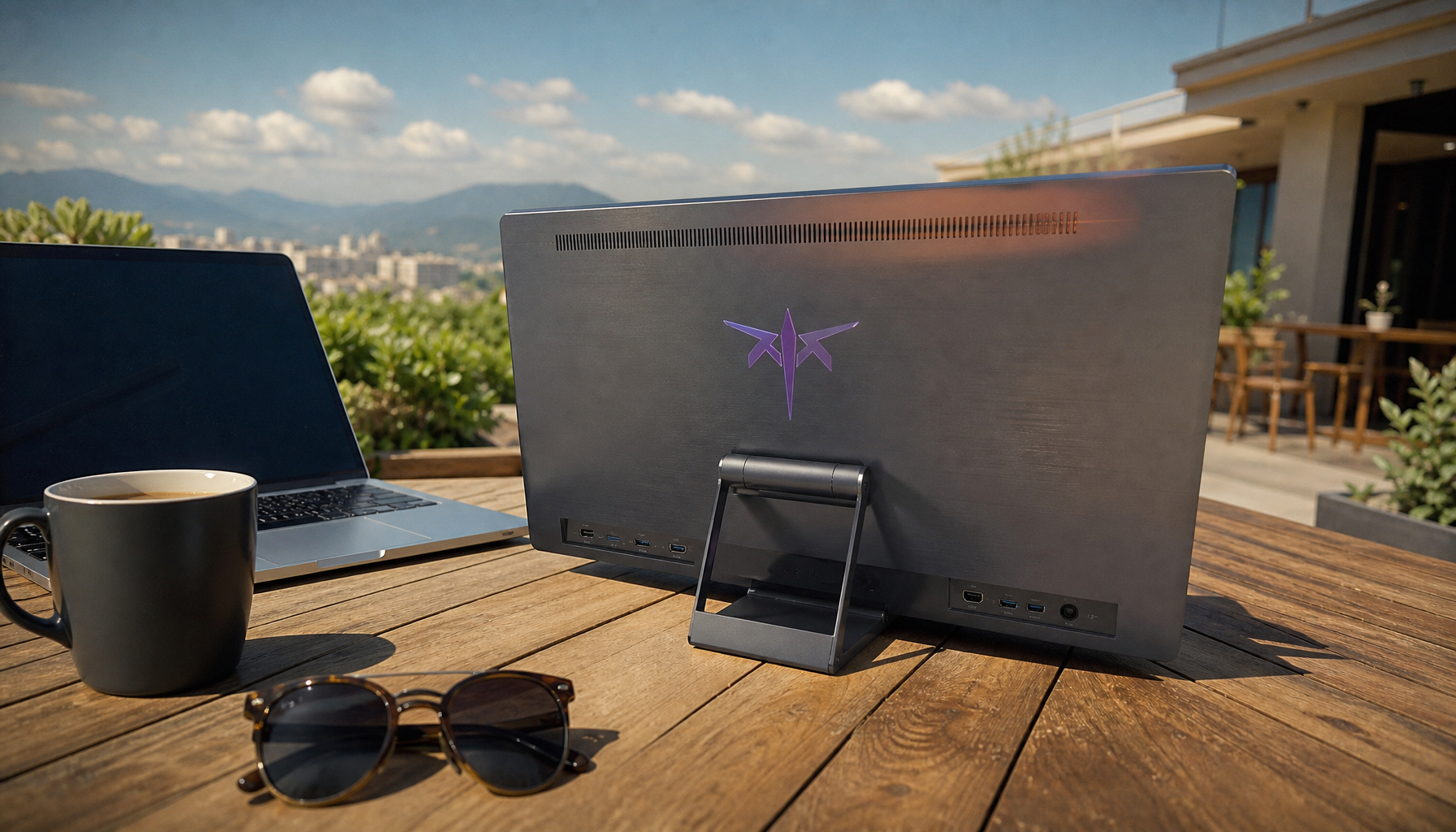
For portable and hybrid display setups, the same rule applies at the port level. Many modern monitors can use one USB-C cable, but only when both the phone and display support video over USB-C; the one-cable USB-C setup depends on full-featured USB-C with DisplayPort Alternate Mode, not just a charging cable. If you connect by HDMI, remember that HDMI carries video but not power, so the display may still need a separate USB power cable.

Control method |
Best for |
Main advantage |
Main drawback |
App casting |
Video apps, music, casual streaming |
Phone stays usable |
App and monitor must support it |
Screen mirroring |
Demos, photos, quick app access |
Shows the whole phone screen |
More lag-sensitive |
Wired USB-C video |
Work, gaming, low-lag viewing |
Stable and responsive |
Requires compatible phone and cable |
HDMI adapter |
Older monitors, broader device support |
Widely compatible |
Often needs separate power |
Monitor control software |
Display settings and work profiles |
Faster than physical buttons |
Usually brand/model limited |
Set Up Wireless App Control
Start with Wi-Fi. Put the smart monitor and phone on the same network, preferably the 5 GHz band if your router and devices support it. This is especially important when you are casting 4K video, mirroring a phone game, or using the monitor as a dashboard while other devices are also active in the home.
Next, open the app you want to control on your phone. If the app supports casting, tap its cast or screen-share icon and choose the monitor. Once the stream starts, the phone usually becomes the control surface for playback, pause, seek, volume, and content selection. This is the cleanest model for media because the monitor handles playback while the phone acts more like a command center than a video source.

If the app does not cast directly, use screen mirroring from the phone’s quick settings or control panel, then select the monitor. This is useful when a work app, dashboard, or browser page has no native casting button. The tradeoff is that every swipe, notification, and orientation change on the phone can appear on the monitor, so turn on Do Not Disturb before a presentation or shared viewing session.
Use Wired Control When Lag Matters
Wireless is convenient, but performance users should not ignore cables. For gaming, slide-heavy presentations, creative previews, or office work where the cursor and touch response need to feel immediate, wired output is usually the more reliable path.
On many USB-C phones, a USB-C to USB-C connection works when the phone supports DisplayPort Alternate Mode and the monitor accepts video over USB-C. Some phones can also offer desktop-style modes, which are useful when you want the phone to feel less like a stretched handset and more like a compact workstation. With compatible USB-C phones and tablets, direct USB-C display output can work with supported monitors, while older phones may need an adapter and are typically limited in resolution; the smartphone-to-monitor workflow is most dependable when you match the phone, cable, and monitor input before buying accessories.

A simple real-world check is worth doing before a meeting or tournament session. Connect the phone, open the app you need, move through three common actions, and watch for black screens, flicker, or touch delay. If the monitor flashes or drops signal, lower the output resolution or refresh rate, switch to a shorter video-rated cable, and confirm the monitor is receiving separate power when required.
Control Display Settings Without Button Hunting
Phone control is not only about apps. A strong smart monitor setup also reduces friction around brightness, color modes, input switching, and window layouts. Physical monitor buttons are often slow for repeated adjustments, especially when the display sits deep on a desk or is mounted on an arm.
Some monitor makers offer desktop utilities for monitor control. These tools can adjust supported monitor settings through software and reduce reliance on physical buttons. That is not the same as using a phone as a remote, but it reinforces the bigger workflow lesson: the best display setups move routine controls into software where they are faster and easier to repeat.
For multi-display productivity, the phone-as-remote idea also pairs well with saved workspace layouts. Browser and window management tools can restore display arrangements across one or more screens, and multi-monitor support still depends on hardware, ports, GPU capacity, resolution, and refresh rate. If your smart monitor is part of a laptop setup, do not assume every port can drive every display at full quality.
Pros and Cons of Smartphone Remote Control
The main benefit is control density. Your phone already has search, typing, touch, voice input, app logins, and media controls, so it often beats a minimalist monitor remote. It also reduces desk clutter, which matters in a compact home office or gaming station where every cable and accessory competes for space.
The second benefit is flexibility. A smartphone can cast a workout app in the morning, mirror a presentation at noon, and drive a portable monitor during travel. Demand for portable display workflows is rising because compact secondary screens are used for productivity, gaming, multimedia, and flexible work; market research projects the portable monitor category at $218.9 million in 2026, with larger growth expected by 2036, driven partly by cross-device work.
The drawbacks are real. Wireless control can lag. Some apps block casting. Shared Wi-Fi can create stutter. Not every USB-C cable carries video. Some monitors support touch input only after drivers or a specific connection path. Privacy also matters: a 2024 review of screen technology measurement notes that modern use spans devices, software, content, purpose, context, and time, while typical US homes have about five internet-connected devices, making digital screen technology use more complex than simple “screen time.” Treat the smart monitor like any connected device: update firmware, avoid untrusted sideloaded apps, and be careful before granting account or home-control access.
Troubleshooting Common Problems
If the monitor does not appear for casting, confirm both devices are on the same Wi-Fi network, then restart the app, phone, monitor, and router if needed. If you use a guest network or router isolation, the phone may be blocked from discovering the display.
If wired USB-C shows no signal, the cable is the first suspect. Many USB-C cables charge only and do not carry video. Try a known video-capable USB-C cable, verify that the phone supports video output, and supply separate power to the monitor if it cannot draw enough power from the phone.

If HDMI works but the monitor stays black, check the input source on the monitor and confirm that the adapter is powered if required. HDMI is good for compatibility, but it is not a full one-cable solution because it does not power the screen.
If mirroring feels delayed, move closer to the router, switch to 5 GHz Wi-Fi, close background phone apps, and lower the stream quality where available. For fast games, precise design review, or live presenting, switch to a wired connection instead of fighting the network.
Best Setup for Different Users
For office productivity, prioritize reliability over novelty. Use the smart monitor’s built-in apps for video calls, dashboards, or document viewing when available, and keep a wired USB-C or HDMI path ready for presentations. A phone remote is excellent for launching content and searching, but long typing sessions still feel better with a keyboard.
For gaming, wired output is the stronger default. If the phone is only controlling a media app or cloud dashboard, wireless is fine. If the phone is the actual game source, latency matters more than cable minimalism.
For portable smart screens, look for USB-C video support, HDMI backup, a stable stand, and enough power flexibility for travel. A phone-controlled display is most useful when it can handle both quick wireless casting and a dependable cable connection when the room’s Wi-Fi is weak.
FAQ
Can any smartphone control any smart monitor?
No. Control depends on the monitor’s operating system, wireless features, ports, and the phone’s casting or video-output support. Before buying, check whether the monitor supports your phone’s ecosystem and whether your phone can output video over USB-C if you want a wired setup.
Is casting better than mirroring?
Casting is usually better for streaming apps because the phone stays usable and the monitor handles playback. Mirroring is better when the app has no cast button or when you need to show exactly what is on the phone.
Do I need a special USB-C cable?
Often, yes. A charging-only USB-C cable may not carry video. For a one-cable display setup, use a full-featured USB-C cable and confirm that both the phone and monitor support video over USB-C.
A smartphone remote turns a smart monitor into a cleaner, faster control surface, but the best setup is not one-size-fits-all. Use wireless casting for convenience, mirroring for quick sharing, and wired video when performance matters; that balance keeps the screen immersive without making the workflow fragile.