USB-C monitor power delivery setup guide: one cable can carry charging, display, and data, but only when the laptop, monitor, and cable all support the same functions. If any one piece is mismatched, the setup may still work partially, which is why the safest move is to check specs before you treat a USB-C monitor like a dock or charger.

How USB-C Monitor Power Delivery Works
What a One-Cable USB-C Setup Includes
A one-cable desk setup usually tries to do three jobs at once: send the display signal, deliver charging power, and pass accessory data for things like a keyboard, mouse, or hub. USB-C can carry all three, but the connector shape alone does not guarantee that every path is active.
In practice, a monitor may handle video well and still provide only modest charging, or it may charge a laptop while leaving hub features limited. USB Power Delivery 3.1 can reach up to 240W in the standard, which is why the number on the spec sheet matters more than the port shape itself. GraniteRiverLabs explains the PD 3.1 ceiling clearly, but most monitors still sit far below that ceiling.
Why the Connector Shape Is Not the Whole Story
For most buyers, the first check is simple: does the laptop port support display output and charging, and does the monitor actually advertise both? A USB-C plug can fit while still missing video support, data support, or enough charging wattage. That is why a setup can look correct on the desk and still fail at the first test.
The practical rule is to treat USB-C as a capability bundle, not a promise. If the laptop, cable, and monitor each support the needed function, the connection can be clean and convenient. If one of them is charge-only or video-only, the result is often a partial setup instead of the single-cable experience you wanted.
What Users Usually Expect Versus What Actually Happens
The common expectation gap is this: video comes up, so people assume charging must be fine too. That is not a safe assumption. A monitor can pass picture while still not supplying enough power to keep the battery steady during heavier work.
That is why the best-fit question is not "Does USB-C work?" It is "Does it work for my laptop under my normal workload?" If you want a monitor to replace the charger most of the time, check that condition first. If you only need a cleaner display path and are happy to keep the charger nearby, the wattage bar is lower.
Check Wattage Limits First
For a USB-C monitor power delivery setup guide, wattage is the first decision point because it determines whether the monitor can only offset battery drain or actually stand in for the charger in day-to-day use. The cleanest way to compare is to look at the laptop's charging need, the monitor's stated USB-C output, and the workload you expect.
| Check Item | What To Verify | What It Means In Practice | Risk If Ignored |
|---|---|---|---|
| Laptop charging need | Check the laptop's required or recommended wattage | A lower-PD monitor may still help with light work, but it may not hold charge under load | The laptop may charge slowly or still drain while plugged in |
| Monitor USB-C output | Look for the stated PD wattage on the spec sheet | This is the output the monitor can actually offer, not the maximum USB-C theory limit | You may buy a monitor that looks capable but cannot sustain your setup |
| Expected workload | Think about video calls, office work, creative apps, or gaming | Light use is easier to support than sustained heavy load | A setup that looks fine at idle can fail during real work |
| Charger replacement intent | Decide whether the monitor must replace the brick or only reduce cable clutter | If you still keep the charger nearby, the fit is much easier | You may overbuy power you do not need, or underbuy and be disappointed |
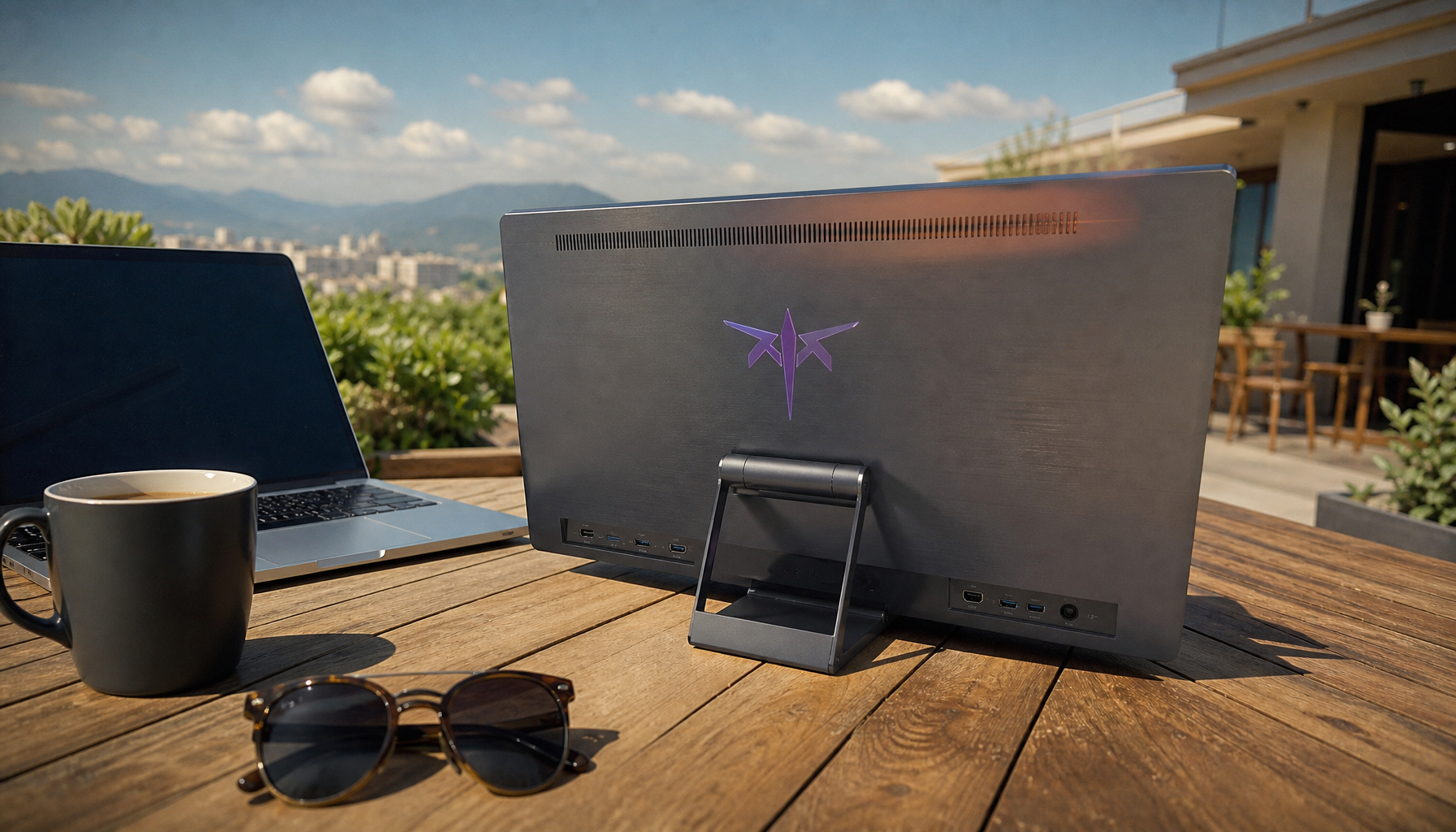
The featured KTC 27-inch 4K office monitor is a neutral fit-check example here, not proof of universal laptop compatibility. Its product facts describe a 90W USB-C option, which can be useful for some laptop setups, but you still need to confirm whether your device's charging profile and workload actually match that output.
If you are comparing a stronger charging option, the 90W USB-C gaming monitor gives you a clearer headroom example for laptops that need more power than a basic office display can provide. That still does not make it a universal dock replacement, but it does help narrow the fit.
The practical threshold is not a fixed universal number. A higher-wattage monitor is more likely to keep up with demanding laptops, but the only safe answer is the one tied to your model and your use case. If your laptop has a larger power draw, or if you run heavy apps for long periods, keep the original charger until the monitor proves it can hold charge in your real setup.
Match the Cable to the Job
USB-C cable choice is the second common failure point. A cable can fit both ends and still fail the job if it is charge-only, too long for the signal path, or missing the power negotiation needed for higher-wattage delivery.
Full-Function Versus Charge-Only USB-C Cables
A charge-only cable may work for basic power, but it often cannot carry video. That is the part many people miss when a setup "sort of" works: the port lights up, but the monitor stays dark. ACT Connectivity notes that a full-featured USB-C cable is needed for video and data, while standard charge-only cables often lack the internal wiring for display signals.
For a single-cable monitor setup, "full-featured" is the safer expectation. If you want charging plus display plus hub behavior, do not start with the cheapest USB-C cable in the drawer. Use a cable meant for signal transmission, then narrow the problem only if the setup still misbehaves.
Cable Length, Signal Quality, and Desk Layout
Longer cable runs can make a good setup feel flaky. If the cable has to stretch across a deep desk, pass through an extension, or snake behind a mount, the chance of signal or charging trouble rises. That does not mean long cables never work. It means desk distance should be part of the purchase check, not an afterthought.
USB-C power delivery guidance from Cable Matters is useful here because it highlights another hidden detail: USB-C cables above 60W need an E-Marker to negotiate higher power safely. Without that, charging can be capped even if the monitor and laptop are both capable of more. In other words, the cable can be the bottleneck.
If your setup breaks down, test with the shortest direct cable you have before adding hubs or extension pieces. That gives you the cleanest read on whether the cable is the weak link.
Pick the Right Cable Set for the Setup
If you want a cleaner starting point, premium display signal cables make it easier to match the connection type to the job instead of relying on whatever cable happens to be nearby. That is especially helpful when you are separating USB-C video, charging, and accessory issues during setup.
Why MacBook and Windows Setups Differ
MacBook and Windows laptops can behave differently with USB-C display and multi-display routing, so the same monitor may feel effortless on one machine and awkward on another. Apple's own guidance on connecting external displays with a Mac is a good reminder that port behavior is device-specific, not universal.
For MacBook users, the big mistake is assuming a Windows-friendly monitor path will behave the same way with every adapter, hub, or multi-display setup. For Windows users, the common mistake is assuming every USB-C port on the laptop carries the same display and charging behavior. That is not true across models.
A simple rule helps here: test the exact port you plan to use before buying extra accessories. If the first port gives weak charging or no display, the fix may be a different port, a different cable, or a different laptop model, not necessarily a better monitor.
Set It Up Without the Usual Guesswork
The safest first setup is boring on purpose. Start with one direct USB-C cable, no dock, no hub, and no splitter. That keeps the failure point obvious and saves time if you need to troubleshoot.
- Connect the monitor and laptop with a direct cable.
- Select the correct input on the monitor.
- Check whether video appears before judging charging.
- Confirm whether the battery is holding steady under your normal workload.
- Add peripherals only after the picture and power path are stable.
- If the setup is unstable, step back to a simpler cable path before changing settings.
If you are comparing options, the KTC 90W USB-C gaming monitor is a stronger featured example than the office-style model for buyers who want more charging headroom in a one-cable desk. That still does not make it a universal dock replacement, but it does give you a clearer fit when the monitor needs to support a heavier laptop load.
A good first setup should tell you three things quickly: whether the port outputs video, whether the laptop accepts power from that port, and whether the cable can carry both without dropping peripherals. If any step fails, do not keep stacking adapters on top of it.

Troubleshoot Weak Charging or No Display
When a USB-C monitor gives partial function, split the problem into power, video, and peripheral paths. That prevents random part swapping and makes the diagnosis much faster.
No Image but Some Charging
If the laptop charges but the monitor stays blank, check three things first: the laptop port's display support, the monitor input selection, and whether the cable is full-featured. A charge-only cable can make this failure mode especially confusing because it looks correct until you try video.
If you are using a higher-resolution path, keep in mind that some DP Alt Mode setups trade USB data bandwidth for display bandwidth. Newnex explains that this tradeoff can affect connected peripherals, which is why a display can work while a hub behaves oddly.
Image Works but Charging Is Weak
If the picture appears but the laptop still drains, treat that as a wattage mismatch first, not a monitor defect. Video success only proves the display path is alive. It does not prove the power path is strong enough for your workload.
This is where the "good enough" judgment matters. If the laptop is fine during light office use but loses charge during creative work or long calls, the monitor may still be useful, just not as a charger replacement. That is a different buying decision from a full power-delivery match.
Peripherals Do Not Follow the Display
If your keyboard, mouse, or storage device does not show up through the monitor, do not assume the display is broken. The USB path may be separate from the video path, and the monitor may act like a display first rather than a full dock.
In that case, the right question is whether you need a monitor with built-in hub behavior or a separate dock for accessories. A single-port USB-C support guide can help you think through that distinction before you buy another splitter or dock.
If you want to compare how one port handles display pass-through and accessory routing, the portable monitor daisy-chain limits guide is a useful follow-up for setups that need multiple screens from one laptop connection.
For broader desk planning, Mac and PC hybrid setup tips can help if your workflow switches between laptop types and you want the same monitor to behave predictably in both cases.
Use This Final Compatibility Checklist
Before you rely on a USB-C monitor every day, check the full chain: laptop port, monitor output, cable capability, and your real workload. If any one of those is unclear, treat the setup as a work in progress, not a guaranteed dock replacement.
- Confirm that the laptop port supports charging and display output.
- Verify the monitor's USB-C power output before assuming it can replace the charger.
- Use a full-featured cable, not a charge-only cable.
- Keep the original charger nearby until the setup proves itself under your normal workload.
- Check whether you still need a separate dock for peripherals.
- Re-test after adding longer cables, adapters, or hubs.
If you want a cleaner desk, a USB-C monitor can help. If you want a guaranteed one-cable replacement for every laptop and workload, verify the specs first and keep a fallback plan.
FAQs
How Do I Know If My Laptop Can Charge Through a USB-C Monitor?
Your laptop has to support charging on that USB-C port, and the monitor's output has to be enough for your real workload. The safest check is the laptop manual or spec sheet plus the monitor's stated PD output. If either is unclear, keep the original charger handy.
What Cable Do I Need for USB-C Video and Charging?
Use a full-featured USB-C cable that supports both display and power delivery. Charge-only cables may fit the port but still fail to carry video. If your setup needs higher wattage, make sure the cable is also rated for the power level your devices expect.
Can a USB-C Monitor Replace a Dock for My Desk?
Only sometimes. It can replace a dock when the monitor, laptop, and cable all support the needed power, video, and accessory functions. If you need stable USB peripherals, multiple devices, or more complex routing, a separate dock may still be the safer choice.
Why Does My MacBook Charge but Not Display on the Monitor?
Start with the cable and input selection, then check whether the Mac's port and the monitor path support video. On Macs, display behavior can differ from Windows setups, so the port you choose matters. A working power path does not guarantee a working display path.
Why Do Windows Laptops Behave Differently With USB-C Monitors?
Different Windows laptops can route power, video, and USB functions differently by model, chipset, or port design. That is why one monitor can behave beautifully on one laptop and only partly on another. The fix is usually a model-specific check, not a generic setting.
Final Takeaway
A USB-C monitor is a convenience upgrade only when the laptop, cable, and monitor all support the same functions. The most common mistakes are assuming every USB-C port is identical, assuming any USB-C cable will do, and assuming video success means charging is solved. Check the specs first, then use a direct cable and verify the setup under your real workload.