A USB-C monitor may stay black, flicker, disconnect, charge slowly, or work only after you add external power. The fix is to separate the problem into power, video, cable, and device compatibility instead of assuming the USB-C port should just work.
Is your portable screen flashing “No Signal” even though the cable clicks in and the laptop is awake? A direct power-and-video check can quickly tell whether you need a powered monitor connection, a better USB-C cable, or a different port. You’ll leave with a practical way to diagnose the failure and avoid buying the wrong adapter.
Why USB-C Monitor Power Problems Are So Confusing
USB-C is powerful because the same oval connector can carry display, data, and power, but that also makes it easy to misread the problem. A port may charge a device but not output video, output video but not supply enough power, or support both only with the right cable. USB-C can be used for display output only when the laptop port, cable, and monitor all support the required video path.

The key issue is that “USB-C” describes the connector shape, not the full feature set. In a performance display setup, the real requirements are DisplayPort Alternate Mode or Thunderbolt/USB4 for video, enough Power Delivery for charging or bus-powered operation, and a full-featured cable that can carry more than basic charging current.
In hands-on setup checks, the fastest way to avoid wasted time is to ask one plain question first: which direction is the power supposed to flow? A portable USB-C monitor often expects the laptop to power the screen. A desktop USB-C monitor often sends power back to the laptop. If that power budget is too low in either direction, the symptoms can look like a video failure even when the panel and laptop are not defective.
What Actually Happens When Power Is Insufficient
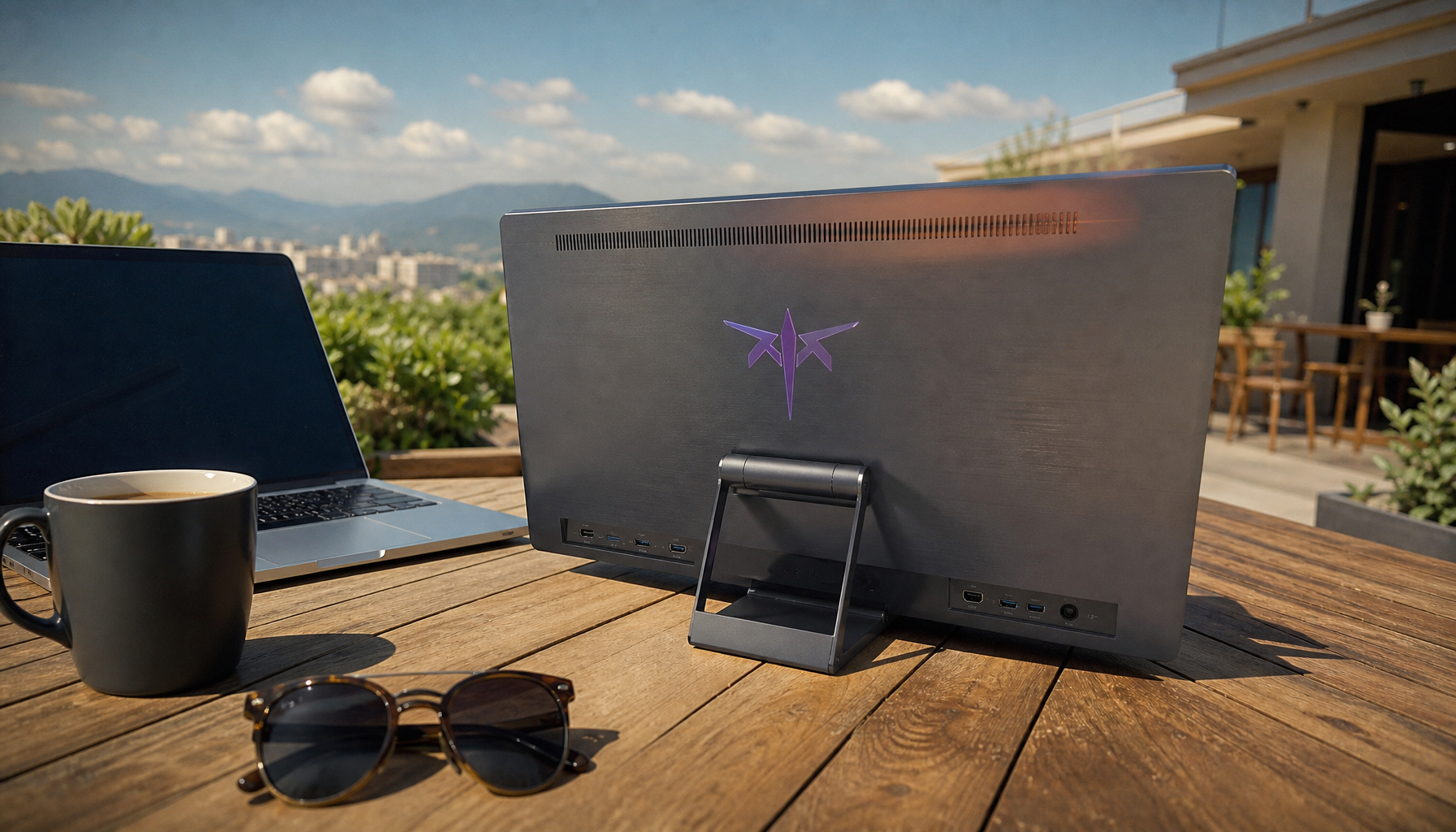
When a laptop cannot supply enough power to a portable USB-C monitor, the display may never turn on, may show a logo and then shut off, or may connect briefly before the operating system drops it. Some portable monitors dim aggressively, disable higher brightness levels, or require a second USB-C power cable connected to a wall charger.

A July 2024 community case shows the real-world messiness well: one portable display failed to receive both power and video from a laptop, while a different portable monitor worked correctly with one USB-C cable on a similar setup. That kind of result points toward model-specific power negotiation or firmware behavior rather than a simple “bad laptop” conclusion, and the practical advice was to test another model.
When a desktop USB-C monitor provides too little Power Delivery back to the laptop, the display can still work while the laptop battery slowly drains under load. This is common with higher-performance laptops used for gaming, video editing, or heavy multitasking. A monitor offering 65W may be comfortable for many thin-and-light laptops, while a performance laptop that normally ships with a 90W, 100W, or larger charger may only maintain charge during light work and lose battery during GPU-heavy sessions.
Situation |
Likely symptom |
Practical meaning |
Laptop powering portable monitor, not enough output |
Black screen, flicker, shutdown, brightness limits |
Add external monitor power or use a lower-power display |
Monitor charging laptop, not enough PD wattage |
Video works, laptop says slow charging, battery drains |
Use the laptop charger or a higher-wattage USB-C monitor or dock |
Cable lacks video support |
Charging or USB data works, no picture |
Replace with a full-featured USB-C, USB4, or Thunderbolt cable |
Port lacks video support |
Dock peripherals work, monitor not detected |
Use HDMI, DisplayPort, Thunderbolt, or a driver-based video workaround |
Power Is Not the Same as Video Support
A laptop can successfully charge through USB-C and still fail to drive a monitor because charging support does not prove DisplayPort Alternate Mode support. Some dual-monitor setup guidance is blunt on this point: USB-C only supports external video if the port includes DisplayPort Alternate Mode, and some ports support only charging or data.
That distinction matters when a dock powers your keyboard, mouse, and even the laptop, yet the monitor stays dark. The data lanes are working, but the native video path may be missing. In that case, adding a stronger charger will not create DisplayPort Alt Mode. You either need a different laptop port, a dock that uses driver-based video, or a direct HDMI/DisplayPort output.
A support case illustrates the same trap from another angle. A user’s laptop had a USB-C port that looked promising, but the responder found no documentation showing display output support, and the user later confirmed the port carried only USB-style markings. The practical conclusion was that the USB-C port was not intended for external display, while HDMI bandwidth limited the ultrawide monitor to a lower refresh mode; not all USB-C ports support native monitor output.
Why the Cable Can Make a Good Setup Look Broken
USB-C cables are not interchangeable for display work. A cell phone charging cable may provide enough power for a small device but lack the wiring, signaling quality, or bandwidth needed for video. A full-featured USB-C cable is required when you want one cable to carry display, power, and data reliably.

For a portable smart screen, this matters even more because the same cable may be asked to power the panel, carry video, and sometimes pass touch data. A weak or charge-only cable can create misleading symptoms: the monitor may light up but show no image, or the laptop may detect a device without creating a display. If your monitor includes its own labeled USB-C video cable, test with that first before judging the laptop.
With high-refresh gaming monitors, ultrawide displays, and 4K panels, the margin gets tighter. A basic 1080p office display is forgiving; a 1440p 144Hz or ultrawide panel is not. The more pixels and refresh rate you demand, the more important the cable rating, port capability, and dock bandwidth become.
How to Diagnose the Problem Without Guessing
Start with a direct connection between the laptop and monitor using a known video-capable USB-C cable. The KTC troubleshooting approach is useful because it treats charging, video, USB data, and KVM behavior as separate functions; a USB-C connection can support one function while failing another.
If the portable monitor has a second USB-C power input, connect that to a wall charger and leave the laptop-to-monitor USB-C cable responsible for video. If the display stabilizes immediately, your laptop’s port probably cannot provide enough power for that monitor at the brightness or mode you are using. If nothing changes, the issue is more likely video support, cable capability, input selection, or firmware.
Next, lower the display load. Drop from 4K to 1080p, reduce refresh from 144Hz to 60Hz, and turn down brightness on a portable display. This is not the final premium experience, but it is a strong diagnostic move. If the monitor becomes stable at a lower setting, the setup is near the edge of its available power or bandwidth.
Then verify the port specs from the laptop manufacturer. Look for phrases such as DisplayPort Alternate Mode, Thunderbolt 3, Thunderbolt 4, USB4, or video output over USB-C. A plain “USB 3.2 Gen 1 Type-C” listing may only describe data speed, not monitor support. If the spec does not mention video, treat the port as unproven until tested.
When a Dock or Hub Is the Weak Link
A USB-C hub adds another power budget and another compatibility layer. If the hub is underpowered, the monitor may fail detection, flicker, or disconnect when you add an external drive, webcam, Ethernet adapter, or other peripherals. Dock setup guidance emphasizes that a laptop’s USB-C port must support video through Thunderbolt or DisplayPort Alt Mode before a standard USB-C dock can handle monitor output; DisplayPort Alt Mode lets the USB-C port transmit video to an external display.
For a fixed office desk, a powered dock or USB-C monitor with strong Power Delivery is usually more reliable than a small pass-through hub. For travel, a compact hub can be excellent, but it should match the exact workload: one 1080p presentation display is a different demand than dual monitors, SSD transfers, charging, and a webcam running at the same time.
The tradeoff is simple. A one-cable USB-C monitor setup is clean, fast, and practical when the laptop, monitor, dock, and cable are matched. The downside is that a single weak component can break the whole experience, and the symptom may not reveal whether the failure is power, video, or bandwidth.
Practical Buying Advice for Gaming, Office, and Portable Screens
For office productivity, check that the monitor’s USB-C Power Delivery matches or exceeds your laptop’s normal charger wattage whenever possible. If your laptop charger is 65W, a 65W USB-C monitor is generally a sensible match for document work, calls, and browser-heavy multitasking. If your laptop uses a 100W charger, a 65W monitor may still display fine, but it may not keep the battery full during demanding workloads.

For gaming and high-refresh use, do not assume a USB-C dock is the best path. High-refresh monitors often perform best through direct USB-C-to-DisplayPort, Thunderbolt, HDMI 2.1, or a dedicated GPU output, depending on the laptop. Multi-monitor setup guidance reinforces the same principle for larger setups: before building around several displays, confirm that the laptop’s GPU, ports, and cables can support the desired resolution and refresh rate.
For portable smart screens, prioritize models that can accept separate external power. That gives you a fallback when a laptop’s USB-C port is not generous enough to power the panel. It also helps on airplanes, at hotel desks, and in temporary workstations where brightness and stability matter more than having the absolute fewest cables.

For everyday productivity, the payoff is real when the setup is stable. External monitor guidance frames the workflow well: keep primary work on the laptop screen and place reference material, browser windows, files, or supporting apps on the external display so you spend less time switching windows.
FAQ
Can insufficient USB-C power damage the monitor or laptop?
Usually, the result is non-operation or instability rather than damage, because USB-C devices negotiate power before drawing it. Still, forcing unstable setups with poor cables, questionable hubs, or overheating adapters is not worth the risk. Use certified, properly rated cables and add external power when the monitor manual recommends it.
Why does my monitor charge the laptop but show no image?
Charging only proves that power negotiation works. It does not prove that the laptop USB-C port supports DisplayPort Alt Mode, Thunderbolt, or USB4 video. Check the laptop’s port markings and official specifications, then test with a known video-capable cable.
Why does the display work on one laptop but not another?
The monitor may rely on USB-C features that one laptop port does not support, or the two devices may negotiate power and video differently. The community example showed a portable monitor working on some computers but not a specific laptop, while another portable monitor worked correctly, which makes model compatibility testing a smart next move.
Final Word
Insufficient USB-C power does not always mean the monitor is bad or the laptop is weak. It means the one-cable promise has hit a limit somewhere in the chain. Match the power wattage, verify video support, use a full-featured cable, and test directly before adding docks or hubs; that is how you turn a blank screen into a dependable display setup.