Usually, no: a USB-C monitor is designed to receive power, video, and data through specific ports, and splitting power and video across two USB-C cables works only if the monitor and laptop explicitly support that setup.
Is your monitor charging the laptop but showing a black screen, or displaying video while the battery still drains? In real troubleshooting, the fastest win is separating three questions: whether the laptop port supports video, whether the cable is full-featured, and whether the monitor’s USB-C port accepts the role you want. This article gives you a practical way to wire it correctly without wasting money on the wrong cable.
The Short Answer: One Cable Is Usually the Intended Setup
Most USB-C monitors are built around the “one cable” promise: one USB-C connection from the laptop to the monitor carries the display signal, USB data for peripherals, and Power Delivery charging. A true USB-C monitor setup can combine video output, data transfer, and laptop charging through one cable, which is why these displays are so valuable for clean desks, hybrid workstations, and quick laptop docking.
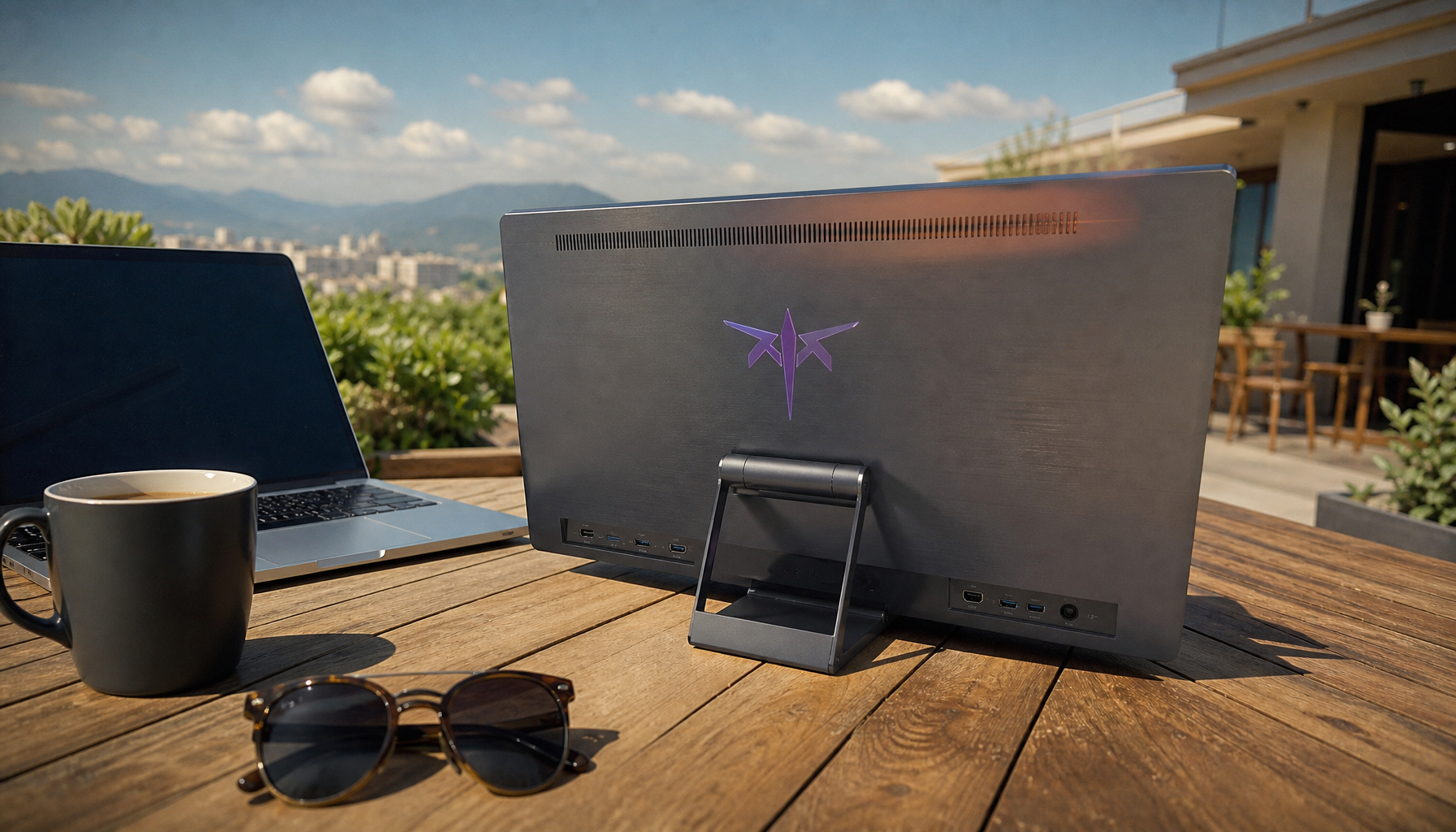
Using two different USB-C cables for the same monitor sounds logical: one cable for power, one for video. In practice, the ports are not usually independent lanes you can freely assign. A USB-C monitor might have one upstream USB-C port for laptop video and charging, plus another USB-C port for downstream accessories, service, or lower-power device charging. If you plug a second cable into the wrong port, nothing useful may happen.
The cleanest setup is still a single certified, full-featured USB-C cable from the laptop’s USB-C video-capable port to the monitor’s USB-C upstream port. If the monitor does not provide enough charging power for your laptop, keep the laptop’s original charger connected separately and use the USB-C cable only for video and data.
Why Two USB-C Cables Usually Do Not Split Power and Video
USB-C is the connector shape, not a guarantee of every capability. Identical-looking ports can support very different combinations of charging, data, and display output, so the decisive detail is the hardware behind the port. USB-C can transmit data and power, but video output depends on support for standards such as DisplayPort Alternate Mode, USB4, or a compatible adapter chain.
Power Delivery is negotiated between devices. The monitor and laptop decide which side supplies power and how much wattage is available. Video is negotiated separately through DisplayPort Alt Mode or another supported display path. A cable rated for high charging wattage does not automatically carry video, and a cable that carries video may not deliver enough wattage for a performance laptop.
That is where many monitor failures come from. A USB-C charging cable may charge a phone or laptop perfectly but lack the internal wiring or bandwidth needed for display. For high-performance screens, video output is not guaranteed unless the cable and ports support the required mode.
The Three-Port Reality: Laptop, Cable, Monitor

A USB-C display chain is only as strong as its weakest part. The laptop port must output video, the cable must carry it, and the monitor’s USB-C input must accept it. If any one piece is charging-only or data-only, the screen may stay blank.
For example, a laptop with a USB-C port rated only for basic data may still accept USB devices but fail with a USB-C monitor. Research notes included a troubleshooting case where the USB-C port supported 5 Gbps data but lacked both DisplayPort Alt Mode and Power Delivery. In that situation, a standard USB-C monitor cable cannot make the port output video or charge the laptop.
This is why the first spec to check is not the cable brand. It is the laptop port capability. DisplayPort Alternate Mode allows a USB-C port to send display signals, while USB4 generally provides stronger display support over the same USB-C-shaped connector.
Setup Question |
What You Need |
What Happens If Missing |
Can the laptop send video over USB-C? |
DP Alt Mode or USB4 support |
Monitor may charge but stay blank |
Can the cable carry video? |
Full-featured USB-C or USB4 cable |
Lower refresh rates, flicker, or no signal |
Can the monitor charge the laptop enough? |
Adequate USB-C Power Delivery wattage |
Laptop battery drains under load |
Is the port the monitor’s upstream input? |
USB-C video input marked for laptop connection |
Downstream ports may not accept video |
When Two Cables Can Make Sense
Two cables can make sense when one cable goes from the laptop to the monitor for video and data, while a separate laptop charger goes directly into the laptop for power. That is not really “two cables to the same monitor”; it is a practical workaround when the monitor’s Power Delivery is too weak for the computer.

This matters for gaming laptops, creator workstations, and larger performance notebooks. Many office ultrabooks are comfortable around 65 W charging, while more demanding laptops may need 90 W to 100 W or more. A USB-C monitor with 65 W Power Delivery may run a slim productivity laptop well, but a gaming laptop driving a high-refresh external screen can still drain while plugged in.
Two cables to the monitor itself may work only if the monitor manual clearly assigns one USB-C port for power input and another for video input. That is more common on portable smart screens than on desktop USB-C monitors. Some portable monitors can accept video from a laptop through one USB-C cable while taking supplemental power from a wall charger through another USB-C port. The key is that the monitor must be designed for that exact behavior.
Cable Choice: Charging Rating Is Not the Same as Display Performance

For a performance display, the cable spec matters as much as the port. A 240 W USB-C cable may be excellent for charging but still be the wrong pick for video if it does not support the needed data lanes or display mode. Product listings for monitor-focused cables often advertise both video and charging, such as 4K at 120 Hz, 20 Gbps data, and high-wattage Power Delivery, because those are separate capabilities buyers need to verify.
For office productivity, the common pain point is 4K being stuck at 30 Hz instead of 60 Hz. That makes mouse movement feel heavy and scrolling feel less fluid. For gaming, the symptom is sharper: a 144 Hz or 160 Hz monitor may only expose lower refresh options, or it may flicker under load. A short, certified USB4 or full-featured USB-C cable is often the most reliable diagnostic tool because it removes cable uncertainty.
Cable length also matters. Long passive USB-C runs can become less reliable for high-bandwidth display signals, especially when pushing 4K high refresh, ultrawide resolutions, or dock-style hub data at the same time. For a desk setup, a 3 ft cable is often more dependable than stretching a long cable around the back of a workstation.
Best Wiring Scenarios for Different Users
For a clean office desk, use one full-featured USB-C cable from laptop to monitor. Keep your keyboard, mouse, webcam, and external drive connected to the monitor’s built-in hub. This gives you a fast dock-and-go workflow, especially with a 27-inch 1440p or 4K productivity display.
For a gaming monitor, prioritize bandwidth first. Use USB-C only if the laptop and monitor support the refresh rate you want over USB-C. If not, DisplayPort or HDMI may be the better video path, while USB-C can handle charging or peripherals separately.
For a portable smart screen, read the port labels carefully. One USB-C port may support full-featured video and power from the laptop, while the other may exist for auxiliary power. In that case, using two USB-C cables can be correct: one from laptop to screen for image, and one from charger to screen so the laptop is not forced to power the display.
For a multi-monitor setup, do not assume that adding another USB-C cable will create another display path. DisplayPort multistreaming requires a compatible laptop, a primary monitor with USB-C DisplayPort upstream support, and a second monitor connected through DisplayPort out. A university IT setup describes this style of DisplayPort multistreaming, where the first monitor receives USB-C from the laptop and passes display output to the second monitor through DisplayPort.
Troubleshooting a Blank Screen or No Charging
Start by checking the laptop manual or port icon for DP Alt Mode or USB4. If the USB-C port is data-only, no monitor cable will turn it into a native video output. In that case, HDMI, DisplayPort, a proper dock, or a USB graphics adapter may be the better route.
Next, confirm the monitor input. Many monitors require you to manually select USB-C as the source. If the screen wakes but stays blank, test the same cable and monitor with another laptop known to support USB-C video. If it works there, your original laptop port is the likely limitation.
Then test with a short, certified full-featured cable. Avoid assuming the cable that came with a charger can drive a monitor. Retail cable categories can look similar, but USB-C cables vary by charging, data, and video capability.
Finally, separate power from video if needed. Use the laptop’s original charger for power and let USB-C carry the display signal. If that fixes battery drain while preserving video, the monitor’s Power Delivery wattage was the weak point, not the display connection.
Pros and Cons of One-Cable Versus Split-Cable Setups
Approach |
Pros |
Cons |
One USB-C cable to monitor |
Cleanest desk, quick docking, can carry video, data, and charging |
Requires compatible laptop, monitor, and full-featured cable |
USB-C video plus laptop charger |
More reliable power for demanding laptops |
Adds cable clutter and uses another outlet |
Two USB-C cables into portable monitor |
Useful when the screen needs extra power |
Only works if the monitor supports separate power input |
USB-C adapter or dock |
Better for multiple displays and peripherals |
Quality and compatibility vary; may add cost |
FAQ
Can one USB-C cable charge my laptop and run a monitor?
Yes, if the laptop port supports USB-C video output, the monitor supports USB-C Power Delivery, and the cable is full-featured. The monitor must also provide enough wattage for the laptop’s workload.
Can I use a charging-only USB-C cable for video?
Usually no. A charging cable may lack the data lanes or display support needed for video. For monitors, buy a cable that explicitly supports USB-C display output, USB4, or DisplayPort Alt Mode.
Why does my monitor charge my laptop but show no image?
The most likely causes are a laptop USB-C port without video output, the wrong monitor input, or a cable that supports charging but not display. USB-C shape alone does not prove display capability.
Is HDMI or DisplayPort better than USB-C?
For pure display performance, HDMI and DisplayPort can be simpler because they are dedicated video connections. USB-C is more versatile because it can combine video, data, and power, but only when every part of the chain supports those functions.
Final Advice
Use one full-featured USB-C cable when your laptop, monitor, and cable all support video plus Power Delivery. Use a separate laptop charger when the monitor’s wattage is not enough. Use two USB-C cables into the same monitor only when the monitor manual clearly says one port is for video and the other is for auxiliary power.