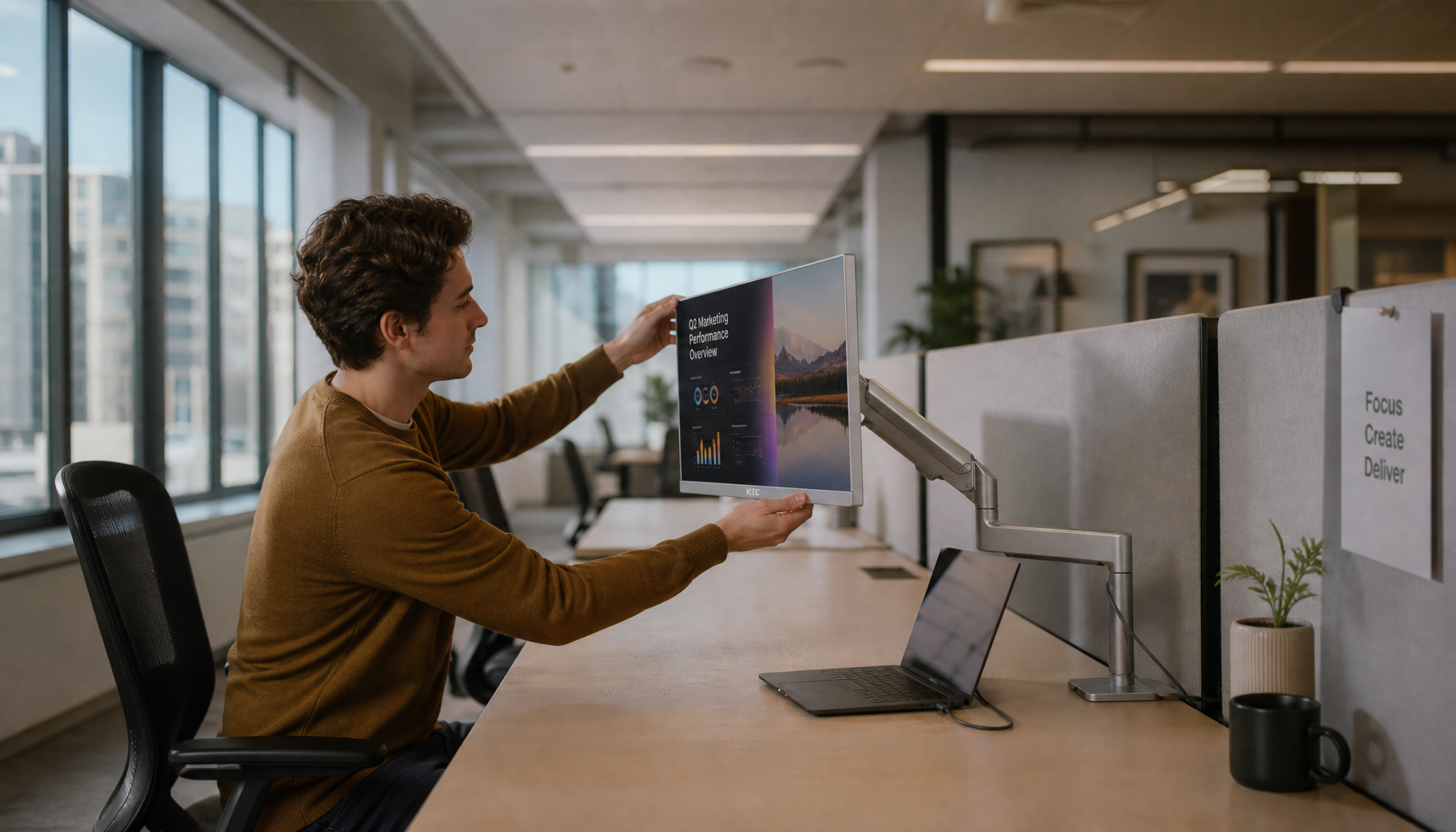
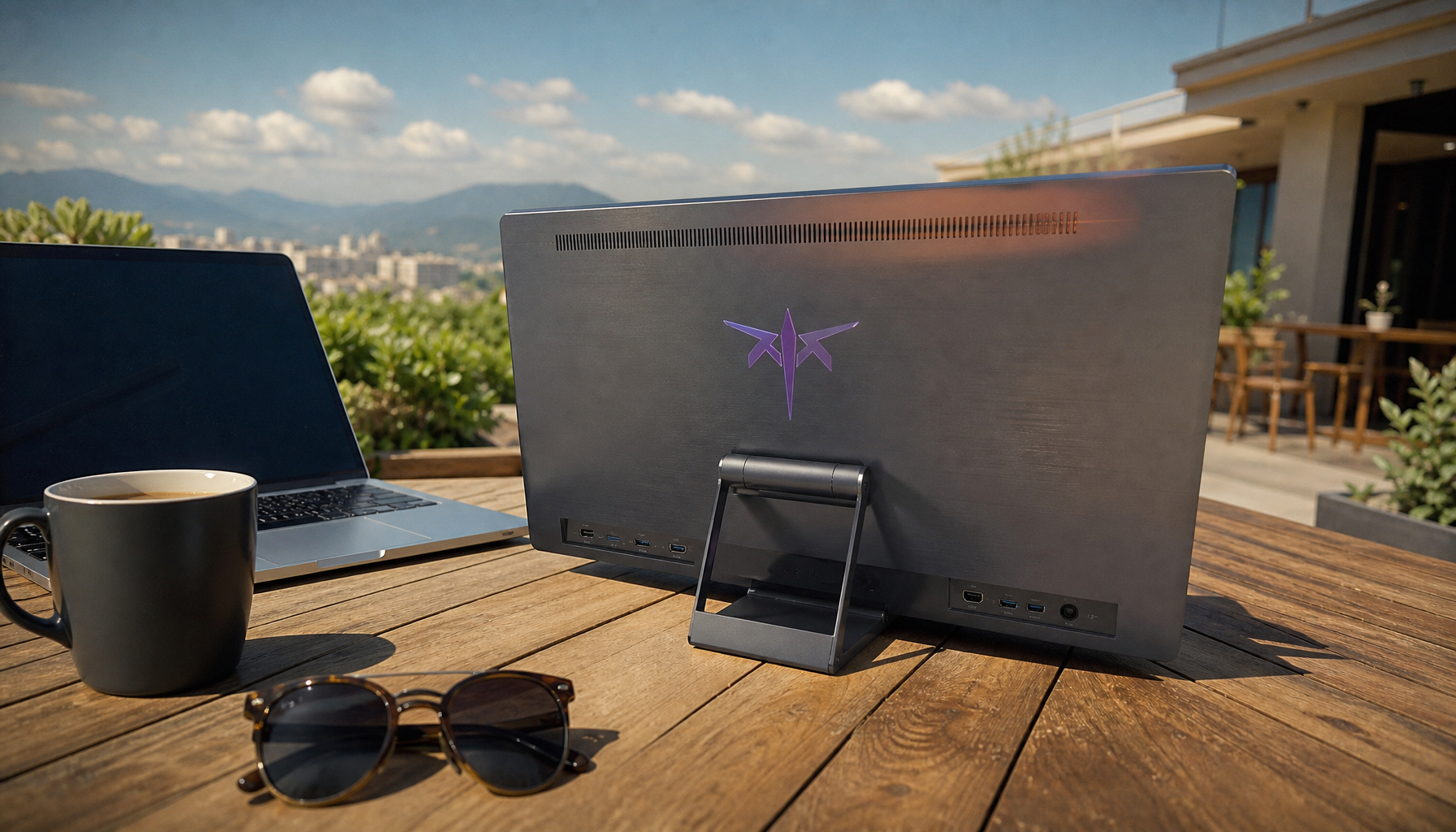
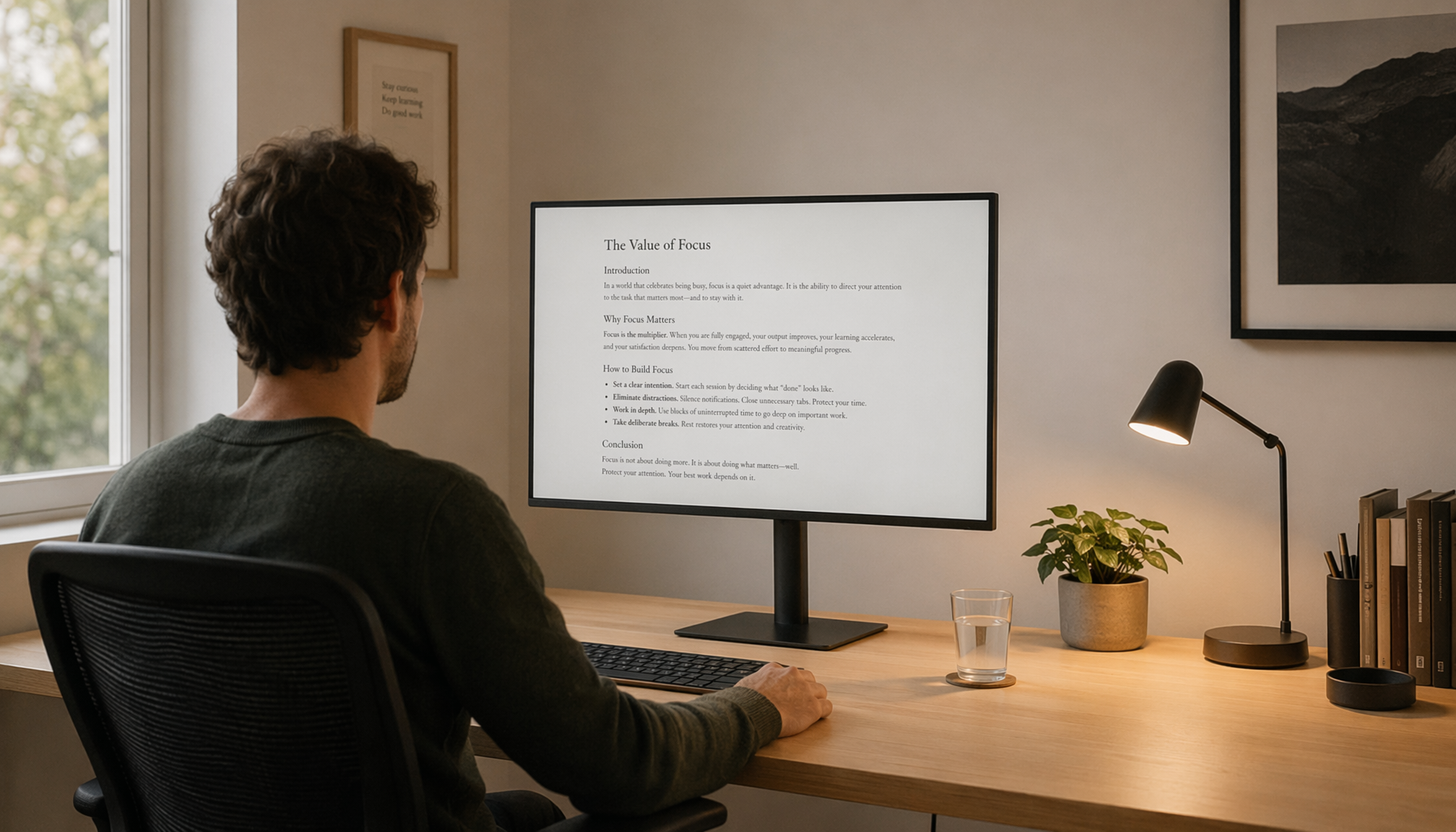
Sharing your screen from an Android phone or iPhone to a Google TV monitor is straightforward once you match the right protocol to your device and ensure both gadgets sit on the same stable Wi-Fi network. Android users can often mirror natively through Google Cast, while iPhone owners need a receiver app on the monitor to bridge the AirPlay gap. A 5 GHz Wi-Fi connection is the practical threshold for usable performance in most homes.

Compatibility Check: Does Your Monitor Support Native Casting?
Before attempting any wireless connection, confirm that your monitor runs Google TV or the Android TV platform. Models such as the KTC A32Q8 and similar smart displays include built-in Google Cast support, which aligns directly with Android phones. These monitors do not ship with native AirPlay, so iOS devices require an additional receiver application installed from the Google Play Store on the monitor itself.
The universal prerequisite is that both the phone and the monitor must connect to the same Wi-Fi network—ideally the 5 GHz band. App-specific casting (for example, sending a YouTube video) works more reliably than full-screen mirroring because it streams content directly rather than duplicating the entire phone display. Full-screen mirroring transmits everything visible on the phone, including notifications and interface elements, which increases bandwidth demands and potential latency.
This quick compatibility check prevents most setup frustration. If your monitor lacks Google TV certification or runs an older firmware version, native casting may fail even on Android devices. In those cases, a wired USB-C to HDMI adapter becomes the more dependable route.
Seamless Setup: Sharing Your Android Screen to Google TV
Android phones running version 8.0 or later can mirror their entire screen using the official Google Home app. Open the app, tap the Cast icon, select your Google TV monitor from the discovered devices, and choose “Cast screen.” Many recent Android devices also offer a faster path through the Quick Settings panel: swipe down twice from the top of the screen, tap the “Screen Cast” or “Smart View” tile, and pick the monitor.
Once connected, audio automatically routes to the monitor’s speakers in most cases. If sound stays on the phone, check the monitor’s audio output settings or restart the casting session. The process typically completes in under 15 seconds when both devices are on the same 5 GHz network and within reasonable proximity to the router.
KTC smart monitors with Google TV integrate this protocol natively, so no extra receiver software is required on the display side for Android users. This native path delivers the simplest experience for sharing photos, videos, or productivity apps.
The iPhone Workaround: Mirroring iOS to a Google TV Monitor
Google TV monitors do not support AirPlay out of the box, which is why the AirPlay option does not appear in the iOS Control Center when scanning for devices. iPhone users can still cast selected content from Chromecast-enabled apps such as YouTube or Netflix by tapping the Cast icon inside those apps, as described in Google’s official media casting guidance.
For full-screen mirroring, install a receiver application like AirScreen or Replica directly on the monitor from the Google Play Store. Launch the receiver app on the Google TV monitor so it advertises itself as an AirPlay target. Then open Control Center on your iPhone, long-press the Screen Mirroring tile, and select the receiver app name. The handshake usually succeeds within seconds when both devices share the same 5 GHz network.
AirScreen works well for “set and forget” use because it runs in the background after initial setup. Replica can feel simpler for occasional sessions but may prompt for a companion iOS app in some versions. Whichever receiver you choose, expect occasional updates to maintain compatibility as iOS and Google TV firmware evolve. The chart below maps the correct path by operating system.
Screen Sharing Path for Google TV Monitors by Device OS
Use this as a quick decision aid: Android can usually use the native Google Cast path, while iPhone and iPad typically rely on a third-party mirroring app. Wireless sharing is best for media and casual use; it is not the right choice for competitive gaming.
View chart data
| Scenario | Android | iOS |
|---|---|---|
| Native Google Cast | 2.0 | 0.0 |
| Third-Party App (AirScreen/Replica) | 0.0 | 2.0 |
| Best Use Case | 2.0 | 2.0 |
| Key Constraint | 1.0 | 1.0 |

Troubleshooting Discovery and Connection Failures
When the monitor does not appear in your phone’s casting list, the most common culprit is router configuration. Many home routers enable AP Isolation or Client Isolation by default; these security features block devices on the same network from seeing one another. Disabling AP Isolation, as outlined in Google’s Chromecast troubleshooting documentation, resolves the majority of “device not found” errors.
Additional network checks include confirming both devices use the identical SSID (avoid 2.4 GHz and 5 GHz bands with the same name but separate connections), enabling UPnP or multicast on the router, and restarting the router, monitor, and phone. Bluetooth should remain on for initial discovery on many Android devices, even though the actual streaming travels over Wi-Fi.
Audio lag or desync often disappears when you switch to the 5 GHz band and keep the phone within about 15 feet of the router. A persistent black screen during video playback usually indicates DRM-protected content (Netflix, Hulu) that restricts full-screen mirroring. In these situations, cast from inside the app rather than mirroring the entire phone screen.
Optimizing Performance for Gaming and Productivity
Wireless screen sharing works well for presentations, photo slideshows, video calls, and casual media consumption. However, the inherent encoding and network latency—typically 100–500 ms in real-world conditions—makes it unsuitable for competitive gaming. For low-stakes casual play or controller-based console streaming, the experience can feel acceptable if the network remains clean.
Stick to a 5 GHz Wi-Fi connection and minimize physical distance between the phone, router, and monitor to reduce jitter. Closing background apps on the phone and avoiding congested networks also helps. Users seeking zero perceptible lag for fast-paced games should switch to a wired USB-C to HDMI adapter instead of wireless mirroring.
Monitors such as the KTC A32Q8 4K Google TV Smart Monitor combine the smart platform with 65 W USB-C power delivery, allowing you to charge your phone while using it as a controller or second display. The larger KTC MEGAPAD 32" 4K Android Smart Touch Monitor adds mobility and touch input, which can extend productivity sessions once mirroring is established.
Ready to Cast? Next Steps for Your KTC Smart Display
Start with a simple test: share a photo album or short video to verify picture and sound quality before relying on the connection for an important call or presentation. Keep the monitor’s firmware current through the Google TV settings menu, as updates frequently improve casting stability and compatibility with newer phone OS versions.
Once comfortable with wireless mirroring, explore the broader smart features on KTC displays. The built-in Google TV interface gives direct access to streaming apps, while the USB-C hub on models like the A32Q8 turns the monitor into a compact workstation. For users who frequently switch between phone and large-screen tasks, these capabilities reduce cable clutter and streamline daily workflows.
If wireless performance still falls short after following the steps above, consider one of the many smart monitors or mobile touch screen displays that balance casting convenience with productivity ports. Checking your router settings and Wi-Fi band remains the fastest way to turn occasional frustration into reliable screen sharing.
Frequently Asked Questions
Can I mirror my iPhone to a Google TV monitor without buying extra hardware?
Yes, but you must install a free or freemium AirPlay receiver app such as AirScreen or Replica on the monitor from the Google Play Store. No additional phone hardware is required, though a stable 5 GHz Wi-Fi network is strongly recommended for acceptable performance.
Why does my Android phone fail to discover the Google TV monitor even when both are on the same Wi-Fi?
The most frequent cause is AP Isolation enabled on the router. Disabling this setting, restarting all devices, and confirming both are connected to the 5 GHz band usually restores discovery. Mesh Wi-Fi systems sometimes require additional multicast or UPnP configuration.
Is wireless screen mirroring good enough for gaming on a Google TV monitor?
Wireless mirroring introduces noticeable latency that makes it unsuitable for competitive or fast-paced gaming. It can work for casual mobile games or controller-based streaming, but a wired HDMI adapter provides far more responsive performance.
Does casting from an iPhone support audio and full-screen video?
When using a properly configured receiver app, both audio and video mirror to the monitor. Some DRM-protected streaming apps limit full-screen mirroring and may only allow casting from inside the app rather than mirroring the entire iPhone display.
How do I reduce lag and stuttering during screen sharing?
Connect both devices to a 5 GHz Wi-Fi network, keep the phone within 15 feet of the router, close background applications, and avoid networks with many connected devices. Updating the monitor firmware and the receiver app can also improve stability.
Will future firmware updates add native AirPlay support to KTC Google TV monitors?
Current models rely on third-party receiver apps for AirPlay-style mirroring. While Google occasionally expands Cast capabilities, native AirPlay support is not expected on non-Apple TV platforms in the near term. Check for firmware updates regularly to capture any incremental casting improvements.