If your portable monitor lights up but shows “No Signal,” the display usually is not broken. It has power, but no usable video path.
You plug in your travel screen before a match, a client call, or a dual-screen work sprint, and the panel wakes up beautifully, then gives you absolutely nothing useful. In practice, the fix is often simple to test: the wrong input, the wrong USB-C port, a weak power path, or a cable that carries charging but not video. This guide gives you a clean way to isolate the fault and get the screen working without random guesswork.
What “No Signal” Actually Means on a Portable Monitor
A powered-on portable monitor showing “No Signal” usually means it is not receiving a valid video feed, not that the panel itself has failed, as explained in monitor no-signal troubleshooting and echoed in portable-monitor guidance from manufacturers. That distinction matters because it changes your first move: instead of assuming a dead screen, you isolate the video chain from the source device to the monitor input.
With portable displays, that chain is more sensitive than it is on a desk monitor because power and video often share the same USB-C ecosystem. A monitor can turn on from a weak or partial connection and still show no picture if the host port does not send video, if the monitor is listening to the wrong input, or if the chosen cable is only meant for charging or data.
Start With the Fastest Isolation Checks
The most reliable first pass is still the simplest one. external monitor troubleshooting in Windows and iFixit both emphasize confirming that a single display can work, reseating cables firmly, and matching the active input to the cable you are actually using. On a portable monitor, that means unplugging both ends, reconnecting them carefully, then opening the monitor menu and manually choosing HDMI, USB-C, or DisplayPort instead of trusting auto-detect.
This is where many mystery failures end. If your laptop is connected over Mini HDMI but the monitor is set to USB-C, the display has no reason to show an image. The same thing happens when a dock, switch, or adapter sits between devices and silently breaks the handshake. A clean direct connection is the fastest truth test.
A practical example helps. If your monitor works from a game console over HDMI but not from your laptop over USB-C, the monitor is probably fine. The failure has moved upstream to the laptop port, cable type, or display settings.
Why Portable Monitors Fail More Often Over USB-C
Portable screens are convenient because USB-C can carry power, data, and video in one cable, but portable monitor connection guidance makes a critical point: the connector shape alone tells you almost nothing. Some USB-C ports support full video output with DisplayPort Alt Mode and Power Delivery, while others handle only charging or data.
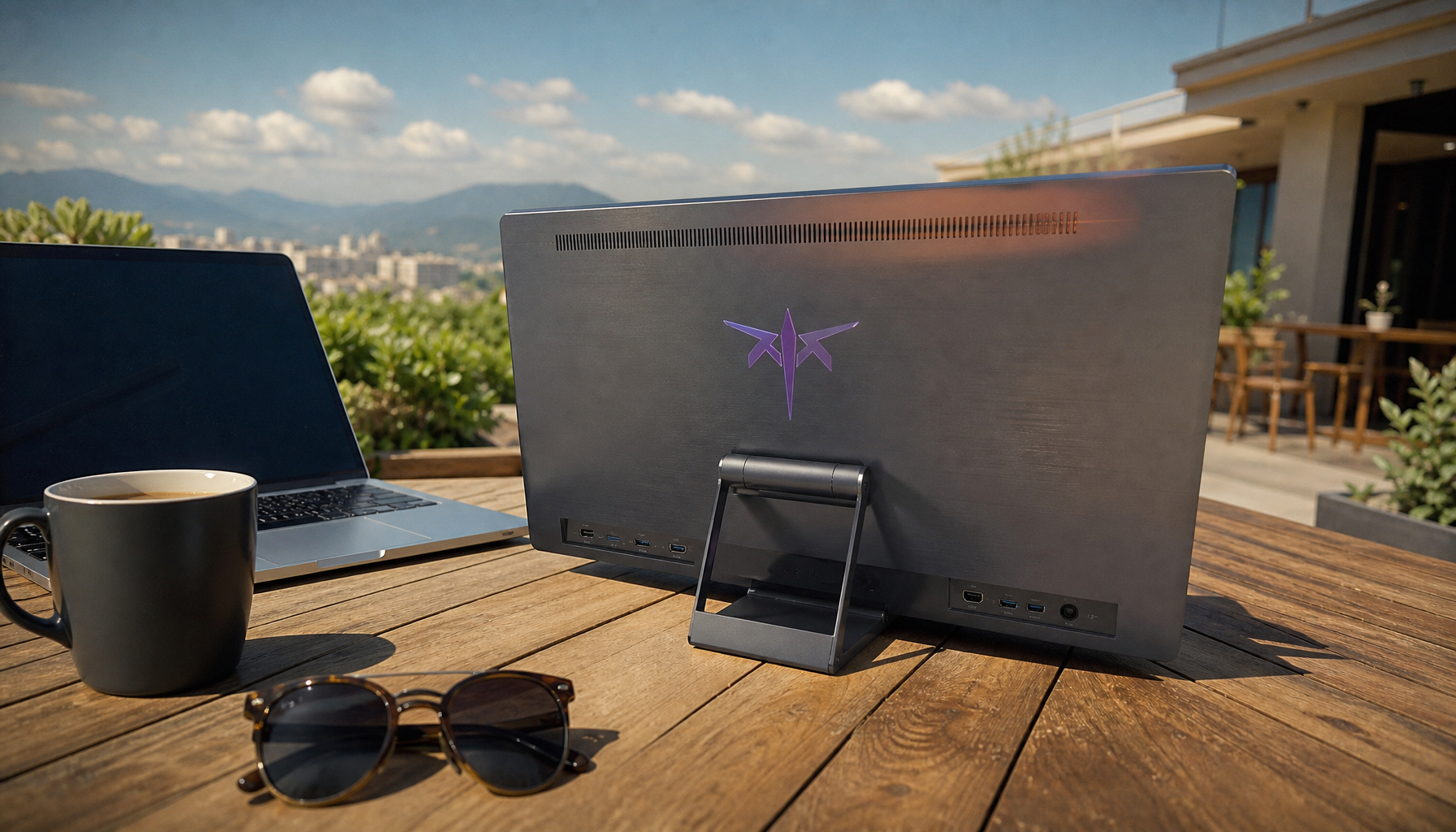
That is the most important portable-monitor nuance to understand. If the host USB-C port lacks video output, the monitor may still power on and still show no picture. The setup looks alive, but the signal path never existed. The linked portable monitor support guide makes the same point and adds a model-specific trap: some monitors have one USB-C port for power only and another for display input. On certain models, using the top port instead of the bottom one will leave you staring at “No Signal” even though everything seems connected.
That gives you a clean decision rule. If USB-C fails, verify both ends of the chain. First, check whether the laptop, tablet, handheld, or phone supports video over that specific USB-C port. Then check whether the monitor’s USB-C port is full-function or power-only. If either side is not video-capable, switch to HDMI plus separate power.
HDMI and Separate Power Are Less Elegant but More Forgiving
When USB-C is unclear, portable display troubleshooting advice and similar manufacturer notes consistently recommend trying HDMI for video and external power for the monitor. It is not as clean as a one-cable setup, but it is often more reliable because it separates two jobs that USB-C combines.
That tradeoff is easy to understand in real use. USB-C gives you a sleek travel setup with fewer cables and faster setup when the hardware is truly full-featured. HDMI plus USB power takes more desk space and one extra cable, but it removes a lot of ambiguity. For tournament prep, hotel workstations, and conference rooms, reliability often beats elegance.

Connection path |
Main advantage |
Main risk |
USB-C to USB-C |
One cable for video and power |
Port or cable may not support video |
Mini HDMI to HDMI plus USB power |
Clearer compatibility and easier isolation |
More cable clutter and separate power needed |
If you switch to HDMI, cable quality and version still matter. Manufacturer guidance notes that HDMI 1.4 tops out at 4K at 30 Hz, while HDMI 2.0 supports 4K at 60 Hz. Even if you are not gaming at 4K, an older or degraded cable can still cause handshake failures. If your monitor is 1080p, lowering the source output to 1080p is a smart diagnostic step before assuming hardware failure.
The Source Device May Be the Real Problem
An external-display troubleshooting path in Windows starts by checking whether the system can drive even one external monitor properly. If it can, the next question is whether the graphics adapter, dock, or USB path supports your exact setup. If it cannot, forcing the portable monitor harder will not help.
This also explains why driver state matters. Several troubleshooting sources note that outdated graphics or monitor-related drivers can block recognition or cause unstable handshakes. On Windows, that means checking display settings, forcing the system to detect the monitor, and updating graphics drivers before spending money on replacement hardware. If the monitor works on another laptop immediately, that comparison tells you the original machine is the limiting factor.
Power can complicate things further. portable monitor connection drops warns that USB-C-powered portable monitors may become unstable when the laptop battery is low or the port cannot provide enough steady power. The linked support guidance adds a concrete example: some models can enter a low-power state when incoming power is insufficient. In real use, that means a monitor may light up, dim, or stay blank until you add external power from a wall adapter or power bank.
A good field test is simple. If the monitor fails over one cable from the laptop, then works when you connect the monitor to external power and run video separately, the issue was not the panel. It was power delivery or USB-C capability.
How to Tell Whether the Fault Is the Cable, the Port, or the Monitor
The most efficient diagnostic move is cross-testing with known-good parts. Monitor isolation advice recommends swapping one variable at a time: another cable, another port, another source device, or another display. The same method reveals whether the original laptop is at fault or whether failures follow the monitor itself.
This matters because cable problems are often invisible. A USB-C or HDMI cable can look fine, charge a device, and still fail at video transmission. Portable-monitor support pages repeatedly recommend using the original cable or a certified replacement for exactly this reason. In practice, if a portable monitor works with Cable A and not Cable B, you do not need a theory. You need a better cable.
Port contamination is another portable-use reality. Travel screens live in backpacks, sleeves, and coffee-shop setups. Dust or lint inside USB-C ports can interrupt a stable connection, so a careful inspection and gentle cleaning with compressed air or a soft brush is worth doing before deeper troubleshooting.
 When It’s Time to Stop Troubleshooting and Contact Support
If direct HDMI fails, direct USB-C fails, multiple known-good cables fail, and the monitor shows the same no-signal behavior across multiple source devices, the odds shift toward a monitor-side fault. product support resources can help you find the right manual or driver first, and manufacturer pages are also the best place to check firmware notes and model-specific port behavior.
That is also the right moment to pay attention to physical symptoms. The same troubleshooting guidance notes that a loose-feeling port, display lines, discoloration, or disconnects across several devices point to hardware trouble rather than setup error. At that point, continued cable swapping is just lost time.
A Smarter Setup Prevents Repeat Failures
Portable displays reward a little discipline. Keep one known-good USB-C cable and one known-good HDMI cable in your bag. Label the monitor’s power-only and video-capable ports if the chassis design makes them easy to confuse. Update graphics drivers and monitor firmware periodically, and use external power when you need maximum stability for gaming sessions, client demos, or long work blocks.
A powered screen with no image is usually a connection logic problem, not a dead panel. When you verify the input, the port’s actual capabilities, the cable spec, and the source device’s output path in that order, the fix becomes much faster and more reliable.