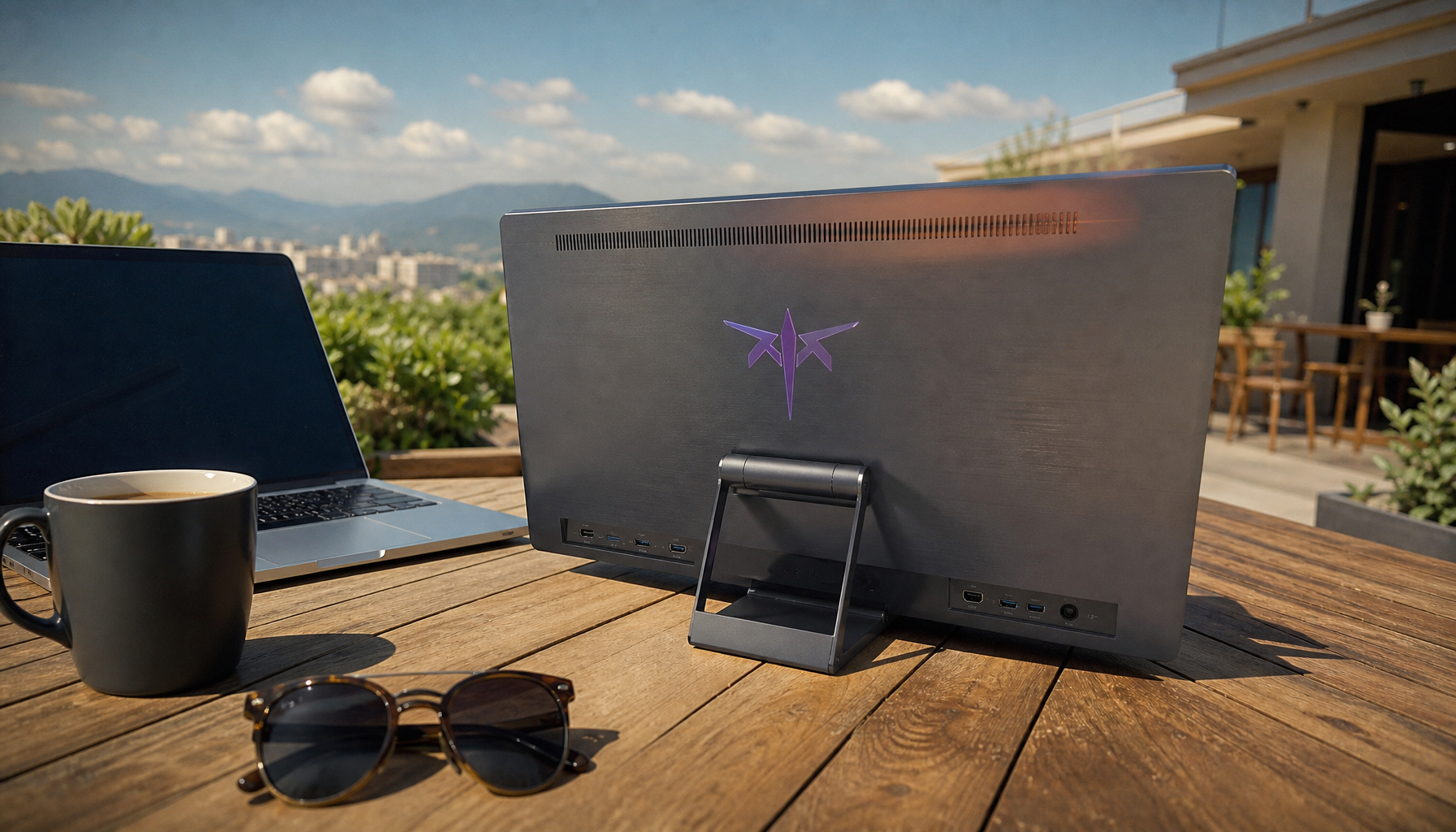
A USB-C-powered portable monitor usually buzzes because power delivery, display signaling, grounding, or cable shielding is creating electrical noise. The fastest fix is to isolate power, video, and audio paths, then rebuild the setup one connection at a time.
Does your portable screen start whining the moment one USB-C cable handles both display and power? In real troubleshooting, switching to HDMI plus separate USB power, adding the laptop’s own charger, or lowering monitor brightness can quickly reveal whether the buzz is coming from USB-C power load, the monitor’s electronics, or connected audio gear. This test sequence separates harmless coil whine from problems worth returning or repairing.
Why USB-C Buzzing Happens
USB-C is convenient because one cable can carry power, video, data, and sometimes audio. That same convenience can make noise difficult to diagnose. A portable monitor may draw power from your laptop, receive video, expose speakers or a headphone output, and pass USB hub data at the same time. If one part of that chain is marginal, the symptom may show up as a faint high-pitched whine, low hum, speaker crackle, or electrical buzzing from the monitor body.
The first key point is that USB-C is a connector type, not a guarantee that every cable, port, and monitor supports the same mix of power, video, data, and charging. A cable that charges your cell phone may not be stable for a portable display. A laptop port may power a screen but struggle when brightness, refresh rate, and USB data are added. A monitor may also have one USB-C port for power only and another for full video input.
The Most Common Cause: Power Delivery Load
When a portable monitor is powered over USB-C, the laptop and monitor negotiate how much power moves across the cable. If the monitor’s backlight is bright, the speakers are active, and the laptop is also trying to charge or maintain battery, the power circuitry may operate under a load that makes internal components vibrate audibly. This is often called coil whine.

A slight electronic hum can be normal, and coil whine generally does not affect lifespan or performance. In practical terms, if the sound is only audible with your ear near the monitor and the picture remains stable, it may be an annoyance rather than a failure. If it is clearly audible from your normal sitting position, changes with screen brightness, or appears with flicker, it deserves deeper testing.
A simple real-world test is to reduce brightness from 100% to about 40% and listen for a change. If the buzz drops sharply, the backlight or power board is probably reacting to load. Then connect a separate USB-C power adapter to the monitor’s power-only port, if it has one, while keeping video on the other USB-C or HDMI input. If the buzz disappears, your one-cable setup was asking too much from the laptop port, cable, or monitor power design.
USB-C Cables Can Be the Quiet Failure Point
Cable problems are easy to underestimate because the display may still turn on. A weak or limited USB-C cable can pass enough power to light the panel but still create unstable behavior under video and power load. That instability can sound like buzzing, create crackling audio, or cause intermittent reconnects.

Portable monitor troubleshooting should start with a direct connection using the shortest full-featured USB-C cable available, with hubs, adapters, KVMs, and extension cables removed. Loose USB-C connections are also a common hidden cause, especially when the same port carries both power and data. For travel setups, this matters even more because ports collect lint and cables get flexed in backpacks.
For a performance-focused desk setup, keep one known-good USB-C cable reserved for display use. It should be rated for video, data, and power delivery, not just charging. If the buzzing stops with a different cable, the old cable is not worth trusting for client calls, ranked matches, or color work.
Ground Noise and Audio Buzz Are a Different Problem
If the buzz comes from external speakers rather than the monitor chassis, you may be dealing with grounding or interference. Ground-related noise is unwanted buzz, hum, or whine caused by grounding differences or electrical interference between connected devices. It often appears when a laptop, monitor, audio interface, powered speakers, dock, and charger are tied together.
Audio specialists often diagnose this by stripping the setup down. Disconnect every audio device except the USB connection, then listen through headphones connected directly to the interface. If the noise disappears, one of the reconnected devices is creating the path. If it remains, the USB cable or USB power path becomes suspect. Grounding problems are a common cause of unwanted hum in monitor speakers and recordings.
For an office productivity display, this may sound like a low hum during video calls. For a gaming monitor setup with powered desktop speakers, it may become a sharp whine that changes as frame rate or screen content changes. User reports describe buzzing that changed depending on displayed windows and stopped when the external monitor was unplugged, pointing toward interference introduced through the display connection rather than a simple speaker fault.
Direct USB-C vs HDMI: Which Is Better for Diagnosis?
Direct USB-C is cleaner on the desk, but HDMI plus separate power is often cleaner for diagnosis. When USB-C carries everything, you cannot immediately tell whether the problem is video signaling, power delivery, audio passthrough, or USB hub behavior. Splitting video and power turns one complex path into two simpler ones.

Setup |
Main Advantage |
Main Tradeoff |
Best Use |
One USB-C cable |
Clean desk, fast setup, portable |
More sensitive to cable, port, and power limits |
Travel, light office work, quick second screen |
USB-C video plus separate power |
Keeps USB-C video while reducing power load |
Needs an extra charger or power bank |
Brightness-sensitive buzzing, unstable power |
HDMI plus USB power |
Separates video from power clearly |
Two cables, less elegant |
Troubleshooting, reliable desk use, noisy USB-C setups |
A useful workaround reported in a user discussion was to avoid a direct USB-C monitor connection and use a USB-C to HDMI adapter instead, because the noise stopped immediately when the external monitor path was changed. That does not prove every USB-C monitor is flawed. It shows that, in some systems, changing the signal path is enough to remove the interference.
A Practical Test Sequence
Start by listening carefully to locate the noise. If it comes from the monitor body or power brick area, think power circuitry or coil whine. If it comes from speakers or headphones, think audio routing, grounding, or interference. If the sound changes with brightness, frame rate, or displayed content, the display and power path are likely involved.

Next, run the monitor at low brightness on a direct USB-C connection. If the buzz fades, add separate monitor power and test again. Then swap in a known-good full-featured USB-C cable. After that, bypass the USB-C path by using HDMI for video and USB only for power. If HDMI is quiet, USB-C negotiation or shielding is likely part of the issue.
If you use external speakers, plug the laptop, monitor, audio interface, and speakers into the same outlet or power strip for the test. Then disconnect audio devices one at a time. Balanced audio connections can reduce susceptibility to interference, and balanced inputs and outputs are a proven studio practice when powered monitors are involved.
When a Reset Helps
A reset will not fix a noisy inductor or a bad cable, but it can clear power-management and input-state glitches. A soft reset is the low-risk version: disconnect all cables, hold the physical power button for 10 to 15 seconds, leave the monitor unplugged for at least 30 seconds, then reconnect power and video. This is especially useful after failed USB-C handshakes, no-signal states, or repeated reconnects.
A factory reset is more disruptive because it restores defaults, including brightness, color presets, input behavior, and other preferences. Use it after cable and power tests, not before. If buzzing continues after a direct connection, known-good cable, separate power, HDMI test, and reset, you have enough evidence to contact support without sounding vague.
When Buzzing Is Normal and When It Is Not
Quiet coil whine that only appears at high brightness or with your ear close to the chassis is usually tolerable if the display remains stable. Loud buzzing from normal sitting distance, buzzing paired with flicker, a burning smell, repeated disconnects, or a loose USB-C port is not normal behavior for a dependable portable monitor.
Disconnect power immediately if buzzing is paired with heat, odor, flicker, or visible screen instability. For a work screen, that protects your laptop and your data flow. For a gaming screen, it also avoids chasing performance problems that are really power problems.
FAQ
Can a USB-C portable monitor buzz even if the image looks perfect?
Yes. Video negotiation can succeed while power delivery or internal monitor circuitry still produces audible noise. That is why a monitor can look sharp at 1080p or 2K yet still whine under certain brightness or charging conditions.
Will a more expensive USB-C cable fix it?
Sometimes, but only if the current cable is the weak point. The replacement needs to be full-featured for video, data, and power delivery. A premium charging-only cable can still be the wrong cable.
Should I stop using one-cable USB-C?
Not automatically. One-cable USB-C is excellent when the laptop port, monitor, and cable are well matched. If buzzing appears, test separate power or HDMI before giving up on the setup.
Is the monitor defective?
It might be, but do not assume that first. If the buzz follows the monitor across multiple laptops, multiple cables, separate power, and another room, the monitor is the likely suspect. If the noise disappears with HDMI or with the laptop’s charger connected, the issue is more likely the USB-C power or signal path.
A quiet portable monitor setup is built by separating variables, not guessing. Start with cable, brightness, direct connection, separate power, and HDMI fallback; if the buzz survives those tests, you have a strong case for service or replacement.