A monitor-based crosshair should not normally increase input lag because the display draws it independently of the game. If aiming suddenly feels heavier, test the surrounding display settings before blaming the overlay itself.
Does your aim feel crisp until you enable the monitor crosshair, then suddenly feel slow or less precise? A controlled before-and-after test can reveal whether the crosshair is changing responsiveness or simply making another display behavior easier to notice.
What a Monitor Crosshair Overlay Actually Does
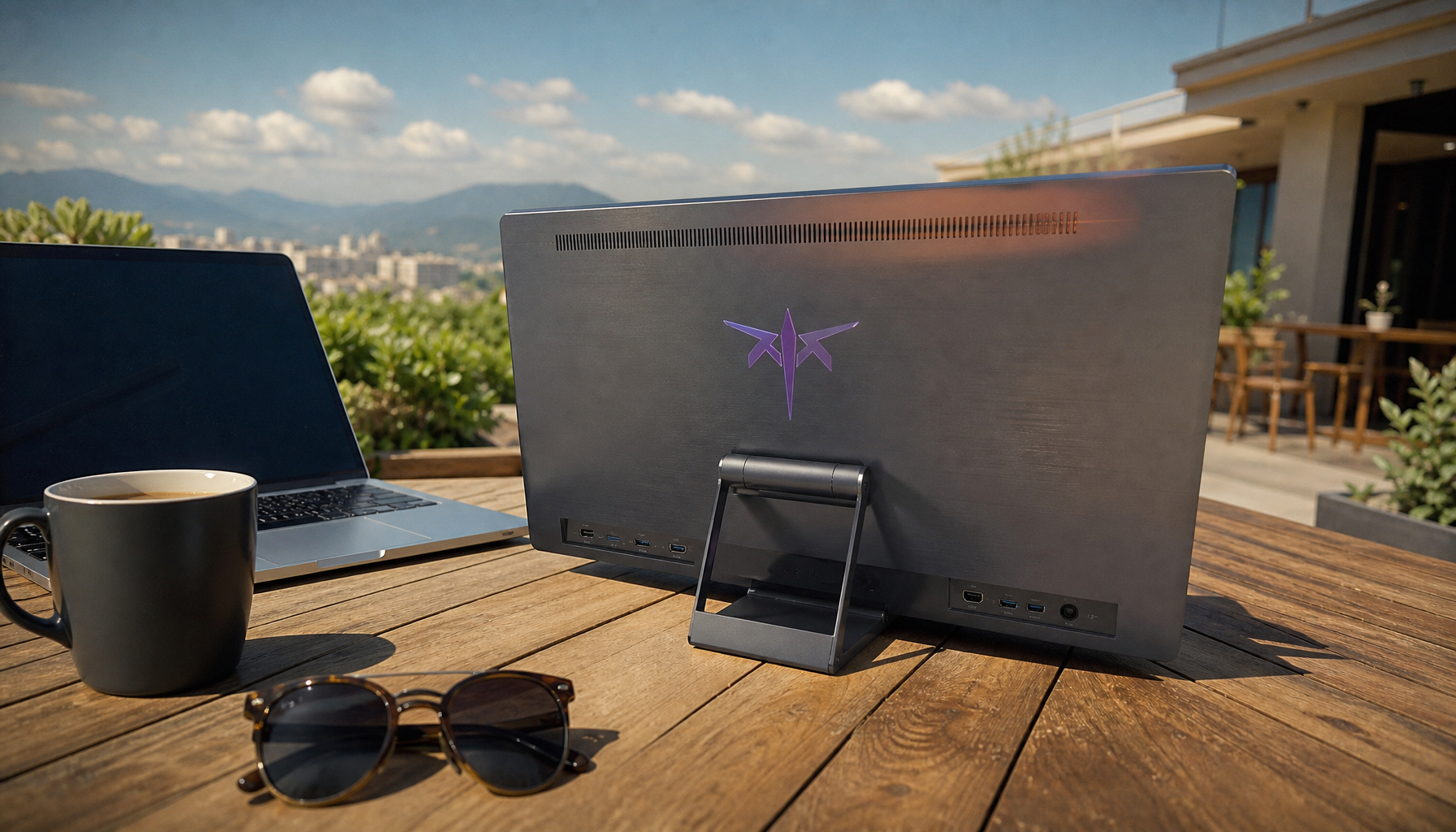
A monitor-based crosshair is an on-screen aiming marker generated by the monitor’s firmware. Unlike an in-game reticle or software overlay, it does not require the game engine, GPU, or operating system to redraw it.
Input lag is the time between a command and the visible result on screen. The full chain from peripheral input to display output includes mouse polling, game processing, GPU rendering, frame delivery, monitor processing, scanout, and pixel transitions. A static monitor-generated marker sits near the end of that chain. It should not cause the GPU to render additional frames or queue game output.

The feature can be useful in shooters with minimal HUDs or temporary weapon reticles. A display review described crosshair overlays as a gaming convenience rather than a latency penalty.
Why the Game Can Still Feel Worse
A crosshair toggle may change more than the visible marker. Monitor firmware varies by model, and crosshair overlays do not inherently add measurable latency. Treat the symptom as a configuration issue until repeatable testing shows otherwise.
The Overlay May Switch Picture Processing Modes
Some monitors group gaming tools inside an on-screen display preset. Enabling the crosshair may coincide with a change to overdrive, adaptive sync, HDR, local dimming, dynamic contrast, or motion-blur reduction. These settings can change how motion looks and feels, even if the crosshair itself is harmless.
Image processing is a known latency variable. Display settings can increase delay, while a low-processing gaming mode can reduce it by bypassing extra processing. Record every on-screen display value before enabling the crosshair, toggle only the crosshair, and compare the values again.
A Bright Crosshair Can Expose Local Dimming Behavior
On Mini-LED and full-array local dimming monitors, a bright crosshair over a dark scene can trigger backlight zones around the center of the panel. Local dimming flicker can appear when small, bright interface elements cause zones to brighten and dim as the image changes.

This effect is not necessarily input lag, but it can reduce aiming confidence. A crosshair surrounded by pulsing brightness, blooming, or unstable contrast makes tracking feel less precise. Test the overlay with local dimming reduced or disabled, especially in SDR. OLED displays are less susceptible to this specific issue because their lighting is controlled per pixel.
Refresh Timing May Be the Real Limitation
Refresh rate determines how quickly a new frame can appear. A 60 Hz display refreshes every 16.67 ms, while 120 Hz refreshes every 8.33 ms, 144 Hz every 6.94 ms, and 240 Hz every 4.16 ms. These timing differences also shape perceived motion clarity on sample-and-hold displays, as described in monitor responsiveness testing.

If an on-screen display preset changes the active refresh mode, disables adaptive sync, or enables a strobing mode with different refresh requirements, the game may immediately feel less responsive. Confirm the active refresh rate in the operating system display settings, GPU control panel, and monitor menu after toggling the overlay.

Refresh rate |
Time per refresh |
Competitive implication |
60 Hz |
16.67 ms |
Slowest visual updates |
120 Hz |
8.33 ms |
Noticeably tighter feedback |
144 Hz |
6.94 ms |
Strong mainstream esports baseline |
240 Hz |
4.16 ms |
Cleaner high-frame-rate tracking |
Frame Synchronization Can Overshadow the Overlay
Traditional vertical synchronization can add substantial latency because it coordinates frame presentation to prevent tearing. In one documented PC test, synchronization-off results measured 59 ms and 61 ms on two GPU configurations, while in-game synchronization measured approximately 103 ms and 102 ms. Adaptive synchronization measured 60 ms and 59 ms, providing tear-free output close to the synchronization-off results.
A monitor crosshair does not explain a jump of approximately 40 ms. If the symptom appears after changing display settings, verify that adaptive synchronization remains active and that the game has not reverted to conventional vertical synchronization, a lower refresh mode, or an unstable frame-rate cap.
Real Lag Versus Perceived Lag
Aiming problems are not always caused by a single measurable delay. Cursor-guidance research involving 40 participants found that additional motion-to-photon delay and lower cursor presentation rates can affect movement precision and timing. The visual feedback study measured baseline additional delays of 8 ms at 240 Hz, 10 ms at 120 Hz, and 40 ms at 60 Hz.
A monitor overlay can also change visual attention. A large, bright, or poorly positioned crosshair may make pixel blur, overshoot, frame-pacing issues, or local dimming transitions more obvious. The result can feel like lag even when button-to-photon timing has not changed.
If mouse clicks and movement appear at the same time in slow-motion video but tracking feels worse, adjust the overlay color, size, brightness, and surrounding display settings. If the visible response genuinely arrives later, investigate processing modes, refresh rate, synchronization behavior, and frame pacing.
How to Test the Crosshair Properly
Use one monitor, one cable, native resolution, and the highest stable refresh rate. Disable dynamic contrast, automatic brightness, power-saving modes, and local dimming during the first test. Keep the same game scene, graphics settings, adaptive synchronization state, frame-rate cap, and mouse settings.
Record two short slow-motion cell phone videos showing both your mouse click and the screen response. Capture several attempts with the crosshair off, then repeat with it on. High-speed video is a practical method for comparing visible input delay, while dedicated tools can provide stronger measurements when available.

Next, restore local dimming and adaptive synchronization individually. If the problem only returns when the crosshair and local dimming are active together, the likely cause is brightness-zone behavior rather than true input lag. If the active refresh rate falls after enabling the gaming preset, restore the correct mode. If the delay appears only in one game, test an offline practice mode to separate local display behavior from network delay.
Should You Keep the Overlay Enabled?
Keep the monitor crosshair enabled when it improves visibility and your before-and-after test shows no timing change. It is a practical tool for competitive play because it remains stable regardless of a game’s HUD design.
Disable it when the display changes presets unexpectedly, local dimming pulses around the center of the screen, or the marker distracts from recoil and target movement. Prioritize native resolution, the highest stable refresh rate, consistent adaptive synchronization, and steady frame pacing over decorative gaming features.
A monitor-based crosshair should be a zero-cost aiming aid, not a responsiveness tradeoff. When it feels wrong, test the surrounding display configuration first. The overlay is usually the trigger that reveals the problem, not the source of the lag.