Your monitor is part of your camera setup, even if it never appears on screen. For client-facing calls, the wrong brightness, color temperature, or blue-light mode can make your face look washed out, overly warm, or strangely gray.
Your Screen Is a Light Source
A bright 27-inch or 32-inch display throws a lot of light onto your face, especially in a darker office. That glow can overpower a desk lamp, shift your skin tone, and confuse your webcam’s auto white balance.
For everyday work, a cooler, brighter screen may help text feel crisp. On camera, that same setup can add a blue cast to your face. Duke’s virtual meeting advice prioritizes flattering illumination from the front, which means your monitor should support your lighting, not fight it.
A practical call mode starts with lower brightness than your normal spreadsheet or gaming profile. If your room is dim, lower the monitor brightness until white pages no longer light your face like a flashlight.

Color Temperature Changes How Trustworthy You Look
Color temperature is the big setting many home-office users ignore. Warm screens can make skin look orange; cool screens can make you look tired or pale.
For client calls, aim for a neutral display tone that matches your room lighting. If your key light is cool white, use a cooler monitor preset. If your office uses warm lamps, avoid setting the monitor to a very blue mode. A video-call lighting article notes that cooler light tones often help professional calls because they support more accurate camera white balance.

Quick setup:
- Turn off aggressive night shift or blue-light filters before client calls.
- Avoid vivid, gaming, cinema, or HDR punch modes.
- Use standard, sRGB, creator, or custom color mode if available.
- Set brightness to match the room, not max output.
- Check your webcam preview after changing settings.
The goal is not studio-perfect color. It is consistent, believable color that keeps attention on your message.
Calibration Helps, but Call Settings Are Different
Monitor calibration is built for accuracy; video-call tuning is built for how you appear through a webcam. Those overlap, but they are not identical.

For creative work, calibration targets such as D65 white point, controlled luminance, and gamma 2.2 are common for online video workflows. Daniel Grindrod’s calibration workflow uses D65 and 120 nits as practical targets for online delivery. That is a strong baseline if your monitor supports custom controls.
Client calls add another layer: the webcam, room light, background color, and meeting app compression all reinterpret what the monitor is doing. A calibrated screen may still be too bright for your face at 9:00 AM near a window or too cool under warm evening lamps.
Calibration makes your display more predictable, but your webcam preview is the final judge for calls.
Build a Dedicated Client-Call Preset
The best setup is a separate monitor preset you can switch on before high-value calls. Think of it as a performance profile: less glare, cleaner skin tone, and fewer distractions.
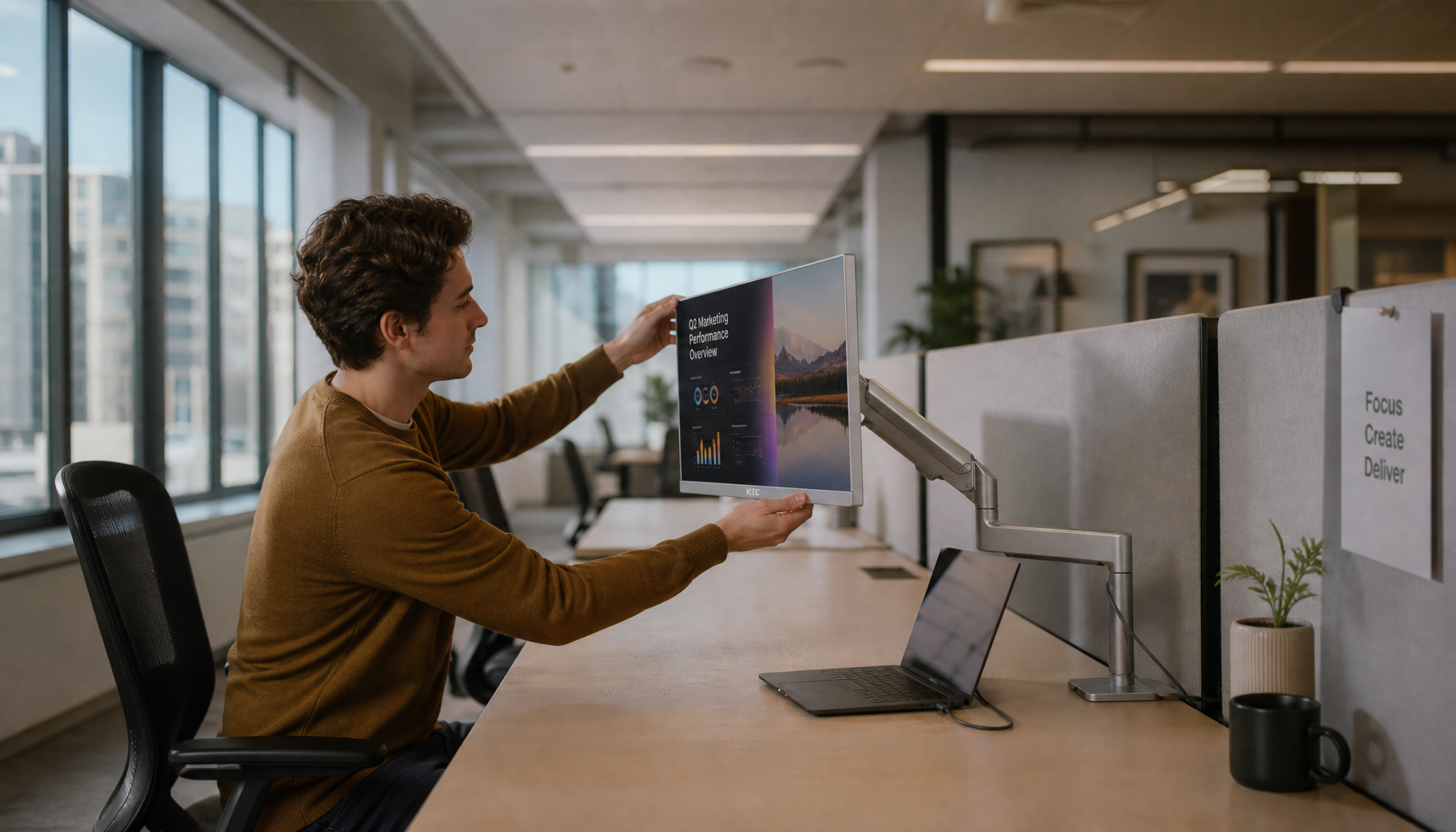
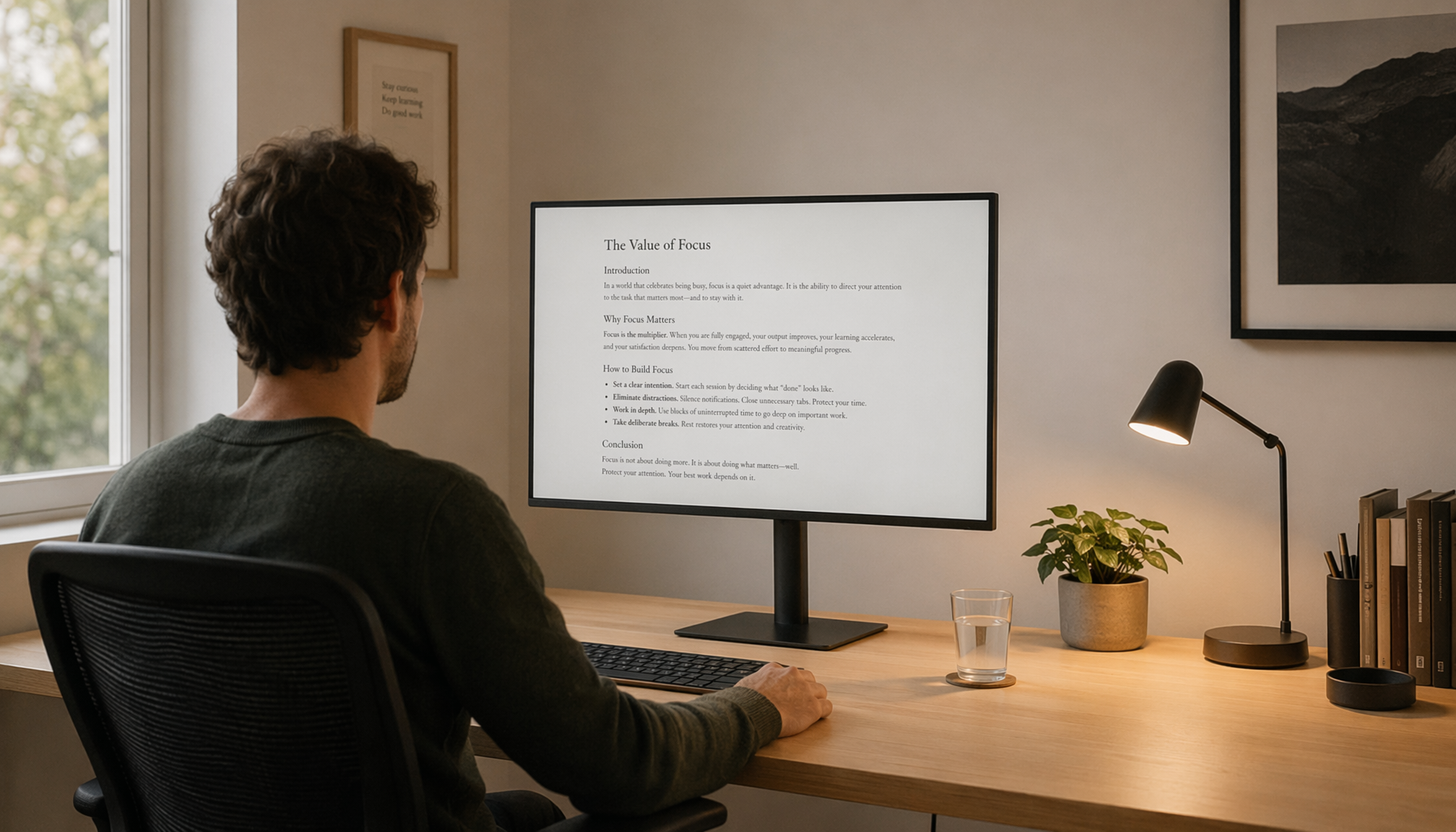
Start with your normal ergonomic setup. Keep the screen about an arm’s length away, with the full display visible without leaning, a principle echoed in home-office monitor guidance on viewing distance. Then tune the image for camera presence.

Use a neutral background and steady front lighting. A clean, well-lit backdrop improves credibility and keeps the speaker central, while soft neutrals tend to work better than busy or bright backgrounds.
A reliable client-call preset might be standard color mode, 40% to 60% brightness, neutral white point, no low-blue-light filter, no HDR, and locked webcam exposure if your software allows it. Save it, test it once, and stop rebuilding your look five minutes before every meeting.