Engineering drawings do not come with a dedicated monitor color standard for layer visualization. In practice, consistent layer separation depends on an sRGB-accurate display, low Delta E, good panel uniformity, disciplined layer settings, and regular calibration.
Ever opened the same CAD file on two screens and watched a light centerline turn into a muddy near-match with a hidden line? One documented workflow cut shared color mistakes by 92% after standardizing how colors were assigned and output, which shows how quickly layer clarity falls apart when display and software settings drift. The payoff here is straightforward: you can choose a monitor that keeps layers, line weights, and annotations readable whether you use a desktop display, an ultrawide, or a portable second screen.

Engineering Drawing Standards Define the Drawing, Not the Monitor
What the standards actually standardize
Because engineering drawing standards focus on geometry, tolerances, views, symbols, and documentation structure, they do not give you a dedicated monitor-side color target for CAD layer visualization. The drawing itself has to be interpreted consistently across teams, but the screen you use to view it is governed by display accuracy and CAD workflow controls, not by one standard system or another alone.
That distinction matters because drawings often combine multiple views, dimensions, and detail sheets that must stay legible across devices. A multi-view CAD workflow depends on clear separation between visible outlines, hidden lines, centerlines, section marks, and annotations, so monitor errors show up as practical reading problems long before they become formal standards problems.
Why layer color is still important in practice
Even without a formal color standard, layer color is a real quality-control tool. In one long-running CAD workflow, 69 colors across 69 layers are used as a visual cue so the drafter can tell immediately whether an object is on the correct layer and will inherit the correct line behavior.
For monitor buyers, that means the question is not “Which engineering standard sets the color spec?” but “Which display specs preserve that visual cue without distortion?” On a modern monitor, layer management only works as intended when colors, transparency, and line presentation remain stable enough for the user to trust what they see.
The Practical Baseline Is Accurate sRGB, Not Maximum Gamut
Why sRGB is usually enough for CAD layer colors
For most engineering drawing workflows, sRGB is the safer display baseline because it is the common screen reference and is less likely to exaggerate colors in non-color-managed apps. That makes accurate sRGB reproduction more valuable than headline-wide gamut coverage when the job is distinguishing layer colors, not grading cinema footage.
A wide-gamut panel can still be useful, but it does not automatically improve layer visibility. If the application, display profile, or OS path is not managed correctly, display-profile mismatches can make colors look different from what the drawing author intended, which is exactly the opposite of what a review monitor should do.
When wider gamut is worth paying for
Wider gamut becomes more relevant when the same monitor also handles rendered presentations, photo-based textures, product marketing visuals, or P3-targeted content. In that mixed-use scenario, gamut options such as a wide-gamut color space and DCI-P3 can add value, but they should still sit behind reliable sRGB behavior for day-to-day drawing review.
That is why many gaming monitors need extra scrutiny before they become CAD monitors. Their default presets often chase vivid color and punchy contrast, while engineering drawings usually benefit more from a restrained, accurate preset or a true sRGB clamp than from the biggest DCI-P3 percentage on the box.
Delta E and Uniformity Decide Whether Similar Layers Stay Distinct
The numbers that matter
When two layer colors are close, Delta E is the metric that tells you whether the screen will keep them visibly separate. A Delta E below 2 is generally considered excellent for professional use, while values above 3 are more likely to produce noticeable color error in real work, especially when thin line colors are already subtle.
Uniformity matters just as much. A monitor can measure well in the center and still shift brightness or color toward the edges, and panel uniformity is especially important on 34-inch ultrawides and larger screens where tool palettes, orthographic views, and title blocks may all sit in different parts of the panel.

What matters less than buyers think
Bit depth has value, but it is usually not the first priority for drawing-centric work. While 10-bit and 12-bit panels help with smooth gradients and subtle tonal transitions, engineering drawings are mainly about lines, symbols, dimensions, and controlled layer states, so low Delta E and strong uniformity typically deliver a bigger real-world benefit.
A useful buying rule is simple: if you must choose between a wide-gamut 10-bit display with mediocre calibration and an sRGB-focused display with tighter accuracy, the second option is usually better for consistent layer visualization. That is the setup that makes hidden lines, centerlines, and annotation colors stay readable from one monitor to the next.
CAD Settings Often Break Color Consistency Before the Panel Does
Eliminate avoidable overrides
A surprising amount of “bad monitor color” is actually bad CAD discipline. In a drawing standards workflow from an organization, 78% of color display issues were tied to conflicts between object and layer properties, and 68% of mismatches came from direct manual color overrides instead of clean ByLayer behavior.
That is why monitor setup and drawing setup have to be treated together. The same guidance notes that a CAD platform supports 255 ACI colors plus about 16 million RGB colors, and mixing those systems carelessly can produce inconsistent display and plotting. If your screen is accurate but the file is full of local overrides, the monitor cannot rescue the workflow.
Use the most stable review mode
The same source recommends practical fixes that matter more than many buyers expect: SETBYLAYER, creating blocks on Layer 0, setting new objects to ByLayer, and auditing viewport overrides. Those steps line up with the layer-as-QC approach used by experienced drafters, where color is trusted because it is consistent and purposeful.
Viewing mode also matters. In the same guidance, 2D Wireframe is the most accurate mode for showing true object colors on screen, while HDR and driver conflicts can distort what users see. If you use a gaming monitor for CAD, that translates into a clear rule: turn off HDR when checking layer colors, use a neutral preset, and avoid “vivid” or “game” modes for drawing review.
Choosing the Right Monitor Type for Engineering Drawings
Gaming and high-refresh-rate monitors
High refresh rate is useful for panning, zooming, and moving through large assemblies, but it is not a color-accuracy standard. A 144 Hz or 240 Hz gaming monitor can work well for engineering drawings if it also offers a trustworthy sRGB mode, low Delta E, and stable behavior at the brightness you actually use.
The practical risk is that many fast displays are tuned for impact rather than fidelity. If the monitor looks great in a shooter but pushes layer colors too far apart or crushes subtle grays, your CAD review gets less reliable, not more. For a mixed gaming-and-work setup, color accuracy should be a purchase filter, not an afterthought.
Ultrawide monitors
Ultrawides make strong sense for drawing-heavy workflows because engineering drawings often require multiple related views and modern CAD platforms support parallel layer and drafting controls. On a 34-inch or 49-inch screen, you can keep the model view, sheet view, layer manager, and reference PDF open at once without constantly hiding panels.
The tradeoff is edge consistency. A wide screen that shifts color or brightness from side to side can make the same layer look slightly different depending on where it sits, so ultrawide buyers should care more about uniformity than shoppers who only center a single window on a standard 27-inch panel.
Portable monitors
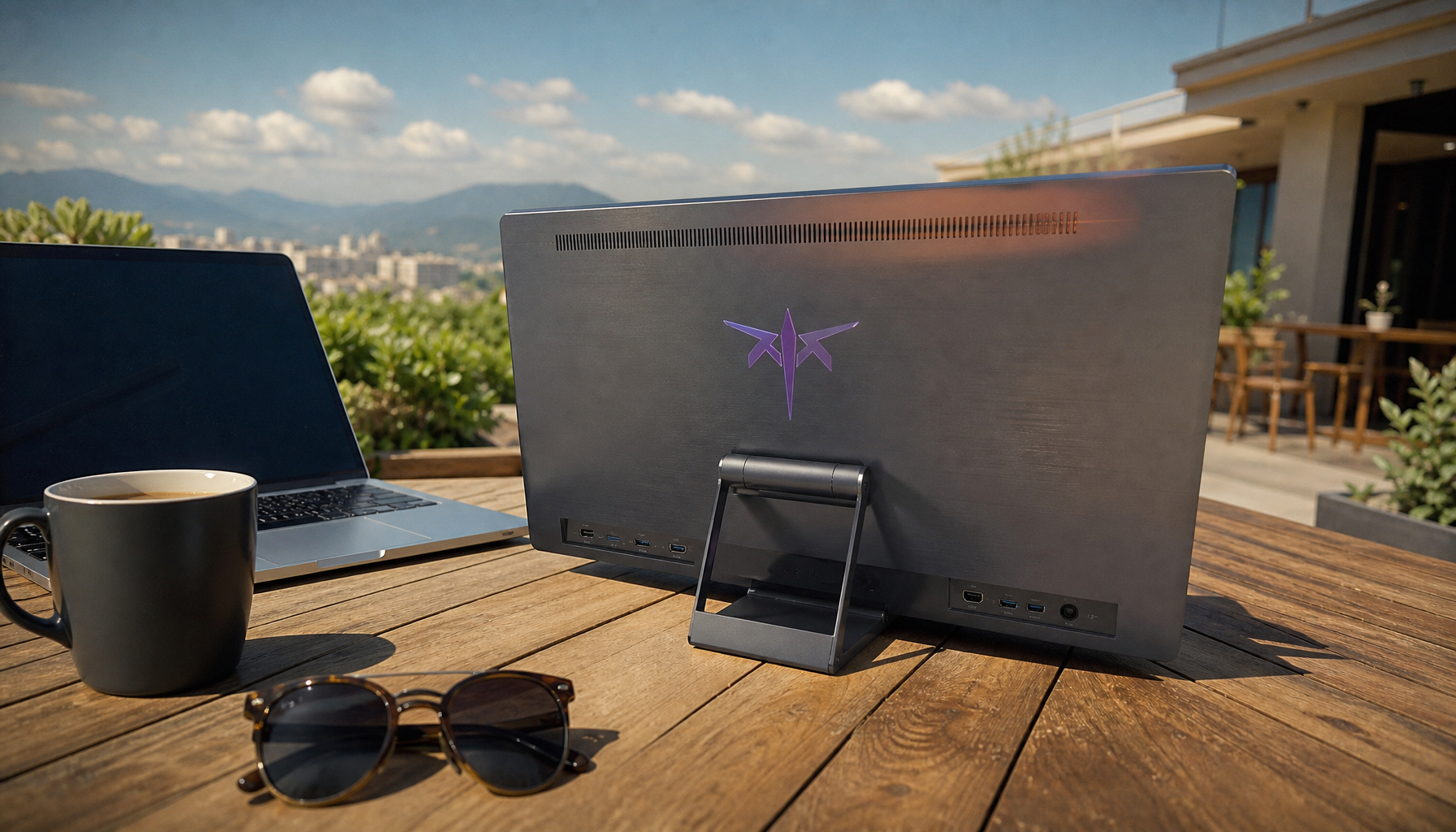
Portable monitors are useful for field reviews, travel, and secondary-screen markup, but they are rarely the best reference display for final color judgment. Because displays drift over time and ambient light affects perceived accuracy, a portable screen usually needs more caution, not less.
For buying guidance, treat a portable monitor as a companion display unless it can be calibrated well and matched against your desk monitor. It should still cover sRGB accurately, but it is smarter to reserve final layer-color decisions for the primary display that you calibrate and control more tightly.
Quick comparison for monitor buyers
Monitor factor |
Practical target for engineering drawings |
Why it matters for layer visualization |
Color space |
Accurate sRGB mode or profile |
Keeps common CAD layer colors predictable across screens |
Delta E |
Average under 2, with no obvious outliers |
Preserves separation between similar line and annotation colors |
Uniformity |
Minimal brightness and color shift across the panel |
Prevents layer colors from changing at screen edges, especially on ultrawides |
Calibration |
Monthly recalibration; hardware calibration preferred |
Reduces drift and keeps multi-monitor setups aligned |
CAD color handling |
ByLayer, minimal manual overrides, consistent plot styles |
Avoids software-side mismatches that look like monitor problems |
Viewing mode |
Neutral preset, HDR off, 2D Wireframe for color checks |
Shows layer colors more truthfully than stylized display modes |
Form factor |
Desktop or ultrawide as primary, portable as secondary |
Larger stable screens are easier for final review than travel panels |
Final Takeaway
The closest thing to a real-world color standard for engineering drawing monitors is not a single logo on a spec sheet. It is a combination of accurate sRGB behavior, Delta E under 2, solid uniformity, regular calibration, and disciplined CAD layer control.
If you are choosing between monitor categories, buy for consistency first. A well-calibrated 27-inch office display or a balanced ultrawide will usually serve drawing review better than a flashy wide-gamut gaming panel running in an aggressive default mode.
Action checklist
- Set your primary CAD monitor to an accurate sRGB or neutral standard mode.
- Check for published Delta E results and avoid displays that only advertise gamut percentage.
- Calibrate at least once a month and compare both screens side by side if you use a dual-monitor setup.
- Turn off HDR and use 2D Wireframe when verifying layer colors and line separation.
- Clean up manual color overrides with ByLayer, SETBYLAYER, and plot-style audits.
- Test uniformity by dragging the same drawing window from the center to both edges of the screen.
- Use portable monitors for convenience, but keep final QC on the calibrated primary display.

FAQ
Q: Do I need a wide-gamut color space or DCI-P3 for a CAD platform or other engineering drawings?
A: Usually no. For layer visualization, accurate sRGB is the better baseline unless the same display also handles rendered presentations, marketing visuals, or other wider-gamut work.
Q: Is factory calibration enough for consistent layer colors?
A: Not for long-term use. Displays drift, room lighting changes, and multi-monitor differences add up, so monthly recalibration is the safer practice.
Q: Can a gaming monitor still be a good engineering drawing monitor?
A: Yes, if it offers a reliable sRGB or standard mode, low Delta E, good uniformity, and a neutral setup with HDR disabled during drawing review.
References
- Engineering drawing
- Technical drawing
- sRGB mode on a computer screen
- How to evaluate monitor color accuracy
- Engineering CAD drawing views
- Layers in CAD workflows
- Delta E and color accuracy
- Wide gamut workflow discussion
- Display profile behavior in wide gamut setups
- Why monitor calibration matters
- A drawing standards manual from an organization