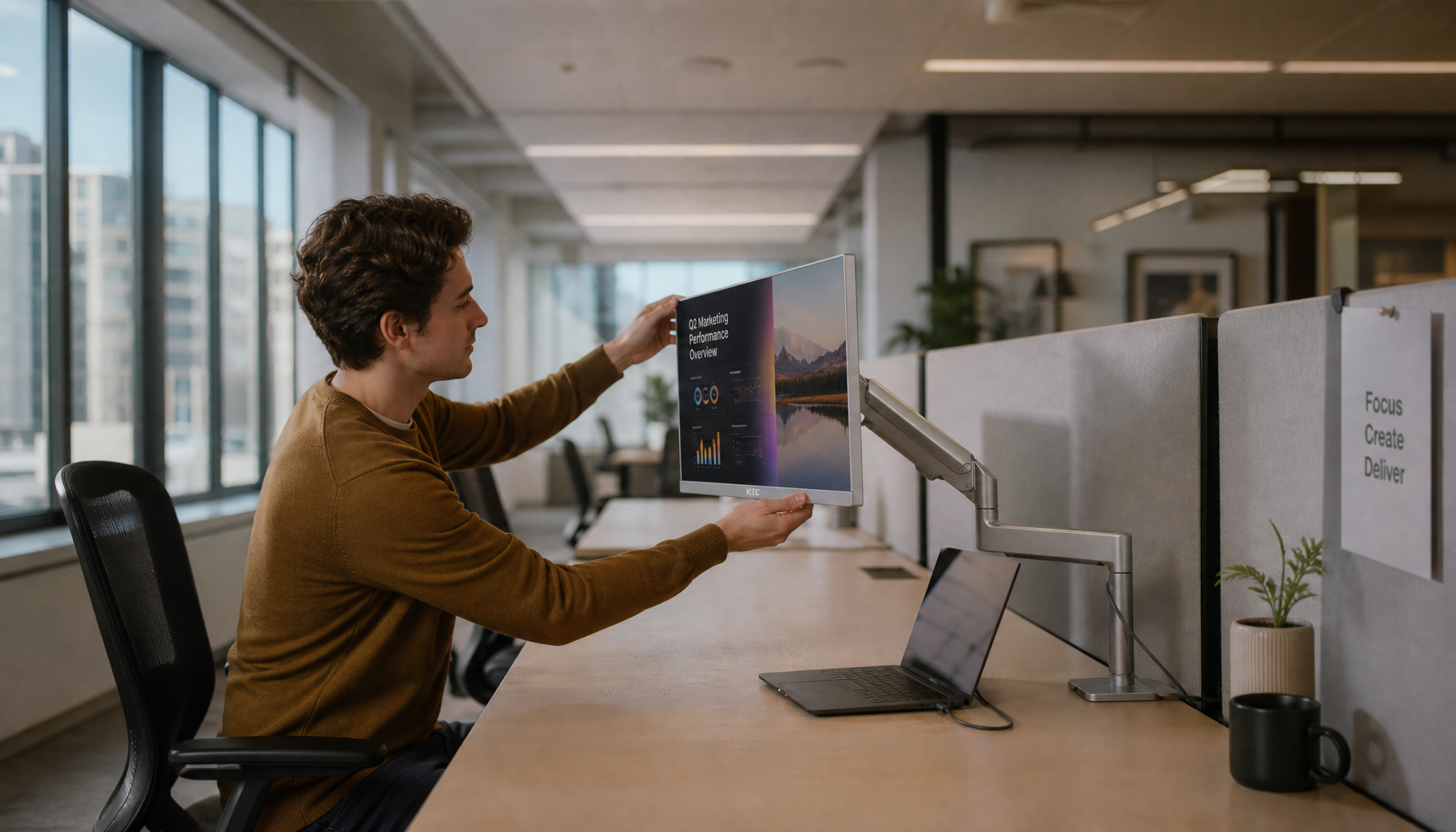
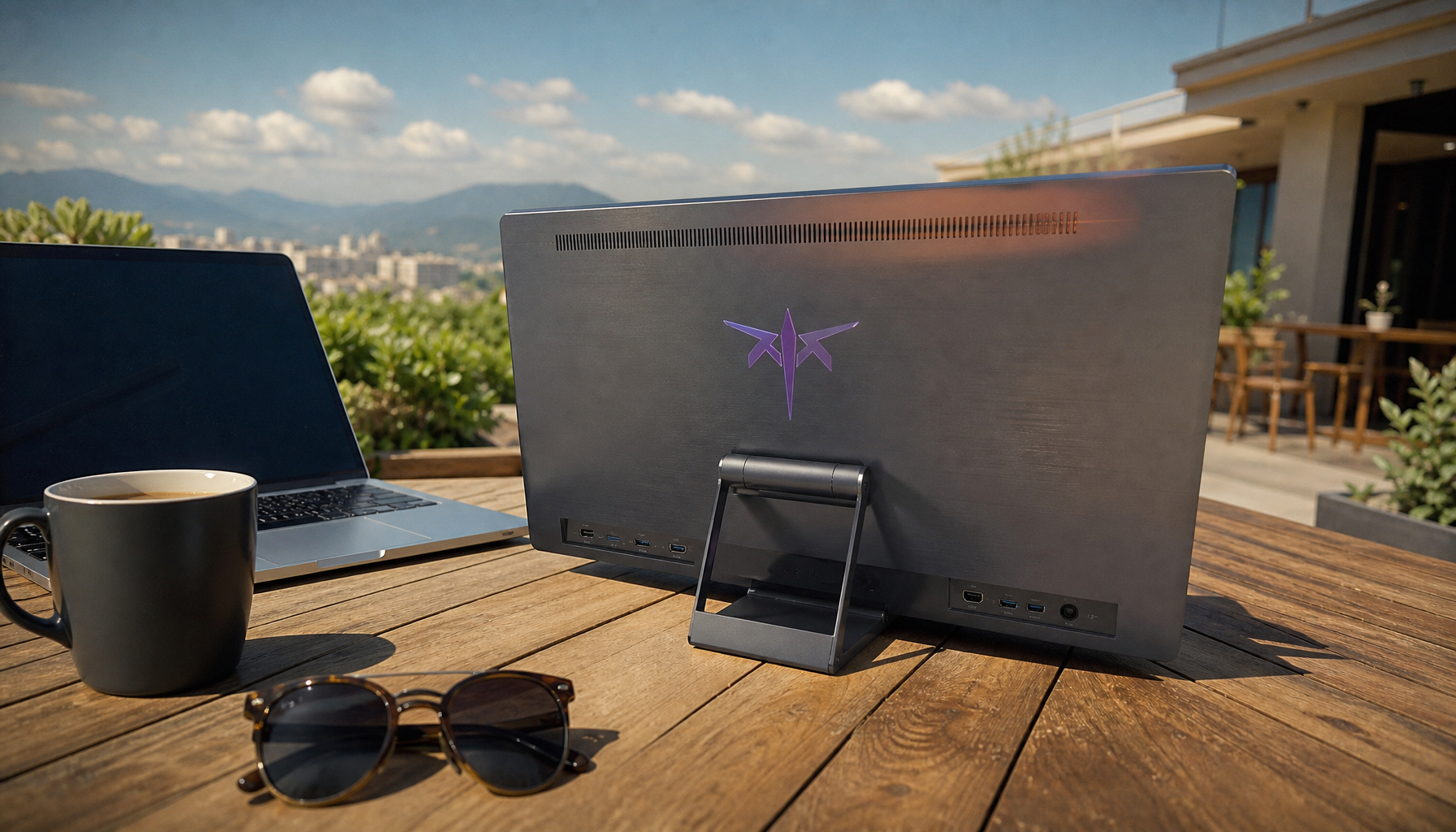
Yes, you can use the KTC MEGAPAD without a Wi-Fi connection for many everyday tasks. It works offline both as a conventional monitor through HDMI or USB-C cables and as a standalone Android tablet using local storage and pre-downloaded content. However, certain smart features like live streaming, cloud syncing, and real-time voice queries require an internet connection, so planning ahead makes a big difference for travel or outage scenarios.

Can You Use the KTC MEGAPAD Without Wi-Fi?
The MEGAPAD remains fully functional offline as both a monitor and a media hub. Unlike many smart displays that lose most capabilities without a network, its built-in battery, local storage, and physical ports let you continue using it in hotel rooms, RVs, camping trips, or during home internet outages.
You can skip the Wi-Fi step during initial setup. The startup wizard includes an option to configure the device temporarily offline, letting you reach the home screen and access local features right away. This makes the MEGAPAD especially useful for users who need immediate portability without first hunting for a stable connection.
The hybrid design gives it an edge over standard monitors. With Android OS onboard, the MEGAPAD can play stored media or run certain apps independently while still accepting external video input when you want a simple display.
Using the MEGAPAD as a Portable Monitor: HDMI and USB-C Offline
HDMI 2.0 and USB-C ports on the MEGAPAD let it function as a high-quality external monitor without any Wi-Fi. This works for laptops, gaming consoles such as Nintendo Switch, PlayStation, or Xbox, and other devices that output video via cable. As noted in the official user manual, these physical connections require no network handshake.
Touch support depends on the connection type. HDMI carries video only, so a separate USB data cable is usually needed for touch interaction with laptops. USB-C Alt Mode offers a single-cable solution on compatible devices, delivering both video and touch without Wi-Fi.
Wireless mirroring via Miracast or Wi-Fi Direct works without a router or internet by creating a direct point-to-point link between your phone and the MEGAPAD. However, this method often introduces noticeable latency compared with wired options, particularly for video or gaming.
The chart below compares common offline connection methods by interactivity and cable needs.
Connectivity vs. Interactivity
Compare connection methods by offline touch support and cable burden to identify the best fit for local interaction on a device.
View chart data
| Category | Touch support | Cables required |
|---|---|---|
| Wired USB | 3.0 | 1.0 |
| Wireless Bluetooth | 2.0 | 0.0 |
| Wireless Wi‑Fi | 2.0 | 0.0 |
| Hybrid wireless adapter | 3.0 | 1.0 |
This visualization helps clarify the trade-offs between cable convenience and touch responsiveness in typical offline setups. For example, USB-C Alt Mode often provides the best balance for laptop users who want touch without extra wires.
When using the MEGAPAD for gaming on the go, its built-in battery powers the screen for several hours without needing an outlet. Many travelers pair it with a console or laptop in this monitor mode for reliable offline entertainment.
For users seeking a versatile portable touch screen, the KTC MEGAPAD 27" FHD Android 14 Google EDLA Smart Touch Monitor delivers strong offline performance in this category. The broader Mobile Touch Screen collection includes several models optimized for similar cable-based or standalone scenarios.
Maximizing the 128GB Internal Storage for Offline Media
The MEGAPAD includes 128GB of internal storage that supports local playback of movies, music, photos, and documents without any internet. According to product testing, this capacity can hold roughly 5–6 high-quality 4K films depending on bitrate, though actual space varies with file sizes and installed apps.
You can expand storage further using the USB 3.0 and USB 2.0 ports to connect external hard drives or thumb drives. Apps such as VLC or MX Player, installed while online, provide excellent compatibility with many offline file formats.
Transferring files from a computer is straightforward via a USB-C data cable. Simply connect the MEGAPAD to your PC, enable file transfer mode, and copy content directly to internal storage or an attached drive.
For reliable local media playback, consider reading the KTC MEGAPAD A25Q5 monitor review which discusses storage and media capabilities in practical terms.
The Pre-Trip Checklist: Preparing Your Apps for Offline Use
Successful offline use starts with preparation on a stable Wi-Fi connection. Log into all necessary accounts, download content within supported apps, and verify that apps recognize your credentials while still online.
Streaming apps such as Netflix require periodic internet “heartbeats” to keep downloaded licenses valid. These check-ins typically occur every few weeks, so long trips without connectivity may cause some content to stop playing even after pre-downloading. The exact grace period depends on the service provider rather than the MEGAPAD itself.
Perform a storage audit before departure. High-bitrate 4K videos consume space quickly, so prioritize essential files and consider using external USB drives for overflow. Offline maps, documents, and productivity tools should also be downloaded in advance.
Launch critical apps once while connected to ensure caches and credentials are stored. This step reduces the chance of authentication prompts once you are offline.
Travelers often combine the MEGAPAD with a portable monitor setup or check the How to Build a Mobile Dual-Screen Gaming Setup with a Portable Monitor for complementary ideas that work well without reliable Wi-Fi.
Wireless Mirroring Without a Router: Miracast and Wi-Fi Direct
Miracast and Wi-Fi Direct enable screen mirroring without a traditional Wi-Fi router or internet connection. These technologies create a direct link between a compatible Android phone and the MEGAPAD, allowing you to share photos, pre-downloaded videos, or other local content in hotels, RVs, or remote locations.
Setup is usually simple: enable the feature on both devices and select the MEGAPAD as the target from your phone’s casting menu. Performance varies by device and environment, with potential stuttering during high-bitrate video playback.
While convenient for quick sharing, wired connections generally deliver lower latency and more consistent results for extended viewing. The guide on mirroring without WiFi provides additional details on these ad-hoc methods.
When Offline Use Isn't Enough: Limitations to Keep in Mind
Certain features stop working without an internet connection. Live streaming services, real-time YouTube content, and cloud-based game saves become unavailable until you reconnect.
Cloud syncing for documents or productivity apps pauses, meaning edits made offline stay local until the next connection. Voice assistants like Google Assistant can handle only basic cached commands and often fail on complex queries that require online processing.
Firmware updates and some app features also need Wi-Fi. Checking for system updates before travel helps avoid stability issues during offline periods.
Users who need constant cloud access or live content may find a traditional smart TV or a setup with reliable hotspot better suited for their needs. For most portable scenarios, however, the MEGAPAD’s offline strengths outweigh these limitations when you prepare in advance.
Choosing the Right Offline Strategy for Your Needs
The best offline approach depends on your primary use case. Travelers who want a standalone media player for flights should focus on pre-downloaded content and internal storage management. Those connecting laptops or consoles benefit most from USB-C Alt Mode or HDMI with an extra data cable for touch.
If your priority is minimal cables and quick sharing, test Miracast compatibility with your phone before a trip. For maximum reliability during long outings, carry a small USB drive with backup media.
Consider your tolerance for occasional limitations. The MEGAPAD excels as a flexible hybrid device, but it cannot replace a fully connected smart display for every task. Matching your planned activities to the right preparation steps ensures you get the most value from the device regardless of connectivity.
Frequently Asked Questions
Can the MEGAPAD Run Android Apps Completely Offline? Most Android apps function offline once installed and logged in, but many require an initial internet connection for authentication. Apps without cloud dependencies, such as local media players or downloaded games, work reliably without Wi-Fi after setup.
Does Touch Screen Work When Using HDMI on the MEGAPAD? Touch works over HDMI only with an additional USB data cable providing the return path. Single-cable HDMI connections support video output but not touch interaction.
How Long Can the MEGAPAD Battery Last in Offline Mode? Battery life varies by brightness, content type, and whether external devices draw power. Typical offline media playback or monitor use provides several hours of operation thanks to the large built-in battery.
Can I Install New Apps Without Wi-Fi on the MEGAPAD? New app installation generally requires access to the Google Play Store, which needs an internet connection. Pre-installing everything you need before travel is the most reliable approach.
Is the MEGAPAD Suitable for International Travel Without Reliable Internet? Yes, provided you complete all downloads, logins, and updates beforehand. Its portable size, battery, and local storage make it well-suited for planes, trains, and destinations with limited connectivity.
What File Formats Does the MEGAPAD Support for Offline Playback? The built-in media player and recommended third-party apps like VLC handle most common video, audio, and image formats. Checking compatibility of less common file types before downloading helps avoid playback issues on the road.