Matte and glossy displays can both look uneven under room light, but the cause is often reflection behavior rather than a defective panel. Glossy screens show sharp reflections; matte screens spread the same light into haze, which can resemble clouding, dirty-screen effect, or weak contrast.
Does one side of your monitor look gray, washed out, or patchy only during the day? In real setup checks, simply rotating a display, dimming an overhead light, or changing the screen angle can separate a true panel-uniformity issue from a room-light illusion within minutes. You’ll learn how to diagnose the reflection pattern, choose the right finish, and fix the room before blaming the screen.
Why False Uniformity Happens
Display uniformity means the panel produces consistent brightness and color across the screen. A true uniformity problem stays visible under controlled conditions, especially on flat gray, white, or dark test images. A false uniformity problem changes when the room changes.
The core mechanism is simple: ambient light does not just hit a screen. It reflects from the outer surface, cover glass, coating, polarizer stack, and sometimes nearby walls or objects. On glossy displays, that reflected light tends to stay concentrated, so you see a lamp, window, keyboard, or your own face. On matte displays, an anti-glare surface diffuses incoming light across a wider area, reducing the sharp reflection but spreading brightness into the image. A practical explanation of anti-glare surfaces describes this as scattering light rather than eliminating it.
That distinction matters because your eye interprets spread-out light as part of the displayed image. A matte monitor beside a window may look like it has a cloudy left edge on a dark game scene. Move the same monitor 90 degrees from the window, and the “defect” may vanish. The panel did not improve; the reflection geometry changed.

Matte Versus Glossy: The Same Light, Different Illusion
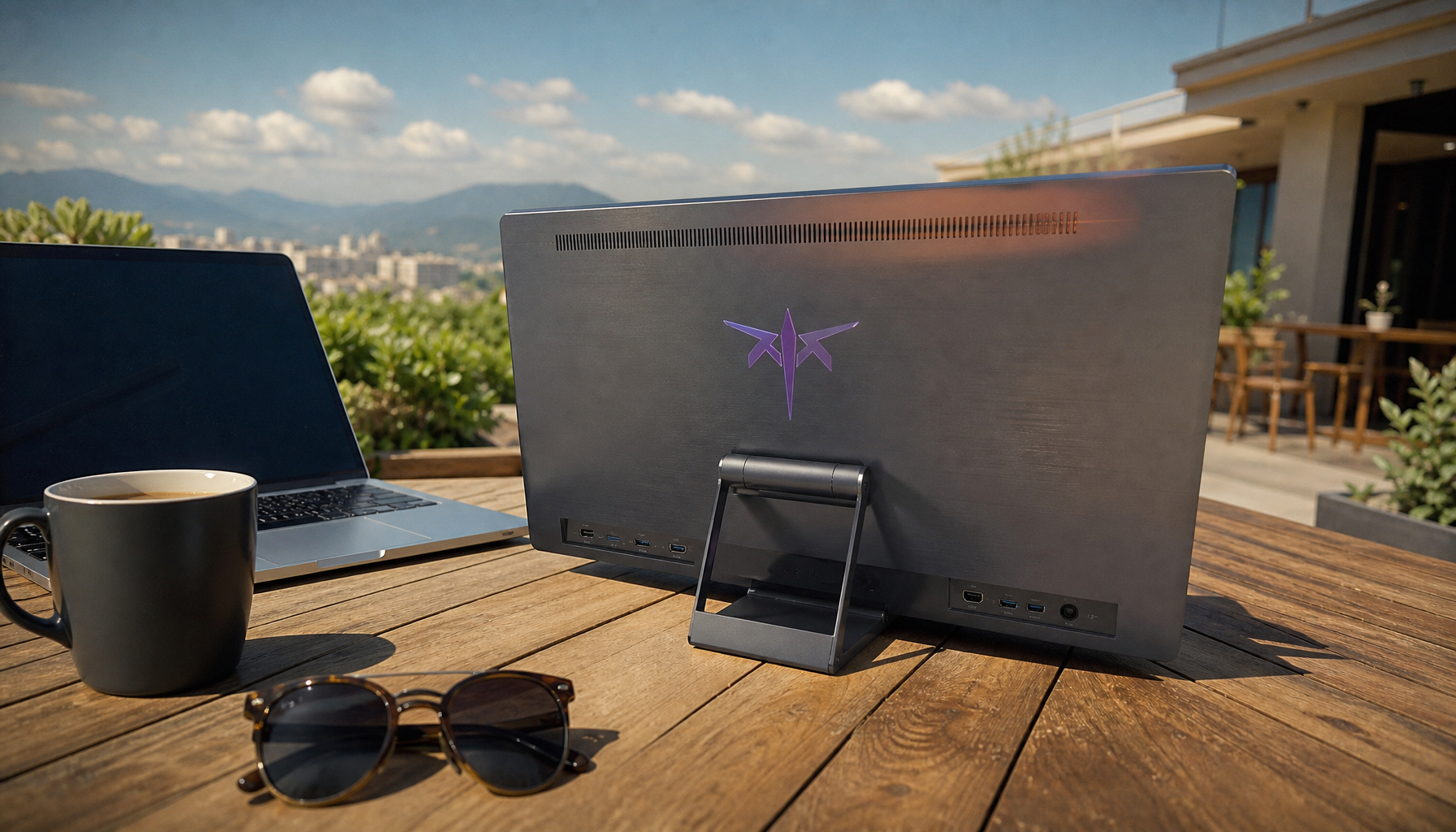
A glossy screen usually preserves perceived sharpness, contrast, and color richness because display light passes through a clearer top layer. The cost is specular reflection: light returns in a more mirror-like pattern. If a glossy OLED or portable smart screen faces a bright window, the screen may still look deep and punchy in darker areas, but a crisp rectangle of window glare can cut straight through the content.
A matte screen reduces that mirror effect by spreading reflections. This is why matte finishes dominate office monitors, esports displays, public kiosks, and many productivity screens. The trade-off is haze. Heavy matte coatings can make blacks look lifted, fine text slightly softer, and dark gradients appear uneven when ambient light is strong. The practical difference is not “matte has no glare” and “glossy has glare.” It is concentrated glare versus distributed glare.
Screen finish |
Reflection pattern |
False uniformity risk |
Best environment |
Glossy |
Sharp, mirror-like reflections |
Looks like bright objects on top of the image |
Controlled lighting, dark rooms, color-focused viewing |
Matte |
Diffuse, hazy reflections |
Looks like clouding, gray blacks, or dirty-screen effect |
Offices, shared spaces, bright rooms |
Light anti-reflective gloss |
Reduced reflection intensity with clearer image |
Can still show obvious light sources |
Premium monitors, touch screens, smart displays |
Heavy anti-glare matte |
Strong reflection diffusion |
Can add visible grain or haze |
Industrial, public, medical, or sun-heavy use |
The Reflection Pattern Test
The fastest field test is to change the room before changing the monitor. Open a flat dark gray image, then slowly tilt the display up and down. If the uneven zone moves, fades, or changes shape, you are looking at reflected light. If it stays locked to the same panel area under low ambient light, the panel itself may be involved.

In multi-monitor productivity setups, this gets tricky. A matte 27-inch office display under a ceiling light may show a broad pale band across the top third of the screen. A glossy portable screen beside it may show a crisp reflection of the same fixture. Users often call the matte display less uniform, even though it is doing exactly what its coating was designed to do: blur the reflection so it is less distracting. The blur simply occupies more screen area.
For a clean check, test at night or in a dim room with indirect lighting. Use the same brightness, the same image, and the same viewing distance. Then add one light source at a time: overhead light, desk lamp, window blinds, and bright wall reflection. A sports-bar glare setup article makes the same practical point for TVs: visibility should be tested from multiple seats and at different times of day because glossy TV screens and poor placement can turn displays into reflective surfaces.
Why Matte Screens Can Look Patchier Than Glossy Screens
Matte coatings are often judged unfairly because their weakness looks like panel failure. A glossy monitor with a window reflection is obvious; users blame the window. A matte monitor with the same window light may show a low-contrast gray veil across one side; users blame the panel.
This is especially visible in dark UI themes, strategy games with foggy maps, HDR menus, coding editors, and office apps with large gray workspaces. The ambient light fills dark areas first because black pixels emit little light to compete with the reflection. That makes a matte screen’s haze look like poor black uniformity.
The effect also depends on coating strength. Mild matte finishes keep more apparent sharpness but suppress less glare. Heavy matte finishes are more comfortable in harsh light but can make small text and dark content look softer. The same trade-off appears outside monitors too: matte print surfaces reduce glare and fingerprints, while glossy finishes increase perceived color and contrast, as shown in a print-focused comparison of matte finish and glossy finish behavior.
Why Glossy Screens Can Hide Uniformity Problems Until the Wrong Light Hits
Glossy screens can make a display look more premium in a controlled room. Blacks appear deeper, colors look more saturated, and text edges can seem cleaner. For gaming monitors, portable OLED screens, and media-focused displays, that clarity can feel more immersive.
The risk is that glossy reflections can dominate attention. A dark boss fight, spreadsheet in dark mode, or video editing timeline can suddenly reveal a reflected face, ceiling light, or bright shirt. A study on glare monitors found that participants using glossy glare monitors had longer fixation duration during reading, and face-area fixations increased on black backgrounds compared with non-glare monitors. The practical takeaway is clear: even when users do not report major readability problems, reflections can still add visual workload.
This is why glossy is not automatically the more accurate finish in real rooms. It may preserve the panel’s native image better, but only if the room is controlled enough for the screen surface to stay visually quiet.
Anti-Glare Is Not the Same as Anti-Reflective
Anti-glare and anti-reflective treatments solve different parts of the problem. Anti-glare surfaces use texture or particles to diffuse reflections. Anti-reflective coatings reduce the amount of reflected light, often by using optical film layers that improve light transmission.
For a premium productivity or smart-screen setup, this difference is critical. A matte anti-glare layer may make a bright office tolerable but add haze. A clear anti-reflective film may preserve sharpness better while reducing reflection intensity, though it may not blur every visible object the way matte does. Industrial and public display suppliers often pair these coatings with hard coatings, oleophobic layers, or touch protection; one display-film overview cites 92%+ light transmission for ultra-clear films where preserving brightness is important.
This is also why “matte versus glossy” is too simple for high-end buying. Some industry notes identify super anti-glare and low-reflection polarizer technology as newer display trends, but public materials do not provide enough performance data to rank products. Treat marketing labels as a starting point, not proof.
Practical Setup: Fix the Room First
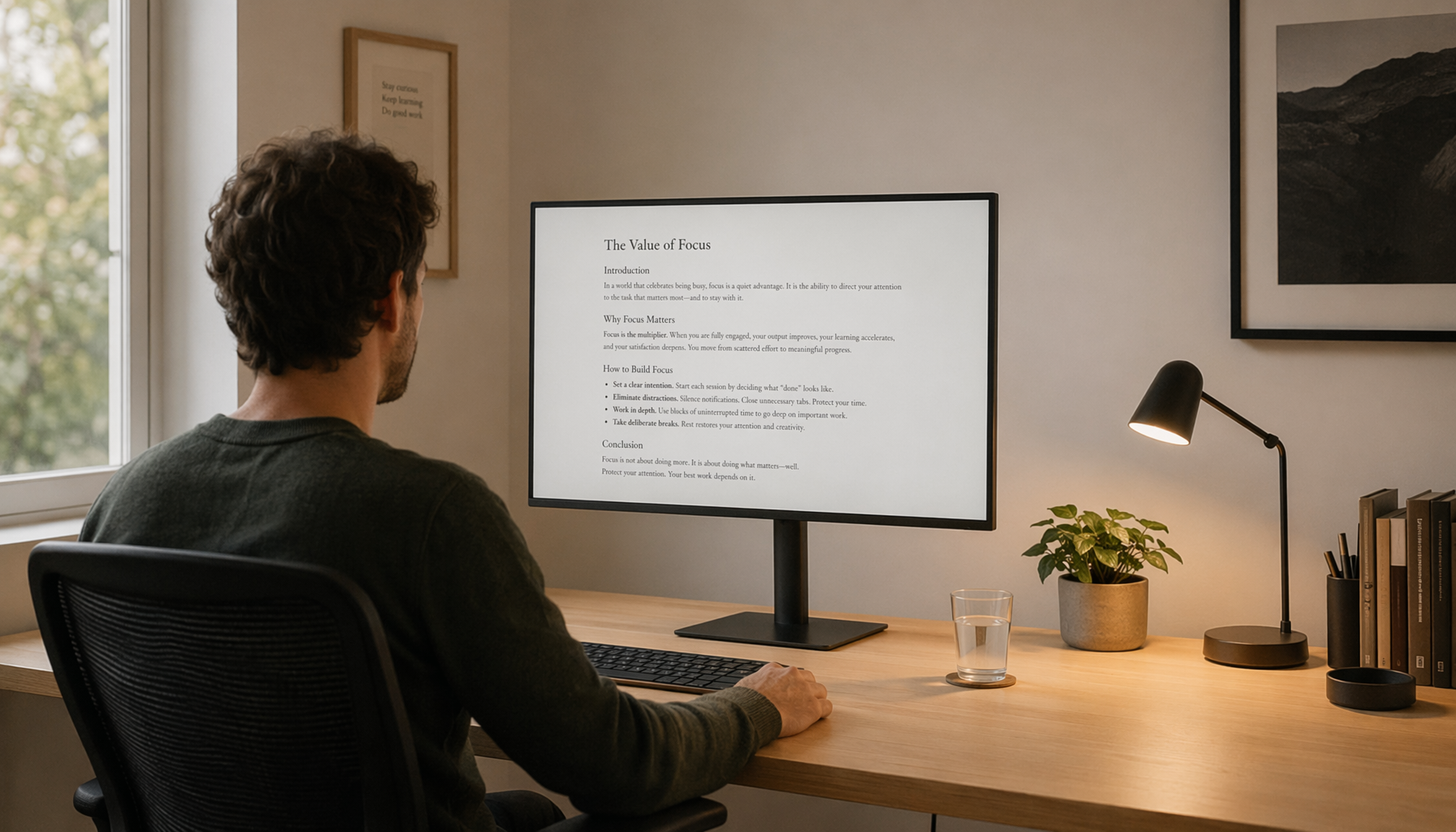
For office productivity, place the monitor so the main window is to the side rather than directly in front of or behind the screen. A perpendicular layout usually reduces both direct mirror reflections and broad matte haze. If your desk forces a window-facing setup, use adjustable blinds, a shade, or a monitor arm that lets you tilt the panel a few degrees through the day.

For gaming, avoid placing RGB towers, bright wall art, or white desk mats where a glossy screen can reflect them during dark scenes. On matte esports monitors, watch for overhead lighting that creates a wide wash across the upper panel. A small tilt downward often helps more than raising brightness, because brightness fights symptoms while angle changes remove the reflection path.
For portable smart screens, test them in the actual position you use: laptop sidecar, couch display, travel desk, or counter setup. A glossy portable OLED can look outstanding in a dim room but turn into a mirror near a sunny window. A matte portable display may be easier for documents and dashboards, but it can lose the punch that makes streaming or handheld console use feel premium.
Eye comfort also deserves a practical mention. Ophthalmology guidance notes that digital eye strain is linked to screen-use habits, reduced blinking, setup, brightness, and glare rather than blue light alone; it recommends screen positioning around arm’s length and the 20-20-20 rule for breaks. That supports a performance-first approach: control reflections, match brightness to the room, and keep the display angle comfortable.
Buying Guidance by Use Case
If your monitor lives in a bright office, shared workspace, classroom, trading desk, or sunlit apartment, matte is usually the more reliable choice. It lowers the chance that one lamp or window reflection will dominate your work. Just avoid overly aggressive matte coatings if you spend all day reading small text or judging fine image detail.
If your setup is light-controlled and you care most about HDR impact, deep perceived blacks, color pop, and sharp UI edges, glossy or light anti-reflective gloss can be the better performance choice. This is especially true for media viewing, OLED gaming, and creator workflows where the room can be tuned. A gaming-monitor finish explainer frames glossy monitors as better for visual richness when reflections are managed, while matte remains the safer practical choice for glare control.
If you are evaluating a monitor in a store or from a review photo, be careful. Showroom lighting often exaggerates matte haze and glossy reflections in different ways. A screen that looks uneven under ceiling lights may look excellent in a calibrated home setup, while a glossy panel that looks stunning in a dark demo corner may be difficult beside your real window.

A Simple Decision Rule
Choose matte when the room is variable. Choose glossy when the room is controlled. Choose anti-reflective clear coatings when you want a higher-end compromise and can verify performance under your own lighting.
The winning display is not the one with the most fashionable finish. It is the one whose reflection pattern stays out of your work, your game, and your focus. Before returning a monitor for bad uniformity, dim the room, rotate the screen, tilt it, and test again; the fastest upgrade may be better light control, not a different panel.