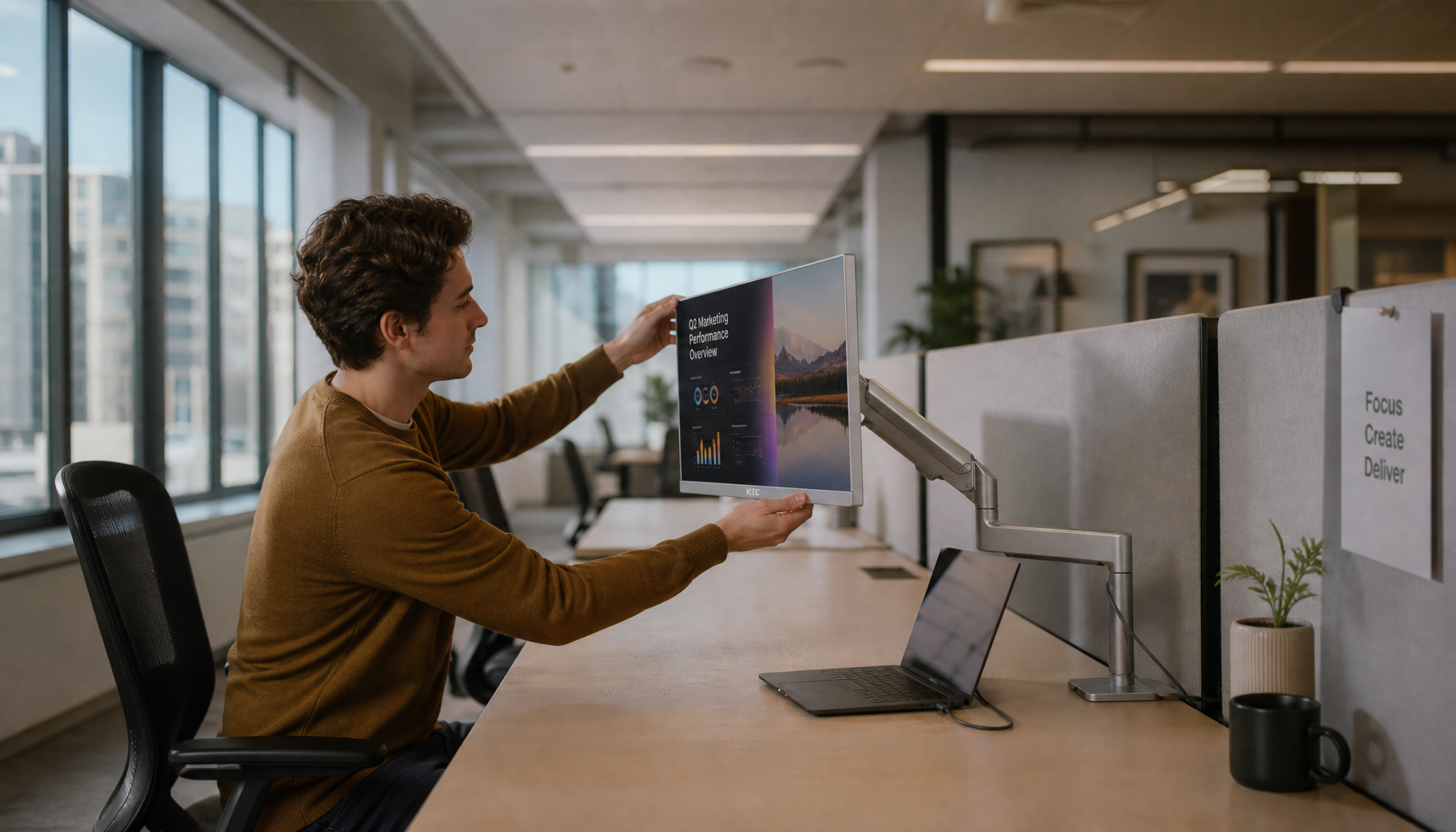
KTC monitor firmware update steps should be treated as a stability check, not a cure-all. If the wrong file is used, power is interrupted, or the signal path changes during flashing, you can end up with a black screen, lost settings, or a handshake problem instead of a fix. Start by confirming the model, then decide whether firmware is even the likely issue.

Why Firmware Updates Deserve a Careful Process
Firmware can help when a monitor has a known stability problem, but it can also create new ones if the flash process is interrupted or the package does not match the exact model. KTC's official support pages point readers to its manuals and firmware downloads and also note that firmware support is tied to the model path, which is why the first step is verification, not guessing.
A useful decision rule is simple: if the screen only started failing after an update attempt, check the signal path before assuming the panel failed. If the monitor was already unstable, the update may have exposed a separate cable, input, or refresh-rate issue. For most owners, that filter saves time and avoids repeated flashing.
If you want a quick follow-up on signal problems, see this no-signal troubleshooting guide for the cases where the display looks dead but the cause is often simpler than it seems.
Check the Current Version and Update Source
First, find the firmware version in the monitor's on-screen menu or support information area. On supported models, KTC's manual path shows that the version belongs in the monitor's information/support area, and the firmware file should be matched to the exact model rather than a similar-looking one. That matters because a near-match can still be the wrong package.

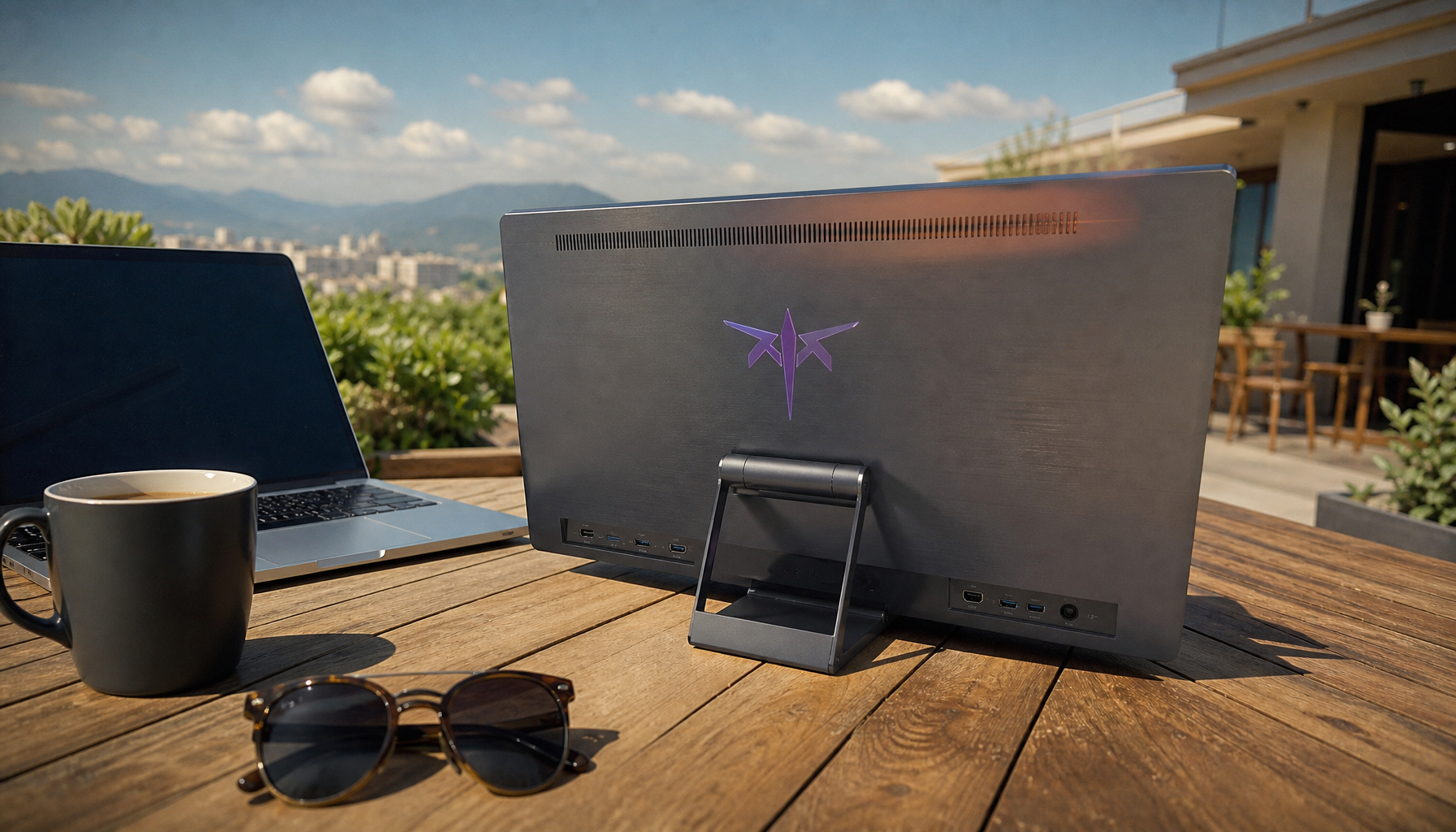
On the H25X7, KTC's manual notes that the menu is accessed by joystick and that the USB port is service-only, which is a good reminder not to treat every port as an update path. If you are checking a different model, use the same discipline: identify the exact model first, then compare the file name and support note before you touch anything.
The featured model below is useful as a reference point for a supported KTC gaming monitor with a clearly documented setup path: KTC 24.5 inch 360Hz/400Hz OC Fast IPS FHD Gaming Monitor | H25X7. If your monitor's support page does not clearly list a matching firmware path, treat the download as unverified until support confirms it.
For the safest setup, use a direct cable path and stable power, not a dock, splitter, or loose adapter chain. As a planning guideline, fewer moving parts means fewer chances for a failed flash. That is especially important if you were already seeing flicker, no signal, or intermittent USB-C behavior before the update.
Apply the Update Without Creating New Problems
- Confirm the exact model and revision, then download only the file that matches that unit.
- Connect the monitor to a stable power source and keep the cable path direct.
- Disconnect docks, hubs, splitters, and other extras until the monitor is stable again.
- Start the flash only after the monitor is already on a known-good input.
- If the screen goes black during the process, give the monitor its normal recovery window before power-cycling it.
- After the monitor comes back, reboot once and check the image on a simple direct connection.
That sequence sounds basic, but it prevents the most common self-inflicted problems. A failed flash often looks worse than it is, and a rushed unplug can turn a recoverable update into a longer troubleshooting session. If you need a related recovery reference for signal issues caused by mode changes, safe mode display recovery is the right next stop when the monitor appears stuck in an unsupported mode.
The main cutoff is this: if the monitor is already unstable before the update, fix the connection path first. A firmware flash should come after the display is behaving normally on one direct source, not before.
Verify Success and Reset Your Baseline
Do not assume the update worked just because the monitor rebooted. Reopen the menu and check the version again, then test the settings that matter most to your setup. For a gaming PC, that usually means input selection, refresh rate, and the picture mode you actually use. For office work, it may be brightness, scaling, and USB-C behavior.
A good baseline is one stable setup you can return to later. Save the input, refresh-rate, and picture settings that work, then leave the monitor alone for a few sessions before changing anything else. That way, if a new issue appears later, you know it is a new issue and not a leftover update setting.
If a driver or handshake change is part of the problem, this display detection and refresh-rate fix helps when the monitor is working at the panel level but not communicating cleanly with the source device.
Troubleshoot Black Screen, No Signal, and Other Post-Update Issues
- Check the input source first. A black screen after updating is often just the wrong input selected, especially if you use multiple ports.
- Test one direct cable. Bad adapters, loose connectors, or an overloaded dock can cause the same symptom as a bad firmware file.
- Lower the refresh rate for a test. If the screen returns at a safer setting, the issue may be a handshake or mode mismatch rather than permanent damage.
- Treat dead pixels separately. Firmware does not create or repair individual dead pixels, so that complaint belongs in a panel or warranty conversation, not a flashing conversation.
- Compare another source or input. If one device works and another does not, the monitor may be fine and the source path may be the real problem.
That last point matters because users often blame the update for a problem that only showed up after they changed several things at once. A bad flash is possible, but a cable, source, or refresh mismatch is usually easier to rule out first. If the issue is specifically about pixel defects, the dead pixel policy and warranty guide is the right resource to review instead of repeating firmware steps.
When to Stop and Contact Support
Stop troubleshooting if the monitor will not display the menu, repeatedly fails to recover, or starts behaving unusually with heat, odor, or power cycling after a firmware attempt. At that point, more guessing can waste time and make it harder to describe the problem clearly. Firmware best practices emphasize confirming the file and power path before any flash.
Before contacting support, gather the model number, the update file name, the steps you already tried, and a short photo or video of the symptom. If you are still browsing for a replacement or checking what KTC sells in a similar category, the LCD Monitors collection is a simple browsing path.
For buyers, the practical takeaway is not that every monitor needs firmware attention. It is that support quality matters when a model has a clear update path and a clear recovery path. If both are missing, that is a useful buying signal too.
FAQs
Q1. How Do I Check My KTC Monitor Firmware Version?
Open the monitor's on-screen menu and look for a support, information, or system page that lists the current version. Then compare that version with the exact model's official download or support note. If the model path is unclear, do not flash yet. Confirm the match first.
Q2. Can a Firmware Update Fix a Black Screen on My Monitor?
Sometimes, but not always. A black screen after an update is often caused by input selection, cable quality, refresh-rate mismatch, or handshake problems. Check those first because they are simpler to rule out than firmware corruption, and they are much less likely to require service.
Q3. What Should I Do If the Screen Stays Black After Updating?
Try one direct cable, select the correct input, and lower the refresh rate if the menu is visible. If the monitor cannot show its menu or does not recover after a reasonable wait, stop power-cycling it and contact support with the file name and symptom details.
Q4. Why Did My Monitor Settings Change After the Update?
Firmware updates can reset picture, input, or refresh-related preferences. Recheck the settings you depend on most, especially brightness, HDR, scaling, and the selected input. If the image looks different but stable, the update may have changed a default rather than broken the monitor.
Q5. Can Firmware Updates Cause Dead Pixels or Warranty Issues?
Firmware does not typically create or repair dead pixels, which are panel defects. Warranty or return handling depends on the product policy, so keep the symptom documented and check the policy for your exact model. If the problem is clearly a pixel defect, use the warranty path rather than retrying firmware.
What to Do Next If the Update Still Feels Unstable
If the monitor still feels unstable after a KTC monitor firmware update, go back to a direct cable path, a single input, and one known-good source before assuming the firmware itself is the issue. That gives you a clean baseline for support and avoids chasing the wrong problem. Once the display is stable again, leave it alone unless KTC confirms a newer file for your exact model.
Related Resources
If the monitor remains unstable, review the signal path and model-specific notes first. For replacements or similar options, browse the full All Monitors collection or the M27P6 as a stable reference point.