You can screen a monitor for likely flicker problems at home by testing it at the brightness you actually use, checking for camera banding, comparing comfort over a longer session, and ruling out gaming settings such as VRR, strobing, and refresh-rate overrides.
Ever dimmed a gaming monitor at night, played for an hour, and ended up with tired eyes even though the screen looked “smooth”? A practical test at about 35% brightness for a full session can reveal discomfort that a quick 10-minute check at 100% brightness will miss. This guide gives you a simple, repeatable way to judge flicker risk before you keep, return, or buy a monitor.
Why Monitor Flicker Is Hard to Spot
Monitor flicker is not always an obvious blinking screen. It can be a rapid brightness fluctuation caused by the backlight, brightness control, refresh behavior, or certain motion settings, and it may show up as eye pressure, headaches, fatigue, or a sense that the screen feels “busy” after a while. A monitor can look fine during a quick store demo and still become uncomfortable during a late-night gaming session.
One common reason is pulse-width modulation, or PWM, where the display controls brightness by switching the light source on and off rapidly instead of smoothly lowering output. This can become more noticeable at lower brightness levels, especially around everyday dim-room settings such as 30% to 50%, where some monitors behave differently than they do at full brightness. A monitor’s PWM dimming behavior matters because invisible flicker can still contribute to discomfort for sensitive users.

Flicker Is Not the Same as Low Refresh Rate
A 60 Hz monitor can feel less fluid than a 144 Hz, 165 Hz, or 240 Hz gaming monitor, but that is not automatically the same problem as backlight flicker. Refresh rate affects how often the image updates. Backlight flicker affects how steadily the screen emits light. A high-refresh-rate display can still feel uncomfortable if its backlight control is harsh at low brightness.
That distinction matters when shopping for gaming monitors, ultrawide monitors, and portable monitors. A 165 Hz display may track motion well but still feel unpleasant at night if dimming introduces flicker, while a properly tuned 100 Hz or 144 Hz monitor with stable backlighting may feel easier on the eyes for long mixed-use sessions.
Start With a No-Equipment Comfort Test
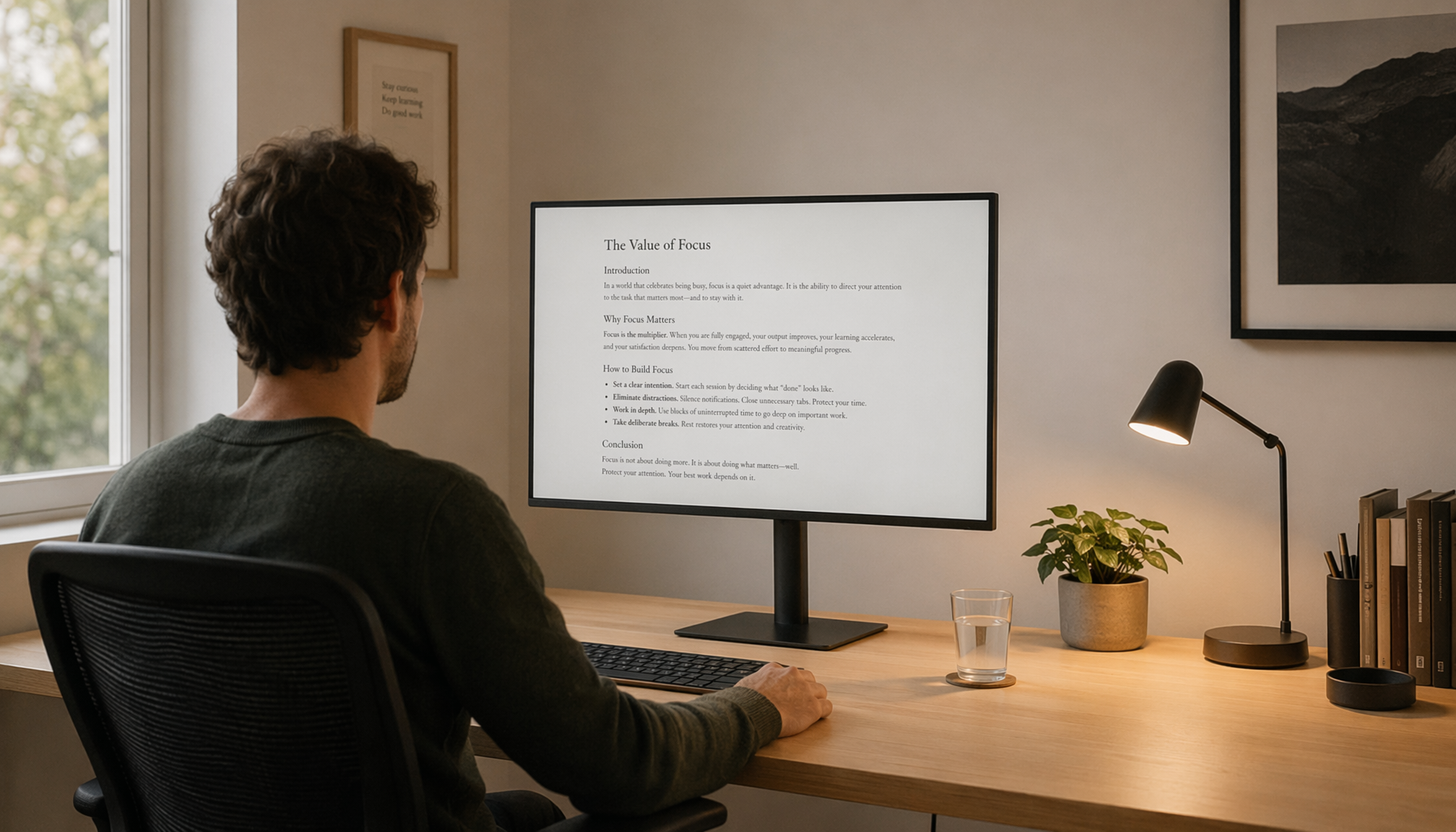
The most useful first test is not a camera trick. It is a controlled real-use session. Set the monitor to the brightness you normally use, especially if that is below 50%, open a mostly white page or document, then use the screen for at least 45 to 60 minutes. Keep the room lighting, viewing distance, and content type similar to your real setup.
This matters because many people only notice flicker-related discomfort after time has passed. If the monitor feels fine for 10 minutes at 100% brightness but causes eye pressure, headache, or fatigue after about an hour at 35% brightness, that is meaningful evidence even if the product page says “eye care” or “flicker-free.” A practical home test should include low brightness, a darker room, close enough viewing to notice discomfort, and enough time for symptoms to appear.
Use a Simple A/B Session
Run two short sessions on different days or with a long break between them:
Test condition |
What to do |
What the result may mean |
High brightness |
Use the monitor at 80% to 100% brightness for 20 to 30 minutes |
If comfort improves, low-brightness dimming may be the issue |
Real brightness |
Use your normal setting, often 30% to 50%, for 45 to 60 minutes |
If discomfort appears here, test dimming behavior more carefully |
Alternate display |
Use a different monitor or laptop screen with the same content |
If symptoms disappear, the original monitor is a stronger suspect |
Different room lighting |
Add a desk lamp or bias light behind the monitor |
If symptoms improve, contrast and glare may be part of the problem |
For gaming monitors, test both desktop use and actual gameplay. A white browser page can expose brightness instability, but a fast game can trigger other problems such as variable refresh rate flicker, strobe backlight artifacts, or frame pacing issues.
Use a Phone Camera, But Understand Its Limits
A cell phone camera can sometimes reveal flicker as rolling bands, pulsing, or horizontal stripes across the screen. Open a white or light gray full-screen page, lower the monitor brightness to your normal setting, point the camera at the screen, and look through the live camera preview. Then record a short slow-motion video if your phone supports it.

This method is useful because many phone cameras use rolling shutters that interact with display flicker. If you see dark bands moving across the monitor at 30% brightness but not at 100%, that suggests the backlight or brightness control is changing behavior when dimmed. Still, a phone camera is not a lab-grade test because results depend on camera shutter speed, frame rate, exposure, room lighting, and the monitor’s refresh setting.
How to Run the Camera Test
Set the monitor to a fixed refresh rate first, such as 144 Hz or 165 Hz, rather than letting the system switch modes. Open a bright static page, disable automatic brightness if your display has it, and test at 100%, 75%, 50%, 35%, and minimum usable brightness. Keep the phone steady and compare the live view at each level.
If bands only appear at low brightness, the monitor may be using PWM or another dimming method that is less steady when dimmed. If bands appear only when a game is running, the problem may be tied to VRR, frame rate swings, HDR behavior, or a motion blur reduction mode rather than the backlight alone.
What Phone Results Can and Cannot Tell You
A clean phone-camera result does not prove the monitor is flicker-free. Some flicker is too fast, too low in depth, or mismatched with the phone camera’s capture behavior. On the other hand, visible banding in a phone video does not automatically mean the monitor is unusable, especially if you feel no discomfort during long sessions.
Treat the camera test as a warning light, not a final verdict. The best evidence comes from combining it with real-use comfort testing, brightness comparisons, and gaming-setting isolation.
Separate Flicker From Gaming Settings and Software Problems
Before blaming the panel, check the settings that commonly create flicker-like symptoms. Variable refresh rate, overdrive, motion blur reduction, backlight strobing, HDR mode switching, poor cables, and unstable drivers can all make a display feel inconsistent. A “flicker-free” label usually refers to backlight behavior, not every possible source of visible instability.
Start by turning off blur-reduction or strobe modes. These features intentionally flash the backlight to improve motion clarity, which can defeat the comfort benefit you expected from a flicker-free monitor. Then test VRR, such as adaptive-sync mode or a similar compatible mode, both on and off. A flicker-free claim does not guarantee zero flicker, especially when game frame rates fluctuate or the monitor switches refresh behavior dynamically.
Quick Software Isolation Test
On a desktop operating system, open the system task manager when you notice flicker. If the system task manager flickers too, the graphics driver or display link in the chain may be involved. If the system task manager stays stable while one app flickers, the app itself may be the cause. That distinction can save you from returning a monitor when the actual problem is a browser, game launcher, overlay, or driver setting.
Also check your cable and port. A high-refresh ultrawide monitor running at 144 Hz or above may need the right display connection standard, a short enough cable, and a stable GPU output. Flicker-like blanking, sparkles, or intermittent flashes can come from a marginal cable rather than the backlight.
Test at the Brightness You Actually Use
Many monitor buyers test a display at factory brightness, which is often far brighter than a comfortable desk setup. That can hide the exact behavior you need to evaluate. If you usually game at night, test at night. If you use a portable monitor in a hotel room, dorm, or small apartment desk setup, test it in a similarly dim environment.
For dim-room use, a comfort range around 120 to 180 nits is often more realistic than the maximum brightness number on a spec sheet. The exact on-screen brightness percentage that produces that range varies by model, so do not assume 35% means the same thing across two monitors. Late-night gaming comfort often depends on flicker-free backlighting, easy brightness controls, anti-glare treatment, refresh rate, and ergonomic adjustment working together.
A Practical Brightness Ladder
Test these levels in order:

- 100% brightness for 10 minutes on a white or light gray screen.
- 75% brightness for 10 minutes.
- 50% brightness for 15 minutes.
- 35% brightness for 45 to 60 minutes.
- Your preferred night setting during a real gaming session.
Write down symptoms instead of relying on memory. Note eye pressure, headache, dry eyes, blurred vision, trouble refocusing, or the urge to look away. Screen users may blink three to five times less than normal, and gaming for two or more continuous hours can raise digital eye strain risk, so your notes should separate general long-session fatigue from symptoms that appear quickly at one brightness level.
What Your Results Mean for Buying a Monitor
If you are choosing a gaming monitor, do not treat “high refresh rate” as the only comfort spec. Look for flicker-free backlighting, stable behavior below 50% brightness, easy brightness adjustment, a matte or anti-glare coating, and at least 100 Hz refresh for smoother everyday use. For competitive gaming, higher refresh rates still matter, but comfort depends on the whole setup.
For ultrawide monitors, test the brightness uniformity and comfort across the full width. A 34-inch or 49-inch display fills more of your field of view, so harsh brightness, reflections, or unstable dimming can become more noticeable than on a smaller screen. For portable monitors, test at lower brightness on single-cable power and video, because power limits and brightness behavior may differ from a desktop monitor plugged into the wall.
When to Adjust, Keep, or Return
Keep the monitor if it stays comfortable at your real brightness, shows no obvious low-brightness pulsing in your phone test, and behaves consistently with VRR, HDR, and strobing configured the way you actually use them. Adjust settings if discomfort appears only with a specific feature, such as backlight strobing or VRR in one game. Consider returning or avoiding the display if discomfort repeatedly appears at normal brightness across different apps, cables, refresh rates, and room lighting.
Do not overvalue marketing labels. “Flicker-free” usually means the monitor avoids PWM dimming, uses DC dimming, or uses high-frequency control to make light output steadier, but it is not a personal comfort guarantee. The best buying test is still your own controlled session at the brightness and refresh settings you will use every day.
Action Checklist for Testing Monitor Flicker
- Set the monitor to its native resolution and your intended refresh rate, such as 144 Hz, 165 Hz, or 240 Hz.
- Disable blur reduction, backlight strobing, automatic brightness, and HDR while running the first test.
- Open a white or light gray full-screen page and test brightness at 100%, 75%, 50%, and your normal level.
- Use your cell phone camera preview and slow-motion video to look for rolling bands or pulsing at each brightness level.
- Run a 45- to 60-minute real-use session at your normal brightness, especially if that is around 30% to 50%.
- Test VRR on and off in a game where you normally notice discomfort.
- Swap the cable or port if you see flashes, blanking, or instability unrelated to brightness.
FAQ
Q: Can I test monitor flicker with only my eyes?
A: Yes, but the test needs enough time. A quick glance may miss invisible or low-brightness flicker, so use the monitor at your real brightness for 45 to 60 minutes and track symptoms such as eye pressure, headache, blurred vision, and fatigue. Compare that with a higher-brightness session and, if possible, another display.
Q: Does a phone camera prove whether a monitor is flicker-free?
A: No. A phone camera can reveal rolling bands or pulsing, especially at low brightness, but it can also miss flicker depending on shutter behavior and frame rate. Use it as one piece of evidence alongside comfort testing, brightness changes, and gaming-setting checks.
Q: Why does my monitor feel worse when dimmed?
A: Some monitors change how they control the backlight at lower brightness levels. If discomfort appears at 30% to 50% brightness but not near full brightness, the dimming method may be contributing. Room contrast can also play a role, so try a desk lamp or bias light before making a final judgment.
Practical Next Steps
If you already own the monitor, test it over two evenings before deciding. Use one evening for desktop work at your normal brightness and another for gaming with VRR, HDR, and strobing tested separately. If the same discomfort appears at low brightness across different apps and cables, the monitor is probably a poor fit for your eyes even if its specs look strong.
If you are buying a new display, prioritize flicker-free backlighting, stable low-brightness behavior, anti-glare treatment, ergonomic adjustment, and a refresh rate appropriate for your use. For most gaming and productivity setups, a comfortable 144 Hz or 165 Hz monitor with steady dimming is a better long-term choice than a faster panel that feels harsh after an hour.