A safe monitor removal starts with the right release method, full support under the display, and a plan for the wall before you touch a screw.
If you have ever felt a gaming monitor shift in your hands while the wall bracket is still half-attached, you already know how fast a simple upgrade can turn into a cracked panel or torn drywall. Most wall-mounted displays use one of a few common mounting layouts and predictable bracket styles, which makes removal much safer when you identify the hardware first. You will leave with a clear process for taking down standard, high-refresh-rate, curved, and ultrawide monitors without creating a second repair job.
Know What You Are Removing First
Most flat-panel monitors use the monitor mount standard, usually with four threaded holes in a square pattern. On mainstream office monitors, portable docking displays with adapters, and many gaming monitors, the common patterns are 75 x 75 mm and 100 x 100 mm, which are roughly 3 x 3 in. and 4 x 4 in. That matters because the release method is usually tied to a mounting plate, not the screen itself.
Identify the mount style before you loosen anything
A fixed plate, a hook-on bracket, and a quick-release mounting plate all come off differently. Some wall arms use a slide-in plate for easier removal, while some quick-release kits are designed so the screen can detach without removing the whole wall bracket. On heavier setups, especially curved ultrawide monitors, that difference is the line between a controlled lift and a sudden drop.
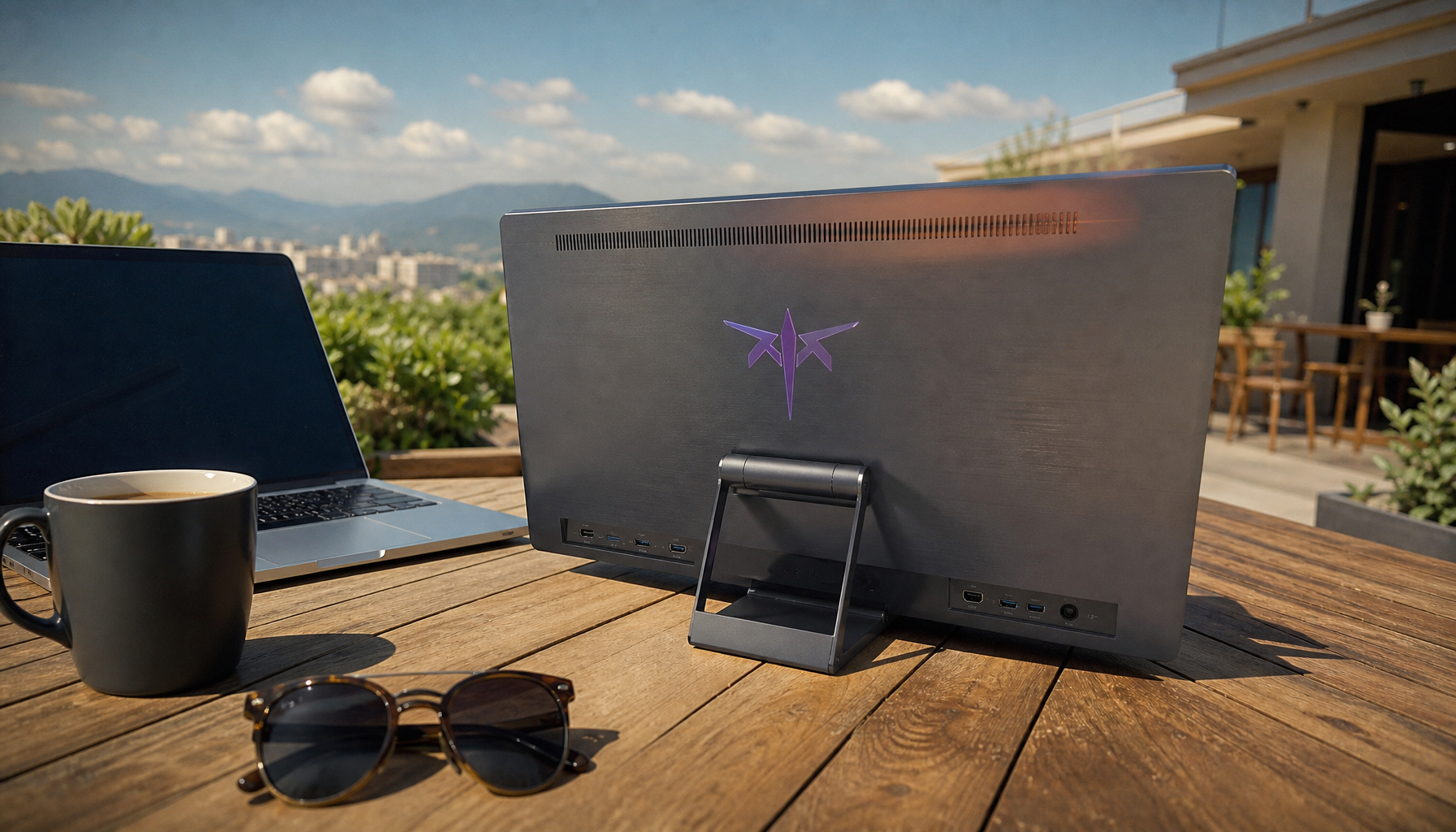
Before removal, inspect the back of the monitor with a flashlight. Look for a safety screw at the bottom edge of the mounting plate, a latch near the center of the bracket, or a vertical slide path. Some monitors also hide the mounting area behind trim, rubber grommets, or a decorative rear panel, as shown in mount access examples.

Match the monitor size to the handling risk
A 27-inch high-refresh-rate display can still be awkward, but a 34-inch curved ultrawide creates more leverage on the mount even when its weight is technically within spec. Wall arms sold for larger screens often extend 10.5 in. or more from the wall, and that extra reach increases the need to support the panel with both hands during removal. That is why ultrawide wall-mount discussions regularly focus on safe positioning and screen support before the bracket is attached or removed, especially for curved panels on soft packing foam or microfiber protection, as discussed in this ultrawide mounting thread.
Set Up the Area So the Screen Never Takes the Load
The safest removal job starts before the first screw turns. Clear the desk, lay down a clean blanket or the monitor’s original foam, and route a path from the wall to the resting surface. This is especially important for thin-bezel gaming monitors and curved displays, where a slight twist can put pressure where the panel is weakest.

Tools that actually matter
You usually need a screwdriver set, a container for screws, a flashlight, painter’s tape, and a soft padded surface. If you plan to remove the wall bracket too, add a stud finder, spackle knife, lightweight wall patch compound, and sandpaper. A basic wall-mount walkthrough also relies on a level and careful wall marking to avoid hidden utilities, which is good discipline on removal day too if you are taking off the full bracket and deciding whether to patch or remount in the same area, as shown in this wall-mount step guide.
Unplug power, display, data, and audio cables before you start loosening the display. Do not count on cable slack to hold anything in place. Cable drag can pull a monitor sideways at the exact moment the plate disengages.
When a second person is the right call
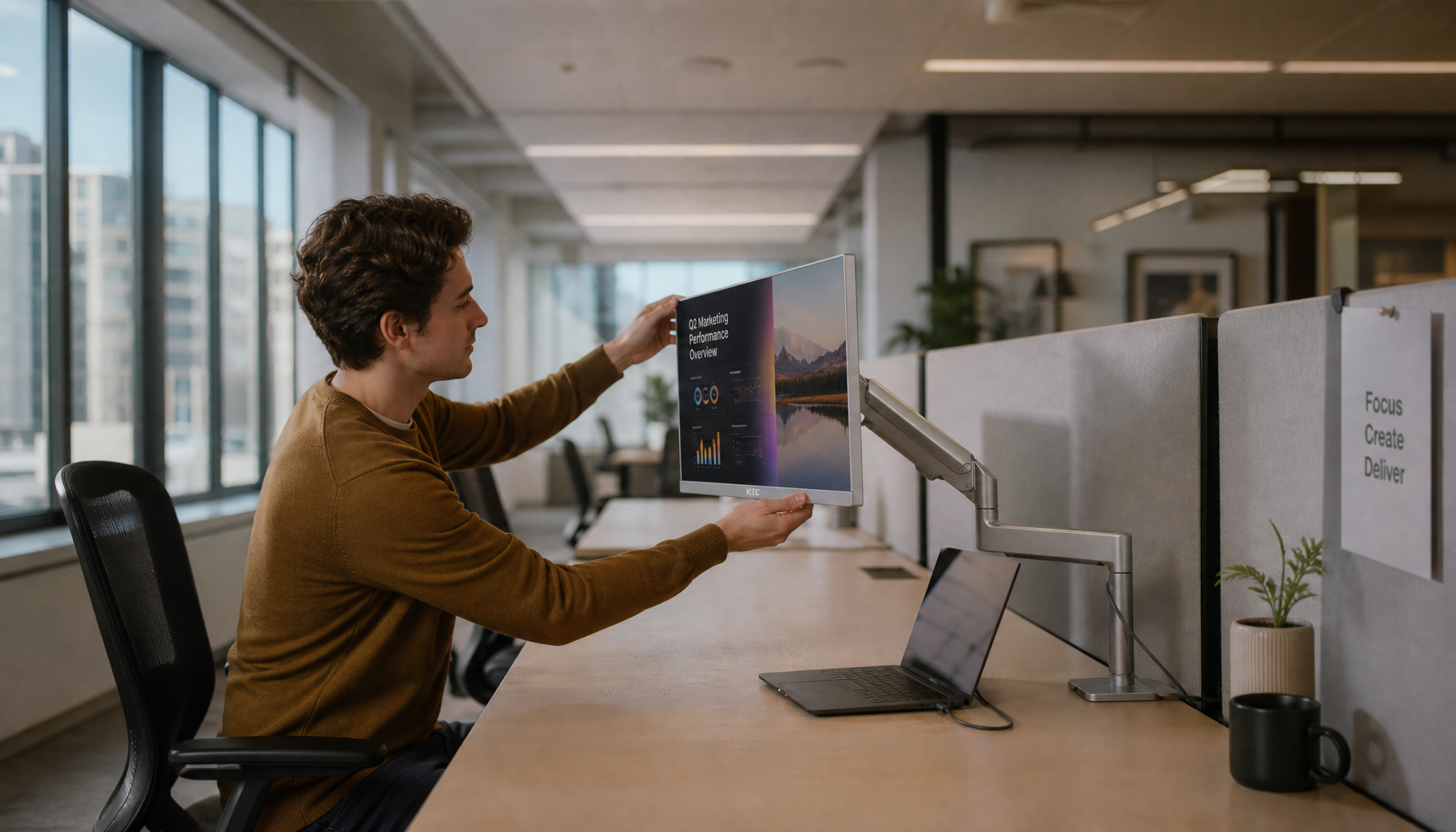
Remove a lightweight fixed monitor alone only if you can fully support it while reaching the release point. If the display is a curved ultrawide, sits on an articulating arm, or extends well away from the wall, use a second person. The wall arm may be rated for the load, but the real risk during removal is torque and control, not just static weight.

That is even more relevant when the arm is mounted to drywall or a light-duty anchor setup. Community discussions on drywall mounting repeatedly warn that articulated arms increase outward pull on the wall when extended, making removal more sensitive than the original “weight rating” might suggest, especially on older walls or between-stud installations in this mounting discussion.
Remove the Monitor Without Twisting the Panel
Support the display from the lower sides or bottom edge, not from the center of the screen. LCD and LED-backlit monitors can be damaged by direct pressure, and curved panels are less forgiving if you press on the face to steady them. The safest grip is firm enough to control the monitor but wide enough to avoid flexing the chassis.

Step-by-step removal checklist
- Turn off the monitor and disconnect every cable at the back and wall side.
- Place padding on a nearby surface before you loosen the first fastener.
- Check for a release latch, locking screw, or slide-up bracket at the mounting plate.
- Support the monitor with both hands, or have a second person carry the load.
- Loosen the safety screw or trigger the release while keeping the monitor level.
- Lift or slide the monitor free in the bracket’s intended direction, then set it face-up or on original foam.
- Remove the wall bracket only after the display is safely off the mount.
If the monitor has trim, tabs, or a hidden adapter
Some monitors do not expose the mounting plate directly. A teardown-style example from a support forum shows why patience matters: plastic faceplate tabs can snap, and moving the panel farther than necessary can strain ribbon cables. If your monitor requires trim removal to reach the stand or mount area, work with the screen face-up, open only what you need, and never pry harder just because a tab has not released yet.
If the display was installed with a detachable mounting adapter, remove only the adapter screws you actually need. Do not dismantle the monitor body unless the manufacturer’s design requires it. For most modern gaming and office displays, the safe move is to separate the screen from the mount, not to open the monitor itself.
Take Down the Wall Hardware With the Least Damage
Once the monitor is off, you can judge whether the wall bracket should stay, move, or come down. If you plan to reuse the location for another monitor, leaving a solid wall plate in place may avoid unnecessary drywall wear. If you are changing to a different arm, especially for a heavier ultrawide or a future dual-monitor setup, this is the moment to inspect the existing anchors and wall condition.
Stud-mounted brackets vs. drywall anchors
Many monitor-arm listings and community answers say drywall-only installation is not the preferred method for articulating arms. One a retailer Q&A entry describes a single-stud or solid-concrete requirement, and a a tech forum thread highlights the same caution for two 34-inch gaming monitors from a brand. That does not change the removal steps, but it does tell you to expect patching if the old setup used anchors in drywall.
If the bracket is in metal studs, finer-thread sheet metal screws are more appropriate than coarse lag screws. A home improvement forum answer on a light 28-inch monitor recommends a screw around 3/16 in. and a pilot hole if the screw is not self-drilling, which is useful context when you are backing hardware out cleanly and deciding what to reinstall later on the same wall in this metal-stud mounting answer.
Quick comparison of common removal situations
Situation |
Main risk during removal |
Best handling choice |
Wall follow-up |
Fixed mounting plate on a 24- to 27-inch monitor |
Missing a locking screw or lift direction |
One person can often remove it if the screen stays close to the wall |
Patch only if removing the bracket |
Articulating arm on a 27- to 32-inch gaming monitor |
Sudden swing or outward pull while disengaging |
Two hands on the chassis, second person preferred if extended |
Inspect anchors or stud screws before remounting |
34-inch curved ultrawide |
Panel flex and leverage on the arm |
Two-person removal with a padded landing area |
Consider a stronger mount or stud-spanning solution |
Drywall-anchor installation |
Anchor tear-out or chipped drywall around the plate |
Remove the monitor first, then bracket slowly and evenly |
Fill holes, sand flush, and repaint if not reusing |
Quick-release mounting plate |
Releasing the latch without full support |
One person can manage lighter screens if the plate is truly detachable |
Keep the plate hardware labeled for reuse |
Patch the Wall and Protect the Monitor for What Comes Next
After the bracket is down, remove loose dust, torn paper edges, and any anchor fragments before filling the holes. Small screw holes usually need only lightweight filler, while blown-out anchor holes may need a patch compound applied in thin passes. Let it dry, sand lightly, and touch up paint only after the surface is flat.
Smart next steps if you plan to remount or upgrade
If you are upgrading to a larger gaming monitor, a 34-inch ultrawide, or a higher-refresh-rate display with a heavier stand-off arm, now is the time to check the next monitor’s mounting pattern, weight without the stand, and arm extension. One marketplace Q&A on wall hardware from a brand describes how spreading the load across a track or a multi-point bracket helped 16 installations stay secure for about two years, while other answers still recommended studs for arms with more extension and pressure on the wall in this wall-mounting discussion.
Store the removed monitor face-up when possible, or face-down only on clean original foam if the manufacturer’s setup method allows it. That is the safer habit for thin or curved panels than setting the screen on a random towel and hoping the pressure is even.
FAQ
Q: Can I remove a wall-mounted gaming monitor by myself?
A: Yes, if it is a lighter monitor on a simple fixed plate and you can support the full weight while reaching the release. For articulating arms, curved screens, or ultrawides, a second person is the safer choice.
Q: What is the easiest way to avoid scratching the screen during removal?
A: Disconnect the cables first, move the monitor straight off the bracket without twisting, and set it on original packing foam or a clean padded surface. Do not press on the center of the panel to steady it.
Q: Should I remove the wall mount or leave it in place?
A: Leave it only if you are certain the location, load rating, and hardware still match the next monitor. If you are switching to a different arm style or a heavier display, removing the bracket and inspecting the wall is usually the better long-term choice.
Final Takeaway
The safest monitor removal is boring on purpose: identify the mount, support the screen before release, and separate the display from the wall hardware in two stages. That approach protects both the panel and the drywall.
For most standard monitors, the job is straightforward once you confirm the mounting plate and release direction. For curved ultrawides, high-refresh-rate gaming displays on articulating arms, or any setup mounted in drywall, slow down, use a second person, and treat the wall hardware as a separate repair decision rather than an afterthought.
References
- Monitor mount standard
- Mounting to drywall and metal studs discussion
- Monitor stand and faceplate removal example
- Wall-mount process example
- Ultrawide monitor mounting discussion
- Between-studs and anchor discussion
- Drywall concerns for dual 34-inch gaming monitors
- Accessing hidden mounting points
- Single-stud wall arm requirements
- Wall mounting Q&A