Set a vertical monitor so your main reading area sits slightly below eye level, not with the top edge high above your gaze. Keep it centered, about an arm’s length away, tilted slightly back, and sized so you can read without lifting your chin.
Does your neck tighten after reading a long report on a portrait display, even though the setup looked cleaner on your desk? A properly lowered vertical monitor can give you the page-like view you wanted while keeping your eyes moving more than your neck. Here is a practical setup method for reading, editing, coding, and reference work without craning upward.
Why Vertical Monitors Feel Great Until the Height Is Wrong
A vertical monitor, also called a portrait monitor, is a standard display rotated 90 degrees so it is taller than it is wide. The advantage is obvious the first time you open a document, article, manuscript, code file, chat log, or research page: you see more vertical content at once and scroll less.
The catch is that a vertical display is tall. If you apply the usual “top of screen at eye level” rule too literally, a 27-inch portrait monitor can push a large amount of readable content above your natural gaze. That turns reading into repeated chin lifts, especially when the toolbar, browser tabs, or document title bar sits near the top.
Good monitor positioning is about matching the screen to your eyes, head, neck, torso, and seated posture. Office ergonomics treats the workstation as something that should fit the worker, and monitor positioning is a core part of reducing physical stress during long computer sessions.
The Best Height for Reading on a Vertical Monitor
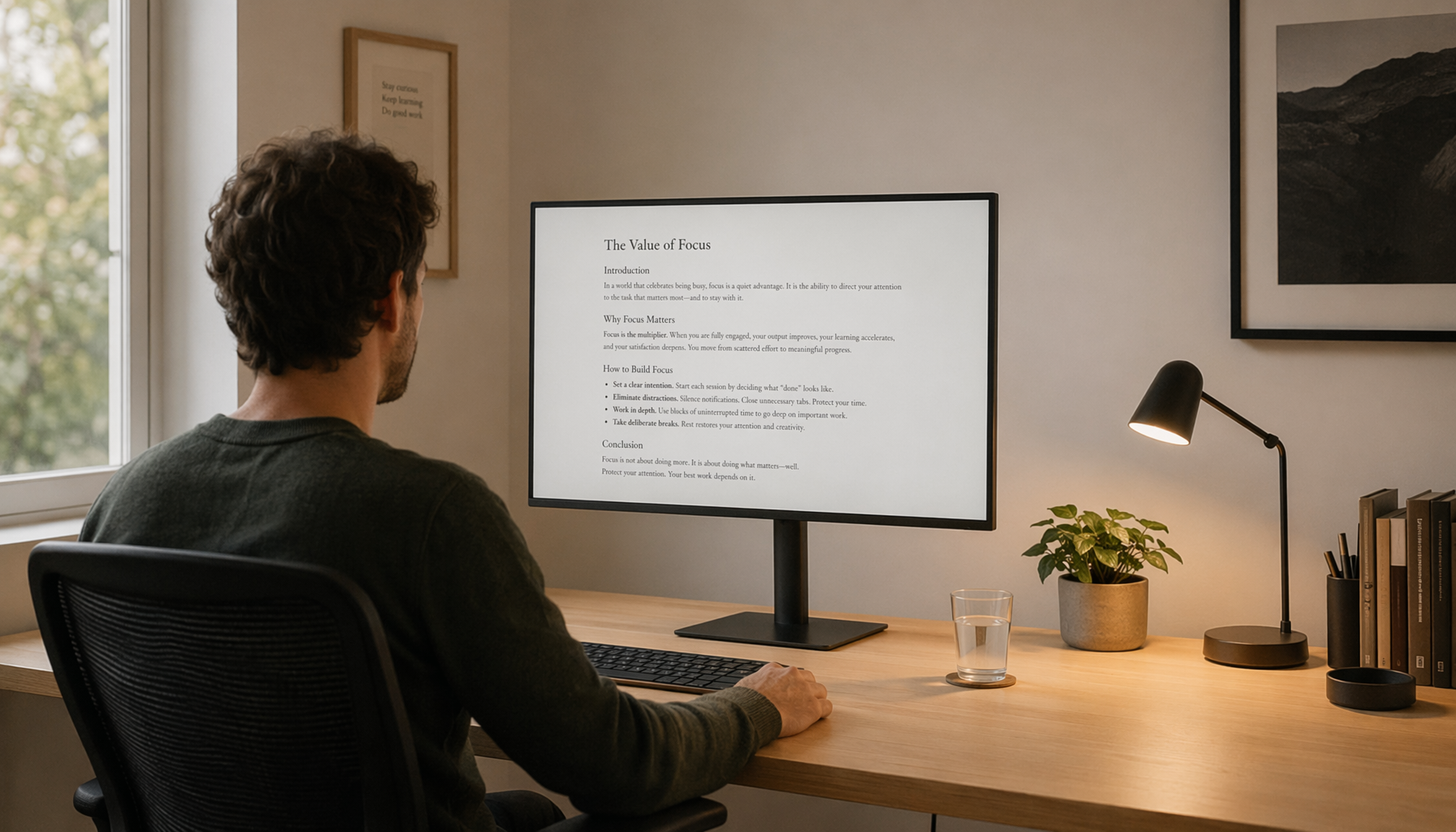
For a vertical monitor used mainly for reading, place the middle third of the screen in your natural line of sight. In plain terms, sit upright, relax your shoulders, look forward, and let your eyes settle slightly downward. The paragraph you read most often should live there.

General ergonomic advice often says the top of a monitor should be at or slightly below eye level, but portrait orientation needs a more careful interpretation. The goal is not to make the tallest part of the monitor the reference point; the goal is to keep the active content where your eyes can scan without your neck extending. A slightly downward gaze is consistent with ergonomic advice that places the center of the screen below eye level rather than above it.
A simple field test works better than measuring every inch. Sit fully back in your chair, place your feet flat, close your eyes for a moment, then open them. Your gaze should land around the upper-middle area of the readable page, not at the top bezel and not in the lower half. If your eyes land below the main paragraph and you need to look up to read headings, lower the monitor.
A Practical Example
If you use a 27-inch monitor in portrait mode, do not treat the top edge like a trophy line. Start with the top third near eye height and the center of your document slightly below eye height. Then open a long article at your normal zoom level. If you keep lifting your chin to read the first few lines after each scroll, the display is too high or the text block is positioned too high in the window.
For reading-heavy work, it is often better to lower the screen slightly and increase text size than to raise the monitor to show more content. More visible lines are only valuable if your body can read them comfortably.
Distance, Tilt, and Text Size Matter as Much as Height
A vertical monitor should usually sit about an arm’s length away. For many desks, that means roughly 20 to 30 inches from your eyes, adjusted for screen size, resolution, and your vision. One ergonomics resource recommends computer screens around 20 to 30 inches from the eyes, with posture stacked so the ears, shoulders, hips, and spine stay aligned.

Distance changes how much of the tall screen you can absorb without head movement. Too close, and the top and bottom of the display feel like separate zones. Too far, and you may lean forward or squint. For a 24-inch portrait display, arm’s length usually feels controlled. For a 27-inch portrait display, push it a bit farther back if your desk allows it, then raise text size until reading feels relaxed.
Tilt helps too. A slight backward tilt can reduce glare and make the panel face your eyes more evenly. Vertical monitors often catch overhead light differently than landscape screens, so check the top half of the panel for reflections. If you find yourself raising your chin to see past glare, the problem may be lighting rather than height.
Setup Variable |
Good Starting Point |
What to Watch For |
Height |
Main reading area slightly below eye level |
Chin lifting or forehead tension |
Distance |
About 20 to 30 inches |
Leaning forward or squinting |
Tilt |
Slightly backward |
Glare across the upper screen |
Text size |
Large enough to read while seated back |
Moving closer instead of zooming |
Keep the Vertical Monitor Centered for Serious Reading
If the vertical screen is your primary reading display, center it with your body and keyboard. Do not center it on the desk if your chair, keyboard, and torso are actually offset. Your natural forward gaze should meet the centerline of the reading task.
This matters because off-center screens turn a reading session into a neck-rotation session. Multi-monitor guidance generally keeps the primary display directly in front, with secondary screens nearby and angled inward; primary monitor placement should follow the seated body position, not the furniture layout.
If your portrait monitor is secondary, use it for reference, chat, documentation, outlines, or notes. For a five-second glance, a side position is fine. For 20 minutes of reading, turn your chair and torso toward it or drag the document to the centered screen. Neck comfort is often won by this small workflow habit.
The Right Hardware Makes the Setup Repeatable
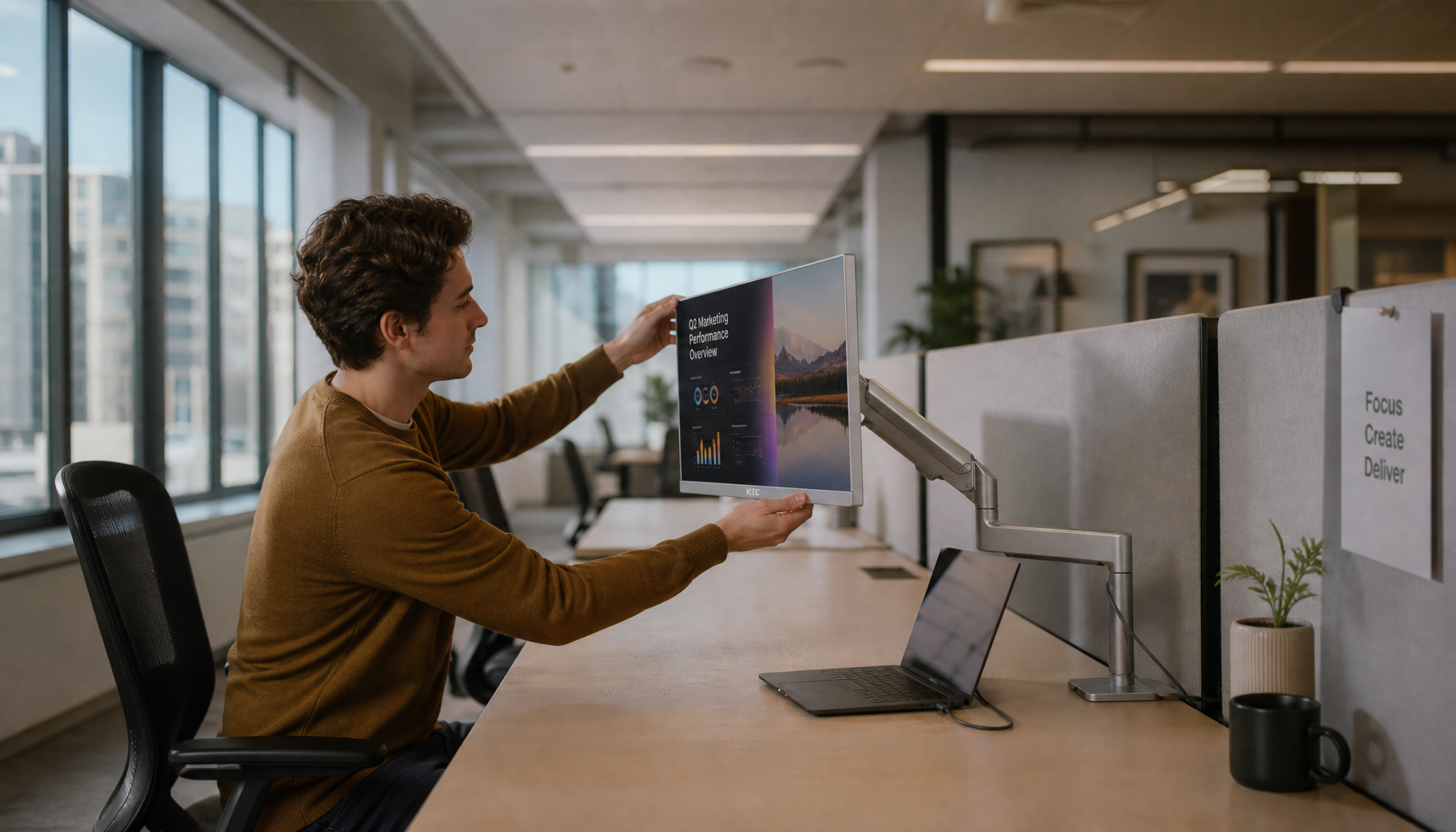
A pivot-capable stand can work, but a monitor arm is usually better for portrait reading because it gives you height, depth, tilt, swivel, and rotation control. Before buying one, check mounting compatibility and weight capacity. A 27-inch display in portrait mode creates more leverage than the same monitor sitting low in landscape mode, so a weak arm may droop or wobble.

Vertical monitors are strongest for documents, code, long articles, legal review, dashboards, chat, and research. They are weaker for wide spreadsheets, timelines, video editing, design canvases, and most games. That is why a mixed setup often works best: a horizontal primary screen for wide work and a vertical companion for long-form reading.
The vertical format can reduce scrolling and keep context visible, but it can also increase upward neck strain if the monitor is too tall, too close, or treated like a landscape screen. The benefit is real only when the active content lives in your comfortable gaze zone.
Reading Comfort Is Also an Eye Strategy
Neck strain and eye strain often appear together. When text is too small, people lean in. When glare is strong, they tilt the head. When the screen is too bright compared with the room, they squint or tense their shoulders.

Use ambient lighting that does not reflect directly off the screen, and place strong window light to the side when possible. University ergonomic tips recommend the 20-20-20 rule: every 20 minutes, look 20 feet away for 20 seconds. For heavy reading days, that break is not a productivity tax; it helps keep your visual system from locking into one close-focus distance.
Progressive or bifocal lens users need extra care. A monitor that is comfortable for someone with single-vision lenses may force a progressive lens user to tip the head back to find the right lens zone. Lower the display and tilt it slightly back until your eyes can read through the correct part of the lens while your chin stays level.
A Quick Fit Check Before You Call It Done
Your vertical monitor is probably positioned well if your shoulders stay relaxed, your chin stays level or slightly tucked, and your eyes do most of the scanning. You should not feel pressure at the base of the skull, tension between the shoulder blades, or a need to lean back just to read the top of the page.
Work for five minutes on a real document, then adjust one variable at a time. Lower the screen slightly if you look upward. Move it back if the top and bottom require head movement. Increase text size if you lean forward. Angle it inward if it sits beside your main display. Small changes beat heroic posture discipline.
FAQ
Is a 27-inch vertical monitor too tall for reading?
Not always, but it is less forgiving than a 24-inch model. A 27-inch portrait display can work well if it sits far enough back, the active reading area is below eye level, and the text is scaled comfortably. If your desk is shallow or your monitor arm cannot lower enough, a 24-inch display may feel better.
Should the top of a vertical monitor be at eye level?
For portrait reading, use that rule cautiously. The active reading zone matters more than the top bezel. If putting the top at eye level makes the main text sit high, lower the monitor until your eyes naturally land on the upper-middle reading area.
Is a curved monitor good in vertical mode?
Usually no. Curved displays are designed around horizontal viewing, and rotating one into portrait mode can make text columns feel visually awkward. For reading, editing, and code, a flat display is usually the cleaner choice.
A vertical monitor should feel like a sharper, faster reading surface, not a neck workout. Put the content where your eyes naturally rest, keep the display centered for serious reading, and let the hardware serve your posture instead of forcing your posture to serve the screen.