Your monitor brightness is matched when white screens feel about as bright as paper on your desk, dark details remain visible, and the display does not glow like a lamp in the room.
Start With the Paper Test
The fastest check is low-tech: open a blank white document, then place a sheet of white paper beside the monitor under your normal room lighting.

If the screen looks much brighter than the paper, lower the brightness. If the paper looks bright and the screen looks gray or dull, raise it. A practical calibration rule is that a monitor used for reading should not be brighter than a well-lit book.
This works because your eyes adapt to the whole scene, not just the panel. A 27-inch display at close range can feel harsh even when its spec sheet looks modest.
Match the Room, Not a Universal Number
There is no single perfect brightness setting. A 120-nit setup can be excellent in a controlled editing room and weak in a sunlit office. Display specialists often raise monitor luminance as ambient light rises, while color-critical users are usually better served by controlling the room instead of endlessly increasing brightness.
For photo, video, and design work, calibration discussions often place everyday editing around 80-120 nits, with brighter rooms requiring more. For office work, gaming, and web use, comfort and visibility matter more than hitting a lab target.
A reliable everyday target: your screen should be bright enough that text looks crisp, but not so bright that it lights up nearby walls, your keyboard, or papers.

Check Black Detail and White Detail
Brightness matching is not only about comfort. It also affects what you can see.
Open a dark image, a near-black gradient, or a monitor test pattern. You should see subtle dark steps without black areas turning into flat blobs. Then check a bright image with clouds, snow, or a white shirt. You should still see texture, not a blown-out white patch.

Basic calibration focuses on three controls: brightness, contrast, and color balance. Good contrast keeps bright areas punchy without clipping, while proper brightness keeps blacks deep without hiding shadow detail; basic adjustments can fix many washed-out or unclear displays without special gear.
For gaming, this matters in real play. A screen that is too dim in a bright room can hide enemies in shadows. A screen that is too bright at night can flatten contrast and fatigue your eyes before the match is over.
Adjust for Day, Night, and Task
Your best setting may need two profiles: one for daytime productivity and one for evening focus. A monitor beside a window at 10:00 AM is in a different environment than the same monitor under a desk lamp at 9:00 PM.

Quick setup:
- Daylight office: raise brightness until white looks clean, not gray.
- Dim room: lower brightness until the screen stops glowing into the room.
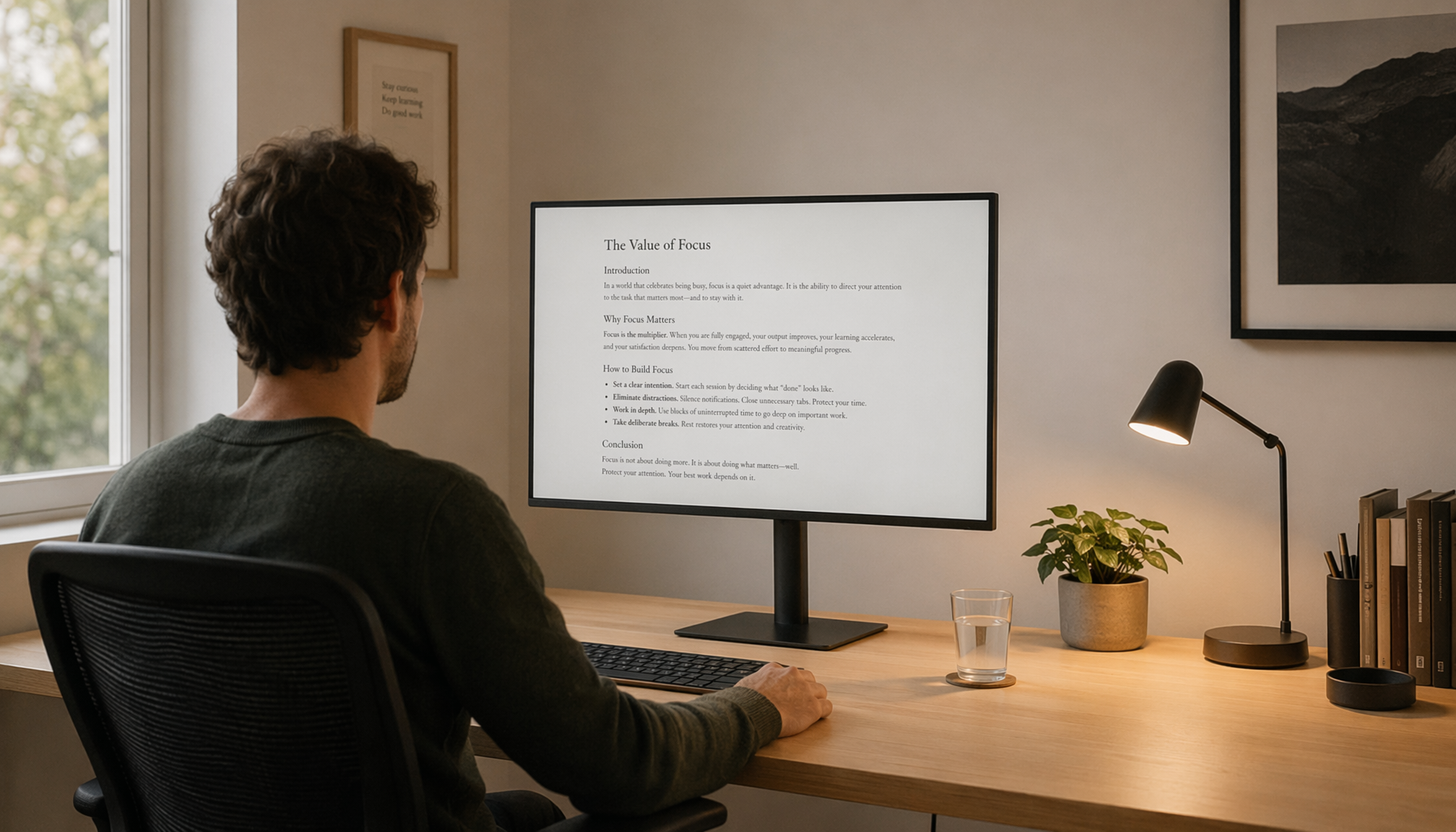
- Long writing sessions: favor paper-like whites and larger text.
- HDR gaming: use HDR settings separately from desktop brightness.
- Color work: keep room lighting stable before judging edits.
HDR peak brightness is useful for highlights, but it does not replace a comfortable SDR desktop setting for email, spreadsheets, and reading.
Watch for Signs of Mismatch
If your eyes feel tired after 20 minutes of reading, brightness may be fighting the room. Glare, reflections, small text, and posture can also contribute, so treat brightness as one part of the full setup.
Common warning signs include headaches, watery or dry eyes, washed-out blacks, dull whites, and frequent manual adjustments. Balanced ambient lighting helps reduce harsh contrast between the screen and surroundings, which can reduce visual fatigue during long sessions.
For the final pass, sit at your normal distance, use your real work apps, and give your eyes a minute to adapt. The right setting should disappear: sharp enough for performance, calm enough for all-day work, and stable enough that you stop thinking about the screen.