Yes. Colored walls can shift how your eyes judge display color, especially in dim rooms, glossy spaces, and projector setups where wall reflections bounce back into the viewing area.
Does your monitor look perfectly tuned at noon, then strangely warm, cool, or washed out at night? A simple room check can help you separate real display problems from color pollution caused by nearby walls, lighting, and reflective surfaces. You’ll learn how wall color affects perceived accuracy and how to set up a room that lets your screen perform as intended.
Why Wall Color Changes What You Think You See
A display produces its own light, but your eyes do not judge that light in isolation. They compare it with the surrounding room. A saturated red wall beside your monitor can make neutral grays feel slightly greenish. A deep blue wall behind the screen can make whites feel warmer than they are. A yellow wall can make a calibrated display seem cooler or duller by contrast.
Interior design treats color, texture, space, and lighting as connected elements because they shape how a room functions and feels, not just how it looks core design elements. For display users, that means the wall is part of the viewing system. It becomes a passive color reference your brain uses while judging skin tones, product photos, spreadsheets, game worlds, and video footage.
This matters most when you care about color decisions. If you edit photos, approve graphics, tune a gaming monitor, compare product renders, or work across multiple screens, a strong wall color can make a good display look wrong. The display may still be accurate; the room may be misleading you.
The Display Accuracy Problem: Your Room Becomes a Color Filter
Color accuracy means the screen is showing colors close to an intended standard or reference. In practical terms, neutral gray should look neutral, white should not look pink or green, and a product image should not shift because of its surroundings.
The printing world handles this with controlled workflows: monitor calibration, color profiles, proofs, material testing, and viewing conditions all affect the final result controlled workflows. The same thinking applies to displays. You can buy a wide-gamut monitor, run a calibration device, and still make poor visual judgments if the room around the screen is strongly tinted.
A real-world example is simple. Put a laptop on a white desk in front of a soft gray wall, then move it in front of a bright orange accent wall. The screen output has not changed, but your perception of white balance can. In an office setup, this can make charts, UI design, and document backgrounds feel inconsistent. In a gaming setup, it can reduce confidence when adjusting HDR, black levels, saturation, or color temperature.

Which Wall Colors Cause the Most Trouble?
Strongly colored walls create the highest risk because they compete with the screen. Red, orange, yellow, green, blue, and purple can all bias perception when they sit directly behind or beside the display. The effect grows when the wall is close, bright, glossy, or lit by lamps.
Color psychology sources often recommend warm tones for energy and cool tones for calm, which can be useful for comfort and mood warm tones and cool tones. That design value is real, but it does not automatically make those colors ideal near a color-critical screen. A bright yellow office may feel lively, yet it can be a poor background for judging neutral whites. A navy gaming wall may look immersive, yet it can make shadow detail feel heavier than it is.
Wall Choice |
Color Accuracy Risk |
Best Use Near Displays |
Neutral gray |
Low |
Best all-around choice for editing, gaming, and work |
Soft off-white |
Low to medium |
Good for productivity, but can reflect more ambient light |
Beige or cream |
Medium |
Comfortable, but may make whites feel cooler or cleaner than reality |
Saturated warm colors |
High |
Better as side accents away from the screen |
Saturated cool colors |
High |
Better behind seating or on distant walls |
Very dark colors |
Medium to high |
Good for immersion, but can reduce perceived brightness |
Monitor Setups: What to Paint Behind and Around the Screen
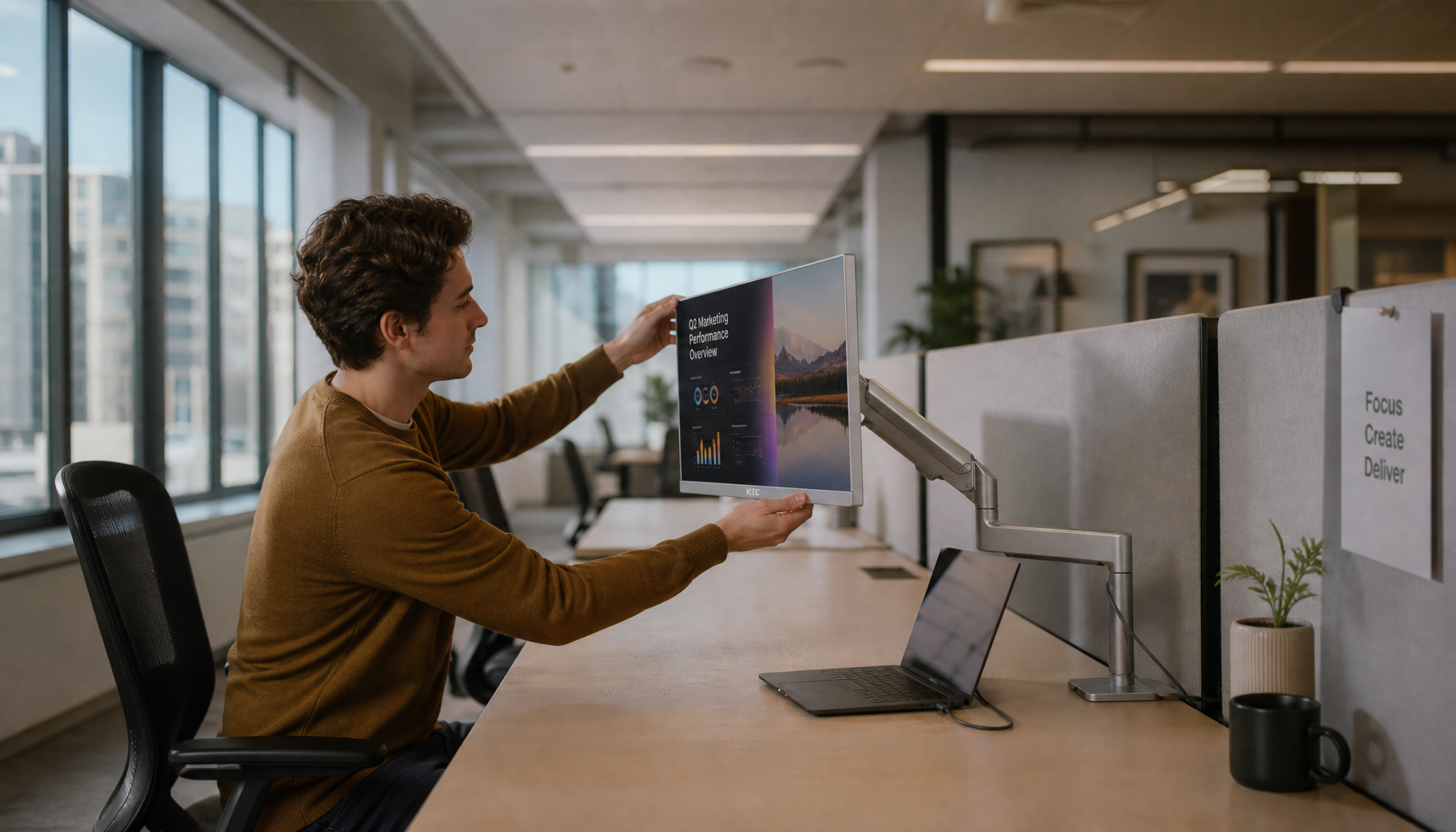
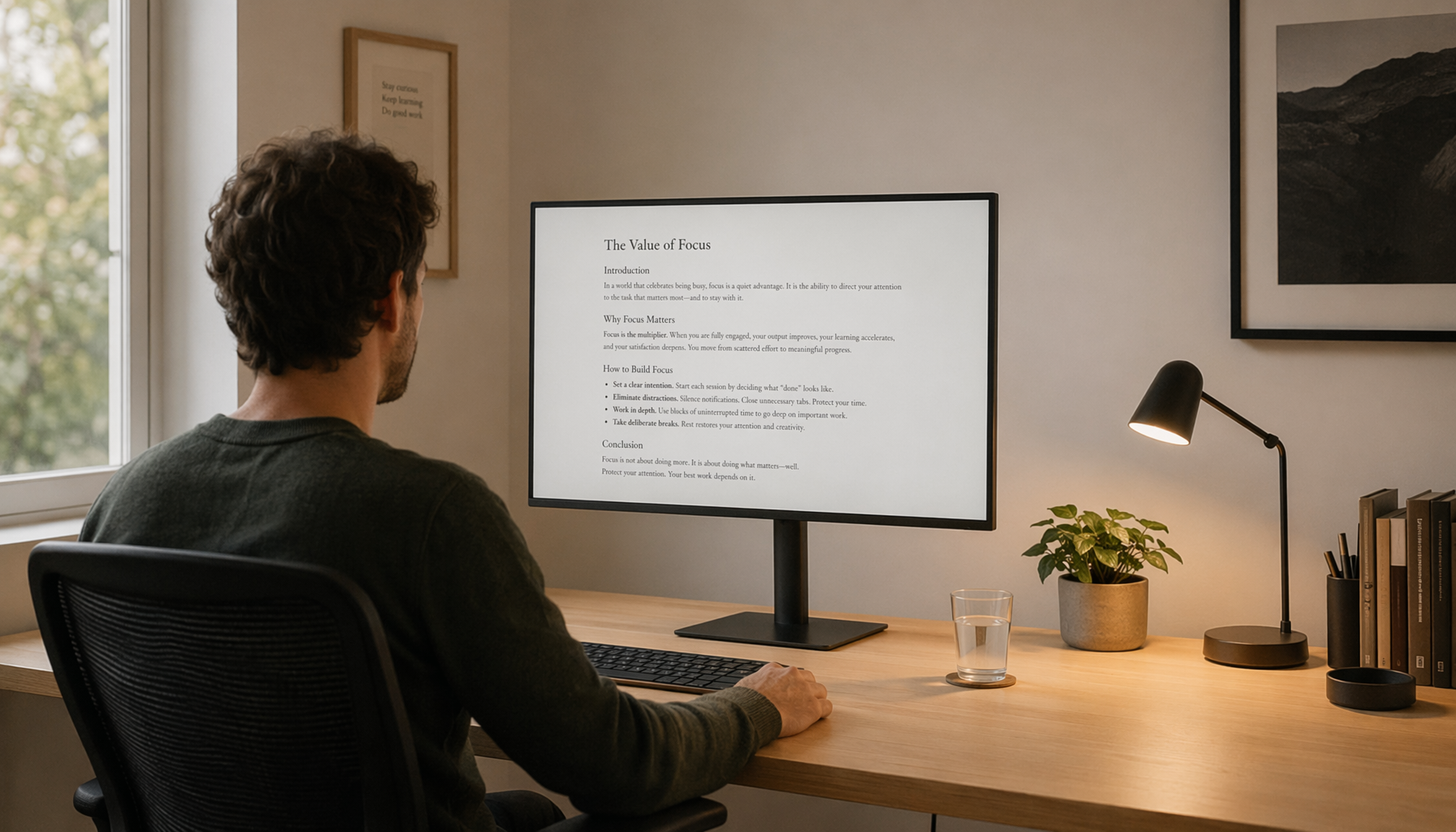
For most monitor users, the safest wall behind the display is matte neutral gray or quiet off-white. Matte finish matters because glossy paint reflects more light and color back toward your eyes. A neutral wall gives your vision a stable reference, especially when comparing whites, grays, and skin tones.

Interior design planning starts with foundational elements such as walls, flooring, and lighting before smaller decorative choices foundational elements. For a serious workstation, treat the wall behind the monitor as foundational. It should support the screen, not compete with it.
If you want color in the room, place it where it does not frame the display. A green bookshelf wall behind you is usually less disruptive than a green wall directly behind the monitor. A warm accent wall on the side can work if it is not brightly lit and does not reflect onto the panel. For a dual-monitor office, keep the immediate background consistent across both screens so one display does not appear cooler or warmer just because of the wall behind it.
Projectors and Portable Smart Screens: Wall Color Matters Even More
Projectors are more sensitive than monitors because the wall or screen surface is part of the image. A projector does not create “white” by itself in the same way a monitor does; it sends light to a surface, and that surface reflects the image back. A colored wall can tint the projected picture and reduce accuracy a colored wall.

That is why projection users usually discuss white, gray, or black screen surfaces rather than blue, brown, or green walls. A brown wall can show an image, but it will contaminate the color. A dark wall can also make the image look dimmer, especially if the projector is not bright enough. Color correction features can help, but they are a workaround, not a substitute for a neutral projection surface.
Portable smart screens sit between monitors and projectors. If the device has its own panel, treat it like a monitor and control the background. If it projects onto a wall, treat the wall like a screen. In a bedroom, dorm, or small apartment, a neutral removable screen or neutral painted panel can deliver a bigger improvement than chasing another settings preset.
Lighting Is the Multiplier
Wall color becomes more influential when lighting is uncontrolled. Daylight, overhead LEDs, desk lamps, RGB strips, and reflected screen light all change how the wall behaves. The same paint can look different in morning sun, late-afternoon shade, and warm evening light.
Paint testing sources emphasize evaluating color in real room conditions because placement, surface, and context affect appearance real room conditions. Apply that same method to your display environment. Look at the screen during the hours you actually work or play. If your monitor only looks “off” when a warm lamp hits a colored wall, the lamp-wall combination may be the culprit.
A practical check takes five minutes. Open a neutral gray image and a white document on your display. Turn off decorative lighting. Then turn lights back on one at a time. If the screen seems to shift as each light hits the wall, your perception is being influenced by the room.

Pros and Cons of Colored Walls in Display Rooms
Colored walls are not automatically bad. They can make a setup feel personal, cinematic, and energizing. A deep wall color can reduce distractions in a gaming room. A warm office color can make a long workday feel less sterile. Good interior design balances mood, function, proportion, and light, rather than treating color as decoration alone.
The tradeoff is precision. The more saturated and reflective the wall, the less trustworthy your visual judgment becomes. For casual gaming, streaming, or general office work, that may be acceptable. For photo editing, design approval, print proofing, display reviews, or product color decisions, it is a real performance penalty.
The best compromise is controlled color placement. Keep the wall behind and immediately beside the display neutral. Use stronger color farther away, lower on the wall, behind seating, or in furnishings that can be moved. This keeps the room expressive without letting the room rewrite what the display is showing.
A Practical Room Setup for Better Color Accuracy
Start with the wall behind the screen. Choose matte neutral gray if accuracy is the priority, or soft neutral off-white if you want a brighter office feel. Avoid high-gloss finishes near the display. They create reflections and can bounce colored light back into your field of view.
Next, control the side walls. If your monitor sits in a corner, both nearby walls matter. A saturated side wall only a few feet from the screen can influence perception almost as much as the rear wall. If repainting is not possible, use a neutral curtain, acoustic panel, bookshelf backing, or large matte board behind the monitor.
Then check lighting. Use consistent bulbs in the room, avoid colored LEDs during color-sensitive work, and keep direct light off the screen. If you use bias lighting behind the monitor, choose neutral white rather than a dramatic RGB color. Immersion is valuable, but accuracy needs a stable reference.
Finally, calibrate after the room is reasonably controlled. Calibration is useful, but it cannot fix a bright red wall reflecting into your eyes. The room sets the stage; the calibration fine-tunes performance.
FAQ
Do colored walls physically change monitor output?
No. The panel still outputs the same signal. Colored walls change the viewing environment, so your eyes and brain interpret the screen differently.
Is a white wall always best?
Not always. White can be neutral, but it can also reflect a lot of ambient light. For color-focused work, matte neutral gray is often the more controlled choice.
Can monitor calibration solve wall color problems?
Calibration improves the display, but it does not remove color bias from your surroundings. For best results, combine calibration with neutral walls and controlled lighting.
What if I want a bold gaming room?
Use bold color away from the screen’s immediate background. Keep the display zone neutral, then build atmosphere with furniture, artwork, or lighting presets you can turn off when accuracy matters.
Final Word
Colored walls can affect how accurate colors appear on your display. For the most reliable setup, make the screen’s immediate environment matte, neutral, and consistently lit, then use stronger color where it adds personality without interfering with performance.