Disable touch at the operating-system level first, usually through Device Manager, then use the monitor’s on-screen menu or driver utility if the touch layer keeps waking back up. The best fix is one you can reverse quickly when you need touch for markup, sketching, or presentations.
Does your cursor jump mid-sentence because your palm, sleeve, or cable nudges a portable touchscreen while you type? In real multi-display setups, turning off touch can immediately stabilize typing, keep focus where it belongs, and reduce screen smudges without giving up the second-screen productivity you bought the display for. Here is the practical path to stop accidental taps and keep your portable monitor working like a controlled productivity panel.
Why Portable Touch Monitors Trigger Accidental Input
A portable touchscreen monitor is both a display and an input device, so the connected computer may treat a tap on the panel like a mouse click. That is powerful when you are annotating a slide or pinching into a design file, but it becomes disruptive when the monitor sits close to your laptop keyboard and your hand brushes the glass during typing.
Modern portable touch displays often use capacitive touch because it supports fast response and multi-touch gestures; projected capacitive touchscreens are known for clarity, gesture support, and accurate input. The tradeoff is sensitivity. A light touch that feels harmless can still move the cursor, select text, activate a button, or steal focus from your main document.
The problem is more common with compact desk setups. A 15.6-inch portable monitor, often considered the balanced size for travel and productivity, can sit only a few inches from your typing zone. Portable monitor sizes commonly run from 12 to 17 inches, and the popular middle range is large enough for real work but still close enough for accidental contact.
The Fastest PC Fix: Disable the HID Touch Device
On most PCs, the usual control point is Device Manager. Open the Power User menu with the logo key + X, choose Device Manager, expand Human Interface Devices, then look for HID-compliant touch screen. Right-click it, choose Disable device, confirm the prompt, and test by touching the portable monitor.

This works because the operating system commonly exposes the touch layer as a Human Interface Device, separate from the display signal. Your monitor can continue showing spreadsheets, chat, code, or reference material while ignoring finger input. If you use the portable screen as a typing-side dashboard, this is usually the cleanest mode: full visual value, zero accidental taps.
If you see multiple HID entries, disable one at a time and test after each change. Many USB-C monitor setups carry video, power, and touch data over one cable, while HDMI setups may use a second USB cable for touch. USB-C with DisplayPort Alt Mode is often preferred because one cable can carry video, power, and touch input data, but that convenience also means the touch device may appear automatically whenever you reconnect.
When the HID Touch Entry Is Missing
If HID-compliant touch screen is not visible, use Device Manager’s View menu and select Show hidden devices. If it still does not appear, the monitor may be using a vendor driver, a generic touchscreen entry, or a firmware-level touch setting instead of the standard operating-system label.
At that point, check the monitor maker’s utility and the display’s on-screen display menu. The most likely locations are System, Input, Advanced, Touch, or USB. Some portable monitors expose a simple touch toggle, while others only disable touch when the USB data connection is removed.
Use the Monitor Menu for a More Hardware-Like Disable
The operating-system method is convenient, but a monitor-level toggle is better when several computers share the same portable screen. If your display has physical buttons or a joystick, open the OSD and look for touch-related settings. A monitor-side disable can stop touch before the connected device interprets the input.

This is especially useful in shared desk or presentation setups. For example, if you carry one portable touchscreen between a work laptop and a personal laptop, an OSD setting prevents accidental touch on both machines without repeating Device Manager changes. It also reduces the chance that a driver update silently re-enables the touch layer.
The downside is speed. Some OSD menus bury touch control several levels deep, and not every portable monitor includes the option. If your display lacks a touch toggle, disconnecting the USB data path can be a practical substitute. With HDMI, that may mean unplugging the USB touch cable while leaving HDMI connected for video. With USB-C-only monitors, this may not be possible unless the device offers a menu setting.
Method |
Best For |
Main Advantage |
Main Tradeoff |
Device Manager |
Daily typing on one PC |
Quick and reversible |
May reset after driver changes |
Shared monitors and repeatable setups |
Works closer to the hardware |
Not available on every model |
|
HDMI plus USB setups |
Simple physical control |
USB-C single-cable setups may lose display or power |
|
Registry or policy setting |
Managed PC systems |
Persistent software control |
Higher risk and harder to reverse |
Other Operating Systems and Smart Portable Screens
Some desktop systems do not natively treat external touchscreens the same way PCs do, so touch support may depend on the monitor manufacturer’s companion software. That means disabling touch may also live inside that same software, not in a universal system setting.
For smart portable screens, look inside Settings, then areas such as Display, Input, or Accessibility. Some models call the setting Touchscreen, Enable touch, or Touch sensitivity. If the setting does not stay disabled after restart, check whether the monitor has a firmware update or a reset option, but back up any local files first if the smart screen stores data.
This is where buying decisions matter. Touchscreen portable monitors are widely sold with similar-looking claims, but compatibility varies by operating system, cable mode, and driver support. A monitor that feels plug-and-play on one computer may behave like a normal non-touch display on another unless the vendor provides working software.
When You Should Disable Touch and When You Should Keep It
Disable touch when the monitor is mainly a reference panel for writing, coding, spreadsheets, chat, dashboards, or browser research. In those layouts, typing accuracy matters more than direct interaction. A disabled touch layer also keeps fingerprints off the glass and reduces arm fatigue from reaching forward repeatedly.

Keep touch enabled when the monitor is doing work that benefits from direct manipulation. Touchscreen displays are useful for annotation, whiteboarding, document review, sketching, zooming, and quick edits. A designer marking up a layout or a project lead moving sticky notes gains more from touch than a writer drafting a long document.
The right answer can change by the hour. During a morning writing block, disable touch. During a client review, re-enable it for markup. During travel, disable it again if the monitor sits close to your keyboard on a narrow hotel desk.
Setup Tweaks That Prevent Accidental Touch Without Fully Disabling It
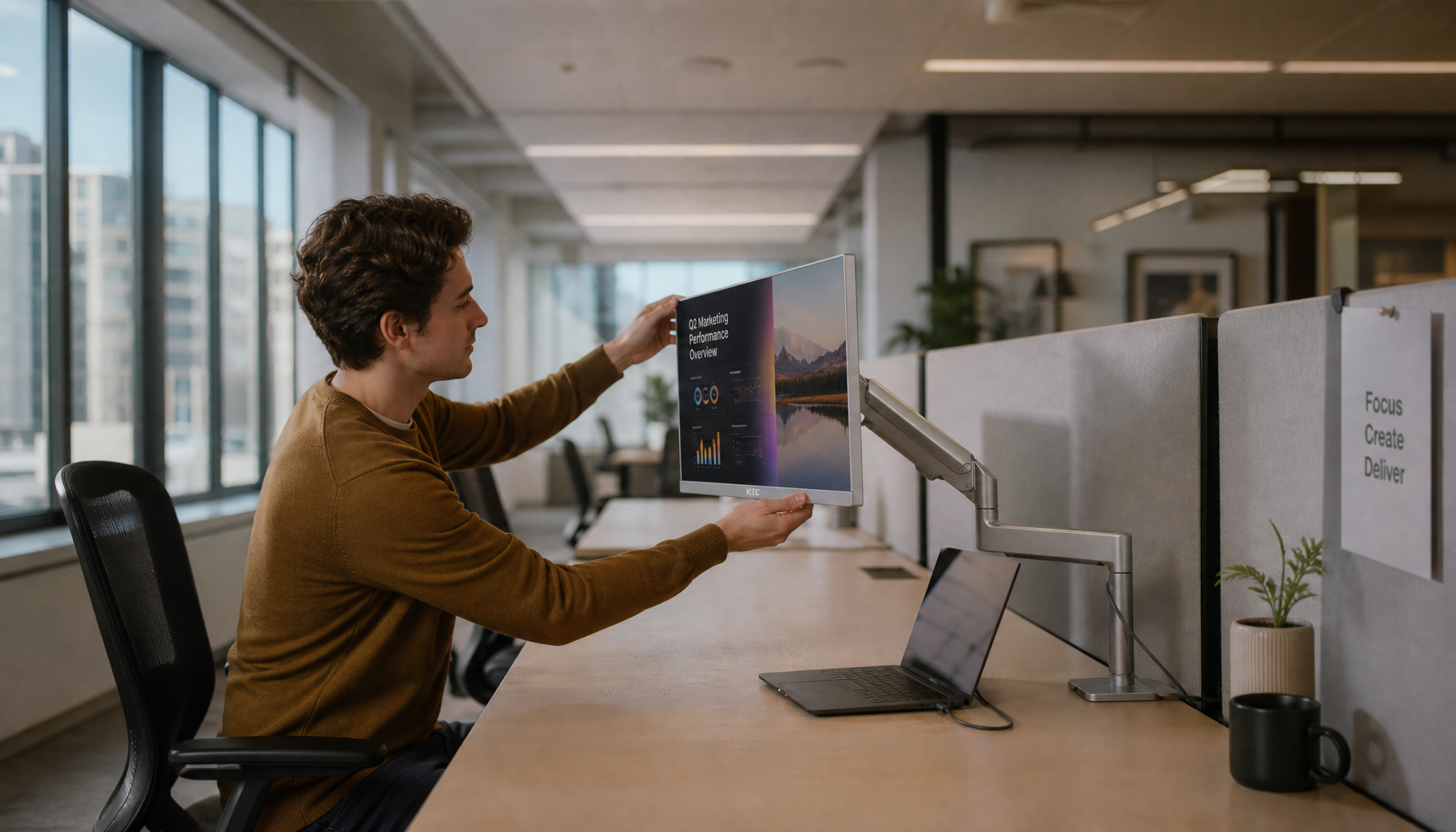
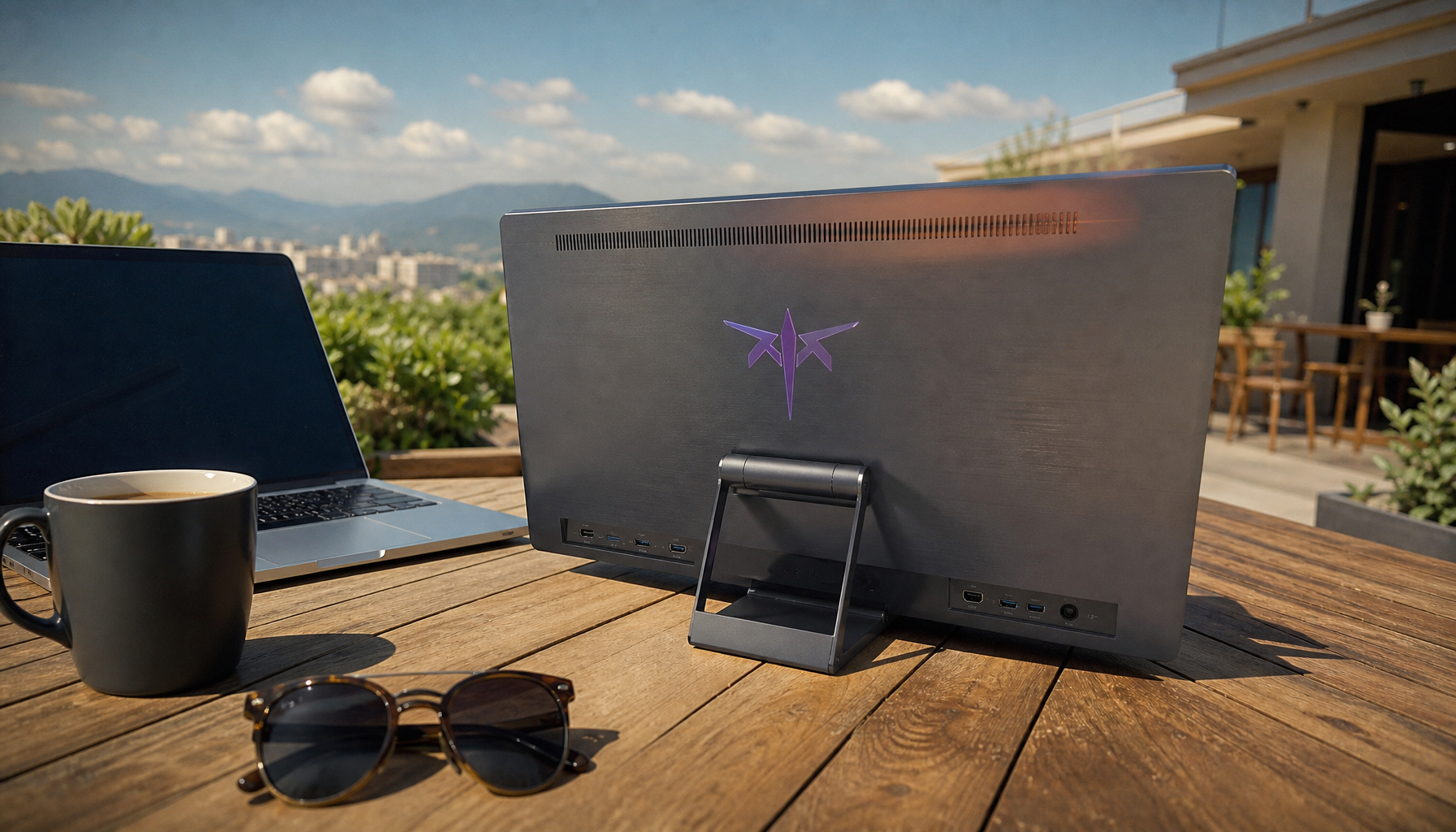
If you still want occasional touch, physical placement helps. Move the portable monitor a few inches farther from the keyboard, raise it on a stand, or angle it more upright so your hands do not cross the panel while typing. A stable kickstand matters because a screen that wobbles forward invites accidental contact.

Screen finish also affects the experience. Glossy panels can make color look vivid but show fingerprints quickly, while matte or anti-glare panels reduce reflections and feel more work-focused in bright rooms. Screen finish is not just a visual choice; it changes how often you notice touch marks during long typing sessions.
If touch input lands on the wrong screen after rotation or reconnecting, recalibrate through the operating system or vendor utility. Touch calibration maps the input layer to the correct display. Without it, a tap on the portable monitor may affect the laptop panel or another monitor, which feels like a random cursor problem even though the hardware is only misassigned.
Troubleshooting Persistent Touch Input
If touch returns after restart, the operating system may be reinstalling or re-enabling the HID device. Reopen Device Manager and confirm whether the same entry is enabled again. If it is, check for vendor software that manages the display, because that utility may be restoring the touch driver at startup.
If disabling one HID entry also affects another touchscreen, re-enable it and test a different entry. Multi-display systems can expose several input devices with similar names. The practical method is slow but reliable: change one setting, test the portable monitor, then label the result in your own setup notes.
If the touch layer disappears entirely when you only wanted it disabled temporarily, restart the PC, reconnect the cable, and confirm that the monitor still receives power and video. With USB-C portable monitors, one weak cable can cause confusing behavior because the same cable may be handling display, power, and touch data.
FAQ
Will disabling touch turn off the portable monitor display?
No. Disabling the touch device normally stops finger input only. The display should continue working as an extended or mirrored monitor as long as the video connection remains active.
Can I disable touch only while typing?
Most systems do not offer a universal “disable touch while typing on an external portable monitor” switch. The practical workflow is to disable the HID touch device before long typing sessions and re-enable it when you need annotation or gestures.
Is it better to buy a non-touch portable monitor?
If your work is mostly writing, spreadsheets, email, or coding, a non-touch portable monitor is often simpler and more cost-effective. If you present, annotate, sketch, review documents, or use creative tools, touch is worth keeping as long as you can disable it when precision typing matters.
Final Word
A portable touchscreen should expand control, not steal it. Treat touch as a mode: disable it for focused typing, enable it for hands-on review, and choose monitors with clear OSD controls, stable stands, and reliable USB-C behavior so the screen supports your workflow instead of interrupting it.