Set your fastest, sharpest monitor as the main display, connect it through the highest-bandwidth port, then verify native resolution, top refresh rate, scaling, and GPU control panel priority.
Does your game launch on the wrong screen, or does your premium 240Hz display feel no better than the spare office monitor beside it? A properly configured dual-display setup can give you smoother gameplay, cleaner window control, and more usable workspace, while dual displays have been associated with productivity gains as high as 42% in cited workstation research. Here is how to make the right screen lead every time.
What Monitor Priority Actually Controls
Monitor priority is the system’s decision about which display is treated as the main screen. It usually affects where the system menu, taskbar focus, login flow, full-screen apps, and many games appear first. In practice, it is the difference between your high-refresh gaming panel doing the heavy lifting and your secondary email monitor accidentally becoming the command center.
A dual-monitor setup can either duplicate the same image or extend the desktop across screens, and extending expands the desktop so each monitor can hold different content. For performance-minded users, Extend is usually the better mode because the primary display can run the game, editor, timeline, or trading dashboard while the second screen handles chat, notes, monitoring, or references.
The main display should usually be the monitor with the best combination of refresh rate, resolution, response behavior, panel quality, and physical position. A 27-inch 1440p 165Hz IPS monitor in the center of your desk should not be treated the same as a side-mounted 24-inch 1080p 60Hz display used for email.
Pick the Right Main Display Before Touching Settings
The best main monitor is not always the biggest one. For competitive gaming, a smaller 24-inch 1080p display can still make sense because it is easier to scan quickly, while a 27-inch monitor is usually stronger for 1440p work, immersive games, spreadsheets, editing, and multitasking. A 27-inch monitor is recommended for many mixed work and gaming setups because it pairs well with 1440p or 4K and gives more room for side-by-side windows.
If you use a 24-inch 1080p monitor beside a 32-inch 1440p screen, the 1440p panel has about 78% more pixels than 1080p. That extra workspace only becomes useful if the monitor is running at native 2560x1440 and display scaling is not making everything unnecessarily large. If the 1440p screen is set to a high scale value, windows may appear similar in physical size to the 1080p display, which is comfortable but reduces the workspace advantage.
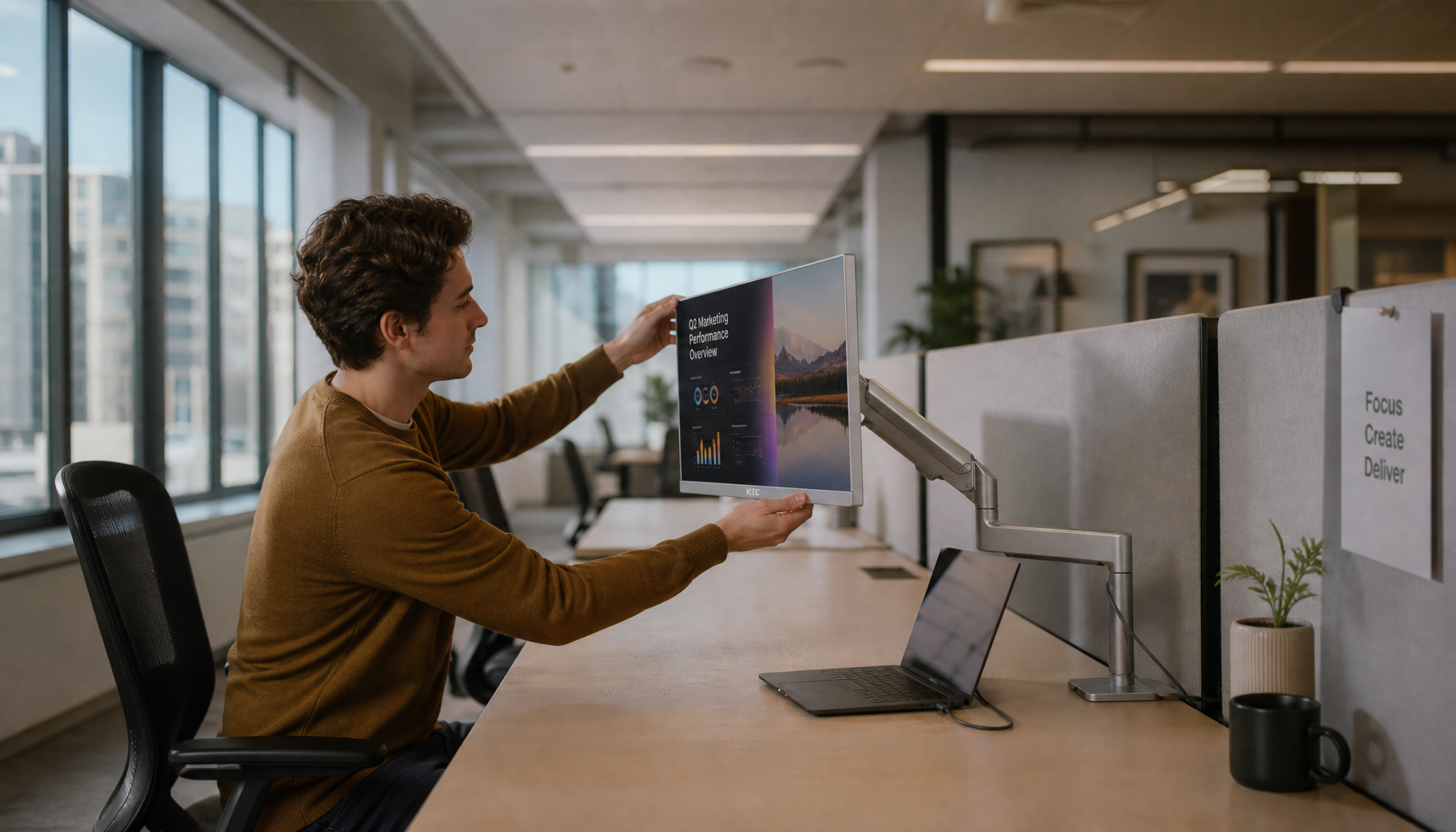
For productivity, the priority screen should sit directly in front of you. A programming or office setup works best when the main app lives in your natural focus, while reference material, chat, terminal output, dashboards, or documentation sit to the side. Dual monitors can reduce constant window switching, and dual-monitor setups can improve productivity when the physical layout and settings match the workflow.

Connect the Main Display to the Best Port
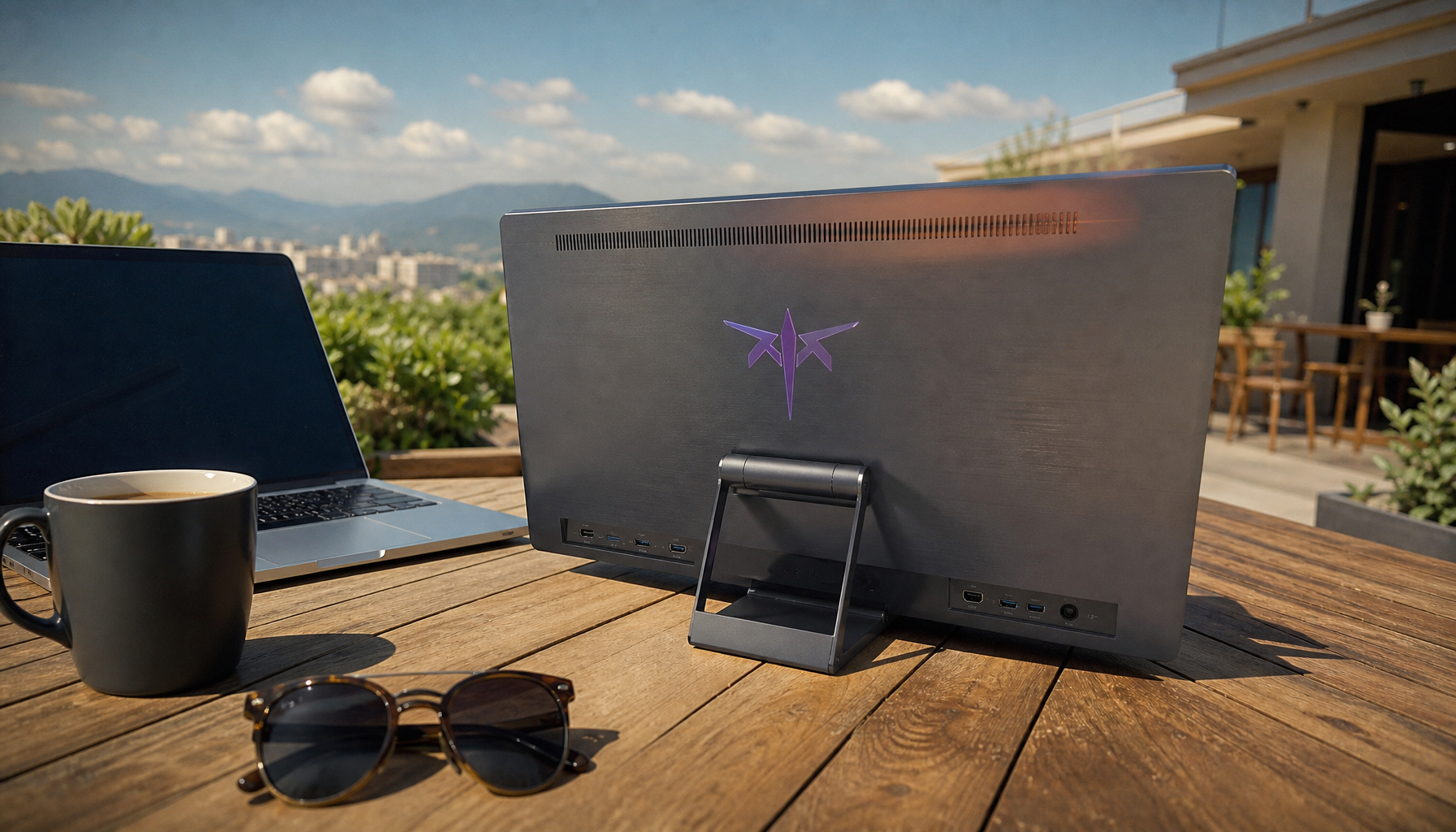
Performance priority starts at the cable. A high-refresh monitor connected through a limited HDMI port may be capped below its advertised refresh rate, while the same monitor on DisplayPort may expose the full setting. The safest practical rule is to connect your primary gaming or creative display directly to the GPU with the port that supports its full resolution and refresh rate.
Modern setups commonly use HDMI, DisplayPort, USB-C, DVI, or adapters, and matching video connection types matters because the computer and display must agree on a usable signal. If your 240Hz monitor only shows 60Hz or 120Hz in display settings, suspect the cable, port, dock, adapter, or GPU output before blaming the monitor.
Priority Choice |
Best Use |
Tradeoff |
DisplayPort to main monitor |
High-refresh gaming, 1440p, multi-monitor PCs |
Requires a compatible GPU and cable |
HDMI to main monitor |
Consoles, TVs, many office displays |
Some HDMI versions limit refresh or resolution |
USB-C dock |
Laptop productivity setups |
Dock bandwidth can limit refresh, resolution, or multiple displays |
Adapter chain |
Legacy displays or emergency setups |
More points of failure and possible signal limits |
For example, if your main display is a 1440p 240Hz monitor and your second screen is 1080p 60Hz, plug the 1440p monitor into the GPU’s strongest DisplayPort output first. Put the 1080p panel on HDMI or a secondary port. That physical priority often prevents the operating system and GPU software from making the wrong assumptions during boot or driver updates.
Set the Correct Primary Display
Open system Settings, go to System, then Display. Use Identify so the numbered boxes match the physical screens on your desk. Select the monitor you want as the main display, then enable Make this my main display. After that, drag the display boxes so their left, right, and vertical positions match reality.

This matters because mouse travel, window snapping, and app placement depend on that layout. If your monitors are side by side but the system thinks one is higher or reversed, the cursor may snag at screen edges or windows may open in irritating places. Aligning the tops of the displays is especially useful when two monitors are similar height; aligning centers may feel better when one display is much taller.
Set Multiple displays to Extend these displays for normal work and gaming. Duplicate is useful for presentations, but it wastes the advantage of a second screen because both displays show the same content. An extended desktop lets the main monitor run the demanding foreground task while the side screen holds lower-priority tools.
Give the Main Monitor Native Resolution and Top Refresh Rate
A monitor only performs like its spec sheet when the system is using the right mode. Select the main display, confirm its native resolution, then open Advanced display and choose the highest refresh rate it reliably supports. A 144Hz, 240Hz, or 360Hz monitor left at 60Hz is one of the most common performance losses in real setups.

Gaming settings should prioritize the highest supported value for refresh rate, with native resolution selected to avoid blur or scaling artifacts. For a 2560x1440 monitor, that means 2560x1440 rather than 1920x1080 unless you are intentionally lowering resolution for competitive frame rate.
Refresh rate and FPS are related but not identical. FPS is what the system renders; refresh rate is what the display can show. If your PC produces 200 FPS on a 60Hz monitor, the screen still updates only 60 times per second. If your PC produces 200 FPS on a 240Hz monitor, the display can show much more of that motion, assuming the game and settings support it.
Tune Scaling Without Giving Away Workspace
Scaling controls how large text, menus, apps, and windows appear. Resolution controls how many pixels are available. This distinction is critical when your main monitor has more pixels than the secondary display.
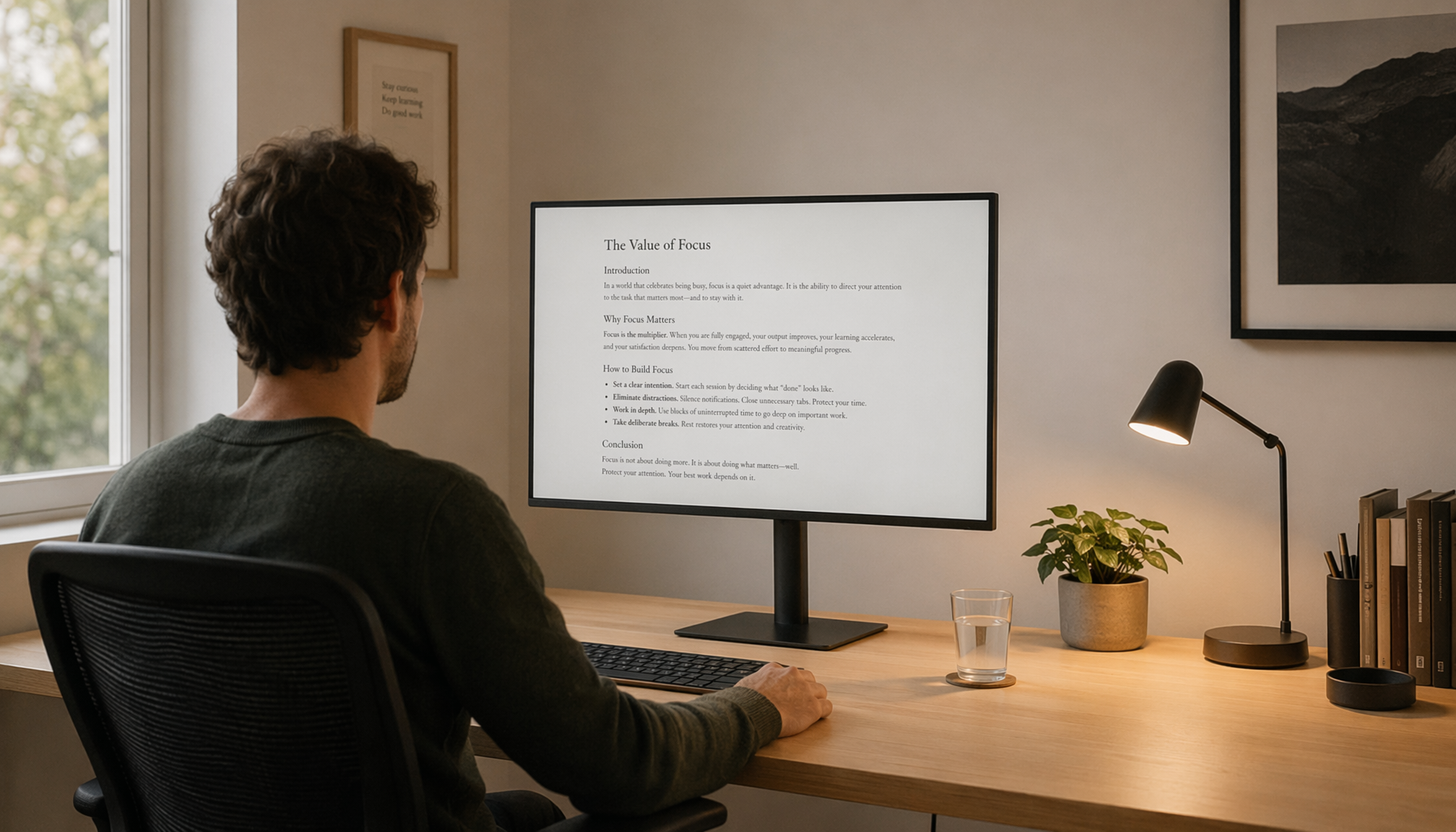
A 32-inch 1440p monitor at 100% scaling will usually show more workspace than the same monitor at 125% or 150%. That can be excellent for timelines, spreadsheets, coding panes, and browser-plus-document workflows. The downside is that text may become too small for some users, especially at deeper desk distances.
For 4K work displays, higher scaling can be practical because raw 4K at 100% often makes interface elements tiny. Some display-setting advice recommends 150% or higher for 4K work screens, while 1440p often lands comfortably at 100% or 125% depending on screen size and viewing distance. The right setting is the one that keeps text readable without wasting the pixels you paid for.
Use GPU Control Panel Settings When System Settings Are Not Enough
If games keep launching on the wrong monitor, check your GPU software. GPU control panels can influence display order, refresh rate, color depth, adaptive sync, and per-display behavior. This is especially important after driver updates, adding a dock, changing cables, or waking a laptop from sleep.
Enable variable refresh only on the display that supports it, and confirm the same feature is enabled in the monitor’s on-screen display menu. Variable refresh technologies synchronize the display with the GPU to reduce tearing, and VRR technologies generally help smooth motion when frame rates fluctuate. For esports players chasing the lowest possible latency, test adaptive sync both on and off in your specific game instead of assuming one universal winner.
Also review color format, bit depth, and dynamic range. A premium monitor can look washed out if the GPU is outputting the wrong range, or it can lose refresh options when set to a bandwidth-heavy color mode over a limited cable. If changing from 10-bit color to 8-bit unlocks your target refresh rate, the port bandwidth is likely the constraint.
Make the Secondary Display Useful, Not Competitive
The secondary monitor should support the main display, not compete with it. Keep browser tabs, chat, capture controls, email, spreadsheets, documentation, or system telemetry on the side screen. Avoid running unnecessary GPU-heavy video, animated wallpapers, or full-screen 3D previews on the secondary display while gaming or rendering on the primary screen.
Mixed monitors are workable, but matching size, resolution, and refresh rate reduces visual friction. If one screen is 1080p and the other is 1440p, tune scaling independently so dragging windows across displays feels predictable. If colors differ, use similar picture modes and brightness levels first before chasing advanced calibration.
Full calibration requires measurement gear, and calibration values are unique to each individual unit, so copying another user’s ICC profile is not a guaranteed fix. For most non-creator users, matching brightness, a neutral white point, and a sensible picture mode gets you close enough for daily work and gaming.
Balance Performance With Comfort
A fast main monitor still needs good positioning. Put the priority screen at eye level, centered, and at a comfortable distance. A 27-inch display generally needs more desk depth than a 24-inch monitor because it is physically wider and taller.

Brightness should follow the room. Gaming guides often recommend moderate brightness rather than maximum brightness, and brightness around 250 to 350 nits works for many gaming situations, with lower levels in dark rooms. Too much brightness can fatigue your eyes and wash out detail; too little can hide enemies, gridlines, or shadow detail.
Overdrive deserves the same restraint. Faster response modes can reduce ghosting, but extreme modes may create inverse ghosting or bright trails. Aggressive overdrive can cause overshoot, while weaker settings can increase blur. For a main gaming monitor, Normal or Fast is often the first setting to test before jumping to Extreme.
Quick Diagnostic Table
Symptom |
Likely Cause |
Practical Fix |
Game opens on side monitor |
Wrong primary display or GPU priority |
Set the main display in system settings, then check the GPU panel |
240Hz monitor shows 60Hz |
Cable, port, dock, or refresh setting |
Use the right port and choose top refresh in Advanced display |
1440p screen feels no roomier than 1080p |
Scaling is too high |
Lower scale on the 1440p monitor if text remains readable |
Cursor catches between screens |
Virtual layout does not match desk layout |
Reorder and align monitor boxes in Display settings |
Colors look wildly different |
Different panel types, modes, or brightness |
Match picture modes, brightness, and color temperature |
FAQ
Should my best monitor always be the main display?
Usually, yes. The main display should be the screen where responsiveness, clarity, and focus matter most. For a gamer, that is the high-refresh panel; for an editor, it may be the most color-consistent display; for an office power user, it is the monitor centered in the most comfortable viewing position.
Does a second monitor reduce gaming performance?
It can slightly increase GPU workload because the system has to drive more pixels, but a static desktop, chat window, or browser page usually has a modest impact. The bigger problem is letting video playback, capture previews, or other GPU-heavy tasks run on the secondary screen during competitive play.
Is 1440p better than 4K for a main monitor?
For many mixed gaming and productivity setups, 1440p is the practical sweet spot because it gives more workspace than 1080p without the heavier GPU demand of 4K. A 4K monitor is stronger for detailed creative work, but it often needs scaling, and scaling can reduce the workspace advantage if configured too large.
Final Word
Monitor priority is not one switch; it is a chain of choices. Put the best screen in the center, feed it with the best port, set it as primary, run native resolution and top refresh rate, then tune scaling so performance turns into usable space. When the display hierarchy is right, your main screen feels faster, cleaner, and more intentional every time you sit down.