High brightness feels better in the morning because your room is brighter, your eyes are adapted to more ambient light, and the monitor is not the only strong light source. At night, the same setting can feel harsh because the screen-to-room contrast is much higher, your pupils are larger, and white UI elements or HDR highlights dominate your vision.
Ever open a game, spreadsheet, or browser at 10:30 PM and feel like your monitor suddenly became a flashlight? A practical brightness setup can make the same gaming monitor, ultrawide, or portable display feel usable across the day without sacrificing clarity. Here is how to tune brightness, contrast, room light, and display features so your screen stays comfortable from morning work to late-night gaming.
Why the Same Brightness Feels Different at Different Times
Your eyes adapt to the room, not just the screen
A monitor does not feel bright in isolation. It feels bright relative to the room around it. In the morning, sunlight through a window, overhead lighting, and reflected light from walls raise the room’s ambient brightness, so a 200-nit or 300-nit monitor may feel balanced. At night, that same screen may become the brightest object in the room, especially if the wall behind it is dark.

This is why a display that looks excellent in a bright office can feel aggressive in a bedroom, dorm, or gaming setup after the lights are off. Research on ambient illuminance and display luminance found that the most comfortable display brightness rose as surrounding light increased: roughly 64 nits at 1 lux, 89 nits at 100 lux, 222 nits at 1,000 lux, and 912 nits at 10,000 lux. The exact numbers came from a simulated cockpit environment, not a home desk, but the pattern is directly useful for monitor setup: brighter rooms can support brighter screens.
Pupil size changes the experience
In low light, your pupils open wider to collect more light. That helps you see the room, but it can also make a bright monitor feel more intense. A white browser window, a game menu, or a sudden HDR flash against a dark room creates a sharp luminance jump that your eyes must keep adapting to.

That repeated adaptation is one reason nighttime brightness can feel painful even if the monitor is not “too bright” by its spec sheet. A 27-inch gaming monitor at 250 nits may be comfortable in daylight, but after dark it can feel harsher than a smaller portable monitor at the same brightness because it fills more of your field of view. Ultrawide monitors make this more obvious: a 34-inch or 49-inch panel showing a bright web page can act like a large light panel across your desk.
Eye strain is different from permanent eye damage
Dark-room screen use can cause discomfort without meaning the display is permanently harming your eyes. A review from a platform notes that screen use in dim lighting is associated with symptoms such as eye strain and fatigue, while also distinguishing those symptoms from known long-term eye damage. In one cited viewing study, people watching in darkness showed lower blink rates and more fatigue than when wall illumination was present during the session.
For monitor buyers, the practical lesson is simple: do not judge comfort only by maximum brightness. A good display for all-day use should also dim low enough, avoid harsh contrast behavior at night, and work well with modest room lighting.
Daytime vs. Nighttime Brightness Targets
Start with luminance, then fine-tune by feel
Most monitor brightness sliders show percentages, not nits. That creates confusion because 40% brightness on one monitor might be 90 nits, while 40% on another could be 180 nits. If you have a display calibrator, use it. If not, use the ranges below as practical starting points and adjust using the white-paper test described later.
For common desk setups, a monitor comfort guide citing ergonomic display recommendations suggests 120-150 nits for typical office conditions and lower levels for darker rooms. Another night-use monitor guide places many dark indoor setups closer to 120-180 nits when some bias or room lighting is present. Those ranges are not contradictions; they reflect different rooms. A pitch-dark room needs less screen output than a dim room with a lamp behind the monitor.

Scenario |
Room Condition |
Practical Brightness Target |
Best For |
What to Watch |
Bright morning desk |
Daylight or strong room lighting |
150-250 nits |
Work, browsing, SDR gaming |
Avoid window glare and washed-out blacks |
Typical home office |
Moderate lamp or ceiling light |
100-150 nits |
Email, coding, schoolwork, mixed use |
Match white pages to room brightness |
Dim evening setup |
Small lamp or bias light behind display |
100-180 nits |
Gaming, streaming, general use |
Reduce harsh white UI transitions |
Dark-room use |
Lights off or very low ambient light |
80-120 nits |
Late-night work, single-player gaming |
Watch for glare, halos, and eye fatigue |
HDR gaming/movie mode |
Dim room with bias light |
Varies by scene and display |
HDR games, movies |
Peak brightness can spike far above SDR |
Use the white-paper test
A simple field test works surprisingly well. Open a blank white document or browser page, place a sheet of white printer paper near the monitor under your normal room lighting, and compare them. If the screen looks like it is glowing much brighter than the paper, lower brightness. If the screen looks dull and gray compared with the paper during daytime work, raise it slightly.

This test is useful because it matches the monitor to your actual environment instead of chasing a universal number. It is especially helpful for portable monitors, which often move between a bright kitchen table, a coffee shop, and a dim bedroom. The same portable display may need one brightness setting on battery at noon and a much lower one at night.
Do not leave showroom presets on
Many monitors ship with vivid, racing, FPS, or dynamic presets designed to look impressive in bright retail environments. Those modes can push high brightness, strong sharpness, saturated color, and aggressive contrast. They may look exciting for five minutes but feel tiring during a full evening.
For a gaming monitor, start with Standard, sRGB, Creator, or Custom mode instead of the loudest preset. Then set refresh rate, adaptive sync, and response-time overdrive separately. Brightness comfort and motion clarity are different controls; you can run 144 Hz, 165 Hz, 240 Hz, or higher without leaving the backlight at a punishing level.
Why Nighttime Pain Is Not Only About Blue Light
Brightness and contrast usually matter first
Blue light gets much of the attention, but nighttime discomfort often comes from basic luminance mismatch: a bright screen in a dark room. A bright white browser window on a black desk produces glare and forces your eyes to adapt between the display and everything around it. Lowering brightness and adding a small light behind the monitor often helps more than simply turning on a warm color filter.
Dark mode can reduce glare for some users, but it is not a universal fix. A platform explains that in a dark room, a bright screen can create glare because the contrast between screen and surroundings is so high. Dark mode lowers the amount of light emitted by white backgrounds, but it can also make pupils dilate, which may reduce fine visual sharpness for small text.
Color temperature affects comfort and sleep timing
Warmer color temperature can make late-night use feel less stark. Many monitors offer Low Blue Light, Reader, Warm, or Night modes; desktop operating systems and many graphics drivers also include night color controls. These settings reduce the cooler blue-white look of the screen, which can make menus and documents less piercing after dark.
Still, color temperature should be a second step after brightness. A warm screen at 300 nits can still feel uncomfortable in a dark room. For late-night productivity, try brightness around 80-120 nits in a dark room, or 100-160 nits with bias lighting, then use a warmer white point only if the screen still feels too clinical.
Blink rate and dryness are part of the problem
Long sessions make brightness discomfort worse because people blink less when concentrating. That is true whether you are editing a document, reading patch notes, playing a competitive shooter, or watching a movie. The platform summary notes that dryness and soreness come mainly from prolonged staring, not simply from the fact that a screen is being used in darkness.
For a practical desk habit, use brightness controls first, then manage session fatigue. During long gaming or work blocks, glance away every few minutes, blink deliberately during loading screens, and keep artificial tears nearby if your eye doctor has recommended them. A comfortable monitor setup still needs breaks.
Display Features That Matter When Buying a Monitor
Peak brightness is useful, but minimum brightness is comfort-critical
A high peak brightness rating is not bad. It can help in daylight, HDR scenes, and bright rooms. The problem is buying a monitor only because it reaches 400, 600, or 1,000 nits while ignoring whether it can dim smoothly to comfortable nighttime levels.
When comparing monitors, look for three things: a usable low-brightness range, stable brightness without flicker, and presets that do not crush dark detail when dimmed. For an all-purpose display, a monitor that can look clean at 100 nits may be more comfortable than one that gets extremely bright but feels jumpy, harsh, or washed out at low settings.
HDR and local dimming can create nighttime surprises
HDR gaming monitors and Mini-LED displays can look spectacular, but their brightness behavior changes by scene. A dark game with bright explosions, UI flashes, or subtitles can produce sudden highlights that feel much stronger at night than during the day. Mini-LED local dimming can also create halos around bright objects on dark backgrounds, which some users notice more in a dark room.
OLED monitors avoid traditional backlight glow and can produce near-black pixels, which helps in dark scenes. However, OLED displays may show automatic brightness limiter behavior when large bright areas appear. IPS gaming monitors are often predictable for desktop work, but in a completely dark room, IPS glow can make black areas look gray. A night-use setup guide notes that panel behavior differs across OLED, Mini-LED, and IPS displays, so the “best” choice depends on the room and content.
Matte coating, screen size, and curve change perceived brightness
A matte coating can reduce mirror-like reflections, which helps in bright rooms. But heavy matte coatings can scatter light and reduce perceived contrast, especially on large displays. Glossy or semi-glossy panels can look clearer, but they demand better control of lamps, windows, and reflective objects behind you.
Screen size also matters. A 49-inch ultrawide at 150 nits can feel more intense than a 24-inch monitor at the same luminance because it occupies more of your visual field. If you use a large ultrawide at night, bias lighting becomes more important. Place the display about 2-3 ft away if your desk allows it, keep bright white windows from spanning the full panel, and use window snapping so documents do not become giant white slabs.
Practical Setup for Work, Gaming, and Portable Displays
For office work and browsing

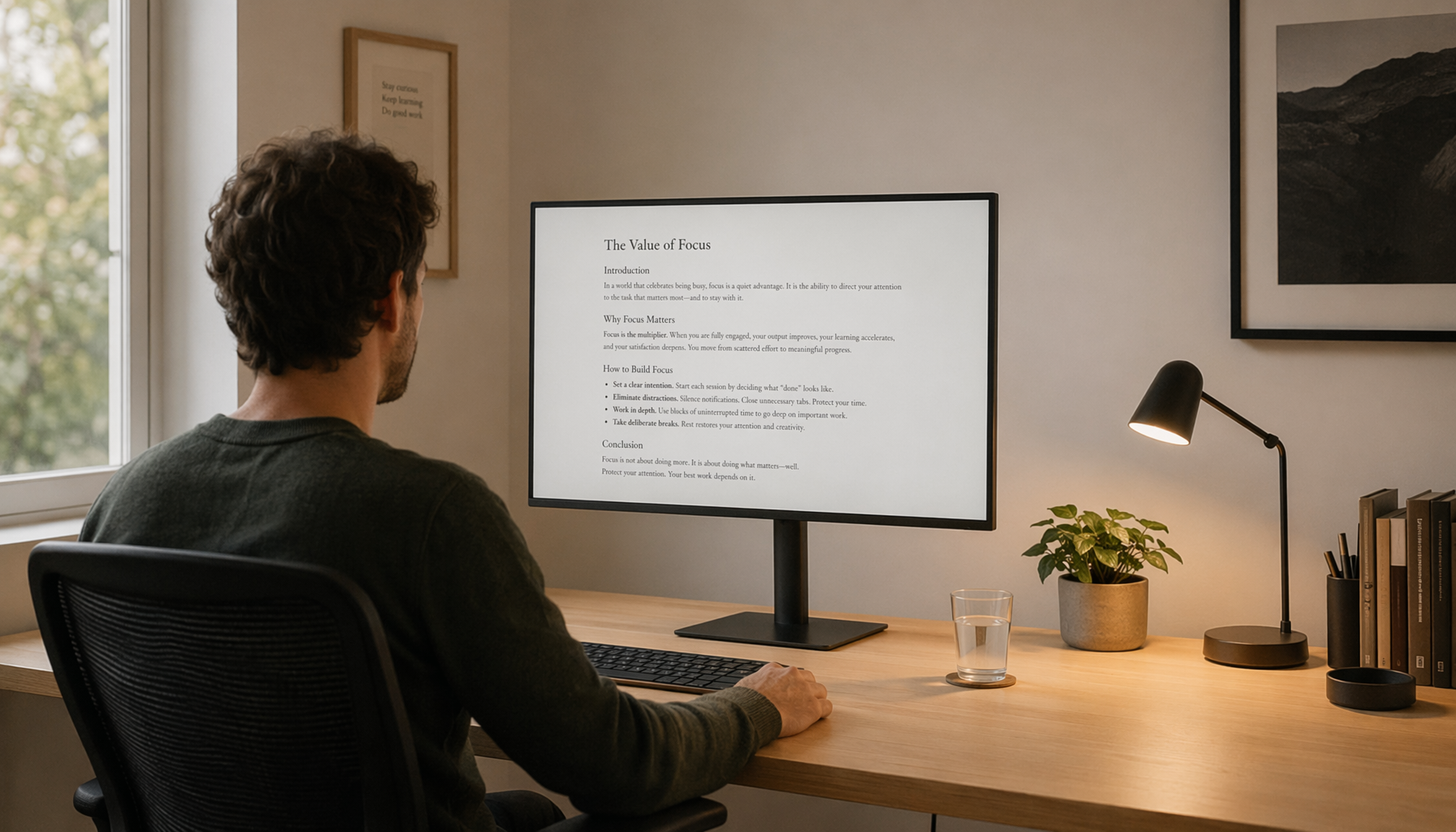
Text-heavy work is often hardest on the eyes because white backgrounds dominate the panel. Start with 120-150 nits in a normally lit home office, then adjust until a white document feels similar to the room rather than brighter than the room. If you use two monitors, match their brightness by eye or with a calibrator; mismatched monitors cause constant adaptation when you move your gaze.
For coding, spreadsheets, writing, and research, avoid maximum contrast if it makes white backgrounds harsh or dark-gray UI elements disappear. Set contrast near the monitor’s default, then adjust in small 5-10% steps while checking black text, gray dividers, and dark UI panels. If a setting makes text pop but causes headaches after 30 minutes, it is not a good setting.
For gaming monitors

Competitive gaming often encourages bright presets because they make enemies and shadow detail easier to see. That can be useful in daytime play, but at night it can turn every menu and flashbang into a glare source. Use a separate night preset if your monitor supports saved profiles: lower brightness, moderate contrast, local dimming on low or medium if it helps, and a warmer color temperature only if it does not hide important detail.
For HDR gaming, treat brightness differently from SDR desktop use. HDR depends on highlight range, so you may not want to globally crush brightness. Instead, use the game’s HDR calibration screen, set paper-white or UI brightness conservatively, and avoid playing HDR in a fully dark room unless the display handles highlights smoothly. A small bias light behind the monitor can make HDR less fatiguing without ruining the contrast effect.
For ultrawide and multi-monitor setups
Ultrawide monitors need more careful brightness control because they fill more peripheral vision. A curved 34-inch or 49-inch display can feel immersive in games but overwhelming with a full-screen white browser. At night, keep bright apps centered or split into narrower windows, and use darker editor themes only when the text remains easy to focus on.
For dual-monitor setups, avoid one bright main display and one dim side display. Match both screens in perceived brightness and color temperature. If one monitor has a much higher minimum brightness, use it as the daytime or gaming display and keep the more dimmable panel for late-night reading or chat.
For portable monitors
Portable monitors often have smaller panels, but they are frequently used closer to the face and in inconsistent lighting. A 15-inch portable monitor at a hotel desk, apartment kitchen counter, or bedside table may need more frequent brightness changes than a fixed desktop display. If it is USB-C powered, lowering brightness can also reduce power draw and heat.
Before buying, check whether the portable monitor has direct brightness controls, not just software controls through the connected device. A usable on-screen display, quick brightness buttons, and a low minimum brightness matter more than an impressive peak brightness number if you plan to work at night.
A Simple Calibration Workflow
The fastest reliable method is to set the room first, then the monitor. A night-use monitor guide recommends adding ambient or bias lighting, setting brightness so a white page matches the room, and then tuning contrast in small increments while checking dark-gray detail. That order works because it reduces the screen’s dominance before you start fine-tuning image controls.
Use this checklist when setting up a new monitor or fixing a painful nighttime setup:
- Set your room lighting first: turn on a lamp, bias light, or soft indirect light behind or near the monitor.

- Choose a neutral preset: start with Standard, sRGB, Creator, or Custom instead of Vivid, Dynamic, or FPS.
- Adjust brightness: aim for 120-150 nits in normal room light, 80-120 nits in a dark room, or 100-180 nits with bias lighting.
- Run the white-paper test: compare a white page on screen with white printer paper under your actual room light.
- Tune contrast in small steps: adjust by 5-10% only if text, gray UI elements, or dark scenes look wrong.
- Save day and night profiles: keep separate settings for work, SDR gaming, HDR gaming, and late-night browsing.
- Recheck after 10 minutes: immediate comfort can be misleading, so judge the setting after your eyes settle.
FAQ
Q: Is a bright monitor bad for my eyes at night?
A: A bright monitor at night can cause eye strain, glare, dryness, and fatigue, especially in a dark room, but that is not the same as proven permanent eye damage. The practical fix is to lower brightness, reduce screen-to-room contrast, add bias lighting, and take breaks during long sessions.
Q: Should I use dark mode on my gaming monitor at night?
A: Dark mode can help when white backgrounds feel harsh, especially for browsing, chat, and productivity apps. It is not always better for fine detail because darker interfaces can make pupils dilate and reduce sharpness for small text, so use it with moderate brightness rather than relying on dark mode alone.
Q: What monitor specs should I look for if I work during the day and game at night?
A: Look for high enough peak brightness for daytime use, a comfortable low-brightness range for night use, stable dimming, low flicker, usable presets, and good control over HDR or local dimming. For ultrawide and Mini-LED monitors, also check reviews for haloing, minimum brightness, and behavior in dark rooms.
Key Takeaways
The reason high brightness feels comfortable in the morning but painful at night is not mysterious: your room changes, your eyes adapt, and the screen-to-room contrast becomes much stronger after dark. A monitor that feels balanced in daylight can become a dominant light source at night if the brightness, contrast, and ambient lighting stay unchanged.
For buying guidance, do not treat peak brightness as the only comfort spec. A strong monitor should be bright enough for daytime work, dim enough for late-night use, stable at low brightness, and flexible enough to save different profiles for SDR work, gaming, HDR, and dark-room sessions. For most people, the biggest comfort upgrade is not a new blue-light filter; it is matching screen brightness to the room and adding a small amount of bias lighting behind the display.