Adaptive Sync flicker gets worse with local dimming because VRR changes refresh timing while local dimming changes backlight brightness by zone.
Does your monitor look smooth in daylight scenes, then pulse or flash in dark menus, loading screens, or night maps when HDR and local dimming are enabled? A practical fix is often testable in minutes: stabilize frame rate, lower local dimming intensity, or split settings by game type.
The Short Version: VRR Moves Time, Local Dimming Moves Light
Adaptive Sync, also called VRR, matches the monitor’s refresh behavior to the GPU’s frame output so motion looks smoother when frame rate changes. The tradeoff is that visible brightness can shift when refresh rate changes quickly, especially on high-contrast panels; VRR brightness flickering is commonly tied to variable-refresh modes.
Local dimming adds a second layer of change. Instead of one uniform backlight, an LCD with local dimming splits the backlight into zones that brighten and dim independently to improve contrast. That is why dark scenes look deeper and HDR highlights hit harder, but it also means the display is constantly deciding how much light each zone should emit. A basic LCD backlight keeps dark areas lit, while local dimming selectively reduces backlight output in darker parts of the image.
When both features are enabled, a frame-time spike can trigger a refresh-rate jump, and the local dimming algorithm may simultaneously adjust zone brightness because the scene has changed. In a dark game menu, a small white cursor, subtitle, HUD element, or loading icon can force one zone brighter while surrounding zones dim. If the frame pacing is uneven, those decisions become more visible as flicker, pulsing, or brightness pumping.

Why Dark Scenes Expose the Problem First
Flicker is easier to see in near-black content because the eye notices small brightness shifts more strongly when the scene is already dark. Long-term monitor testing often shows that VRR flicker is most obvious in darker scenes, menus, and inconsistent frame pacing.
Local dimming makes the same scene more contrasty, which is usually the whole point. A night map with a bright muzzle flash or a desktop with a white mouse pointer on a dark wallpaper creates sharp contrast boundaries. The backlight zones react to those boundaries, and if the refresh cadence is also jumping, the monitor can expose every small luminance correction instead of hiding it.
A simple example helps. Imagine a 165 Hz monitor with a 48-165 Hz VRR range. Your game runs at 120 FPS in an open area, drops to 52 FPS during a shader-heavy scene, and briefly touches 47 FPS in a loading transition. Near that lower VRR floor, the monitor may change refresh behavior abruptly. If local dimming is also trying to keep a dark loading screen black while a bright spinner stays visible, the backlight can appear to pulse.
Local Dimming Is Not the Villain, but It Raises the Stakes
Full-array local dimming places LEDs behind the screen in controllable zones, while Mini LED uses much smaller LEDs for denser control. The benefit is obvious in HDR: deeper blacks, brighter highlights, and stronger separation between light and dark objects. Full-array designs typically offer better precision than edge-lit systems because they use LEDs spread across the back of the display instead of only around the perimeter.
The downside is that zone-based lighting is still not pixel-level lighting. A bright object smaller than a dimming zone can create blooming, and fast changes can create zone transition artifacts. Display testing research notes that local dimming divides an LED backlight into zones to improve dark-scene performance, while Mini LED backlights can support many more zones for better precision.
More zones usually help, but they do not guarantee clean behavior. A monitor with 1,152 zones can look more controlled than one with 384 zones, yet algorithm quality, panel contrast, zone size, and game mode processing still matter. KTC’s zone-count discussion is useful here because zone count matters, but poor tuning can still introduce brightness pumping, flicker, crushed shadow detail, or uneven patches.

Setting Combination |
What Usually Improves |
What Can Get Worse |
Adaptive Sync on, local dimming off |
Smoother motion with fewer brightness-zone artifacts |
Lower HDR contrast and weaker black levels |
Adaptive Sync off, local dimming on |
Stronger contrast with fixed refresh timing |
More tearing or stutter when FPS varies |
Adaptive Sync on, local dimming on |
Best potential blend of smoothness and HDR impact |
Highest chance of visible flicker in dark, unstable scenes |
Fixed refresh, local dimming low |
Predictable desktop and esports behavior |
Less cinematic HDR depth |
The Frame-Rate Trigger: LFC and Sudden Refresh Jumps
Low Framerate Compensation is one of the most common triggers. When FPS falls below the monitor’s VRR floor, the display may repeat or multiply refreshes to keep motion smooth. On a 48-144 Hz VRR monitor, LFC can trigger around 47 FPS and cause the refresh rate to jump dramatically.

That kind of jump matters because many panels do not hold exactly the same dark-tone brightness at every refresh rate. With local dimming enabled, the display is also changing backlight output per zone. The result is a stacked visibility problem: refresh timing changes affect perceived luminance, and zone dimming makes those luminance changes happen against deeper blacks.
This is why a game can look stable at 100-120 FPS but flicker in menus capped at 60 FPS, during loading screens, or in heavy scenes where frame time spikes. It is also why flicker may appear in one title and not another on the same monitor.
Panel Type Matters: OLED, VA, IPS, and Mini LED LCD
OLED and VA monitors tend to show VRR flicker more clearly because their stronger contrast makes small gamma or brightness shifts easier to notice. IPS panels can flicker too, but the lower native contrast often makes the effect less dramatic. Mini LED LCD sits in a special middle ground: it can deliver serious HDR brightness and dark-scene contrast without OLED burn-in concerns, but its backlight zones can add their own transition artifacts.
Mini LED is a higher-performance evolution of full-array dimming, with more granular brightness control and stronger HDR capability than traditional FALD. Still, Mini LED remains zone-based rather than pixel-level, so halos, blooming, cost, heat, and processing complexity remain real tradeoffs.
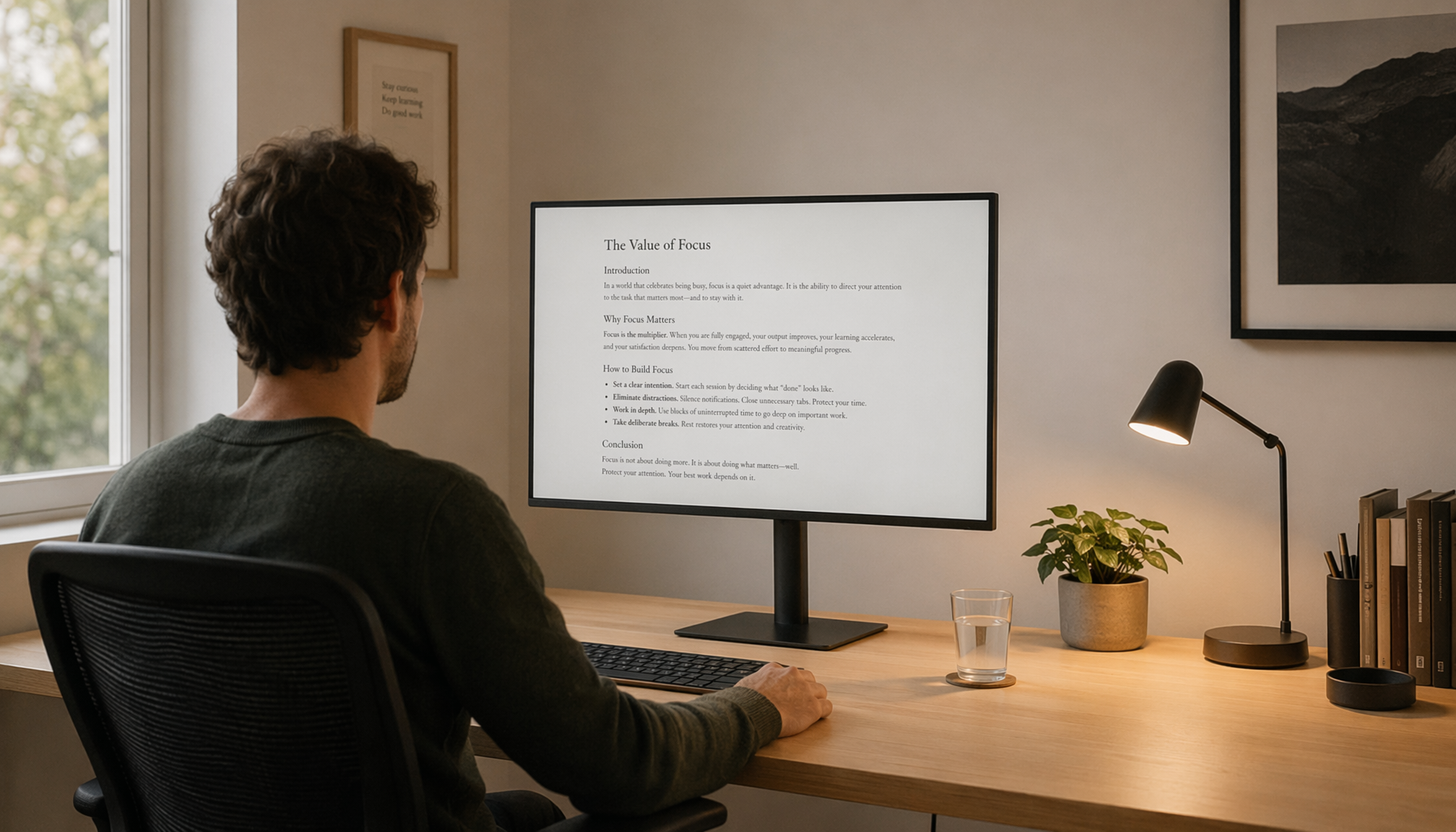
For office productivity, this matters more than many buyers expect. A dark code editor, spreadsheet grid, video timeline, or browser window with a bright cursor can trigger subtle backlight changes. For competitive gaming, it can be even more distracting because your eyes are trained on small motion and contrast shifts.
How to Tune It Without Killing the Monitor’s Best Features
Start by stabilizing frame rate. A lower, consistent FPS cap usually beats a higher, unstable average. If your game bounces between 95 FPS and 145 FPS on a 144 Hz or 165 Hz display, try capping just below the level your system can hold most of the time. For example, a steady 117 FPS can look cleaner than an uncapped range that swings from 80 FPS to 160 FPS.
Next, keep the game away from the lower VRR boundary when possible. If your monitor’s VRR floor is 48 Hz, settings that constantly dip into the high 40s can trigger the worst behavior. Lowering shadows, ray tracing, crowd density, or heavy post-processing may reduce flicker more effectively than changing monitor settings because the root problem is often frame-time instability.
Then adjust local dimming by use case. For HDR campaigns, cinematic games, and movies, local dimming on medium or high can be worth it. For SDR desktop work, code editors, web browsing, and esports titles with dark UI overlays, local dimming off or low is often the cleaner choice. That is not a downgrade; it is using the panel like a tool rather than forcing one showcase mode onto every workload.

Driver forums include reports where light flickering appeared after specific driver updates on Adaptive Sync monitors, which is a useful reminder that firmware, GPU drivers, and signal stability can change real-world behavior. A certified DisplayPort or HDMI cable, current GPU driver, and monitor firmware update are simple checks before assuming the panel is defective.
A Practical Test Routine
Use one dark scene where you can reproduce the issue. A game menu, loading screen, night area, or HDR calibration screen works well. First, run with Adaptive Sync on and local dimming off. If flicker disappears, VRR is still involved, but the dimming layer is amplifying it. Then turn local dimming on low or medium and watch whether the pulse returns around bright UI elements.
After that, cap FPS near a level the game can hold. If the monitor is 165 Hz and the game often sits around 110 FPS, test caps around 100 FPS or 105 FPS. The goal is not the highest number; it is the smoothest frame pacing with the least visible brightness movement. If the game still flickers during menus only, look for a separate menu FPS cap or set a global cap through the GPU driver.
For desktop productivity, test the same dark window with a moving white cursor. Desktop environment users have documented Adaptive Sync flicker tied to mouse movement on a multi-monitor setup, and the detailed system report shows why diagnosis should include GPU, compositor, EDID, refresh range, and display connection details. Adaptive Sync behavior is not isolated to one brand or one game engine.
Should You Disable Adaptive Sync or Local Dimming?
For competitive shooters, fixed refresh with a tight FPS cap can be the better experience if flicker pulls your attention away from targets. You lose some tear-free flexibility, but you gain predictable luminance and timing. For single-player HDR games, Adaptive Sync plus local dimming is still worth trying because the immersion payoff can be excellent when FPS stays stable.
For office work, disable local dimming in SDR unless your monitor handles it cleanly. The contrast benefit is usually smaller on spreadsheets, documents, and browser tabs, while cursor halos and pulsing windows are easy to notice over an eight-hour workday. For portable smart screens, battery behavior and simpler backlights often change the equation, so prioritize stable refresh, clean text, and predictable brightness over aggressive dynamic contrast.
The best setup is usually not one universal preset. Use one profile for HDR gaming, one for competitive play, and one for productivity. That gives you the strengths of Adaptive Sync and local dimming without letting either feature compromise the moment in front of you.
FAQ
Is Adaptive Sync Flicker a Defect?
Not always. It can be a normal side effect of VRR behavior, panel response, firmware tuning, or frame-time instability. If flicker happens across many games, cables, inputs, and refresh settings, then a hardware fault or poor monitor implementation becomes more likely.
Do More Local Dimming Zones Always Reduce Flicker?
More zones can reduce blooming and improve HDR precision, but they do not automatically eliminate flicker. The dimming algorithm, panel type, VRR tuning, and game frame pacing all affect the final result.
Is OLED Better Than Mini LED for This Issue?
OLED avoids local dimming zone artifacts because each pixel emits its own light, but OLED can still show VRR flicker in dark scenes. Mini LED avoids OLED burn-in concerns and can get very bright, but its zone behavior can amplify pulsing when VRR is unstable.
Adaptive Sync flicker worsens with local dimming because refresh timing and backlight zoning are both changing the image’s brightness behavior in real time. Stabilize FPS first, tune local dimming by workload, and treat HDR contrast as a precision setting rather than a switch you must leave on everywhere.